
Filipino Mahjong How to Count Points: A Complete Scoring Guide
Last updated: Nov 23, 2026
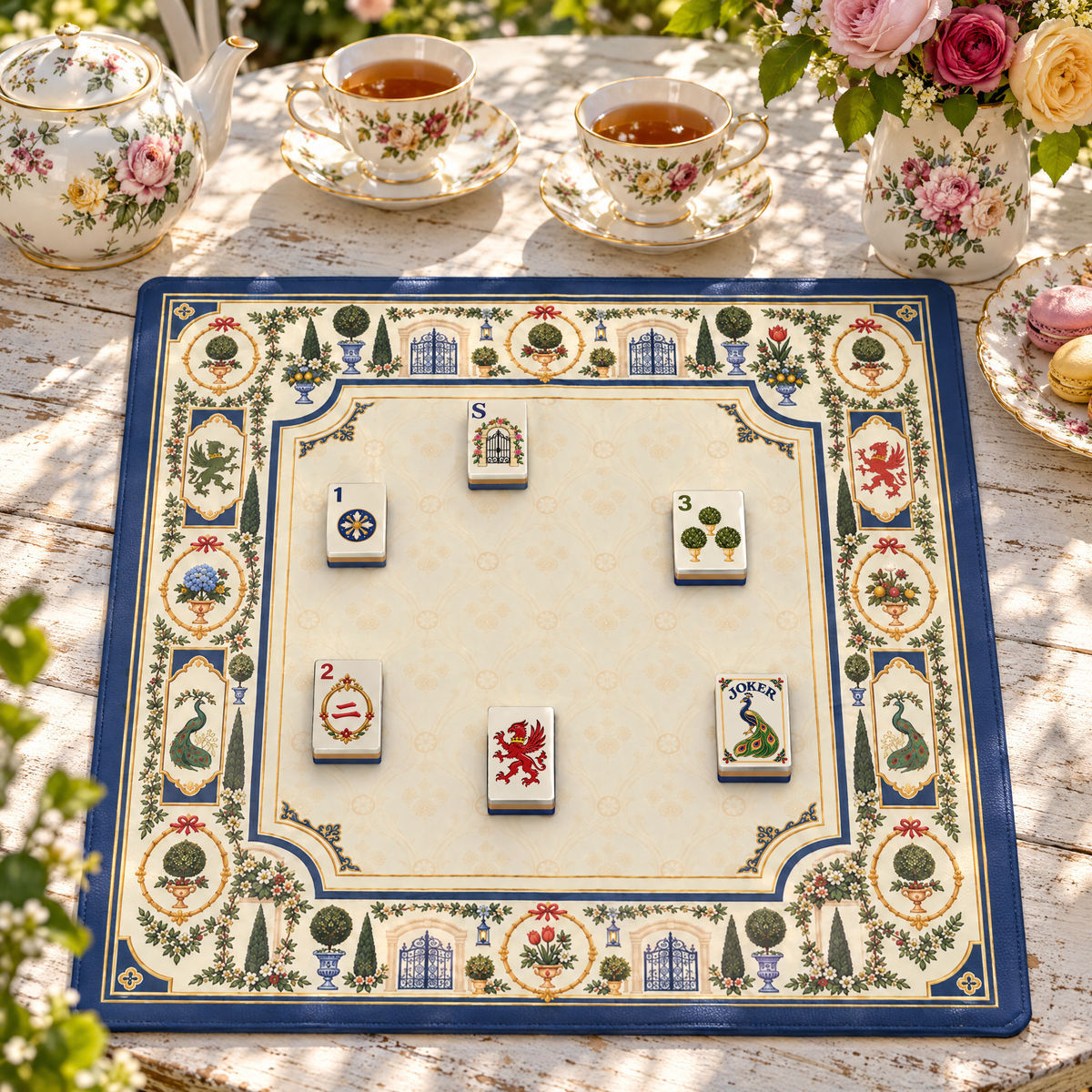
Filipino mahjong scoring differs significantly from American mahjong: points are earned during play (not just at the win), based on melded sets, special tiles, and the final winning hand. Each pung (three identical tiles) is worth 2 points; a kong (four identical) is worth 4 points; a pair is worth 0 points. Winning bonuses vary by hand type: a simple win on your own turn typically scores the base hand value plus wait bonus (1–8 points depending on wait type). Red dragons, green dragons, and white dragons each add 1 point per tile in melds. The scoring card or rulebook for your group governs specific hand premiums (usually 2–20 points for rare patterns). Play continues until a player reaches an agreed total (often 100 or 500 points), and final settlement can use chip racks or a scoring ledger. Unlike American mahjong's fixed yearly card, Filipino rules vary by region and player preference, so confirm your group's variant before you start.
How are pung and kong points calculated in Filipino mahjong?
In Filipino mahjong, pung and kong values form the base of hand scoring. A pung (three identical tiles—three 5 Dots, for example) scores 2 points; a kong (four identical tiles) scores 4 points. Honor tiles (winds and dragons) often double these values in some regional variants: a wind pung may be 4 points, a dragon pung 4 points, and honor kongs 8 points. Points accumulate only when melds are exposed (laid face-up on the table); concealed sets (tiles you hold in your hand until you win) typically score differently or not at all during play. The pair (two identical tiles) scores 0 points and is used only to complete a winning hand. Before you play, ask your group whether all four players use the same point multipliers for honors or if concealed melds earn points at the moment of winning.

What bonus points do you earn for winning in Filipino mahjong?
Winning bonuses in Filipino mahjong vary by the type of wait and source of the winning tile. A self-draw win (drawing the winning tile yourself on your turn) typically adds 2–4 bonus points on top of your hand's base score. A discard win (winning by calling a tile someone else discarded) usually scores the base hand value only. A pung or kong win (completing a pung or kong as your winning meld) may add 1–2 bonus points. Some groups award going out on first hand a flat bonus (often 5–10 points) or bonus for all simples (tiles 2–8 with no honors). A few regional rules grant limit hands (all honors, all terminals, all same suit) a fixed cap—sometimes 20–50 points—rather than calculating each tile. Confirm your group's bonus structure before sitting down; write it on a scorecard or have everyone agree aloud.
How do flowers and special tiles affect Filipino mahjong scoring?
Flower tiles (if included in your set) are usually scored immediately upon draw: the player draws an extra tile and scores 1 point per flower (or sometimes 2 points, depending on the house rule). Some regional variants do not use flowers at all, treating the base set as suit tiles and honors only. Seasons (four tiles representing spring, summer, autumn, winter) follow the same rule if your group includes them. Dragon tiles (red, green, and white) earn 1 point per dragon in any exposed pung or kong in most Filipino variants; some groups award 2 points per dragon. Winds (north, east, south, west) are usually worth the same as regular suit tiles in their sets unless the hand includes a "wind pung" bonus, which may double the pung value. Before your first game, inventory your tile set and check whether your group plays with flowers; if so, clarify whether they are scored on draw, on exposure, or at hand completion.

What is the winning hand structure and how is it scored?
A winning hand in Filipino mahjong consists of four melds (pungs, kongs, or chows) plus one pair—identical to Chinese and Hong Kong mahjong, unlike American mahjong which uses no chows. Assuming your group permits chows (runs of three consecutive numbers in the same suit—for example, 4 Dots, 5 Dots, 6 Dots), a chow scores 0 points; it completes the hand but adds no base value. The pair scores 0 points. Your hand score is the sum of all pung and kong points plus any bonuses (winning bonus, dragon bonus, hand pattern bonus). If your base hand sums to 8 points, you earn 8 points plus, say, 2 points for a self-draw win, for a total of 10 points. If a player discards the winning tile and you call it, you score the base 8 points with no self-draw bonus. Total points are typically tracked per game round, and play continues until someone reaches a target (100, 500, 1000 points are common thresholds). Keep a running tally on paper or use a chip rack to track each player's cumulative score visibly.
🀄 Shop best-selling mahjong sets →
How do you settle scores and handle ties at the end of a game?
At the end of a game session (when a player reaches your target score), settlement depends on your group's preference: chip-based play (each player buys in with cash and cashes out based on final score difference) or score sheet play (no money, just bragging rights and a tally in a notebook). In chip play, the highest-scoring player collects chips from the losers proportional to score gaps—for example, a 50-point lead might equal 5 chips per point per opponent, depending on your ante. Some groups use a settle-after-each-hand method: winners collect from losers immediately after each hand, keeping running totals separate. A tie (two or more players with the same score) typically means they split the points or divide the pot equally; some groups declare a single additional tie-breaker hand. A few groups use winner-take-all (highest score takes all contributions, second and third get nothing), though this is less common and riskier. Discuss payment rules and tiebreaker rules before money changes hands; write them down if they are complex.
What are common mistakes in Filipino mahjong scoring and how do you avoid them?
The most frequent mistake we see: forgetting to score concealed melds at the moment of winning in variants where they count. Some players only tally exposed melds and miss bonus points on hidden sets, leading to score undercounts. Solution: before the win hand is claimed, all four players should verbally confirm each exposed set's type (pung, kong, chow) and agree on bonuses.
Second mistake: misidentifying hand patterns for bonus points. A player may think their hand qualifies for an "all terminals" or "all honors" bonus when it does not, inflating their score. Solution: keep a printed rule card or scorecard visible at the table listing exact conditions for each bonus hand.
Third mistake: inconsistent honor tile values. One player scores a wind pung as 2 points, another as 4 points, causing disputes. Solution: before any money is wagered, write all point values on a blank scoresheet and have everyone initial it.
Fourth mistake: losing track of running totals, especially over multiple hands. Solution: designate one player as scorekeeper, or use a mahjong rack with pushers to keep chip stacks visible and auditable to all four players.
🎁 See our most-loved mahjong sets & accessories →
Scoring Element | Filipino Mahjong | American Mahjong | Key Difference |
When points accrue | During play (melds exposed) + winning bonus | Only at hand completion | Filipino scores mid-game; American scores end-only |
Chow value | 0 points (if allowed) | Not permitted | Filipino allows sequences; American does not |
Pung value | 2 points (or 4 for honors) | Not scored separately | Filipino awards base meld points; American uses yearly card |
Self-draw bonus | 2–4 points | Varies by hand type | Filipino bonus is simple; American bonus is hand-dependent |
Winning target | 100–500 points (group choice) | Single hand = win | Filipino is cumulative; American is per-hand |
What to check before you buy tiles for Filipino mahjong:
Is your group using a 144-tile or 152-tile set? (Confirm whether flowers are included; if yes, expect fewer numerals.)
Do you need engraved American mahjong sets or unadorned tile faces? (Engraved sets aid beginners; plain sets are faster to read during rapid play.)
Will you track scores on paper or use mahjong racks with pushers? (Chip racks prevent math errors and keep all scores visible.)
Do your players need a printed scorecard or laminated rule sheet? (Avoid disputes by printing house rules in advance.)
✨ Find your Mahstead set — free US shipping →

FAQ
Is Filipino mahjong scoring the same as Chinese mahjong scoring?
Not entirely. Filipino and Chinese variants share the pung/kong/pair structure and point accumulation during play, but bonus hand values and honor tile multipliers vary by region. Always ask your group which rulebook they follow before joining.
Can you score points before someone wins in Filipino mahjong?
Yes. Points are awarded for exposed melds (pungs, kongs, flowers) as soon as they are laid down, before any hand is complete. This is a major difference from American mahjong, which scores only at hand completion.
What happens if two players claim the winning tile at the same time in Filipino mahjong?
Typically, the player closest to the discarder in turn order (often the player directly after the discarder, going clockwise) claims priority. Confirm this rule with your group before play; some groups use a "fastest claim" rule.
Do flowers always count for 1 point in Filipino mahjong?
Not always. Some regional variants award 2 points per flower, and some do not use flowers at all. Confirm your group's flower rule and its point value before the game starts.
How do you calculate total score if a hand has multiple bonus conditions?
Add the base hand score (sum of all melds) plus each applicable bonus (self-draw, winning pattern, dragon bonus). For example: base 6 points + self-draw 2 points + all-honors bonus 10 points = 18 points total. Write each component on your scorecard to avoid errors.
Can you go negative in Filipino mahjong scoring?
Rarely, unless your group explicitly allows it. Most groups set a minimum score of 0 or prevent a player from dropping below 0 total points; if a loss would make them negative, they pay only the amount they have. Clarify this before any money is involved.


View More
View More
View More
