
Mahjong Card Holder: How to Hold & Read Without Fumbling
Last updated: Nov 23, 2026
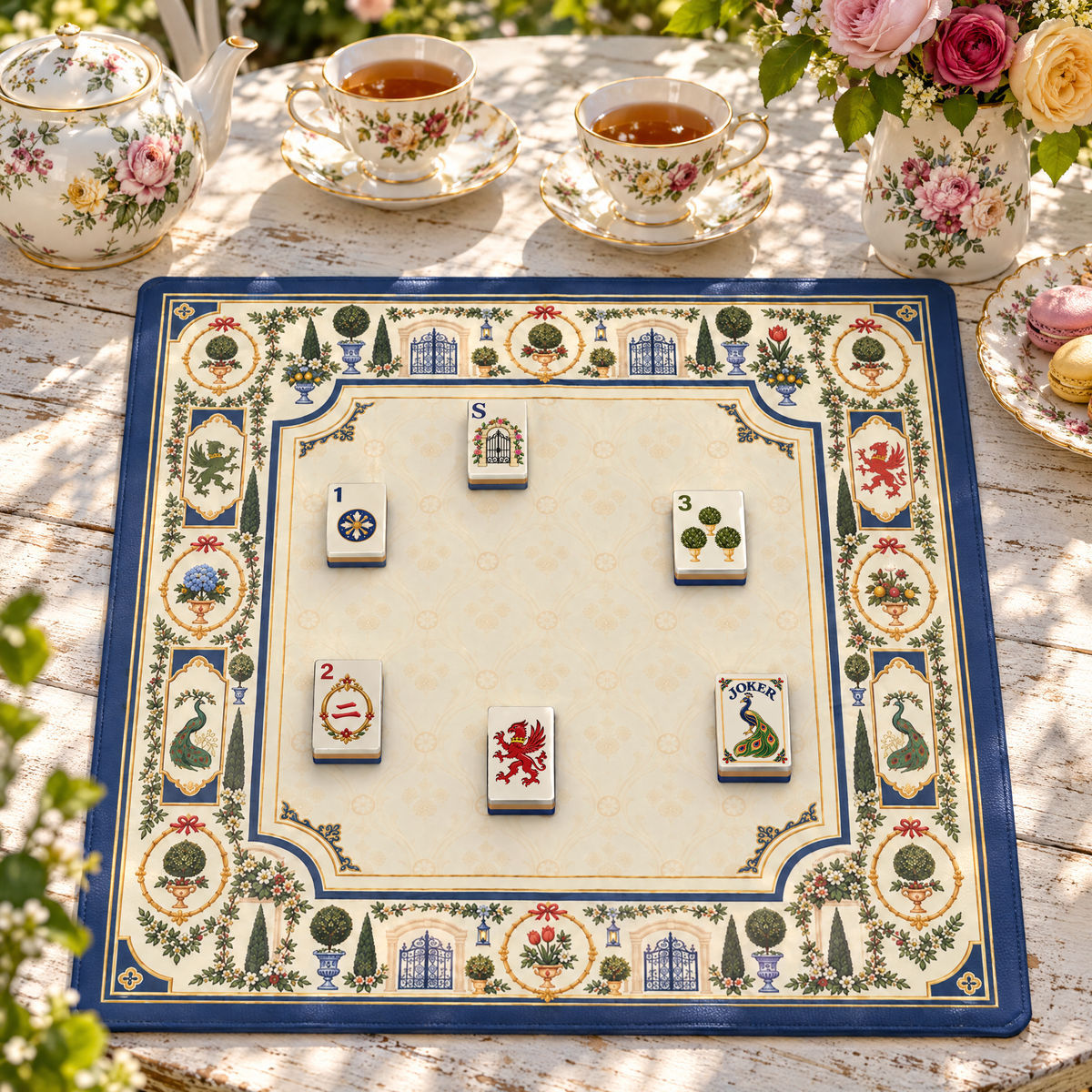
A mahjong card holder is a stand, clip, or storage sleeve that props the current-year National Mah Jongg League card upright on the table so you can reference hands without passing it hand-to-hand. Most players use a simple acrylic or wooden stand that sits flat on the table, costs little to nothing, and lets two or three players read the card from their seat. Some use a clip attached to a mahjong rack with pushers, while others fold the card into a protective sleeve or card stand. The card needs to stay dry, unfolded, and angled so the printed hand patterns and number columns are readable under normal table lighting. Avoid holders that block sight lines to the wall or tile draws, or that let the card slide out during a tense hand. 🀄 Shop best-selling mahjong sets →
Why does the mahjong card need a holder at all?
During a four-player game, the card circulates constantly—East player reads it, West wants a look, South needs to verify a hand pattern, everyone reaches across the table. Handling it by hand creases the paper, smudges the print, and slows the game. A holder keeps the card stationary, readable by all, and protected. It also frees both your hands for playing tiles instead of juggling card and tiles together.

What types of card holders do mahjong players actually use?
Tabletop stands. A small acrylic or wooden A-frame or flat stand (2–4 inches tall) sits in the center of the table. Everyone can read it without moving. Pro: simple, cheap, works for any card size. Con: takes up table space, not portable.
Clip-on racks. Many mahjong racks with pushers have a clip or slot on the front that holds the card vertically. Pro: keeps card within arm's reach, no extra table footprint. Con: only one or two players have easy sight lines.
Protective sleeves. A clear plastic card sleeve (4×6 or 5×7) keeps the card flat and safe; you prop it against a tile rack or bag. Pro: travel-friendly, durable. Con: harder to read from a distance.
Card binder or folder. Some leagues or casual players keep the current card in a small three-ring binder or report cover with clear pockets. Pro: organized, protects multiple years' cards. Con: overkill for weekly games.
DIY solutions. Clothesline clips, binder clips, tape, or a simple piece of foam board propped at an angle. Pro: free or nearly free. Con: amateur-looking, cards slip or tear.
Holder Type | Best For | Cost Basis | Why It Works |
Tabletop stand | Casual four-player games, shared reading | Low | Central, visible to all, no setup |
Clip on rack | Serious players, compact setups, East seat | Low–moderate | Paired with your own rack, keeps things tidy |
Card sleeve | Travel, beginners, protection | Low | Slim profile, reusable for years |
Binder/folder | Competitive leagues, archivists | Low–moderate | Professional, multi-year storage |
DIY clip or prop | Minimalists, one-off games | Minimal | Quick, uses what you have |
🎁 See our most-loved mahjong sets & accessories →
Where do you buy a mahjong card holder?
Most card holders aren't sold separately as "mahjong card holders"—they're generic items repurposed by players. Check office supply stores for small acrylic display stands or card holders meant for business cards or photos. Woodworking or craft sites sell small A-frame easels. Protective card sleeves come from any store selling trading-card supplies. If you want a holder designed specifically for mahjong, check online retailers that specialize in mahjong equipment, including our best-selling collection, which pairs card holders and racks together. Buy a card sleeve if you travel; buy a tabletop stand if you host weekly games.
How do you set up a card holder on your table?
Tabletop stand: Place it in the center of the table or in the "dead zone" (the space not covered by the wall or racks). Angle it so the card faces slightly toward the player who just drew it, or toward the center so all four can read. Rotate it after each hand so the next player reading first has the best angle.
Clip-on rack holder: Slide the card (unfolded flat, or folded in half lengthwise) into the clip or slot before the game starts. Make sure the card can't slip down or fold under itself. Adjust the clip so the text rows face outward, not toward the rack.
Sleeve: Lay the card flat on the table, slipped into the sleeve, propped against your tile rack or leaning against a bag or box. Keep it within 12–18 inches so you don't have to reach far.
Fold and prop: If you fold the card in quarters, prop one folded edge against your water bottle or a small book. Make sure the printed side faces up and the key hand patterns are visible. Change the fold halfway through the evening if your eyes are straining.
How does a card holder help you read hands faster?
When the card is stable and centered, you spend less time asking "whose hand is this?" and less time passing it around. You can glance up mid-hand and cross-check a pattern without interrupting play. If two players read simultaneously from a shared stand, you settle disputes instantly. A mahjong rack with pushers with a built-in card clip eliminates the hunt for the card altogether—it's always there, always upright.
What mistakes do players make with card holders?
Folding the card too tightly. Creased cards are hard to read and can tear. Use a sleeve or loose fold if you must fold at all.
Placing the holder where the wall blocks it. If your holder sits behind the wall, nobody can read it without standing or leaning forward. Keep it forward of the wall.
Letting the card slide in the holder. If the card can move, it gets refolded by gravity or bumped by accident. Clip it firmly or use a snug sleeve.
Using a holder with weak lighting. Even the best stand won't help if the card is in shadow. Play near a window, under a lamp, or use a stand that lifts the card into direct light.
Sharing one card stand among four hands. If only one player can read it at a time, the card becomes a bottleneck. Invest in a bigger stand or multiple sleeves so everyone can verify at once.
Should you buy a fancy holder or make one yourself?
If you play weekly in the same spot, a small tabletop acrylic stand (available at office supply and craft retailers) is worth the modest cost—it's durable, looks professional, and costs far less than a replacement mahjong set. If you travel, a card sleeve is mandatory. If you already own a mahjong rack with pushers, the clip-on holder is built in; just slot the card and go.
DIY works fine for one-off games, but if you host regularly, stop improvising. A proper holder saves time, protects the card, and shows your guests you take the game seriously. Many players in our weekly groups buy a simple stand and keep it in their mahjong bag or case with their set and mahjong mat—it travels, stores, and pays for itself after a few games.
✨ Find your Mahstead set — free US shipping →
What to check before you buy
Card size. American mahjong cards are typically 5×8 inches folded; sleeves and stands must accommodate that.
Holder height. It must clear the table so all four players can see over or around it without moving racks.
Material durability. Plastic cracks after a year of weekly play; wood or reinforced acrylic lasts longer.
Portability. If you bring your set to different venues, choose a lightweight stand or sleeve.
One-handed card swaps. If your holder requires both hands to insert or remove the card, it slows the game.
FAQ
Can you use a book stand or recipe holder instead of buying a mahjong card holder?
Yes. Any stand that holds a 5×8-inch card upright and fits on a mahjong table works. Check that it's stable, doesn't take up tile-drawing space, and lets all four players read without leaning.
What's the best way to protect a card from coffee spills if I'm using a holder?
Slip the card into a clear plastic card sleeve before inserting it into the holder or stand. The sleeve keeps liquid away and lets you read through it. Replace the card if it's already wrinkled or marked.
Should the mahjong card be folded in the holder or laid flat?
Flat is better. Folding creases the card and makes patterns harder to read. If your holder only fits a folded card, consider switching to a larger stand or using a protective sleeve instead.
Can a mahjong rack clip hold the card during the whole game?
Yes, if the clip is tight and the card doesn't slide. However, only the player with the rack at that position can read it easily. Pair it with a tabletop stand if other players need regular access.
Where do I buy a mahjong card holder specifically branded for mahjong?
Most card holders are generic office or hobby items repurposed by players. For sets that include a holder or pair well with one, check our best-selling mahjong collection, which carries coordinated racks, mats, and storage options.


View More
View More
View More
