
Mahjong Bag Size Guide: Pick the Right Case for Your Set
Last updated: Nov 23, 2026
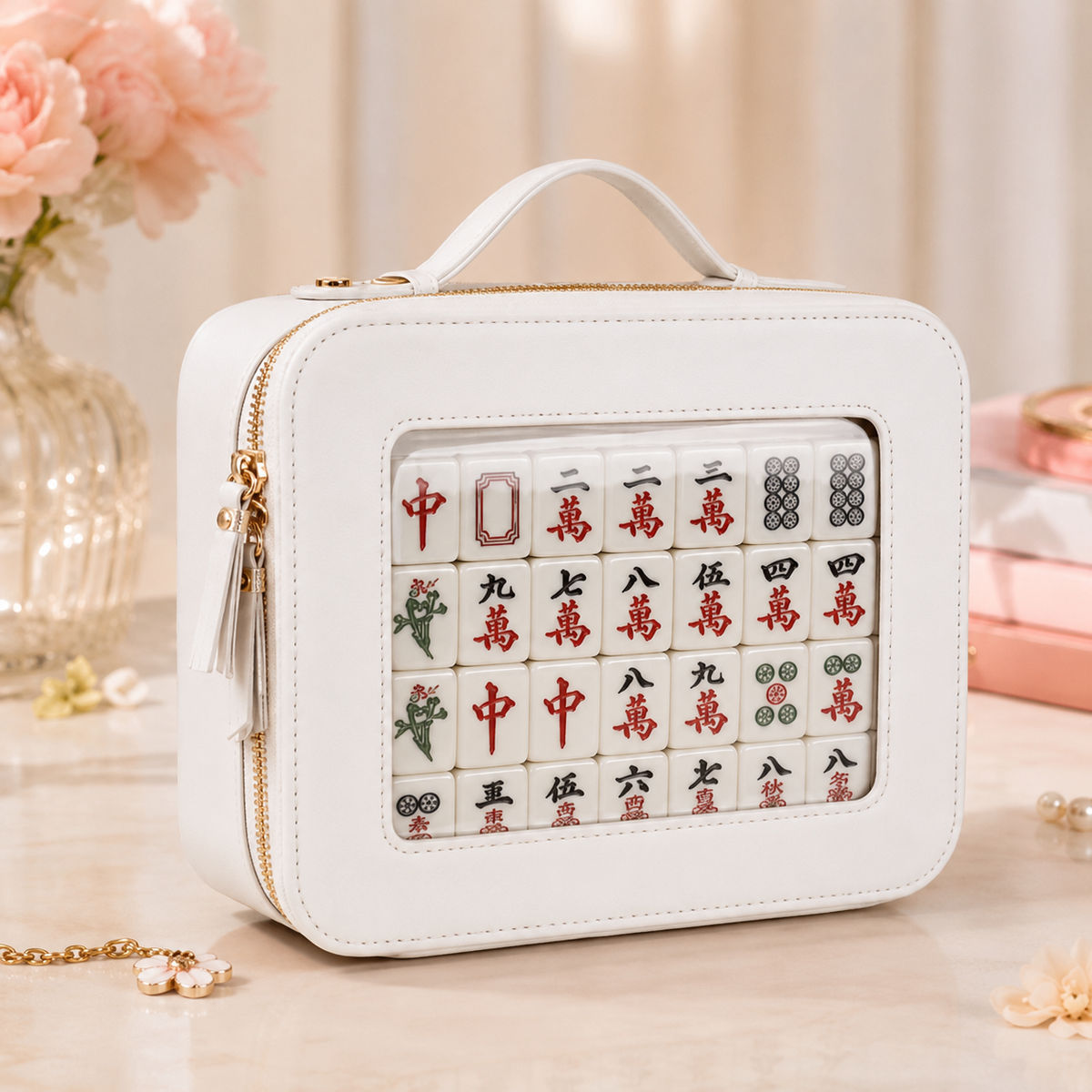
A standard American mahjong set with 160 tiles (152 playing plus spares) measures roughly 9×12 inches when packed. Bags come in three main categories: compact travel pouches that hold just the tiles and rack, mid-sized cases that fit the full set plus a mat rolled flat, and large rolling suitcases for players who host multiple games weekly. Most of us at Mahstead choose mid-sized cases because they balance portability—they fit car trunks and airline carry-ons—with protection. Check the interior dimensions before ordering, not just the exterior, and confirm whether the bag's depth accommodates a mat rolled to 3 inches thick. Nylon lining and reinforced seams prevent tiles from shifting; look for cases with padded dividers or slots if you own multiple sets.
What size bag do I actually need for a mahjong set?
Your answer depends on what you're storing and how often you move it. If you play weekly at one home, a stationary case with vertical tile racks works fine—you rarely lift it. If you're a traveling player hitting games across town or state, you need something light, compact, and durable enough for repeated packing and unpacking. The sweet spot for most of us is a bag that holds the tiles, one rack with pushers, and optionally a folded mat—nothing more, nothing less. Measure your set's box first: if it's roughly 9 inches wide and 12 inches deep, look for bags with at least 10×13 interior dimensions to allow for padding and zipper clearance. A properly sized bag protects tiles from moisture, dust, and breakage while staying compact enough to move without strain.
🀄 Shop best-selling mahjong sets →

How do I know if a bag fits my tiles and a mat?
This is where most buyers guess wrong. A mat rolled to 3 inches thick adds significant depth to your packing equation. If your bag has 5 inches of interior depth, a rolled mat fills most of it before you add tiles. Measure twice: the mat's rolled diameter (usually 3–4 inches for a standard mat), the tile box dimensions, and the bag's actual interior depth, not the external measurements. Many mid-sized cases advertise "fits a full set" but mean tiles and rack only—the mat doesn't fit. If you want to carry both, you'll need either a bag with gusseted (expandable) sides or a larger case. Pro tip: some players store the mat at home and only transport tiles and racks for weeknight games, freeing up bag space for dice, scorecards, and snacks. That trade-off saves weight and simplifies packing.
What's the difference between travel, storage, and premium bags?
Travel pouches are lightweight nylon with a handle, designed for short distances and frequent use. They typically hold tiles and one rack; zippers may not be heavy-duty for weekly wear. Cost basis is budget-friendly, and they excel for players who game at a single venue. Standard cases are the everyday workhorse—reinforced fabric or hard-shell plastic with padded lining, sturdy zippers, and room for tiles, racks, and a mat rolled flat. They're heavier than pouches but light enough for car transport and durable enough for years of weekly play. Premium rolling cases have wheels, handles, and dividers; they're for collectors with multiple sets or players hosting tournaments. We recommend the standard case for most players: it's the Goldilocks choice—not overkill, not fragile. When choosing between types, ask: Do I move this weekly? Do I own one set or five? Do I need to fit it in an overhead bin?
🎁 See our most-loved mahjong sets & accessories →
Bag Type | Best For | Interior Depth | Holds |
Travel pouch | Single-venue, light carry | 3–4 inches | Tiles + 1 rack |
Standard case | Weekly play, home + car | 5–7 inches | Tiles + rack + mat |
Rolling case | Multi-set owners, events | 8–10 inches | 2+ sets, mats, accessories |
Vintage hard shell | Collectors, display | Variable | Depends on model |

Does my bag material matter—nylon, plastic, or leather?
Yes, because it affects durability and how your tiles age. Nylon is lightweight, affordable, and water-resistant; zippers and seams wear first with heavy use. Hard plastic shells protect against crushing and moisture better, resist tears, and last longer, but they're heavier and less flexible for oddly-shaped racks. Treated canvas or fabric blends strike a middle ground—sturdy, breathable, less sweaty in a car trunk than plastic. Leather or vegan leather looks elegant for premium or engraved sets but requires conditioning and isn't ideal if your bag lives in a humid garage. Interior lining matters as much as the shell: padded nylon or foam-backed fabric keeps tiles from sliding and absorbs shock. Avoid thin unlined bags; tiles shift during transport, corners crack, and jokers get separated. Check seam reinforcement too—baggage-style thread stitching at stress points (handle attachment, zipper ends) signals durability.
What should I check before I order a bag?
Before clicking buy, verify three things in this order:
Interior dimensions match your set. Look up your specific set's box size (often printed on the box or product page), then compare to the bag's usable interior, not exterior. Account for padding (typically ½ inch on each side). If your set is 9×12×5 inches, the bag needs at least 10×13×6 inches interior.
Zipper quality and replacement parts. Heavy-duty separating zippers (the kind that open fully) are easier to pack and unpack than standard sliders. Check whether the manufacturer offers replacement zippers or parts; if not, a broken zipper means a dead bag.
Weight and handle comfort. Lift an empty bag if possible or check reviews for weight. A case under 3 pounds stays comfortable for repeated carries; above 5 pounds, you'll feel it on stairs. Padded or ergonomic handles matter if you move the bag weekly—thin handles cut your hands and signal corner-cutting on durability.
Also confirm the bag's warranty or return policy: can you return it if it doesn't fit your tiles? Many retailers don't allow returns on bags, so measure first and ask before you commit.
✨ Find your Mahstead set — free US shipping →
Which Mahstead collections pair best with the right bag choice?
If you're buying a travel case for the first time, you'll want a reliable, well-made set to protect. Our best-selling mahjong sets are the standard choice for players starting out or upgrading—durable tiles, clear engravings, and they fit standard bags without surprises. For players who host games and want everything matched, consider pairing a mid-sized bag with a mahjong mat and racks with pushers in the same color scheme; they'll all pack together logically. If you're shopping for someone as a gift, engraved American mahjong sets bundled with a quality bag make a complete, thoughtful present that says you know the game. All Mahstead sets ship with free US delivery, so focus your bag choice on your travel needs, not shipping costs—that's already solved.

FAQ
Can I fit two mahjong sets in one mid-sized bag?
Rarely. Two standard sets stacked exceed the typical 6-inch interior depth. Rolling cases or large suitcases are designed for this; standard cases hold one set with room for a mat, but not two.
What's the smallest bag that holds a complete set with a mat?
Interior dimensions of at least 10×13×6 inches. Anything smaller forces you to choose between the mat and extras like dice or scorecards. This size is called a "mid-sized case" in most product listings.
Should I store my bag upright or flat?
Flat is safer—it distributes weight evenly and prevents tiles from settling unevenly in one corner. Upright storage works if the bag has an internal divider or the tiles are in their original box inside.
Do I need a special bag if I buy a deluxe or engraved set?
No. All American mahjong sets with 160 tiles are the same size regardless of decoration or material cost. Buy the bag based on your travel frequency and space, not the set's premium features.
What's the difference between a bag and a case?
In the mahjong world, "bag" usually means a soft-sided pouch with handles; "case" implies a hard or semi-rigid shell, often with more protection. Some bags and cases are used interchangeably in product names, so check interior photos to confirm the style you want.
Can I fit a mahjong bag in an airplane carry-on?
Most soft mid-sized cases pass carry-on size limits (22×14×9 inches for major US carriers). Measure your packed bag or ask the airline; hard-shell rolling cases often exceed limits. Check before you book travel around a game.


View More
View More
View More
