
Easiest Mahjong Rules for Kids: A Parent's Quick Start Guide
Last updated: Nov 23, 2026
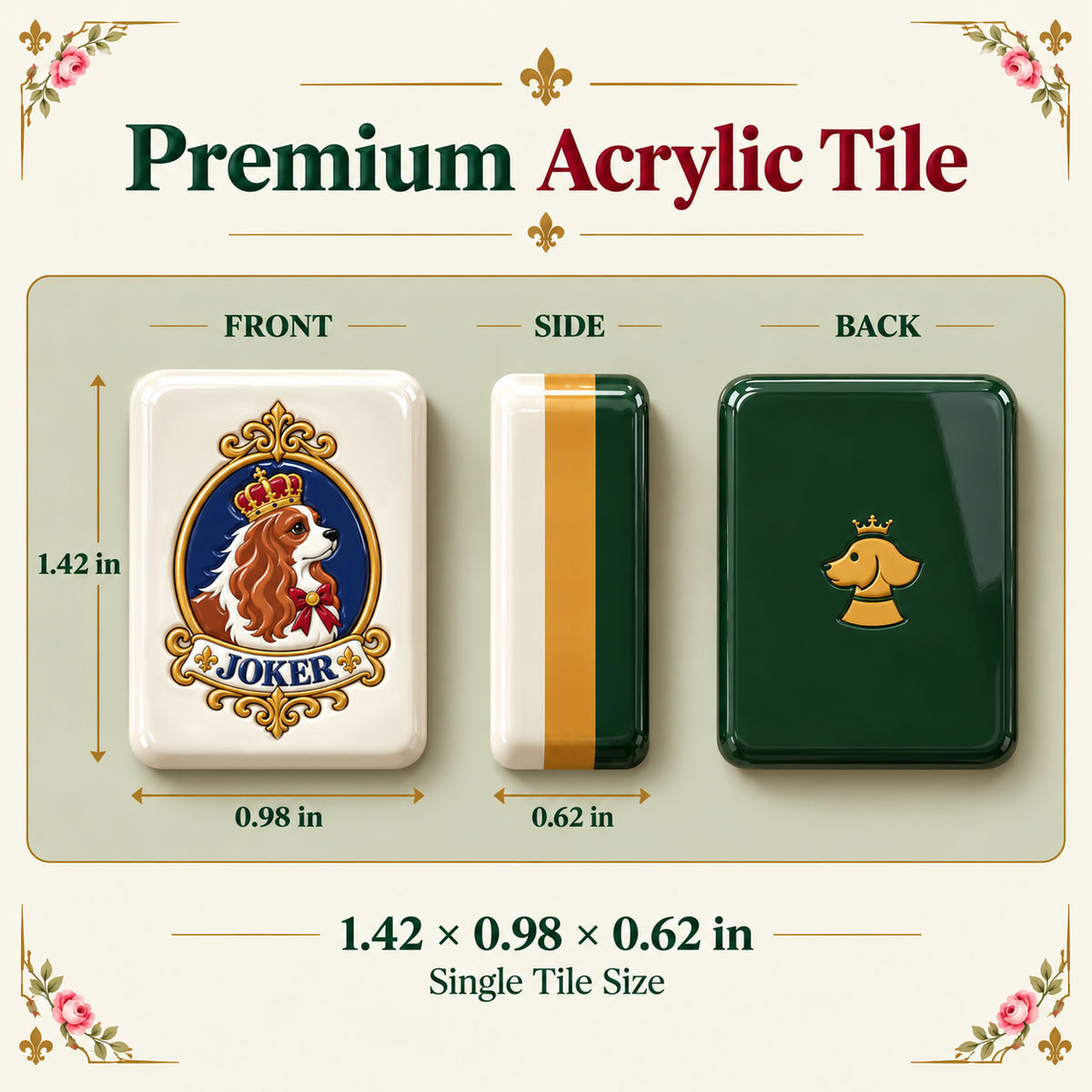
American mahjong for kids works best when you teach three things first: sorting tiles into suits, building a single hand from the card, and calling "Mahjong" when you win. Kids 8 and up grasp the idea in one session if you skip scoring complexity at first and use a clear tile set—acrylic tiles are easier to handle than bamboo. Start with a four-player game played counter-clockwise; let kids discard freely without penalty for 10–15 minutes while they learn what tiles look like. The National Mah Jongg League card (updated yearly) shows all winning hands, so you're not memorizing—just matching. Games last 20–30 minutes when kids are learning. Avoid explaining joker rules or the Charleston shuffle on day one; add those after they've won twice. A sturdy best-selling mahjong set with large, clear tiles keeps frustration low.
What makes mahjong so hard for beginners to teach?
Most kids struggle because adults dump all the rules at once: the Charleston, the current year's card, joker rules, scoring, seat assignment. Your job is to compress it. Tell your child: "Match tiles in groups, build one winning hand, discard what you don't need." That's the whole game. Leave out Charleston shuffles, seat wind rotation, and point calculation for the first three games. Kids learn by seeing tiles move, not by hearing explanations. One parent we know shows her kids the winning hand on the card, then has them find pieces of it in their rack. Within 10 minutes they're picking their first discard. The real barrier isn't complexity—it's impatience.

How do you set up a beginner game so kids actually want to stay?
Seat four kids around a table with the best-selling mahjong set in the middle, a copy of the current-year card (printed or on a tablet), and a pen for scoring. Give each child a racks with pushers if available—it keeps tiles organized and prevents spills. Spread the 152 tiles face-down and shuffle them by hand for 30 seconds; don't worry about the formal wall or the break. Deal each player 13 tiles, one at a time, turning from player to player. Flip a sixth tile into the middle. Place the card face-up where all four can see it. Tell them: "Look at your tiles. Find any pattern on the card that matches what you hold—numbers, dragons, winds, or flowers. If you can match it, put those tiles aside and say the pattern name." Let them sit for two minutes and study. Then, going clockwise, each player picks one tile from the middle and discards one they don't need. The first to say "Mahjong" wins. That's it. No scoring yet. Run the same game three times; on game four, add a single rule: "You get one point per tile in your winning hand." Kids feel progress immediately.
What tiles confuse kids most and how do you explain them?
The three suits trip up every beginner: Bams show sticks or a bird (the 1 Bam has a bird on it), Craks are orange circles (like cracks in a plate), and Dots are simple dots. Show the card: one row is all Bams 1–9, the next is Craks 1–9, the next is Dots 1–9. Point to the tile on the card, then find it in the set. Dragons come next: Red goes with orange (Craks), Green with bamboo (Bams), White "Soap" with dots. Winds are letters: North, East, South, West. Pick up each wind tile and say its name aloud. Flowers and seasons are wild cards—show them on the card, then explain that some hands use them, some don't. On your first teach, skip flowers entirely and come back on game two. Kids often forget that the 1 Bam has the bird and mistake it for something else; keep a copy of the card handy so they can look it up in 10 seconds without asking.
Can you play mahjong with just two or three kids?
Yes, but not standard American rules. Standard four-player uses wind seats and specific tile draws that don't work with fewer players. For two kids, deal them 16 tiles each instead of 13 and let them play without seat winds or the card for the first game—just make runs of same-color tiles (5 Bams, 6 Bams, 7 Bams) or groups of identical tiles (three 4 Dots, three 4 Dots, three 4 Dots). For three kids, deal 14 tiles each and use the card but skip the Charleston shuffle. Run games where the eldest child is the "dealer" each time so turn order stays simple. Learn the specific 2 and 3 player rules once they're comfortable with four-player. Most families start with four kids and bring in a parent or sibling if one drops out.

What's the fastest way to keep a beginner game moving?
Set a 20-minute timer. When kids are learning, slow gameplay kills enthusiasm—they forget what tiles mean and lose focus. Use these shortcuts: (1) Skip the Charleston for the first five games. (2) Don't explain scoring; just count tiles and declare a winner. (3) Use a printed card at the table so kids point instead of asking. (4) Let kids hold racks if they own them—it speeds up discard decisions. (5) Accept that kids will misread tiles; gently correct without stopping the game. (6) Have one parent sit beside the table and help spot winning hands ("Look, you have three 5 Dots, two 6 Dots, and a 7 Dot—that might match a pattern"). One round should last 10–12 minutes after the first game. If games drag past 25 minutes, simplify further: remove flowers from play entirely, or tell kids they can only discard in the order their tiles sit in the rack, removing strategy so turns happen fast. Speed builds confidence.
How do you tell if your set is good enough for kids to learn on?
Tiles should be large enough to read from 3 feet away, durable enough to survive being swept into a pile 50 times, and easy to sort by color. Acrylic tiles in clear, bright colors (not painted bamboo or bone, which kids mix up) work best. Check that the 1 Bam clearly shows a bird, and that Red, Green, and White dragons are unmistakable at a glance. Racks with pushers are optional but save setup time—kids can rest tiles without knocking them over. A carrying bag keeps the set in one place so it stays complete. A mat with a dividing rail lets kids see the center discard pile clearly without reaching across the table. Browse best-selling mahjong sets and choose one with large acrylic tiles if your kids are 8–11; 12+ can handle smaller tiles.
Decision: which set works for a family game?
Scenario | Why it matters | What to look for |
First-time four kids, ages 8–10 | Tiles must be huge and bright; durability beats pretty | Acrylic set, large tiles, clear suit colors |
Outdoor or grab-and-go play | Portability and spill-safety matter most | Lightweight bag, sturdy tiles in one case |
Multi-generational (kids + grandparents) | Readability and comfort for all ages | Medium-large tiles, high-contrast colors, sturdy racks |
Teaching multiple classes of kids | Volume and replacements matter | Durable set, spare jokers included, buy two |
🀄 Shop best-selling mahjong sets →
What mistakes do parents make on day one?
Teaching the Charleston shuffle before kids know what tiles are. Explaining the current-year card instead of just showing patterns. Declaring winners by score instead of letting the first "Mahjong" take the round. Mixing up which dragon goes with which suit. Giving each child a different card instead of one big card all four watch together. Starting with scoring rules—kids tune out. Forgetting that 8-year-olds can't read small text; print the card in 18-point font. Using a real table without a mat; tiles slide and scatter. Not having a clear discard pile so kids forget whose tile is in play. Test your setup with one practice game before inviting kids to play; you'll catch 90% of these traps.
✨ Find your Mahstead set — free US shipping →
What to check before you buy a kids' mahjong set
Tile size: Hold one between your thumb and forefinger; you should see every detail from arm's length.
Color clarity: Red, Green, White look totally different at a glance. Bams, Craks, Dots are easy to tell apart by color alone.
Racks: Come separately but save endless setup time and tile-counting errors if kids have one each.
Bag or case: Single cloth bag is fine for storage; hard case if you transport the set weekly.
Complete count: 160 tiles listed on the product page (152 play tiles + spare jokers). No missing pieces.
Mat (optional but recommended): Reduces spills and marks a clear center pile for discards; saves table cleanup.
🎁 See our most-loved mahjong sets & accessories →
Return to the mahjong for beginners guide once your kids want to learn the Charleston shuffle or scoring points.

FAQ
What age can kids actually learn mahjong?
Ages 6–7 can sort tiles and play simplified "matching" games. Ages 8+ grasp the full four-player game in one sitting if you teach one rule at a time. Younger kids lose focus during longer turns; stick to 15-minute games under age 9.
Do kids need to memorize the mahjong card?
No. One printed copy on the table is enough. Kids point to patterns and match tiles. After 10 games, they'll recognize four or five common hands without looking, but memorization isn't the goal—matching is.
Can you teach mahjong without the Charleston shuffle?
Yes, completely. The Charleston is a pre-game tile-pass ritual that balances luck. It takes 2–3 minutes to explain and confuses beginners. Skip it for the first five games; add it once kids understand winning hands.
What's the fastest way to end a practice game if kids get bored?
Call time at 20 minutes regardless of progress and declare whoever holds the most tiles that match a hand pattern as the winner. Kids stay engaged if games feel fast and winnable. Longer games breed frustration and tuning out.
Should you use jokers on day one?
No. Jokers are wildcards that replace tiles in your hand. Explain them once kids have won two games and understand basic tile grouping. On game one, pretend jokers aren't in the set.
Can a parent play alongside kids as a fourth player?
Yes, absolutely. An adult player keeps kids moving, models good discard strategy, and helps spot winning hands without playing for them. It's the fastest way to run a smooth first game.


View More
View More
View More
