
Mahjong Bag for Beginners: What to Buy & How to Choose
Last updated: Nov 23, 2026
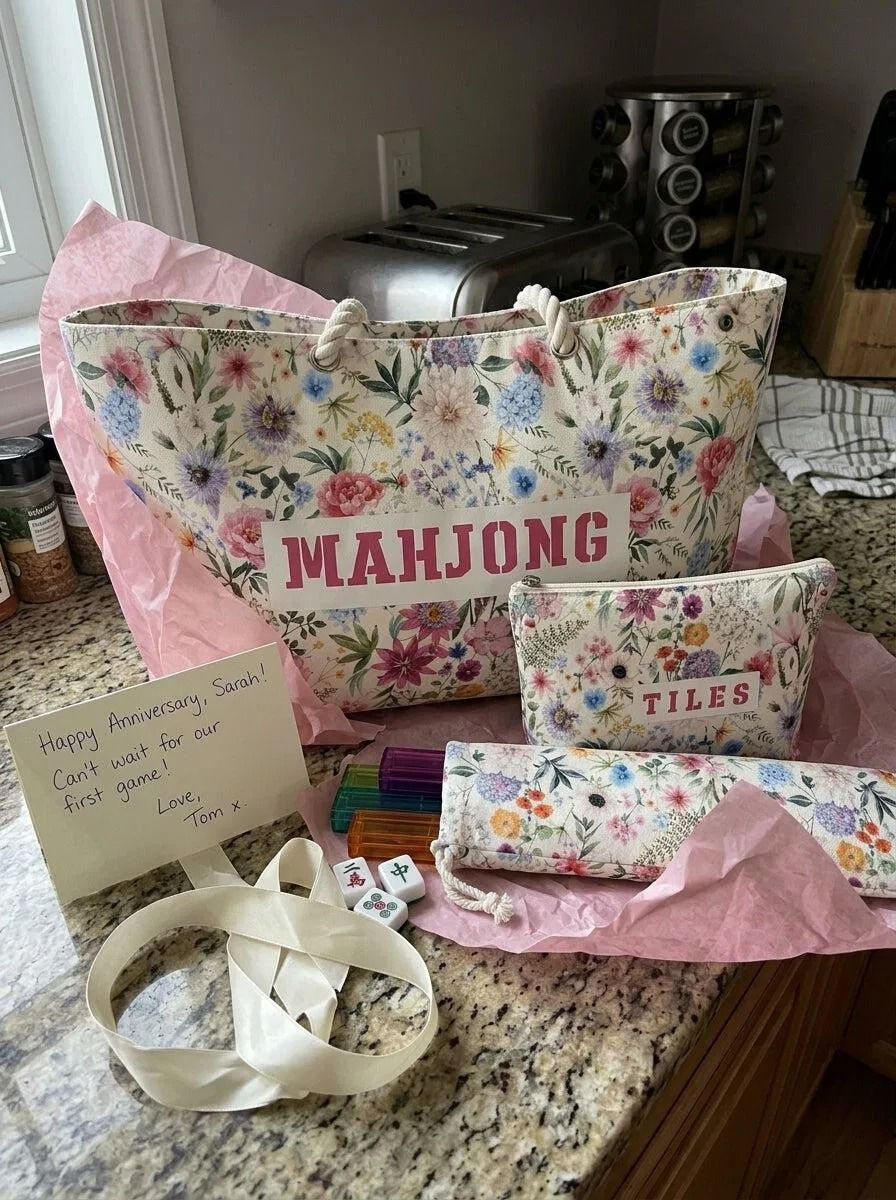
A mahjong bag protects your tiles and mats from dust, humidity, and damage during storage and transport. Beginners should choose between soft drawstring pouches (lightweight, budget-friendly, best for home storage), structured cases (more protection, fits a full set plus accessories), and hard-shell carriers (maximum durability for frequent travel). Mahstead offers durable canvas and padded options in our travel-bag collection sized to hold a 160-tile set, mats, and racks. Soft bags cost less and suit players who store their set at home and move it only between rooms or a weekly game location. Hard cases protect tiles better if you travel often or play in multiple venues. Most beginners start with a structured or soft bag; upgrade to a hard case later if you host or play tournaments. Check the dimensions before ordering—your set, mat, racks, and the current year's card all need to fit comfortably.
What does a beginner really need in a mahjong bag?
Beginners often overthink this. You need protection from dust, humidity shifts, and the occasional bump, plus space for your tiles, mat, and racks. A bag keeps everything in one place so you're not hunting for jokers at game night. Most players start with a soft or semi-structured bag that holds a full set; as you advance or travel more, you might graduate to a hard case. The right bag reduces setup time and teaches you to keep your game organized from the start.

Soft pouches vs. structured bags vs. hard cases: which is for you?
Three main types serve different beginner habits:
Bag Type | Best For | Protection Level | Storage Footprint | Why Pick It |
Soft drawstring pouch | Home storage, low travel | Low; suits, dust | Minimal, rolls small | Cheap, portable, casual weekly games |
Structured padded case | Home + car transport | Medium; padding absorbs bumps | Moderate; fits most closets | Balanced protection and packability |
Hard-shell carrier | Frequent venue changes, tournaments | High; rigid walls, locks | Larger; needs shelf or trunk space | Tiles safe in any condition |
Most beginners start with a structured bag because it's the middle ground: your tiles stay cleaner than in a pouch, but the bag fits in a car back seat without dominating space. If you play at one friend's house every week, a soft pouch is honest overkill-prevention. If you transport tiles to three different venues monthly, a hard case saves money on damaged tiles in the long run.
🀄 Shop best-selling mahjong sets →
How do you measure your set and mat to ensure it fits?
Before you buy a bag, know your bundle's dimensions. A standard 160-tile acrylic set measures roughly 9.5" × 7" × 2" when stacked in its tray; a folded mat is typically 25" × 25" when closed. A full mahjong mat unrolled runs 27" × 27" but compresses to a cylinder about 5" diameter and 27" long. Racks with pushers add roughly 1" of height if stored together. A bag labeled "160-tile capacity" should fit your set; measure the bag's interior width, depth, and height, then lay out your items inside before checkout if possible. Some beginners forget the mat and only account for tiles, leading to a bag that's too tight. Write down "set + rolled mat + two racks + card" and compare that bundle against the bag's interior, not its external size.
What protection features should a beginner bag have?
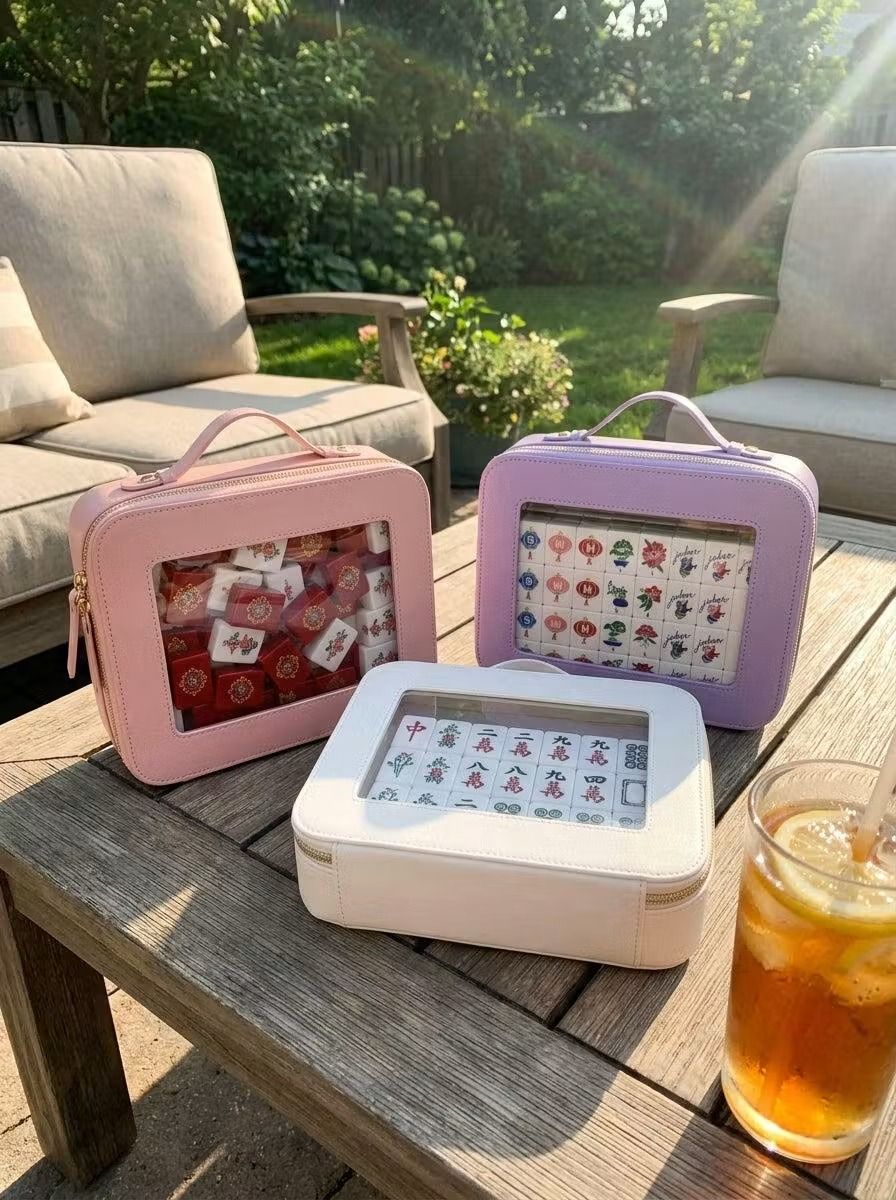
Look for padding, secure closures, and compartments. Padding—whether foam, canvas, or neoprene—cushions tiles against jolts in a car. Secure closures (zippers, latches, locks) keep tiles from spilling if the bag tips. Compartments separate tiles from mats and racks, reducing tile scratching and making setup faster. Beginners often skip compartments and regret it: when all tiles pile into one space, jokers and singles scatter, and your mat gets bent. A bag with at least one divided section keeps you sane. Hard cases typically include foam inserts you can customize; soft bags rely on the main pouch, so pick one deep enough to let tiles sit flat without compression.
🎁 See our most-loved mahjong sets & accessories →
Should you buy a bag with your first set or wait?
Buy the bag at the same time or shortly after. Storing an unbagged set invites dust, humidity changes, and accidents. Tiles are acrylic and resilient, but humidity warping the tray or fading designs is real over months. A travel-bag from our collection costs far less than replacing a scratched tray or a dozen tiles dulled by dust. Many beginners buy a set, play for two weeks, then panic when they spill tiles on the floor because they had no bag. A beginner's budget should include both set and bag. Think of it like buying a phone and a case: the case protects the investment and sets you up for consistent, joyful games.
What to check before you order your mahjong bag
Use this quick checklist:
Interior dimensions: Measure them against your set + mat + racks stacked as you'd pack them.
Compartments or dividers: At least one section for the tile tray, one for mats and racks.
Closure type: Zippers are standard; latches or locks add security for frequent transport.
Material: Canvas or neoprene resists wear; thin polyester degrades in sunlight.
Handles or straps: Check if they're reinforced at stress points; weak handles fail fast.
Weight when empty: A heavy bag becomes frustrating on the walk from car to game table.
Color: Neutral tones hide dust and stains better than white or pale pastels.
Return or warranty info: Ask the seller if the bag can be swapped if it doesn't fit your set.
Beginners often overlook handle strength and material durability. A bag that fits perfectly but tears after six months wastes money. Read product descriptions carefully for material type and ply (how many layers); thicker bags last years.
✨ Find your Mahstead set — free US shipping →
Choosing a mahjong bag is simpler than choosing your first set. Beginners should prioritize fit, basic padding, and at least one compartment. A structured or soft bag is enough; hard cases come later when you travel frequently or host multiple games weekly. Measure your set and mat, pick a bag with good closures and interior organization, and you'll protect your tiles and streamline setup for years. Start your mahjong journey with a bag that respects both your tiles and your growing passion for the game.

FAQ
Can I use any drawstring bag, or do I need a mahjong-specific bag?
A regular drawstring bag risks spilling tiles and doesn't protect the tray or mat well. Mahjong-specific bags have compartments and padding to keep tiles organized and safe. Most beginners find a dedicated bag prevents loss and frustration after just a few games.
What's the typical size of a beginner's mahjong set?
A 160-tile acrylic American mahjong set in its tray measures roughly 9.5" wide by 7" deep by 2" tall. A mat folds to about 25" × 25" and rolls to 5" diameter. Your bag interior should comfortably hold both without compression.
Do I need separate bags for tiles and mats, or one bag for everything?
One bag is simpler and more practical. A single bag with internal compartments keeps all your pieces together and cuts down on forgotten items at game night. You only grab one bag, and you're ready to play.
How much does a beginner-quality mahjong bag typically cost?
See current price on the product page; soft pouches and structured cases vary by material and size. Budget for a bag as part of your initial set purchase, not as an afterthought upgrade.
Will a hard-shell case be overkill if I only play at home or one friend's house?
For home storage or a single weekly venue, a soft or structured bag is enough. Hard cases are worth it only if you transport tiles to three or more locations regularly or play in tournaments. Start soft or structured and upgrade later if travel increases.
Can I fit a rolled mat inside the bag with the tile tray, or does it need its own space?
Most bags have enough depth to fit both a rolled mat and the tile tray if you pack them side by side or end-to-end. Measure before buying. Separate compartments prevent the mat from crushing or denting the tray edges.
Should I buy a bag in a specific color for visibility or durability?
Neutral tones (black, gray, navy, tan) hide dust and stains better than white or bright colors. Pick a color you'll recognize at a venue. Durability depends more on material and ply than color.


View More
View More
View More
