
American Mahjong vs. Riichi Mahjong: Key Differences
Last updated: Nov 23, 2026
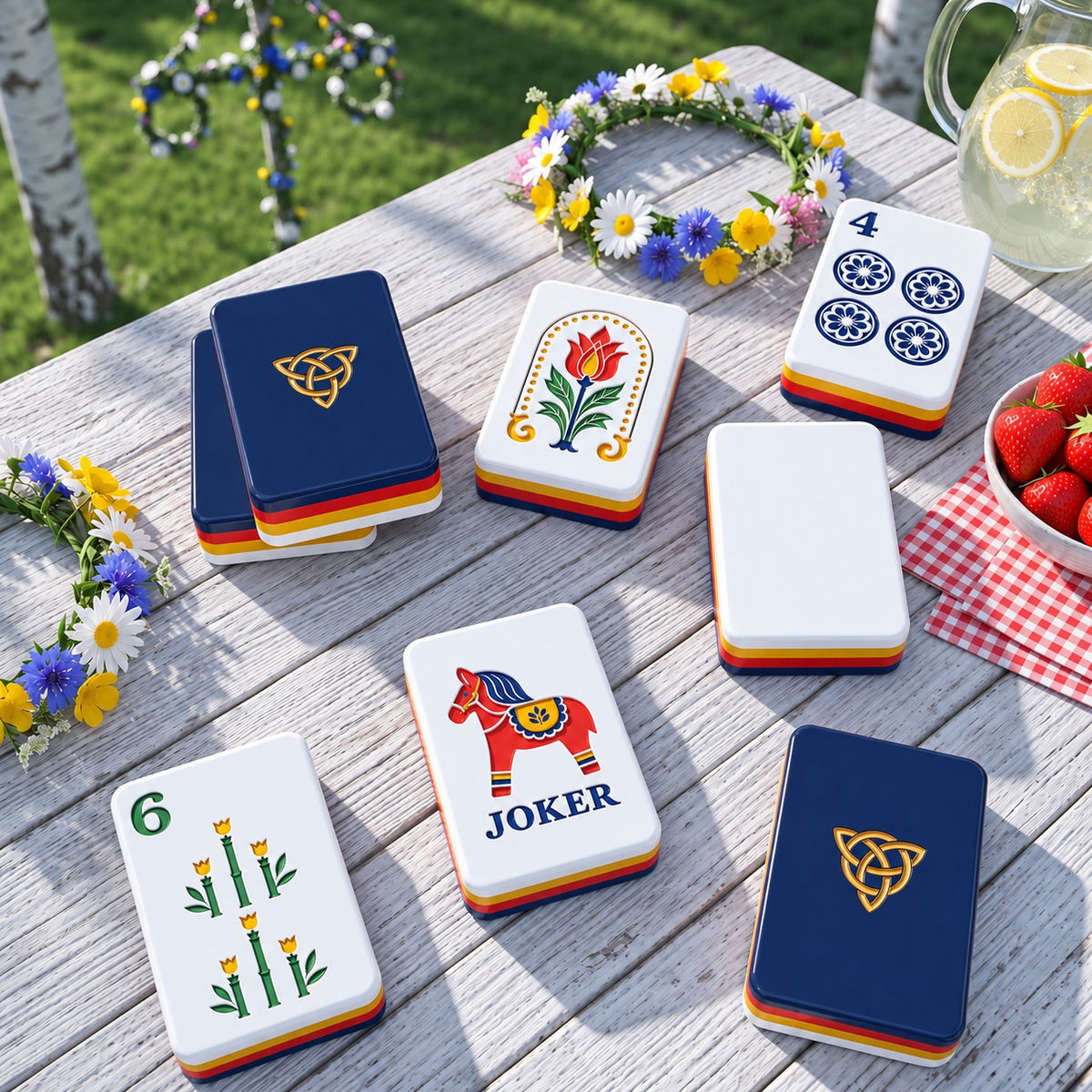
American mahjong uses 152 tiles (three suits: Bams, Craks, Dots numbered 1–9, plus Winds, Dragons, Flowers, and Jokers); players build hands only from the current year's National Mah Jongg League card, cannot form sequences (chows), and use the Charleston tile-passing ritual. Riichi mahjong uses 136 tiles (four suits: Man, Pin, Sou, Honors numbered 1–9), allows sequences and single-tile discards, requires declaring "riichi" (ready to win on next draw), and features complex hand scoring and waiting patterns. American play emphasizes fixed hand patterns and large melds; Riichi emphasizes speed, tile probability, and adaptability. Both need four players and a full tile set from our best-selling collection, but American players also need the annual League card while Riichi players memorize standard hand types and winning conditions.
American mahjong and Riichi mahjong are distinct games with different tile counts, hand-building rules, and winning mechanics. Choosing the right variant depends on your group's preference and the equipment you own.
What tiles does each game use?
American mahjong plays with exactly 152 tiles: three suits (Bams, Craks, Dots) numbered 1–9, four copies each (108 tiles), plus 16 Winds (4 each: North, East, West, South), 12 Dragons (4 Red, 4 Green, 4 White), 8 Flowers, and 8 Jokers. Riichi mahjong uses 136 tiles: four suits (Man, Pin, Sou, Honors) numbered 1–9, four copies of each (108 tiles), plus 16 Winds and 12 Dragons only—no Flowers or Jokers. American sets sold today contain 160 tiles (the standard 152 plus spares for replacement), while Riichi sets are typically 144 tiles (136 playing tiles plus spares). The key difference is that Riichi integrates Honors into the same game structure, while American separates Winds and Dragons as distinct tile types.

Can you form sequences in both games?
No—this is the biggest strategic difference. In American mahjong, you can only expose Pungs (three identical tiles), Kongs (four identical), Quints (five identical), and Sextets (six identical); sequences (1-2-3, called chows in other variants) cannot be called or exposed. All hands come directly from the printed National Mah Jongg League card issued each spring, and you must match those exact patterns. In Riichi mahjong, sequences are fundamental: a winning hand consists of four melds (Pung, Kong, or Chow) plus a pair, and you build these patterns by drawing and discarding one tile per turn. American play locks hands to a reference card; Riichi play allows flexible hand discovery and adaptation mid-game.
How does winning work differently?
American mahjong: you win by completing a hand that matches one of the patterns on the current year's League card and declaring "mah jongg." You cannot change your declared pattern mid-hand, and no special bonuses apply beyond the hand value listed on the card. Riichi mahjong: you win by forming a legal hand (four melds plus a pair) and declaring "tsumo" (self-drawn) or "ron" (claimed discard). Before winning, you may declare "riichi"—a commitment to accept only your predetermined winning tile—which locks your hand but earns bonus points. Riichi features complex scoring multipliers based on hand type, bonus tiles (Dora), and concealment. American winners receive points based on hand difficulty; Riichi winners earn calculated scores that vary dramatically by hand shape and conditions.
What is the Charleston and does Riichi use it?
The Charleston is American mahjong's pre-game tile-passing ritual: players pass tiles to the left, then right, then across the table (and optionally repeat), then return one tile face-down to each neighbor. This ritual establishes a common gambling contract and adds social ritual; most American groups play it before every hand. Riichi mahjong does not use a Charleston. Instead, the game begins with the dealer drawing 14 tiles and other players drawing 13 each; play proceeds through draw-and-discard cycles until someone wins or the wall empties. American play requires the Charleston ritual and makes it part of competitive protocol; Riichi play is immediate and continuous from deal.

What equipment do you need to play each variant?
Aspect | American | Riichi |
Tile count | 152 playing tiles (160-tile set with spares) | 136 playing tiles (144-tile set with spares) |
Reference card | Current year's National Mah Jongg League card (required) | None (standard hand patterns memorized) |
Dice | 2 dice (determine dealer and starting position) | 2 dice (same) |
Racks/pushers | Tall racks with pushers to manage 13–14 tiles | Standard or tilted racks (often no pushers) |
Mat | Optional but common (helps tile organization and meld display) | Common in clubs (tile-counting and discard grid) |
Flowers/Jokers | Required (8 each included) | Not used |
Scoring | Hand value from card + bonus multipliers (limited) | Complex calculation: hand type + Dora + wait pattern + concealment |
American players typically invest in a best-selling set plus racks with pushers to manage taller tile displays; they also need the printed League card every spring. Riichi players benefit from a mat with a discard grid and often use a scoring reference sheet. Both need four-player seating and a dedicated play space; if you host weekly games, a bag or case keeps your set portable and protected.
🀄 Shop best-selling mahjong sets →
Which variant suits your group?
American mahjong appeals to players who enjoy fixed hand patterns, social ritual, and card-based strategy. The Charleston adds ceremony; the League card provides clear goals; large melds (Quints, Sextets) reward planning. Riichi mahjong suits players who prefer speed, adaptability, and probabilistic thinking. Each draw changes your hand; riichi declarations add psychology; scoring multipliers create high-stakes moments. American play is often slower and more meditative; Riichi play is faster and more reactive. If your group plays once weekly, American's turn length works well. If you play multiple short rounds, Riichi's pace may fit better. Try a trial hand of each variant before committing; most dual-player friends keep equipment for both games.
🎁 See our most-loved mahjong sets & accessories →
What to check before you buy
Confirm your group's chosen variant — ask whether your circle plays American, Riichi, or both. Do not assume.
Check tile count on the product page — American play requires 152 tiles (sold in 160-tile sets with spares). Riichi uses 136 tiles (144-tile sets). Verify before purchase.
Verify tile engraving clarity — both variants demand legible suits and numbers; examine sample photos or request details if purchasing online.
Count your Flowers and Jokers — American sets must include 8 Flowers and 8 Jokers; Riichi sets have neither. Confirm on the product description.
Plan for the League card (American only) — purchase or print the current year's card; it is not included in tile sets.
Consider your hosting setup — if you play weekly, invest in racks and a mat to speed play and reduce errors.
✨ Find your Mahstead set — free US shipping →

FAQ
Can I use the same tile set for both American and Riichi?
No. American sets have 152 tiles (8 Flowers, 8 Jokers, 3 suits); Riichi sets have 136 tiles (4 suits, no Flowers or Jokers). You need separate sets for each variant.
Do I have to memorize hands for Riichi mahjong?
Yes. Riichi players must recognize winning patterns (melds and pairs) without a reference card. American players consult the printed League card each hand, so memorization is optional.
How long does a Riichi hand take vs. an American hand?
Riichi hands average 10–15 minutes per round because play is continuous draw-and-discard. American hands average 20–35 minutes because the Charleston adds setup time and hand evaluation slows play.
Is Riichi mahjong harder to learn than American?
Both are complex. American requires understanding the League card and hand matching. Riichi requires memorizing winning shapes, wait patterns, and scoring rules. Most players find Riichi's pattern recognition easier to start but scoring calculations harder to master.
Why do American sets include Jokers if other variants don't?
Jokers allow large melds (Quints, Sextets) and flexible hand completion in American play. Riichi mahjong has no wild tiles; hands are built from exact tile draws and form standard patterns only.
Can four people play Riichi if one player has never played before?
It is difficult. Riichi assumes players recognize winning shapes and scoring rules; a complete beginner will slow the table significantly. American is more forgiving because new players can study the card before each hand.
What's the fastest way to teach someone American mahjong?
Start with our how-to guide, show them how to read the card, walk through one full Charleston, and play one hand slowly. Riichi learners need pattern drills and scored practice hands first.


View More
View More
View More
