
Mahjong Bag Care Guide: Keep Your Set Safe & Fresh
Last updated: Nov 23, 2026
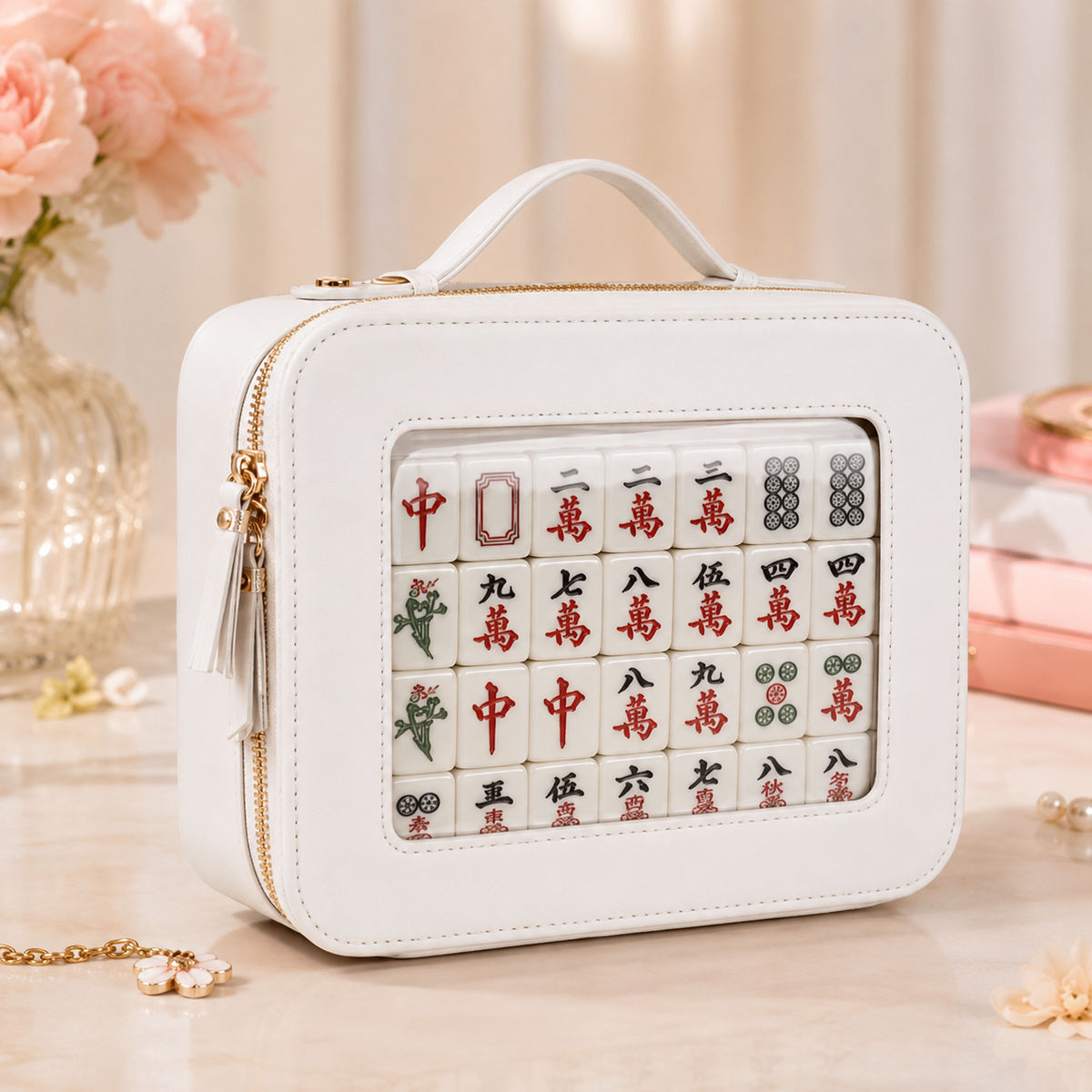
A mahjong bag's job is to shield your 160-tile set, rack, mat, and dice from dust, moisture, sunlight, and pressure during storage and travel. Store your bag in a cool, dry place (ideally 40–55% relative humidity); avoid basements, attics, and car trunks where temperature swings and moisture accumulate. Clean tiles quarterly with a soft, dry microfiber cloth—never water or solvents, which degrade acrylic and strip engraving. Check zippers and seams monthly; replace a broken zipper before it splits the bag. For travel, use a padded bag or hard case and avoid stacking heavy objects on top. At Mahstead, our travel bags and cases are designed with reinforced stitching and moisture-resistant materials to handle these stresses, so your set arrives ready to play every time.
Your mahjong set is an investment in years of game nights. Proper bag care—storage, humidity control, and routine cleaning—keeps tiles, racks, and mats in playing condition for decades. Store your bag in a cool, dry place (ideally 40–55% relative humidity); avoid basements, attics, and car trunks where temperature swings and moisture accumulate. Clean tiles quarterly with a soft, dry microfiber cloth—never water or solvents, which degrade acrylic and strip engraving. Check zippers and seams monthly; replace a broken zipper before it splits the bag. For travel, use a padded bag or hard case and avoid stacking heavy objects on top. At Mahstead, our travel bags and cases are designed with reinforced stitching and moisture-resistant materials to handle these stresses, so your set arrives ready to play every time.
What's Inside Your Mahjong Bag—and Why It Matters?
A standard 160-tile American mahjong set includes tiles, jokers, spare tiles, racks with pushers, a mat, dice, and wind indicator. Each piece has different care needs. Acrylic tiles are durable but can yellow under UV light and become brittle in extreme heat. Wooden racks absorb moisture and warp; felt mats trap dust and can mildew. Zippers and seams are the first points of failure. A good bag distributes weight evenly and keeps moisture out. Before choosing a bag, list what you carry: Do you travel weekly or store between games? Is humidity high where you live? Do you need compartments for tile organization? These answers determine whether a basic carryall or a specialized case suits your situation.
How Does Humidity Damage Your Tiles and Racks?
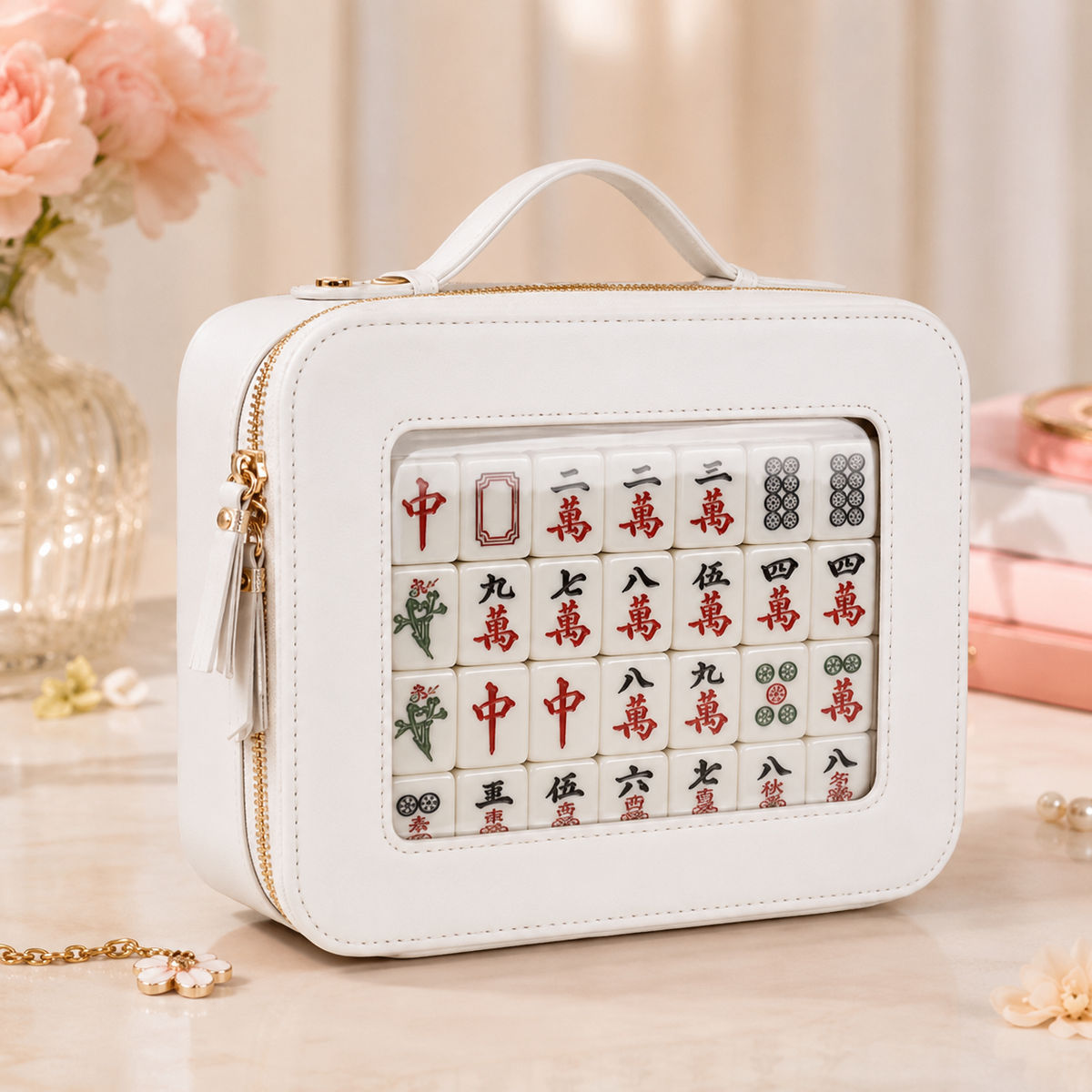
Acrylic tiles absorb minimal water, but wood components—racks, pushers, and the mat backing—swell and warp when humidity exceeds 60%. Joints separate, joinery fails, and your rack no longer closes smoothly. In dry climates (below 30%), tiles become brittle and crack under pressure. The ideal range is 40–55% relative humidity. If you live in a humid region, store your bag in a cabinet with a small silica-gel packet renewed monthly. Avoid basements (often 70%+ humidity) and sunny windowsills. A sealed bag alone won't regulate humidity; you must manage the environment inside and around it. Keep your bag indoors at room temperature, away from HVAC vents that cause rapid swings.
What's the Fastest Way to Clean Tiles Without Damage?
Never use water, rubbing alcohol, or commercial cleaners on acrylic tiles. They dissolve the resin and strip engraved lettering. Use only a dry microfiber cloth—the same kind used for eyeglasses or phone screens. Wipe each tile gently in one direction; do this quarterly or after a game when hands are dusty. For stubborn residue (e.g., dried marker or food stains), dampen the cloth with a single drop of distilled water, wipe once, and immediately dry with a second cloth. Let tiles air-dry completely before returning them to the bag. For racks and pushers, use the same dry cloth. If your mat has a stain, dab it with a cloth barely damp with cool water—never soak it—and air-dry flat. Store tiles in the compartments provided so they don't rattle and scratch each other.
How Often Should You Check Your Bag's Zippers and Seams?
Examine zippers monthly, especially after travel. Look for fraying, misaligned tracks, or teeth that won't close. Seized zippers often result from dust: gently brush the teeth with a dry brush before forcing it. If a slider stops mid-track, apply a small amount of graphite pencil powder (rub the zipper teeth with a #2 pencil) to lubricate it—never use oil or wax. If the slider breaks, the bag becomes unreliable. Many people ignore a sluggish zipper until it fails completely, splitting the seam or jamming tiles inside. Replace or repair the bag before it reaches that point. Check seams where the sides meet the base and where the handles attach. A small tear spreads quickly when the bag is full; catch it early and stitch it closed with heavy-duty thread. Inspect corner reinforcements too; they bear the most stress during travel.
Where Should You Store Your Bag Between Game Nights?
The location matters more than the container. Store your bag upright on a shelf—never stacked with weight on top—in a climate-controlled room. Avoid:
Garages – Temperature swings, humidity spikes, and dust are common.
Basements – High humidity, mold risk, and cold slow tile response.
Attics – Extreme heat in summer, extreme cold in winter; tiles become sluggish.
Car trunks – Temperature exceeds 150°F in summer; humidity varies wildly.
Sunny windowsills – UV light yellows acrylic; heat warps wood.
Near heaters or AC vents – Rapid humidity and temperature changes.
Best practice: A bedroom closet, hallway cabinet, or living room shelf in climate-controlled space. Keep the bag vertical so tiles settle evenly; horizontal storage for months can warp the tile stack. If you host weekly games, store the bag on a shelf near the table to minimize handling and storage-to-play transitions. For seasonal storage (e.g., summer cabin storage), seal the bag in a plastic container with desiccant packets and label it with the date sealed. Open and air it out one week before your next game.

Comparison: Bag Types and Their Best Uses
Bag Type | Best For | Durability Notes | Travel Suitability |
Padded nylon carryall | Weekly home games, short trips | Moderate; handle stress after 2–3 years | Good for car trips under 2 hours |
Hard-shell case | Frequent travel, airlines, events | High; lasts 5+ years with care | Excellent; protects against crushing |
Soft fabric tote | Occasional casual games | Low; seams fail after 1 year | Fair; no impact protection |
Canvas drawstring | Short trips, minimal weight | Low; zipper jams easily | Poor; no padding, no weather seal |
Mahstead travel collection | Weekly play, mixed storage & travel | High; reinforced stitching, moisture-resistant | Excellent; designed for your specific set |
Shop bags and cases designed for mahjong →
How Do Engraved or Custom Sets Require Different Care?
Engraved tiles—personalized with names, titles, or custom artwork—have recessed lettering that traps dust and moisture. Clean engraved sets more frequently: every 2–3 weeks if used weekly. Use a soft brush or a dry cloth with a gentle circular motion to lift dust from grooves. Never scrub or apply liquid to engraved areas, as moisture can pool and cause discoloration. Engraved American mahjong sets from Mahstead use professional-grade acrylic and laser etching that resists fading, but the lettering still requires gentle handling. If you gift an engraved set, include care instructions so the recipient preserves the personalization. Store engraved sets in a dedicated, sealed bag to minimize dust exposure—this is the one exception where an extra-sealed compartment justifies premium bag cost.
What to Check Before You Buy a Mahjong Bag
Before purchasing any bag, verify:
Internal dimensions – Will your mat, rolled or flat, fit inside? Do racks stack without pressure on tiles?
Compartments – Do you prefer one large space or dividers for tiles, racks, and mat?
Handles and straps – Are they reinforced? Can you comfortably carry a full set (typically 8–10 pounds)?
Zipper quality – Are teeth aligned? Can you open and close it smoothly 10 times?
Seam visibility – Are stitches tight and even? No loose threads?
Material texture – Is the exterior moisture-resistant? (Nylon or canvas with a water-resistant coating is better than raw fabric.)
Base padding – Is the bottom reinforced? Can it support the weight without bottoming out?
Price-to-durability ratio – Will it last through your expected travel use? (Based on typical usage, a well-made bag lasts 3–5 years for weekly players.)
🀄 Shop best-selling mahjong sets →
Seasonal and Travel Tips for Maximum Protection
Summer: High heat and humidity are the enemies. If you travel during summer, leave the bag in a cool room until just before departure. Never leave it in a hot car. Use desiccant packets in your bag, especially in humid regions. Check zippers monthly; heat weakens adhesives and can seize tracks.
Winter: Cold makes acrylic brittle. Bring your bag indoors at least 30 minutes before opening it to avoid condensation forming on tiles. Never leave a bag in an unheated garage overnight. If you travel by plane, pack your set in your carry-on rather than checked baggage—pressure changes in the cargo hold can stress seams and crack tiles.
Weekly play to tournament: If you're moving your bag from weekly home games to a tournament event, inspect every component the night before. Wipe tiles, test the rack, verify the mat is flat, and ensure the bag zips smoothly. Bring spare desiccant packets and a microfiber cloth. Avoid last-minute repairs; damage discovered at the event can't be fixed.
Long-term storage (6+ months): Before storing, clean all tiles and racks thoroughly. Place fresh desiccant packets inside. Seal the bag in a plastic bin with the desiccant. Store in a closet or cabinet (not a basement). Open and air the set one week before use.
🎁 See our most-loved mahjong sets & accessories →
Real-World Scenarios: What Happens When You Skip Care
Scenario 1: The Humid Garage Storage You store your bag in an attached garage over the summer. By September, you notice your wooden rack won't close smoothly; the pushers are stiff. Inside the bag, the mat smells musty. The tiles are fine, but the wood has swollen 3–5% from humidity spikes (typical 60–80% in summer garages). Recovery takes 2–3 months in controlled conditions; prevention takes 30 seconds—move the bag indoors.
Scenario 2: The Broken Zipper Mid-Game A slider has been sluggish for weeks. At your third game of the night, it jams. You force it; the fabric tears. Water isn't available immediately, so dirt enters the bag during transport home. Tiles accumulate dust; one rack corner catches dust inside the tears. Repair cost and frustration could have been prevented by checking zippers monthly and replacing a slider once it began to stick.
Scenario 3: The Cracked Tile from Pressure Your bag has been stored horizontally under a bookshelf for four months. Tiles have compressed slightly. When you retrieve it, one tile is cracked. It was likely already stressed; pressure at the wrong angle finished it. Standing the bag upright avoids this entirely.
Scenario 4: The Engraved Set Whose Lettering Faded An engraved custom set was stored in a sunny hallway window for a year. The laser etching in the grooves is now dull and stained from dust and UV. The tile face is fine, but the personalization is compromised. A sealed, opaque bag in a cool closet would have preserved it.
These aren't hypotheticals—they're patterns we see in sets that come back for repairs or replacement.
✨ Find your Mahstead set — free US shipping →
FAQ
Can I use a regular duffel bag or grocery tote for my mahjong set?
Yes, temporarily. But standard bags lack padding, moisture resistance, and reinforced seams. Tiles will shift and scratch each other; zippers fail quickly; humidity enters freely. For weekly play, a dedicated mahjong bag protects your investment.
How often should I replace my mahjong bag?
A well-made bag lasts 3–5 years with weekly use. If you use it monthly, 7–10 years is typical. Replace it sooner if zippers jam repeatedly, seams tear, or moisture begins entering the bag despite your best efforts.
Should I store my bag with tiles inside or empty?
Inside is better. Tiles distribute weight evenly and protect internal compartments from collapsing. Empty bags can warp or mildew in damp environments. Always store upright, never stacked.
Is it worth buying a hard-shell case instead of a padded bag?
Hard cases cost more but last longer and offer superior impact protection for frequent travel or airline use. Padded bags are lighter and cheaper for home storage and short car trips. Choose based on your travel frequency and environment.
Can I use silica gel or desiccant packets safely with my tiles and wooden racks?
Yes, absolutely. Silica gel is inert and safe for all materials. Place packets in a small cloth pouch or the bag's mesh pocket so they don't contact tiles directly. Replace packets monthly or when they no longer feel crispy.
What should I do if my bag gets wet during travel?
Open it immediately and remove tiles, racks, and the mat. Pat tiles dry with a microfiber cloth. Place racks and mat flat on towels in a warm, dry room with air circulation (not in direct sunlight). Leave everything to air-dry for 24–48 hours before reassembling.
Can I clean the bag's exterior?
Yes. Wipe nylon or canvas with a damp cloth; use a soft brush for textured areas. Allow it to air-dry completely before storing. Do not machine wash; it will damage zippers and seams.
Are Mahstead bags designed specifically for American mahjong sets?
Yes. Our travel bag collection is sized and compartmented for 160-tile sets, mats, and racks. Interior padding and moisture-resistant materials protect acrylic tiles and wood components during storage and travel.


View More
View More
View More
