
Mahjong Bag Buying Guide: Travel & Storage Options
Last updated: Nov 23, 2026
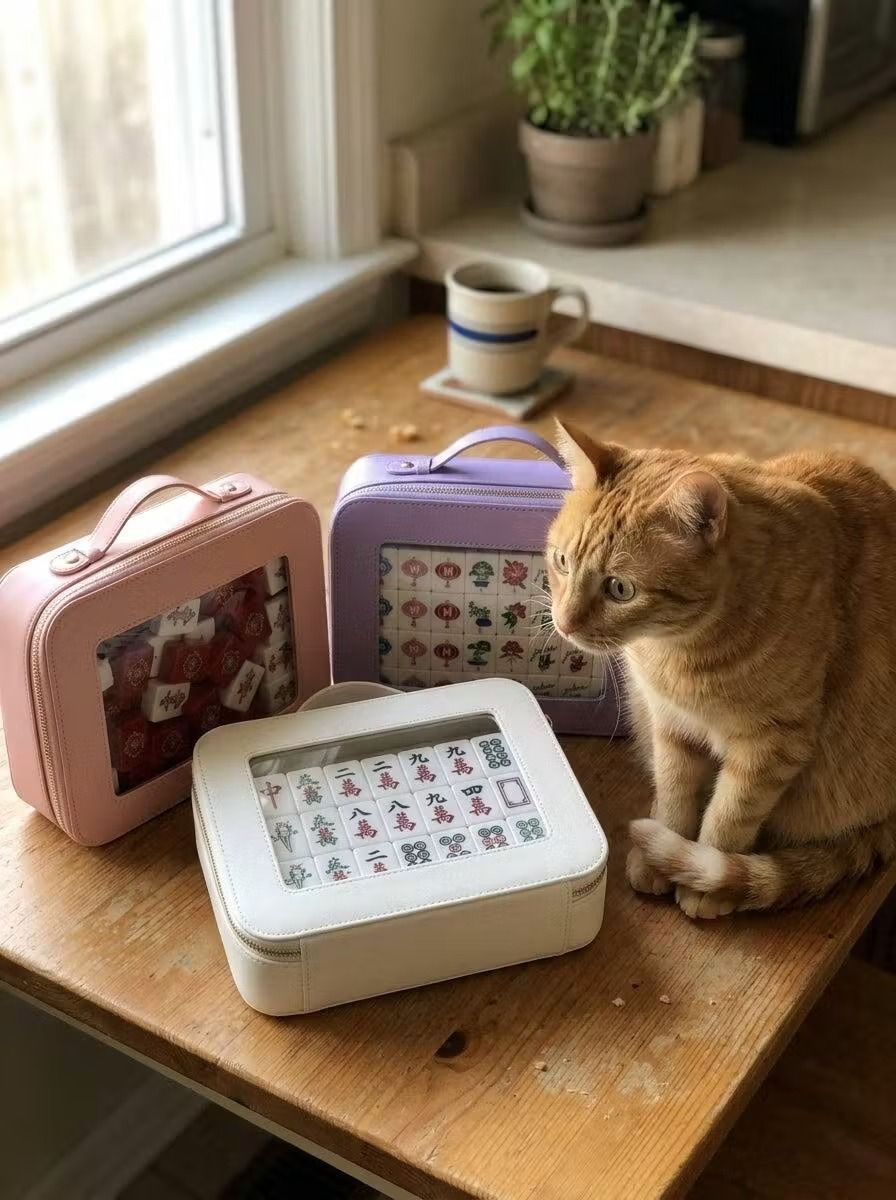
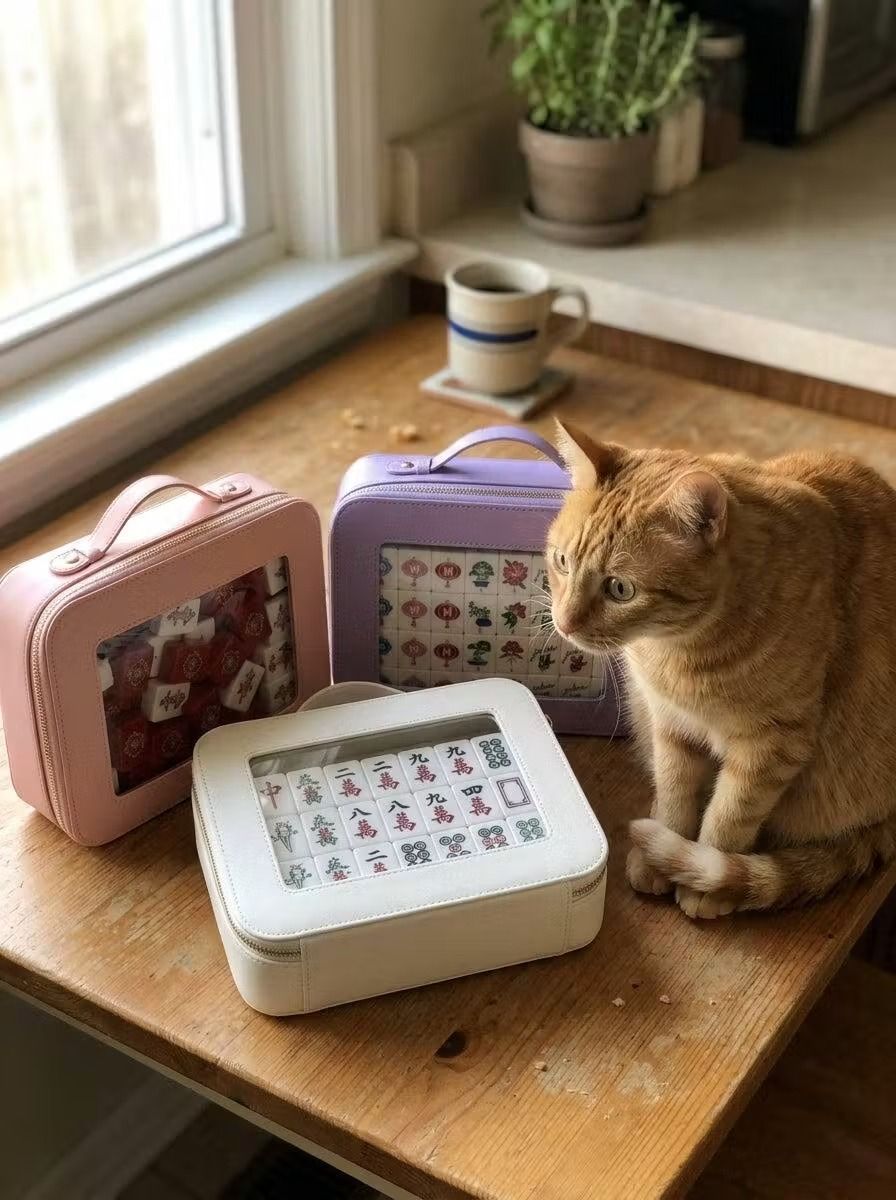
A mahjong bag is a protective carrier for your tiles (152-tile set), mat, racks with pushers, and accessories—designed to fit through doors, survive car trunks and keep pieces organized between games. Bags range from soft drawstring pouches to structured cases with padded compartments. Mahstead offers travel bags and cases in acrylic-compatible sizes; most hold a complete set plus a mat. Soft bags suit casual weekly players and short trips; hard cases protect tournament gear and frequent travel. Cost varies by material and capacity. Choose based on how often you move your set, storage space available, and whether you transport a mat and racks together or separately. A casual weekly player needs basic protection; frequent travelers benefit from reinforced cases with handles and foam padding.
🀄 Shop best-selling mahjong sets →
Should you buy a soft or hard mahjong bag?
Soft bags (canvas, nylon, or padded fabric) are lightweight and affordable. They work if your set stays in a home, car, or a short walk to a friend's house. Hard cases (plastic, rigid composite) protect tiles from crush damage in backpacks, overhead bins, and luggage. Hard cases add weight and bulk—useful only if your set travels frequently. Weekly players who carry a set one block to game night? Soft. Tournament players with sets in and out of cars weekly? Hard or semi-rigid. Rule of thumb: soft bags suit predictable, close-range trips; hard cases earn their weight on planes, in storage, or with rough handling.
What size bag do you actually need?
A standard American mahjong set uses 152 tiles in a box roughly 10 × 3.5 × 2 inches. A mahjong mat folds to 8 × 12 inches (doubled length). Racks with pushers add 9 × 2 × 2 inches per pair. Many players carry the set box plus a mat; fewer add racks to the same bag. Measure your actual tiles and mat before ordering—acrylic sets are denser than bamboo, so weight matters more than volume. A bag marketed for "American mahjong" should hold 152 tiles plus a folded mat with room for dice. If you plan to carry racks too, verify compartment depth and check whether the bag has dividers.
🎁 See our most-loved mahjong sets & accessories →
Which bag features matter most?
Feature | Why it matters | When to prioritize |
Padded compartments | Protects tiles from jostling & humidity | Frequent travel or fragile tile sets |
Handles (top or shoulder) | Eases carrying; fits car cupholder | Weekly players; short commutes |
Water-resistant exterior | Keeps mat dry in weather | Travel or outdoor storage |
Zippered main pocket | Prevents tiles sliding out in transit | Any travel by car or foot |
Removable dividers | Lets you store racks, dice, & cards | Players who transport full setup |
Carrying strap or wheels | Reduces hand fatigue; suits luggage stackers | Tournament players; long-distance trips |
Padded compartments are the single best feature if you own acrylic tiles—they're beautiful but sensitive to pressure. Handles matter if you walk to games. Water resistance is worth the small premium if your car has a wet floor or you store the bag in a garage. Zippers prevent accidental spills; removable dividers let you customize for your exact gear.
What's the difference between a mahjong bag and a general game bag?
A mahjong-specific bag has compartments sized for tile boxes (typically 10–12 inches long, 3–4 inches deep). A generic game bag or dice bag is often too small for a full set box and lacks the rigid structure that protects tiles from crushing. Tiles are heavier and more fragile than cards or dice, so a bag must be both spacious and structured. A mahjong bag also commonly has a flat design to fit under tables or in shallow storage, whereas general game bags are often cube-shaped. If a listing doesn't mention American mahjong or tile protection, it's likely too small or poorly designed for your set.

How do you pack a bag to prevent tile and mat damage?
Place the tile box in the center—never cram it against a wall where pressure can crack acrylic. Wrap the mat in the bag's outer pocket or a separate compartment so mat fabric doesn't snag tile edges. Dice and cards go in a small interior pouch away from tile jostling. Pad gaps with soft fabric (scarves, towels) to absorb impact. Never stack heavy items on top of the tile box. Close zippers fully—half-zipped bags let tiles shift during transport. If you carry racks, lay them flat in a separate section; standing them upright can bend and dull tile edges if the bag tilts. Store the bag in a cool, dry place; extreme heat can warp acrylic tiles and degrade zippers.
✨ Find your Mahstead set — free US shipping →
How do travel options change for tournaments vs. casual play?
Casual weekly games: a soft drawstring or canvas bag with basic padding works fine. You're moving the set a short distance in controlled conditions, so durability is secondary to cost and convenience.
Monthly or seasonal travel: a semi-rigid bag with a reinforced bottom, water-resistant exterior, and carrying handle. This protects the set during occasional car trips and storage for weeks at a time.
Tournament or frequent travel: a hard or hybrid case (plastic shell + padded interior), shoulder strap or handle, foam compartments for tiles and mat, and a separate pocket for the year's mahjong card. You move between multiple venues, often on planes or in shared transport, and need to protect against theft, weather, and rough baggage handling.
If you host weekly games and the set never leaves your home, a decorative tote bag is sufficient—you're protecting against dust and accidental spills only. If you're the only player with a set and friends gather at your house, lightweight matters less than capacity.
What should you check before buying a bag?
Checklist item | Why it matters | What to do |
Interior dimensions | Bag must fit your tile box comfortably | Measure your set box; compare to product specs |
Weight limit (if carrying racks too) | Handles or straps can tear if overloaded | Add weights of set, mat, racks, and accessories |
Zipper quality | Poor zippers jam, split, or pop open | Read reviews mentioning zippers; prefer YKK or metal |
Water resistance | Protects mat and tiles from spills, humidity | Check material; "water-resistant" ≠ waterproof |
Compartment separation | Prevents tiles from sliding; keeps mat clean | Look for pictures showing interior layout |
Material durability | Canvas pills; nylon tears; plastic cracks | Match material to your use (storage vs. rough travel) |
Return or exchange policy | Protects you if bag doesn't fit your set | Read terms before checkout |
Dimensions are the top mistake—a bag that looks big enough online may be 1 inch too short for your mat when folded. Always compare interior width, depth, and height to your actual gear. Zipper reviews matter: if multiple reviewers mention zippers sticking, skip it. Water resistance is worth asking about via chat if the product page doesn't specify; "water-resistant" keeps spills out for a few minutes, but isn't true waterproofing.
What you'll need:
If you're a frequent traveler or tournament player, pair your bag with a best-selling mahjong set and a quality mahjong mat to ensure your whole setup travels as one protected unit. For added organization, racks with pushers fit into larger cases and keep tiles upright between rounds.

FAQ
Can a mahjong bag fit both a set and a mat?
Yes. Most Mahstead travel bags and cases accommodate a 152-tile set box (roughly 10 × 3.5 inches) and a folded mat (8 × 12 inches when closed). Verify interior dimensions before ordering to ensure both fit without crushing. Racks typically require a larger or separate bag.
Is a padded bag necessary if I store my set at home?
No. If your set stays indoors, a simple cloth or drawstring bag protects against dust and accidental spills. Padding is only essential for travel, car storage, or rough handling. Home storage benefits more from a dry, temperature-stable location than from bag padding.
What's the best material: canvas, nylon, or plastic?
Canvas is durable and looks premium but absorbs moisture and is heavier. Nylon is lightweight, water-resistant, and affordable—ideal for casual travel. Hard plastic protects against crush damage but adds weight and bulk. Match the material to your use: canvas for weekly players, nylon for occasional travelers, plastic for frequent flyers or tournament use.
How do I know if a generic game bag will work for my mahjong set?
Measure the tile box (usually 10 × 3.5 × 2 inches) and compare to the bag's interior dimensions. Generic game bags are often too small or lack compartments for mat storage. If the listing doesn't mention tile protection or show interior photos, assume it won't fit a full mahjong set plus mat comfortably.
Should I buy a bag matching my mahjong set's design?
Not necessary. A matching bag looks cohesive but adds cost. Function—compartments, padding, durability—matters far more than aesthetics. Many players choose neutral bags to fit multiple sets or to accommodate future set upgrades. Prioritize fit and protection over matching design.
Does a bag need to fit dice and scoring chips too?
Most Mahstead bags have a small interior pocket for dice and cards. Scoring chips are optional in American mahjong (players track scores on paper). If you want everything in one bag, confirm the product has a dedicated pouch; otherwise, carry dice and cards in your coat pocket or a small separate pouch.


View More
View More
View More
