
Large Print Mahjong Set Buying Guide: What to Check
Last updated: Nov 23, 2026
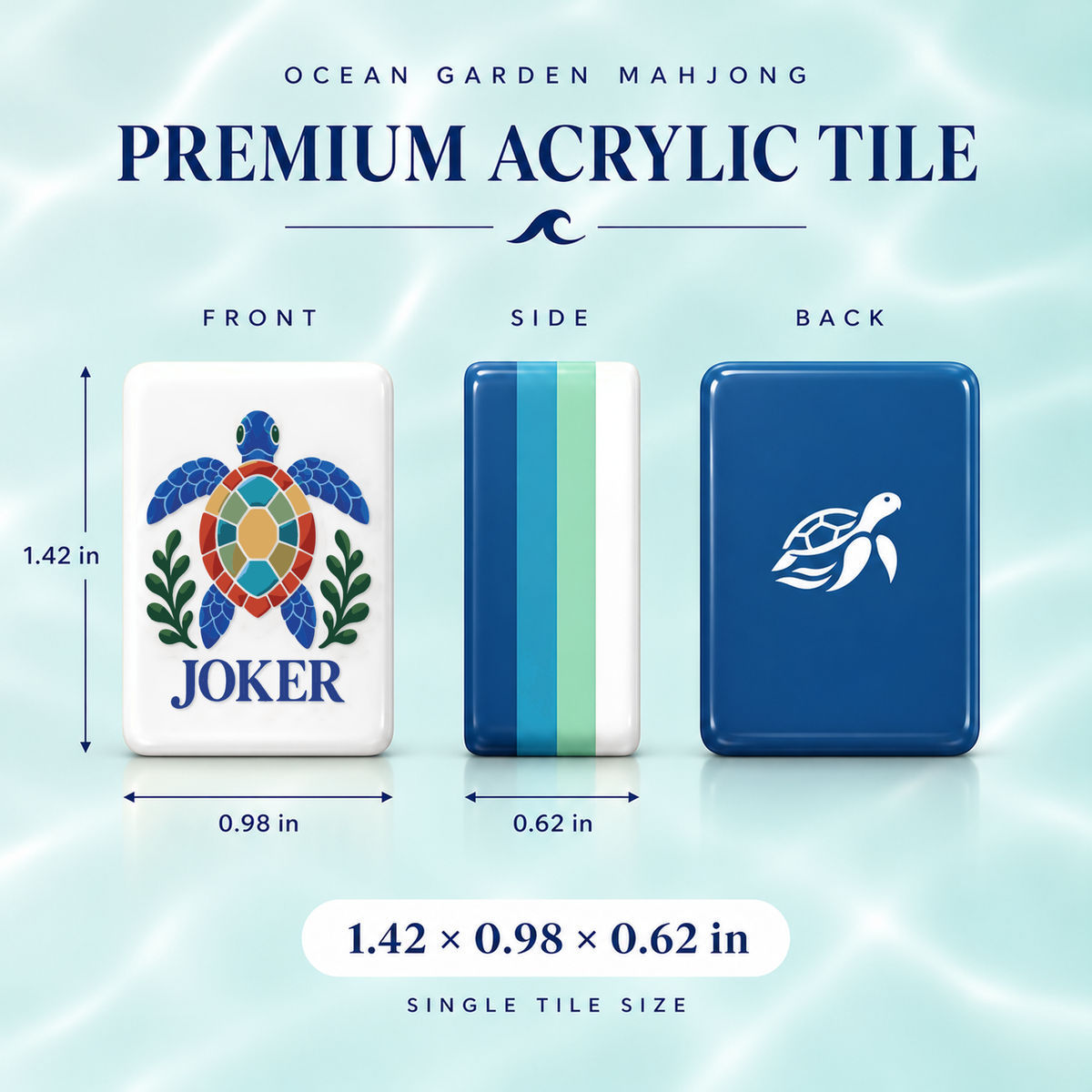
Large print mahjong sets feature tiles with bigger, bolder characters so players read them faster and with less eye strain. American mahjong sets sold by Mahstead come as 160-tile complete sets (152 playing tiles plus spares) with tile faces typically ranging from standard engraved designs to jumbo-style options. Tile size itself varies by manufacturer—there's no industry standard—so compare actual dimensions before ordering. Large print isn't always about tile size alone; it's about contrast, font weight, and material clarity. Most players choose large print to reduce mental fatigue during long games or to accommodate aging eyes. Since Mahstead ships free across the US, you can order, inspect fit and readability at your table, then decide if sizing works for your group.
Large print mahjong sets make tiles easier to read during play, especially for players with vision concerns or those playing under varied lighting. American mahjong sets sold by Mahstead come as 160-tile complete sets (152 playing tiles plus spares) with tile faces typically ranging from standard engraved designs to jumbo-style options. Tile size itself varies by manufacturer—there's no industry standard—so compare actual dimensions before ordering. Large print isn't always about tile size alone; it's about contrast, font weight, and material clarity. Most players choose large print to reduce mental fatigue during long games or to accommodate aging eyes. Since Mahstead ships free across the US, you can order, inspect fit and readability at your table, then decide if sizing works for your group.
What does "large print" really mean for mahjong tiles?
Large print doesn't mean one thing. Some sets have bigger physical tiles; others have the same tile size but heavier, darker engraving or paint that contrasts more against the background. A tile that's 1.2 inches square with crisp black characters reads better than a 1.4-inch tile with thin gray lines. Check the product photo against a ruler measurement—most listings show width and height. Ask the seller for close-up photos of character clarity, not just the full set.
🀄 Shop best-selling mahjong sets →

How does tile material affect readability?
Acrylic tiles—which Mahstead manufactures—hold engraved or printed details crisply because the character marks don't fade or wear off mid-game. Bamboo or bone tiles can yellow or scratch over time, making old engravings harder to read. Plastic tiles may show printing that chips or flakes. Acrylic also reflects light more evenly, reducing glare that strains eyes. For large print, material durability means your readable tiles stay readable for years.
What size and spacing actually work at your table?
If your usual mahjong table sits four players around a 36-inch playing surface, tiles held 12–18 inches from your eyes need to be roughly 1.0–1.3 inches square for comfortable reading without glasses. If players stand or sit farther back, or if anyone has significant vision loss, 1.3–1.5 inches works better. Measure your current set with a ruler, note which sizes felt easiest to read, then match that to the new set's dimensions before ordering. Test readability at your actual table—not standing in a shop or under store lighting.
What's the real cost difference between standard and large print?
Large print sets don't always cost more—it depends on whether you're paying for bigger tiles, better engraving, or both. Mahstead's best-selling mahjong sets range in style and detail level; see current pricing on each product page since prices vary by design complexity and material. A set with clearer engraving on standard-size tiles may cost the same as one with slightly larger tiles but thinner print. Compare character clarity in close-up photos, not just the advertised size. The best value is the set you'll actually use comfortably every week.
Who should buy large print, and why?
Player type | Why large print helps | What to prioritize | What to check |
Age 60+ | Reduced eye strain; fewer mistakes | Contrast and character weight | Photos of actual engraving |
Vision correction (glasses/contacts) | Easier to read without removing eyewear | Tile size ≥1.2 inches | Dimensions and glare reduction |
Low-light venues | Better visibility under lamps | Font boldness, not size alone | Photo under typical room lighting |
Long game sessions | Less fatigue across 2–3 hours | Consistent character clarity | User feedback on readability over time |
Mixed-skill group | Speeds up play; fewer "What tile is that?" | Bold design, good spacing | Size comparison to a coin |
🎁 See our most-loved mahjong sets & accessories →

What to check before you buy
Request close-up photos of tile faces at actual size—not just marketing shots of the whole set.
Measure your current set (if you have one) to know which size has felt comfortable.
Ask the seller whether characters are engraved (won't fade) or printed (may wear).
Check material: acrylic holds clarity longest; bamboo and bone age faster.
Confirm shipping: Mahstead offers free US shipping, so you can test at home and assess readability in your space.
Compare against the table distance: hold a photo 12–18 inches from your eyes at the height you usually sit to simulate gameplay.
Read player reviews (if available) for feedback on readability over time, not just first impressions.
Common mistakes when choosing large print sets
Assuming bigger always means better. A 1.4-inch tile with thin gray engraving reads worse than a 1.2-inch tile with bold black characters. Contrast matters more than size alone.
Ignoring your table setup. If your group plays on a mat with players standing, larger tiles help. If everyone sits close at a small table, standard size with crisp printing works fine. Test in your actual space.
Buying without seeing samples. Photos under shop lighting don't show how a tile reads under your home lamps or in sunlight. Order and examine at your table before committing to a second set.
Assuming all acrylic is equal. Engraving depth, character weight, and material finish vary. Ask whether the set is engraved or hand-painted; engraving lasts longer.
Skipping the test on players who'll actually use it. Vision varies by person. If your group includes players with different eyesight, pass a sample around at game night before ordering for the whole group.
How to talk to a seller about large print
When ordering, mention:
Your table size and seating distance ("We play at a 36-inch table, about 14 inches between eyes and tiles").
Lighting at your venue ("We play under standard overhead lamps, sometimes outdoors").
Any vision constraints in your group ("Two of us wear bifocals; one has macular degeneration").
How long typical games run ("We usually play 2–3 hours").
Material preference ("We want acrylic that won't fade over five years").
A good seller will ask these questions and recommend accordingly. Mahstead can show you engraved American mahjong sets with full specifications and clear close-up photos so you compare before ordering.
Pairing large print tiles with the right accessories
Large print tiles work best when paired with the right table setup. A mahjong mat with raised walls keeps tiles organized and reduces reaching—helpful when reading is already a focus. Racks with pushers let players hold and organize tiles without craning their necks. A well-designed mahjong bag protects your investment and makes setup easy week after week.
✨ Find your Mahstead set — free US shipping →

FAQ
Is there a standard size for "large print" mahjong tiles?
No industry standard exists. Large print typically means tiles 1.2–1.5 inches square with bold, high-contrast characters. Always compare to your current set and test in your playing space before ordering.
Can I upgrade just the tiles in my existing set to large print?
Not practically. Mahjong sets are sold as complete units with matched racks and cases. Buying a new large print set ensures all components work together and shipping covers the full package.
What's the difference between engraved and printed large print tiles?
Engraved characters are cut into the tile surface and won't wear away. Printed characters sit on top and fade with heavy use. Engraved large print lasts longer and maintains clarity over years of play.
Will a large print set slow down my game?
No. Bigger, clearer tiles actually speed up play because players recognize tiles faster and make fewer mistakes. Less time spent squinting or asking "What is that?" means faster rounds.
Does Mahstead offer large print sets in specific designs?
Yes. Mahstead's best-selling collection includes sets with varying engraving styles and clarity levels. Check product photos and dimensions to find the clarity and size your group needs. Free US shipping means you can order and test at home.
How do I know if a large print set will work before my whole group commits?
Order one set, bring a tile to your next game, and pass it around. Let each player hold it at their typical viewing distance. If everyone agrees it's easier to read, you've found your match.


View More
View More
View More
