
13579 Hands Mahjong Rule Explained (American)
Last updated: Nov 23, 2026
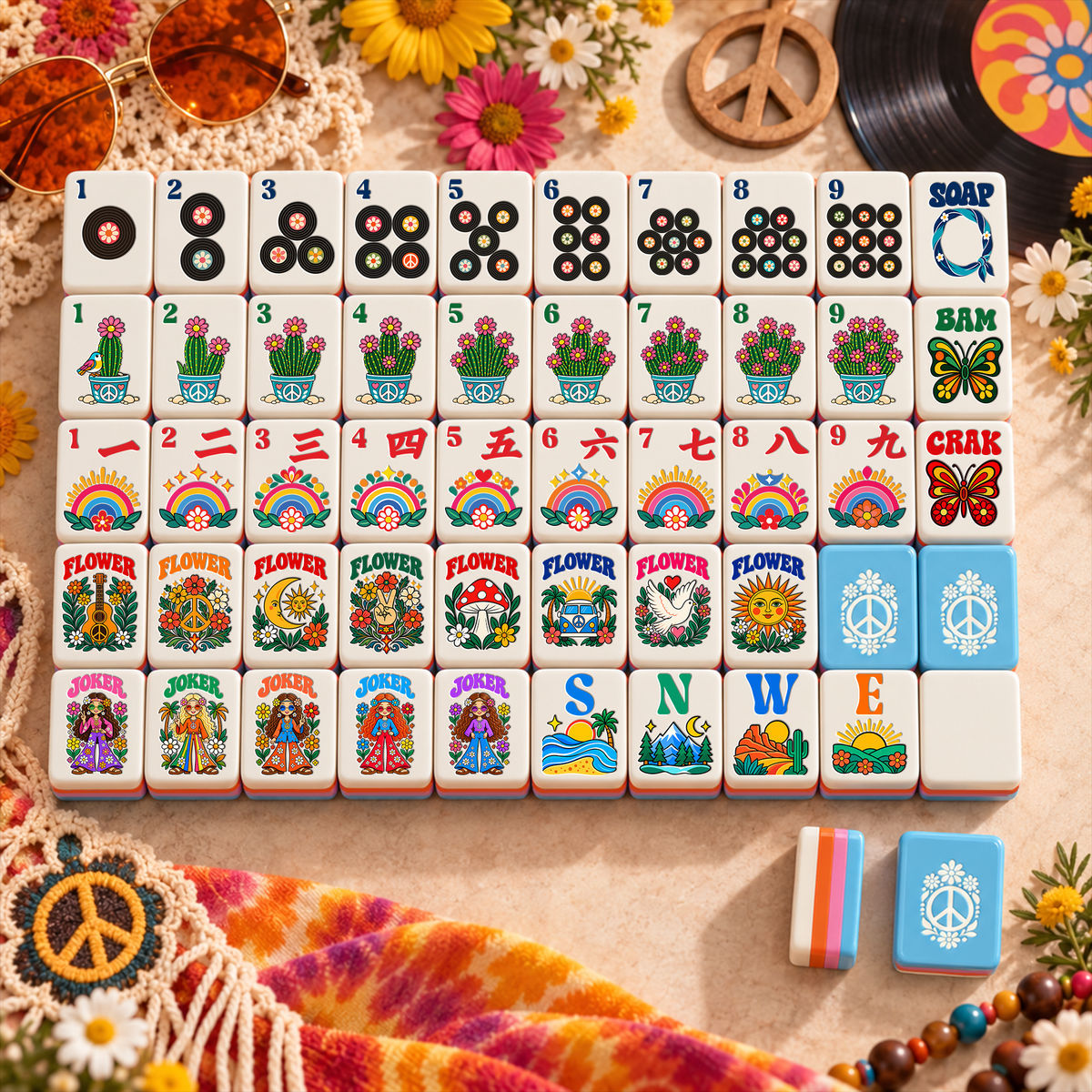
The 13579 hand in American mahjong is a winning hand made entirely of odd-numbered tiles: 1, 3, 5, 7, and 9 from the Bams, Craks, and Dots suits. You'll find it listed on the current year's National Mah Jongg League card in the "Consecutive" or "Patterns" section. The hand typically requires 14 tiles (five groups of three tiles each plus a pair, or one four-tile group plus three-tile groups plus a pair), all using only odd numbers—no evens, no honors allowed. You can use jokers to fill blanks or complete groups. The main catch: 13579 hands often look similar to neighbor patterns on the card, so you must match the exact tile count and grouping shown. Many players confuse this with even-number hands (2468) or mixed sequences.
What does "13579" actually mean in mahjong?
The numbers stand for the five odd digits: 1, 3, 5, 7, 9. In American mahjong, you build a winning hand using only tiles with these numbers across the three suited tiles (Bams, Craks, Dots). No honor tiles (winds, dragons, flowers) are allowed. No even numbers (2, 4, 6, 8). Every single tile must be odd. Think of it as the mirror image of the even-number hand pattern.

Where do I find 13579 hands on the card?
Open the current National Mah Jongg League card and look in the middle sections labeled "Consecutive," "Patterns," or sometimes "Like Numbers." You'll see rows that list tile combinations: each row shows a valid winning hand. Some rows display 13579 explicitly in the hand name or description. Most cards organize patterns by length (14 tiles shown across five columns) and group them by type. Scan for lines that use only 1s, 3s, 5s, 7s, and 9s—no 2s, 4s, 6s, or 8s. The card tells you exactly how many tiles to collect and in what grouping (pung, kong, quint, sextet, or pair). If you're new to reading the card, our guide to reading the mahjong card walks you through the layout step-by-step.
How do I actually build a 13579 hand?
Start with your hand (the 14 tiles you hold) and the discard pile. Collect tiles: collect three 1 Craks, four 3 Dots, three 5 Bams, two 7 Craks, and two 9 Dots—that's one valid 13579 shape. Use jokers to substitute for any odd-number tile you're missing. You cannot use a joker as a pair; it can only fill a spot in a pung, kong, quint, or sextet. Once your 14 tiles match exactly one hand shown on the card for that year, you declare "mahjong" and win the hand. The key: match the grouping and tile count shown on the card—if the card shows a quint of 5s, you need all four 5s plus a joker, not three 5s and a joker. Many players grab a hand that looks right but misses a detail and lose the hand.
🀄 Shop best-selling mahjong sets →
Common mistakes people make with 13579 hands
Mixing even and odd tiles: The biggest slip—grabbing a 4 Bam thinking it's close enough to a 3. It's not. Odd-only means zero even numbers.
Wrong grouping: You collect the right tiles but in the wrong pung/kong/pair format. The card is strict: if it shows three 1s, a quint of 3s, and two 7s, you cannot swap those groupings.
Using jokers as a pair: Jokers can never be the pair in any hand. They fill exposed groups only.
Confusing 13579 with 2468: It's easy to mix them up when you're scanning the card fast. Double-check: odd or even? Count the number parity before you claim.
Misreading the year's card: The card changes every spring. Hands valid in 2025 may not appear on the 2026 card, or they may shift sections. Always use this year's card—not last year's.
13579 vs. 2468 and other patterns: which is rarer?
Both odd and even hands require you to collect all same-parity numbers across three suits. Neither is inherently "easier"—it depends on the discard pile that game. The real difference is card placement: if 13579 hands cluster in one section of the card and 2468 hands cluster elsewhere, you may naturally draw into one more often. Some players track which patterns appear more frequently on consecutive years' cards; over time, the League balances them roughly equally. What matters for your strategy: know where both patterns live on your card, so when you're collecting tiles mid-hand, you can pivot quickly if the odd path stalls and the even path opens up. That flexibility wins more hands than obsessing over which pattern is "better."
Pattern | All Odd/Even | Tile Range | Honors Allowed | Joker Use | Difficulty |
13579 | Odd only (1, 3, 5, 7, 9) | Bams, Craks, Dots | No | Fills groups only | Medium |
2468 | Even only (2, 4, 6, 8) | Bams, Craks, Dots | No | Fills groups only | Medium |
Like Number | One suit, all numbers | Bams, Craks, or Dots (pick one) | No | Fills groups only | Medium–Hard |
Mixed Pattern | Varied suits, varied numbers | Bams, Craks, Dots | Yes (sometimes) | Fills groups only | Hard |
🎁 See our most-loved mahjong sets & accessories →
How to spot a 13579 hand early in play (strategy tip)
Watch the discard pile from the start of the hand. If early on, players are throwing odd-numbered tiles freely (lots of 2s, 4s, 6s, 8s hitting the table), the 13579 path is likely open. If you're holding three 1 Craks and a 3 Dot already, hold them and keep watching. When a neighbor discards a 5 Bam, it's a signal: grab it if you can call it, or note that the 5s are moving. Draw from the wall when no one has exposed a pung or kong yet—you have more control. Once someone exposes a large group (a kong of 7s, for instance), the pattern pool shrinks, and you'll know within three or four draws whether 13579 is still alive or dying. If it dies, pivot to another hand on your card. The players who win most often aren't those who commit to one pattern; they're those who read the tile flow and shift early.
✨ Find your Mahstead set — free US shipping →
What to check before you buy a mahjong set for 13579 play
Tile readability: You need tiles where the numbers are printed or engraved clearly enough to spot 1, 3, 5, 7, 9 at a glance, especially under game lighting. Acrylic sets with crisp number markings beat worn bamboo sets fast.
Joker count: A 160-tile set has enough jokers to fill typical gaps, but if your group plays several hands in a row and burns jokers, you might run low. Know how many joker spares come with your set.
Mat or rack: If you prefer mahjong racks with pushers, you'll organize odd and even tiles separately—a huge help for 13579 hands. A mat works fine too; just arrange tiles left-to-right by number and suit.
Card holder or stand: Keep the current year's card visible and flat. Many tables use a small easel or card holder to avoid squinting at a bent-up card.

FAQ
Can I use honor tiles (winds or dragons) in a 13579 hand?
No. The 13579 rule means odd-numbered tiles only. Winds, dragons, and flowers are not numbered, so they cannot be part of a 13579 hand.
If I'm one tile short of a 13579 hand, can I use a joker to fill the gap?
Yes—jokers substitute for any missing tile in an exposed group (pung, kong, quint, sextet). You cannot use a joker as the pair. If the card shows you need three 5 Dots and you have two, a joker can stand in as the third.
How often do 13579 hands show up on the National Mah Jongg League card each year?
It varies annually. The League includes odd and even pattern hands in most years, but the exact count and placement shift. Always check this year's card; don't rely on last year's memory.
Is a 13579 hand worth more points than a 2468 hand?
Points depend on the tile combination and grouping shown on the card that year, not on odd vs. even. Two different 13579 hands on the same card can have different point values. Check the scoring column on your card.
What's the fastest way to learn which hands on the card are 13579?
Scan the card's hand names or descriptions for "13579" or "Odd Numbers." Then flip through a few cards from past years to see how the League labels these patterns. You'll spot them faster with repetition. Many players also mark their card with a highlighter for quick reference during play.


View More
View More
View More
