
Korean Mahjong Strategy: Tile Reading, Offense & Defense Tactics
Last updated: Nov 23, 2026
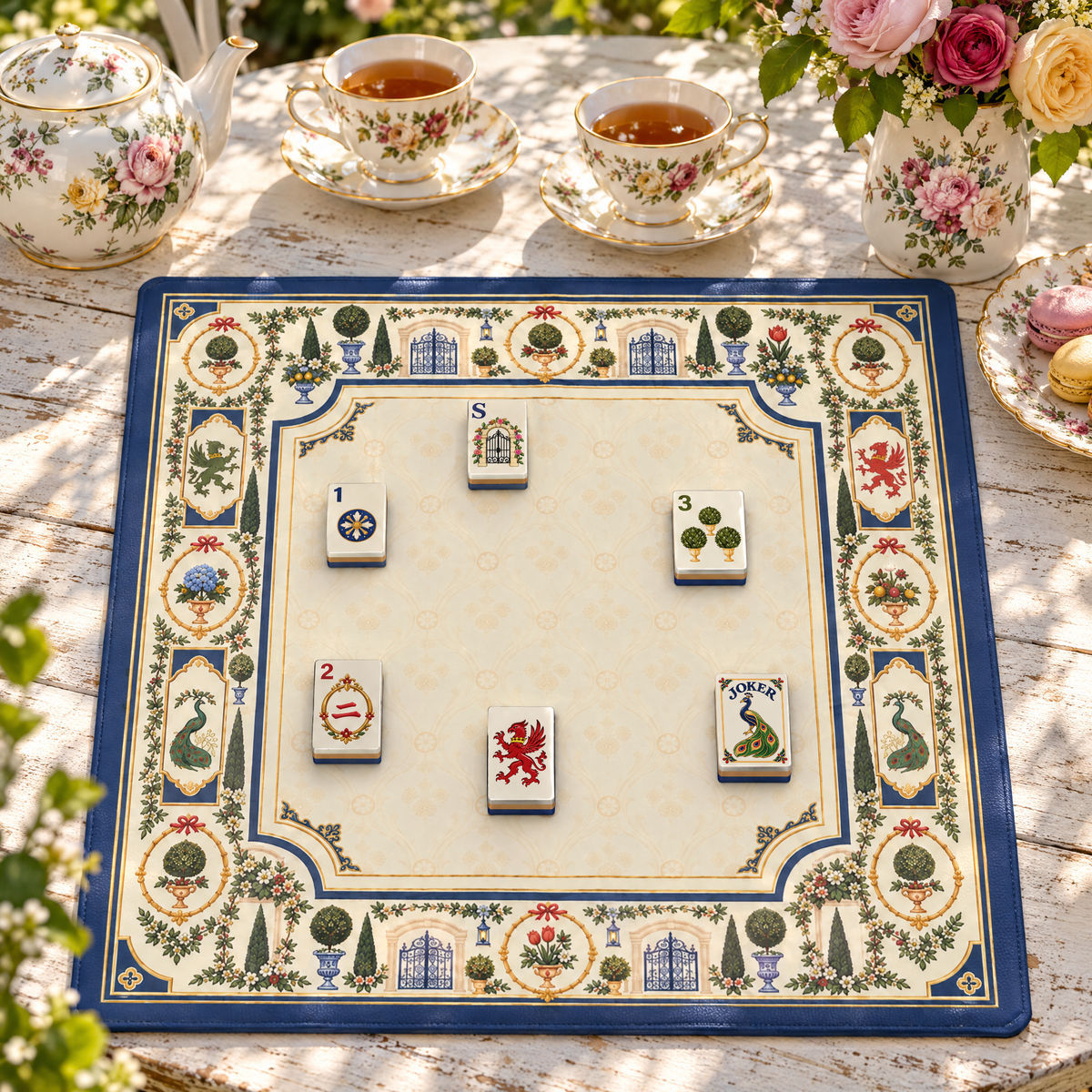
Korean mahjong strategy revolves around three pillars: rapid tile recognition, aggressive offense, and calculated risk-taking. Unlike American mahjong (which uses a fixed annual card), Korean play emphasizes immediate hand-building and fast discard cycles. The game uses 136 tiles—four copies each of 1–9 in three suits (Bams, Craks, Dots), plus 16 winds and four dragons—and allows both pungs (triplets) and chows (sequences like 3-4-5). Players win by completing a hand of four melds plus a pair before opponents, often within 10–15 minutes per round. Strategy centers on reading what opponents discard, predicting their holdings, and deciding whether to pursue a quick win or slow a neighbor's hand. Beginners mistake passive discarding for safety; advanced players know that timing your aggressive plays and watching discard order are the difference between winning streaks and folding hands. A quality set with clear tile visibility—like best-selling mahjong sets—helps you spot patterns faster at the table.
What is the core philosophy of Korean mahjong play?
Korean mahjong strategy rests on speed and adaptability. Unlike American play (which locks hands to a printed card each year), Korean variants reward players who build winning hands on the fly, adjusting to live tile flow. The game's fast rhythm—often 10–15 minutes per hand—means you cannot afford passive observation; you must read every discard, predict opponent holdings, and act decisively. The philosophy is offense-first: a winning hand is built by aggressive tile chasing and rapid meld completion, not by waiting for perfect conditions. This does not mean reckless; it means calculated aggression grounded in tile probability and opponent behavior.

How do you read opponent discards to predict their hands?
Discard order is the heartbeat of Korean mahjong strategy. Pay close attention to sequence of discards, not just individual tiles. If East player discards 1-Bam, then 2-Dot, then honors consecutively, they likely don't hold a straight suit and are culling weak tiles early. Conversely, if a player discards 5-Crak (a center tile) early, they may already hold a meld in that suit or have a complete alternative hand forming. Watch which suits get discarded most from each player; the suit they avoid is the one they're building. Corners (1s and 9s) and dragons discarded early signal they're not chasing a hand ending on those tiles. Track speed: fast early discards mean someone has a quick winning path. Slow discards suggest blocking or reworking. Mark the discard wall: if three 8-Dots have left the table and you hold two, your odds of completing that meld drop sharply. The player who discarded two 8-Dots early is statistically safer to discard toward now.
When should you play offense versus defense?
The timing of offense versus defense depends on hand speed and seat position. If you are dealer (or the prior winner), you carry aggressive advantage—play offense early, force the pace, and claim melds faster. If you are third or fourth seat in the round, play cautiously until one player accelerates; then switch gears. A practical framework: if you hold two complete melds plus eight tiles toward a third meld by draw round 4–5, go offense—call available tiles, discard aggressively into your strength (the suit you're building), and aim to win by round 8–10. If you hold scattered tiles with no clear direction by round 5, switch to defense: discard safe honors and corners, cover partner discards, and wait for melds to come to you. Never flip mid-hand without reason; indecision loses. If an opponent is on the brink of winning (you suspect one meld left), lock defense—discard nothing they've shown interest in and watch for their accelerated calling pattern.
What tile patterns and melds should you chase first?
Build melds in order of probability and completion speed. Pungs (triplets) close fastest because once you hold two of a tile, the third is a direct draw or a single call away; pursue pungs in your strong suit first. Chows (sequences) are slower because they require two specific consecutive draws or calls to complete; chase chows in suits where many low and middle tiles are already out (reducing draw randomness). Mixed hands combining pungs and chows in your strong suit accelerate winning; avoid spreading across two suits unless you discard one completely. A winning framework: by round 3–4, commit to one of two patterns: either two complete melds in one suit plus a pair (leaving you one meld away), or a 1-9 span (like 1-Bam, 2-Bam, 3-Bam + 7-Bam, 8-Bam, 9-Bam) where discard pressure is diffuse. Abandon weak tiles—anything you haven't called or drawn by round 5 has low probability. Move discards toward your declared strength; this speeds your own winning path and pressures opponents into guessing your end tile.
How does hand speed affect strategy in later rounds?
The later the round, the more aggressive the discard zone and the lower tolerance for tentative play. By round 8–10, most winning hands are on the board; players either accelerate or concede. If you enter round 8 without two complete melds, your odds of winning drop sharply—commit to one suit only and discard all others. Speed reads your competition: if three players have called melds by round 6, the fourth is either far ahead or locked in defense. If no one has called a meld by round 6, the tile flow is blocked; switch to defense and wait for a forced call. Track drawn tiles versus discarded tiles: early in the hand, discards dominate; late, drawn tiles drive play. Late-round strategy means trusting your strong suit absolutely—ignore peripheral suits entirely, discard their tiles ruthlessly, and bet on your meld completion. A common mistake is chasing two suits into round 10, hoping for a "miracle" 7th or 8th tile; it rarely comes, and you waste your early calling chances. Commit. Discard. Win or lose clearly.
Strategic Comparison: Build Patterns by Winning Speed
Pattern Type | Melds by Round 5 | Typical Win by Round | Discard Risk | When to Use |
Pure-suit pungs | 2 complete | 8–10 | Very low | You hold 2+ of three tiles already |
Mixed pungs + chow | 2 complete | 7–9 | Low | Balanced tile flow; suits are even |
Span hand (1-9) | 1–2 framed | 9–12 | Medium | Many middle tiles in discard pile |
Defensive lock | 0–1 only | 11+ (or loss) | High | No clear direction by round 4 |
Conclusion: Pure-suit pung hands win fastest; span hands are slow but safe from pressure; defensive play acknowledges defeat but stops bleeding points.
🀄 Shop best-selling mahjong sets →

What tiles should you keep versus discard early?
Early-round discards (rounds 1–4) set your strategic tone. Keep honor tiles (winds, dragons) only if they appear twice in your hand or fit a specific honor-heavy ending (rare in Korean play). Discard corners (1s and 9s) unless they appear in your strong suit or as a pair. Keep middle tiles (3–7) in your main suit; these are the cheapest to complete as chows and pungs. Prioritize: if you hold 1-Bam, 2-Bam, 3-Bam and 5-Bam, 6-Bam, 7-Bam, keep all six; discard the 4-Bam (completion is slow) and any tiles outside the Bam suit entirely. Discard by probability: if three 9-Craks are visible, discard your 9-Crak immediately (low draw probability remains). If no 1-Dots have appeared by round 3, hold yours; it's statistically rare and may become valuable.
How do you handle jokers and wildcards in Korean variants?
Not all Korean mahjong variants use jokers; some use white dragons or blanks as wildcards. If jokers are active, treat them as flexible builders, not finishers. Use a joker to complete a pung or chow when you're one tile short and time is critical (round 8+), but never discard a joker early—it's insurance for late-round acceleration. If a joker is part of the discard, assume someone forced it into play; they're close to winning. Some Korean tables allow jokers to substitute for any tile; others restrict them. Clarify house rules before the hand starts. A common error is wasting jokers on low-priority melds; save them for your final meld when draw odds matter most. In American mahjong (which uses jokers as call-eligible tiles), strategy differs—jokers are declared openly and cannot stand alone. Korean rules are looser; exploit that by holding jokers for late-game decisions.
🎁 See our most-loved mahjong sets & accessories →
What mistakes kill winning streaks at the Korean table?
Mistake 1: Indecisive suit switching. Players hold 5–6 tiles in Bams, 4 in Craks, 3 in Dots, and discard randomly from all three. This fragments your hand and ensures loss. Commit to one suit by round 3; discard the rest.
Mistake 2: Chasing called tiles after two calls. If an opponent has called (melded) two 5-Bam sets, discard your 5-Bam immediately. Do not hold it hoping for a third; the odds are gone, and you block your own mental clarity.
Mistake 3: Defensive hesitation in winning hands. If you have two complete melds plus a pair and one tile to win, play offense. Call melds aggressively, discard your winning suit's neighbors (4-Bam and 6-Bam if you're chasing 5-Bam), and pressure opponents into error. Passive play lets faster hands overtake you.
Mistake 4: Ignoring discard pile structure. The discard pile is a mirror of hand direction. If you haven't looked at discards in two rounds, you're flying blind. Glance every turn; it takes two seconds and costs zero points.
Mistake 5: Staying in a dead hand too long. By round 7, if you hold no complete melds and no clear path to two melds, fold mentally and play defense. Holding hope into round 10 while others win wastes your focus and clouds judgment.
What to check before you buy tiles for Korean mahjong play
When shopping for a set suited to Korean or fast-paced play, prioritize tile clarity. Korean mahjong's rapid pace demands instant visual recognition; dull or faded tiles slow your reading speed and cost you strategic advantage. Look for sets with:
Clear suit differentiation: Bams (bamboo), Craks (circles), Dots should be visually distinct even in peripheral vision
Legible numerals: Numbers 1–9 readable at arm's length without leaning in
Good weight and feel: Tiles that don't slide unexpectedly during rapid discards
Adequate spare jokers: Faster games burn through backup tiles; ensure your set carries enough
Our best-selling mahjong sets are designed for clarity and speed—acrylic construction means no warping, consistent color, and visibility from all table angles. If you host weekly Korean games, a durable mat with clear point markings also speeds scoring and reduces argument. Consider mahjong mats that include discard zones; organizing the visual field reduces mental load and lets you focus on strategy.
✨ Find your Mahstead set — free US shipping →
How does Korean strategy differ from American mahjong?
American mahjong is hand-locked: every legal winning hand appears on the National Mah Jongg League card published each spring. A player studies the card, memorizes patterns, and builds toward specific sequences. Strategy revolves around hand selection and tile-counting. Korean mahjong is open-ended: winning hands emerge from live play, not a preset list. Strategy centers on real-time tile reading, opponent behavior, and aggressive execution. American play includes the Charleston (an elaborate 18-tile pass before play begins), which is absent in Korean variants. American mahjong forbids chows in exposed (called) melds—you can only expose triplets, quads, and sextets—while Korean allows both. Call timing differs: American calls are announced; Korean sometimes allows silent melds. Joker rules diverge sharply (how jokers work in American play is rigid and formal; Korean is flexible). Scoring systems diverge too: American uses point cards; Korean often uses chip gambling or simpler flat scoring. If you are transitioning from American to Korean play, expect faster pace, less preparation, and higher reliance on in-game instinct.

FAQ
What is the best opening strategy for Korean mahjong?
Discard honors (winds, dragons) and corners (1s, 9s) in the first two rounds unless they appear twice. Keep two or three tiles in your intended strong suit; consistency signals commitment. By round 3, commit fully to one suit and discard all others ruthlessly.
How do you know when an opponent is close to winning?
Watch for acceleration: fewer discards per round, faster hand movement, and repeated calls in the same suit. If they've called two melds in one suit by round 5, assume they're hunting a third in that suit. Discard that suit immediately and observe their reaction.
Should you ever hold three suits into round 5?
No. By round 5, holding three active suits guarantees loss. Commit to one; abandon the other two. Tentative play in Korean variants is fatal. If you cannot decide, default to your strongest suit (most complete melds or best draw history).
How does position (dealer, seat 2, 3, 4) change strategy?
Dealers and the prior winner play offense early (rounds 1–4) to leverage advantage. Seats 3 and 4 play defensive or neutral until a dominant hand emerges, then shift. Late seats call melds more cautiously; early advantage seats call more freely.
What is the riskiest error in hand-building?
Chasing two suits equally. Pick one; ignore the other. Splitting focus splits your tile draws and guarantees scattered melds and a late hand. Speed wins; speed requires commitment. Commit or lose.
How often should you check the discard pile?
Every turn. Glance at the last three discards and the suit distribution; it takes two seconds and reveals hand direction. If you miss two turns of discard watching, you lose critical opponent intelligence and make strategic errors.


View More
View More
View More
