
Korean Mahjong Scoring: Rules, Point Values & Strategy
Last updated: Nov 23, 2026
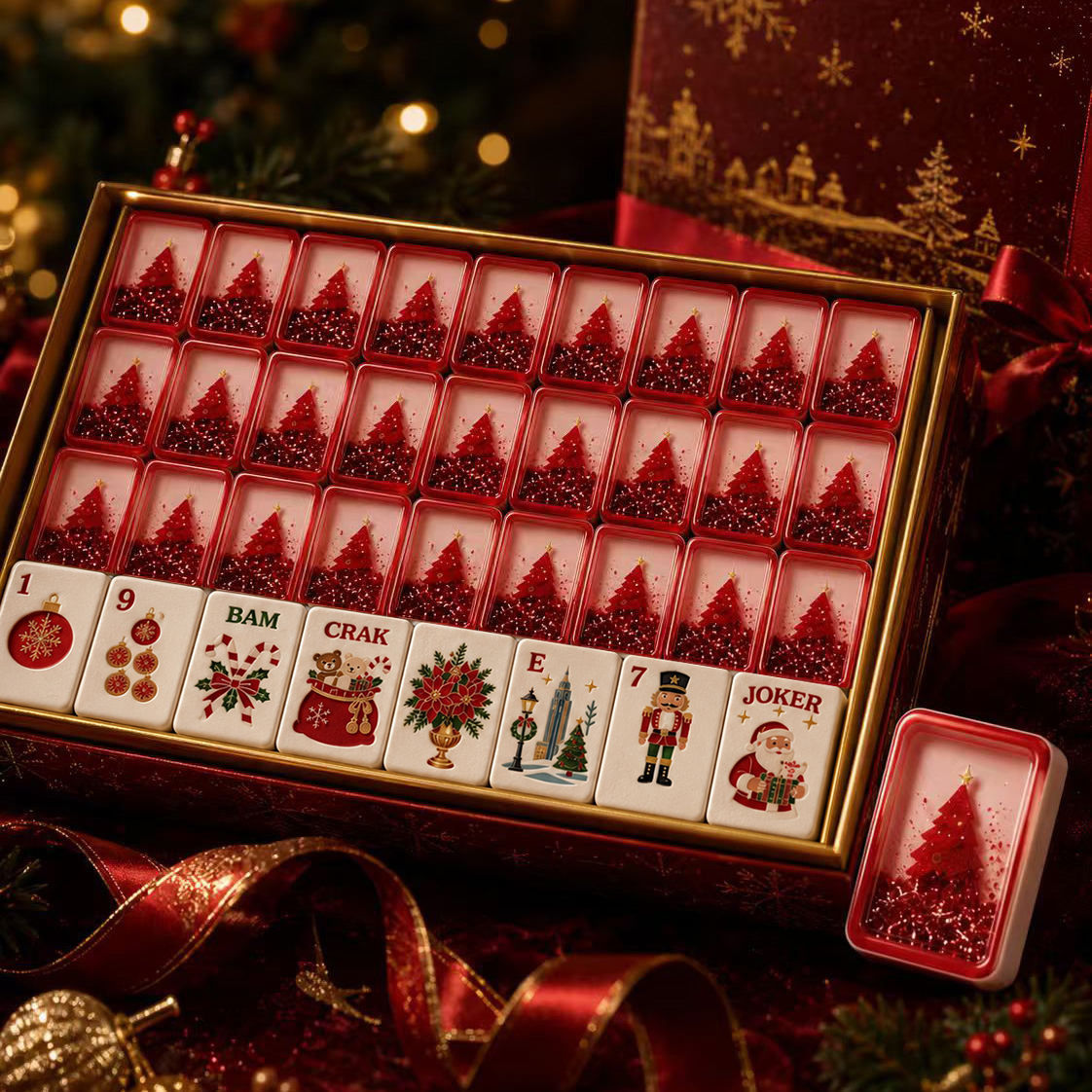
Korean mahjong scoring varies by region and house rules, but the most common system—played with 144 tiles (three suits 1–9, four winds, three dragons, eight flowers, and eight bonus tiles)—awards points based on melds (pungs, kongs, chows), winning conditions (self-draw versus discard win), and honor tiles. A basic hand starts at 8 points and multiplies upward by "fans" (combinations that double the score: 1 fan = ×2, 2 fans = ×4, etc.). Winners typically collect payments from all three opponents. The fastest hands score 32 points base; the highest hands reach 500+. Payment is calculated player-to-player—if Player A wins on Player B's discard, Player B pays double; if Player A draws their own tile, all three pay. House rules vary sharply by city and table, so confirm scoring before sitting down. Korean mahjong differs fundamentally from American mahjong, which uses 152 tiles, jokers, and no chows—and hands come only from the current year's National League card with fixed point values. 🀄 Shop best-selling mahjong sets →
How do Korean mahjong fans (points multipliers) work?
In Korean mahjong, a "fan" is a scoring multiplier earned by completing specific tile patterns or conditions during play. One fan doubles your base score; two fans quadruple it; three fans multiply by eight, and so on. Common fans include: pung of dragons (one fan), pung of winds (one fan), all terminals (two fans), all simples (one fan), self-drawn win (one fan), win on first discard (one fan). Most house games cap at three or four fans per hand to keep games moving. The more fans you score, the higher your payment from each opponent—but fans are cumulative, so stacking multiple conditions creates exponential payouts. Unlike American mahjong's preset card, Korean scoring lets players pursue multiple paths to high scores in real time.

What's the difference between a win by discard and self-draw in Korean scoring?
In Korean mahjong, the method of winning changes who pays and how much. If you win by calling an opponent's discard (kong's last tile, or claiming a discard before someone else), you receive a single payment from the player who discarded the winning tile—they pay double points. If you draw your winning tile from the wall (self-draw or "tsumo" in some variants), all three opponents pay you the base amount each. Self-draw wins are worth more total money because three people pay instead of one, though individual payments are not doubled. This distinction drives strategy: some players avoid discarding when opponents are close to winning, while others rush to self-draw rather than wait for a discard. House rules sometimes add bonus points for self-draw victories to sweeten the incentive.
How do limit hands work in Korean mahjong?
Some Korean mahjong tables use a fixed-payment cap (a "limit" or "ceiling") to prevent runaway losses—common limits are 300, 500, or 1,000 points depending on house rules. Once a hand scores high enough to reach the limit, the winner receives the limit payment from each opponent, regardless of the true calculated score. A few elite hand patterns (seven pairs, all honors, all one suit) may automatically qualify for the limit without calculation. Limits keep the game social and protect players from devastating single-hand losses, especially in friendly games. However, not all Korean mahjong groups use limits; some play unlimited scoring where a single spectacular hand can pay 2,000+ points. Always clarify the table's limit rules before buying in, as this dramatically changes bankroll risk and strategy—tight hands become viable if payments are capped, while aggressive play rewards earlier winners in unlimited games.
What hand patterns score the most points in Korean play?
The highest-scoring patterns typically involve terminals, honors, or unusual combinations that are statistically rare. All terminals (1 and 9 of each suit only) scores 2–3 fans. All honors (winds and dragons only) scores 3–5 fans depending on composition. Seven pairs (if your house allows this winning shape) scores 2–3 fans automatically. All one suit (any single suit plus honors) scores 2–3 fans. Dragon pung plus wind pung plus matching bonus tiles stacks fans quickly. Self-drawn all terminals can trigger both the terminal fan and the self-draw fan, multiplying to 8× or 16× base. Korean players prize "chicken hands" (simple hands worth 1–2 fans that win fast) for cash efficiency, but "big hands" (terminals, honors, all one suit) are the prestige wins. The rarest, most difficult patterns earn the most—and house rules sometimes add bonus multipliers to ultra-rare combos like "all green" (green dragons + green bam tiles in one suit variant).
How do Korean scoring rules differ from American mahjong?
American mahjong uses exactly 152 tiles (108 number tiles, 16 winds, 12 dragons, 8 flowers, plus 8 jokers) and draws hands only from the National Mah Jongg League's printed annual card—a player cannot legally win a hand not listed on that year's card. Scoring is fixed per hand: a simple hand is worth one point, a complex hand might be worth two or three, and payouts are always 1 unit per point from each opponent. No chows (number sequences like 1-2-3) can be called or exposed; only pungs (3 identical), kongs (4 identical), quints (5), and sextets (6) are exposed. American games use the Charleston (a ritualized pre-game tile pass) and require exactly four players. Korean mahjong typically uses 144 tiles (no bonus flowers/jokers in basic play), allows chows (sequences), awards points by pattern type and multiplier (fans), and can accommodate three or four players. American games are slow, structured, and card-dependent; Korean games are faster, more flexible, and reward on-the-fly pattern reading. If you're learning both, start with the fundamental difference: American = fixed card, no chows, simple points; Korean = open scoring system, chows allowed, fan multipliers.

Quick Comparison: American vs. Korean Mahjong Scoring
Aspect | American Mahjong | Korean Mahjong |
Tiles in play | 152 (108 + 16 winds + 12 dragons + 8 flowers + 8 jokers) | 144 (108 + 16 winds + 12 dragons + 8 flowers) |
Hands | Fixed on National League card only | Player-created patterns (not preset) |
Sequences (chows) | Never exposed or called | Allowed and exposed |
Points per hand | 1–3 points, preset | 8+ points base, multiplied by fans (×2, ×4, ×8, etc.) |
Win types | Discard only | Discard or self-draw (self-draw pays from all three) |
Players | Exactly 4 | 3 or 4 |
Speed | Slow (card-lookup per hand) | Fast (pattern-recognition) |
Payout per unit | 1 unit from each opponent | Base × fans × multiplier from each |
House rule variance | Low (League card is standard) | High (limits, bonus patterns vary by table) |
🎁 See our most-loved mahjong sets & accessories →
Common scoring mistakes Korean players make
Mistake 1: Forgetting to count all applicable fans. A hand might qualify for self-draw and terminal and pung-of-dragons simultaneously—beginners often claim only one fan. Solution: before declaring a win, list every fan condition met, then multiply the base. Mistake 2: Confusing who pays whom. If you win on Player B's discard, only Player B pays you double; Players C and D don't pay unless the table uses a different rule. Solution: clarify payout direction before the first hand—write it down if needed. Mistake 3: Not confirming house limits. Playing at a table with a 300-point limit when you assumed unlimited can flip your entire bankroll strategy. Solution: ask the table host for a one-minute rules summary before sitting. Mistake 4: Chasing fans instead of winning. Holding out for a big hand while opponents get closer to completion often costs you the entire round. Solution: balance greed with speed—a sure 2-fan win beats a probable 4-fan bust.
What to check before you buy a mahjong set for Korean play
Before buying a set, confirm: (1) Tile count and composition. Korean mahjong traditionally uses 144 tiles (no jokers). If you buy a best-selling acrylic set with 160 tiles (which includes spare jokers and blanks for American play), you'll have extra tiles that won't go in the wall, but you can still play Korean rules—just set aside the jokers and blanks. (2) Tile visibility and size. Korean play moves fast, so larger tiles (engraved acrylic sets are easier to read than small, glossy tiles) help you spot patterns quickly. (3) Racks or pushers. Korean players benefit from mahjong racks with pushers to organize melds neatly and speed up calls—many house games expect you to have your own racks. (4) Mat or table space. A mahjong mat with clear zones (discard pile, wall, meld areas) eliminates disputes over tile placement and keeps games flowing smoothly. (5) House rules documentation. Ask the table for their specific fan definitions, limits, and bonus patterns—these vary by region and group, so a rulebook from Seoul might not match your Dallas table.
✨ Find your Mahstead set — free US shipping →
Example hand: calculating a Korean mahjong win
Setup: You hold three 5 Dots (a pung), three East winds (a pung of honor), a chow (sequence) of 1–2–3 Craks, two white dragons (a pair), and three 7 Craks. Your last tile is the 7 Craks, drawn from the wall (self-draw). The table uses a 300-point limit and plays unlimited fans.
Step 1: Confirm your melds. Pung of 5 Dots ✓, pung of East winds ✓, chow 1–2–3 Craks ✓, pair of white dragons ✓, pung of 7 Craks ✓. Total = five melds = valid win.
Step 2: Count fans.
Pung of honor (East): 1 fan
Self-drawn win: 1 fan
No all-simples, no terminals, no all one-suit, no all honors
Total fans = 2 fans = ×4 multiplier.
Step 3: Calculate points. Base 8 × 4 (fans) = 32 points per opponent.
Step 4: Apply limit check. 32 points is below the 300-point house limit, so no cap applies.
Step 5: Collect payment. All three opponents each pay you 32 points. You gain 96 points total; each opponent loses 32 points.
If you had won on an opponent's discard instead: Only that one opponent would pay you double = 64 points from them; the other two would pay 0. You'd gain 64 points total—significantly less than self-draw.

FAQ
Can you play Korean mahjong with an American mahjong set?
Yes. American sets have 160 tiles (152 playable + 8 spares); Korean rules use 144. Simply remove the jokers and extra blanks and play Korean patterns. You won't use the National League card—scoring is by hand recognition, not preset combinations. Both variants use the same three suits, winds, and dragons.
Is Korean mahjong faster than American mahjong?
Generally yes. American games require card lookup for each winning hand and allow only exposed pungs/kongs (no chows), which slows play. Korean games score on-the-fly by pattern recognition and allow chows, so players declare wins faster. Expect Korean hands to end in 5–10 minutes; American hands often take 10–15 minutes because of card verification.
What happens if two players draw the winning tile at the same time in Korean play?
House rules vary. Most tables award the win to the player sitting closest to the discarder, or to the player who called it first. Some tables declare a "dead hand" and the round replays. Clarify this edge case with your table host before playing, as tie-breaking rules are inconsistent across groups.
How much money should I bring to a Korean mahjong game?
It depends entirely on house limits and fan frequency. A table with a 300-point limit and 1-point = $0.50 payout means maximum losses of $150 per hand from one opponent. Many casual groups use 1-point = $0.10 or play for points only (no cash). Ask the table for typical hand sizes and whether a limit exists before buying in.
Are Korean mahjong scoring rules standardized, or do they change by city?
Scoring is highly variable by region, city, and even individual tables. Seoul, Busan, and diaspora communities in North America often use different fan definitions, limits, and bonus patterns. There is no official Korean Mahjong League equivalent to the American National Mah Jongg League, so always ask the table host for their house rules in writing before your first hand.
What's the easiest fan to score as a beginner in Korean mahjong?
Self-drawn win (1 fan) and pung of honor tiles (1 fan each) are the most frequent. If you can hold onto a wind or dragon pung and draw your own winning tile, you'll hit 2 fans (×4 multiplier) quickly. Chows are also easy to form, so practice building sequences alongside pungs to open more winning paths.


View More
View More
View More
