
Kokushi Musou in Riichi Mahjong: The 13-Unique Hand Explained
Last updated: Nov 23, 2026
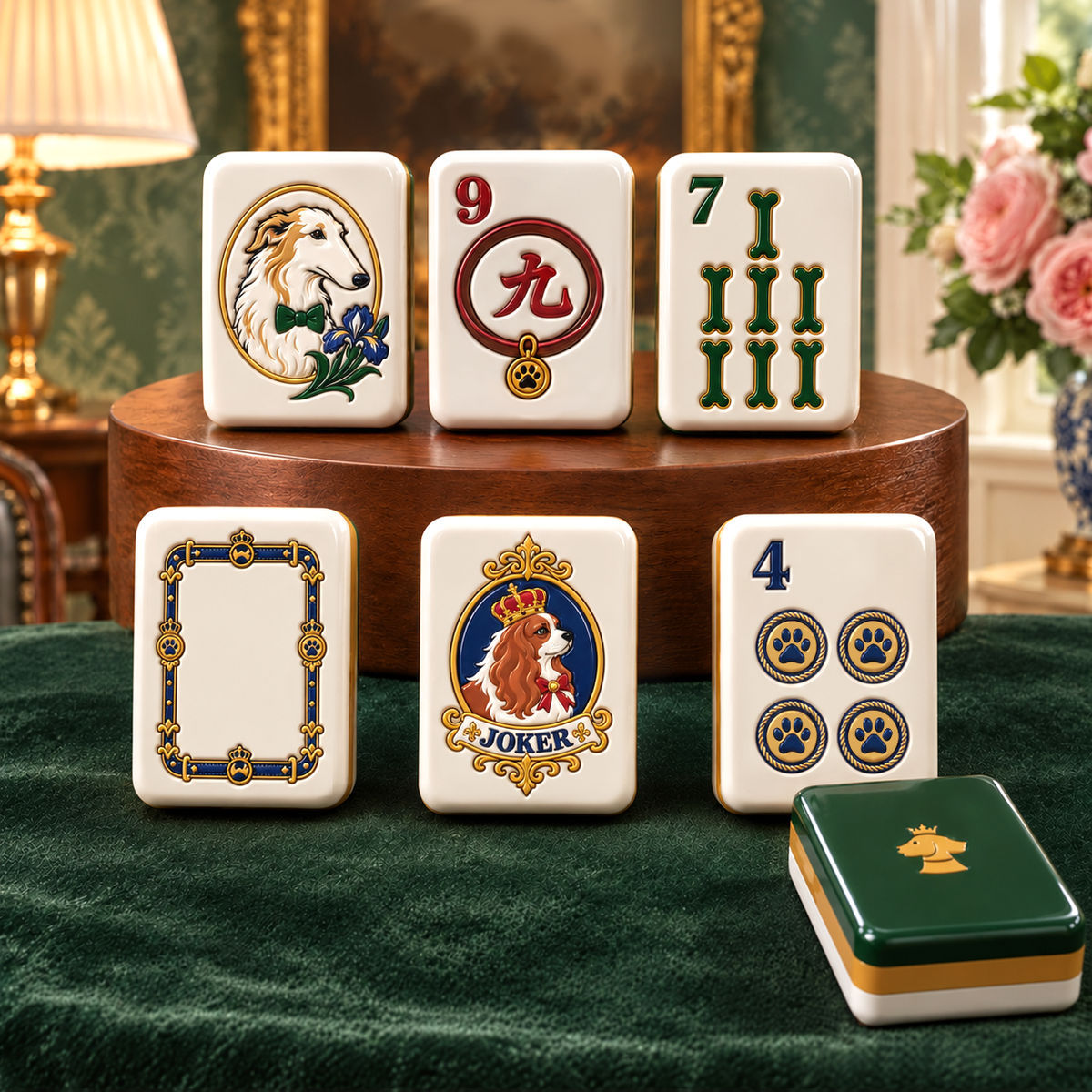
Kokushi musou ("peerless hand") requires you to collect one of each terminal tile (1 and 9 of all three suits) and all four wind and dragon types, then add a matching pair to any of those 13 types—13 unique tiles plus one duplicate. It is not a sequence or combination but a special yaku (winning pattern) worth 13 base points in Riichi scoring, making it one of the highest-value hands. You build it slowly over many turns; drawing a duplicate of a terminal or honor you already hold advances you toward the pair. Kokushi is much rarer than a standard hand because you must hold seven specific types without overlap before the final draw. Unlike American mahjong's fixed yearly card, Riichi mahjong's yaku are universal and timeless—kokushi is always legal and always high-scoring. Most players chase it only when they already hold 10+ of the 13 unique types; otherwise the hand is too fragile and you'll run out of tiles before completing it.
Kokushi musou (国士無双) is a one-of-a-kind hand in Riichi mahjong: you need exactly one tile from each of the 13 terminal and honor types, plus one matching pair. It scores higher than most standard patterns and ranks among the rarest wins at the table.
Why Is Kokushi Called "Peerless"?
The name kokushi (国士) means "national hero" and musou (無双) means "unparalleled." Together, the hand symbolizes a solitary excellence—one representative from every warrior class (terminals and honors) standing alone. In classical Japanese, terminals and honors were called the "13 honorable tiles," so collecting them all signified gathering every type of strength. The metaphor stuck; the hand remains a prestige win even in casual play. You're not chasing pairs or sequences; you're claiming the entire noble army in one turn.

What Are the 13 Unique Tiles You Need?
The 13 terminals and honors are: 1 Bam (bird), 9 Bam, 1 Crak, 9 Crak, 1 Dot, 9 Dot (white), East, South, West, North, Red Dragon, Green Dragon, and White Dragon. You must hold exactly one copy of each. Your 14th tile (the winning tile) must be a duplicate of one of these 13. For example: 1 Bam, 9 Bam, 1 Crak, 9 Crak, 1 Dot, 9 Dot, East, South, West, North, Red, Green, White, and another East completes the hand. The pair can be any of the 13; it doesn't matter which one you double. The hand is complete when you draw or claim a tile that matches one you already hold, forming a pair while the other 12 types remain singular.
How Does Kokushi Score in Riichi Mahjong?
Kokushi is a "yakuman" equivalent—worth 13 base points (counted as a single yaku, not multiplied by other yaku). In Riichi point conversion, that translates to mangan (8,000 points for the discarder to pay when it's their fault, or splits among non-discarders if self-drawn). Because it's so rare and powerful, kokushi cannot be combined with other yaku for scoring multipliers; it scores as itself alone. The high base value reflects its difficulty: you're holding 13 separate tile types, each of which appears in only 4 copies in the deck, and you need to draw exactly the right tile at the right moment. Even veteran players see kokushi maybe once every 50 sessions.
When Should You Chase Kokushi vs. Fold?
Experienced Riichi players use a simple rule: chase kokushi only if you hold 10 or more of the 13 unique types with fewer than 5 turns elapsed. If you reach turn 8 and have only 8 unique types, the probability of completing in time drops sharply—you'll likely discard away needed tiles as pressure mounts. Count your unique types honestly; if you're missing 4 or more and the hand is already in motion (7+ discards on the table), abandon it and build a standard hand instead. The cost of a dead hand is higher than the reward of a delayed kokushi. Watch also for your opponents' discards: if they've thrown away multiple 1s or 9s early, your chances of drawing the pair you need have shrunk. Pivot quickly to a backup pattern (a simple tanyao or toitoi hand) that uses the tiles you've already gathered.
How Does Kokushi Differ from American Mahjong?
American mahjong, played with engraved American mahjong sets, changes hands every spring via the National Mah Jongg League card and allows jokers (wild tiles) in many positions. Riichi mahjong, the centuries-old Japanese standard, uses fixed yaku (patterns) year-round and has no wild jokers—every tile must be genuine. Kokushi exists only in Riichi; American mahjong has no equivalent hand because the card dictates all legal combinations. Riichi is also turn-based with strict discard sequences and penalty rules, whereas American play allows more flexibility in exposure and calling. If you've learned American mahjong, switching to Riichi requires unlearning jokers, the seasonal card, and the Charleston tile-passing ritual. However, the tile suits, winds, dragons, and basic counting remain recognizable.
🀄 Shop best-selling mahjong sets →

Comparison: Kokushi vs. Other High-Value Riichi Hands
Hand | Tiles Needed | Rarity | Base Points | Why It Matters |
Kokushi | 13 unique terminals + honors + pair | Extreme | 13 | Legendary; no sequences or pairs required elsewhere |
Ryuisou (all green) | All green tiles (2, 3, 4, 6, 8 Bam, green dragon) | Very rare | 6 | Simpler color rule; easier to build |
Tsuisou (all honors) | Winds + dragons only + standard melds | Rare | 6 | Similar to kokushi but allows melds |
Chinitsu (all one suit) | One suit only + standard melds | Common | 5–6 | Fast to build; low barrier to entry |
Sanshoku (three colors) | One number across 1, 5, or 9 of each suit | Moderate | 2–4 | Good stepping stone; teaches tile counting |
Kokushi stands apart because it ignores sequences and pairs in favor of pure type diversity. No other yaku demands that you hold seven unrelated categories at once.
How to Practice Kokushi Without a Riichi Set
If you play American mahjong primarily, you can still train kokushi-thinking using best-selling mahjong sets. Lay out one copy of each terminal and honor tile on a mat, then practice adding a 14th tile (the pair) to each position. Ask yourself: which pair is most likely to appear in a random draw? Which is least? Time yourself: how fast can you spot when you're one tile short of kokushi if you hold only 12 unique types? These mental exercises build the pattern recognition you'll need when you transition to Riichi or play alongside Riichi enthusiasts. You can also watch video replays of professional Riichi tournaments online; commentators often highlight kokushi builds in real time, showing you the exact moment a player pivots away or commits to chasing.
Building Your Own Riichi Mahjong Awareness at Home
If you host weekly games and want to include Riichi players or explore the variant yourself, set aside time for a "variant night" once a month. Invite a Riichi-fluent friend to teach and call your hands according to Riichi rules. Use a standard best-selling mahjong sets tile set—tiles are identical across American and Riichi play; only the rules and scoring change. Keep a printed score sheet and a yaku reference card on the mahjong mat so all players can look up hand values. This low-pressure introduction helps you and your group understand kokushi in context: when does a player actually chase it? What does the table energy feel like when someone's one tile away? How does everyone react when it finally lands? These moments cement the yaku in your memory far better than theory alone.
🎁 See our most-loved mahjong sets & accessories →
What to Check Before You Buy a Riichi-Ready Set
If you're buying tiles specifically to learn Riichi or practice kokushi, verify that your set includes all 13 unique terminals and honors in sufficient quantity. Standard Riichi sets contain 136 tiles (four copies of every unique tile type). Check that the suit colors are distinct and the tile faces are clear under table lighting; many Riichi players prefer bone-and-bamboo or plastic sets with embossed numerals over smooth acrylic, because the tactile grip helps you feel your hand shape even when tiles are face-down. Confirm the tile size fits your hand and any racks with pushers you own (many overlap between American and Riichi standards). If you play at a club or tournament, check whether they supply tiles or if you need to bring your own. A durable travel bag with compartments protects tiles during transport and keeps scoring chips, reference cards, and dice organized in one place.
✨ Find your Mahstead set — free US shipping →

FAQ
Can you win kokushi on the first turn?
No. You draw 13 tiles on your first turn, leaving you one tile short of the 14-tile hand needed to win. Kokushi can be completed only on your second turn or later, when you draw or claim a 14th tile that matches one of your existing 13 unique types.
Does the pair have to be a specific tile?
No. The pair can be any duplicate of the 13 terminal or honor types. Most players prefer pairs of tiles they already need for other yaku (like East wind if they're building a hand with wind pungs), but strategically, any pair completes the hand equally.
What if I discard a terminal or honor by accident?
Your kokushi hand is no longer viable. If you discard, say, the 1 Bam when you're holding the only copy, you cannot win kokushi that round because the deck now has no other 1 Bam available to draw. Carefully track your discards and your hand composition on every turn.
Is kokushi worth chasing if I have seven unique types and 12 turns left?
Not recommended. Each turn, the probability of drawing a tile you need shrinks. At seven types with 12 turns remaining, you're drawing 12 tiles from roughly 100 available; odds of hitting all six missing types plus a pair are below 5%. Switch to a standard hand and avoid a dead draw.
How does kokushi rank compared to a yakuman in Riichi?
Kokushi is a yakuman-level hand in most Riichi rule sets, worth the same as other one-of-a-kind patterns like suanko (four concealed pungs) or daisangen (three dragons combined). It is not higher than yakuman; it is yakuman. Some tournament rules award bonus points for rare hands, but base scoring remains equivalent.


View More
View More
View More
