
British Mahjong How to Count Points: Beginner's Guide
Last updated: Nov 23, 2026
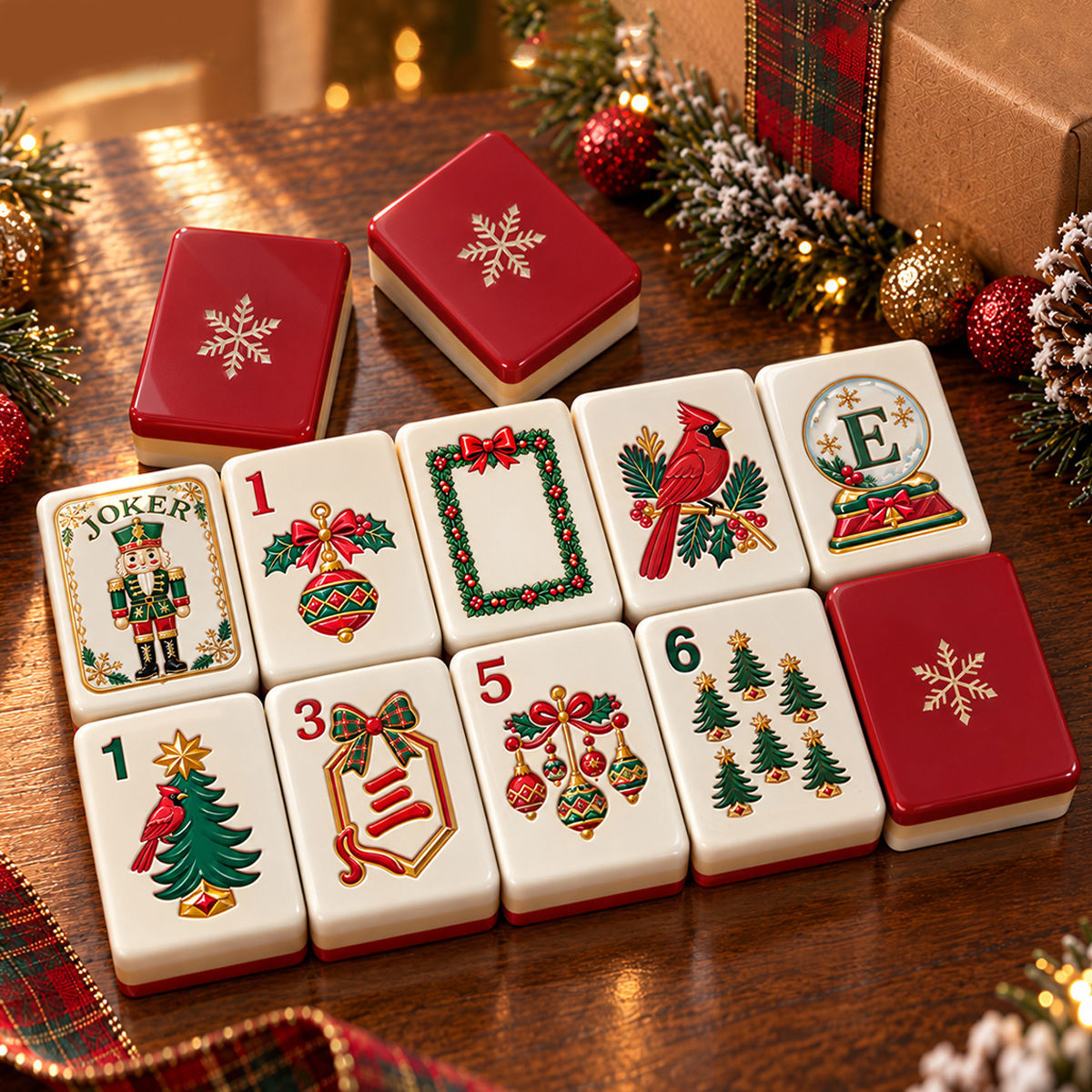
British mahjong awards points based on tile combinations and their inherent values—Terminals (1s and 9s) and Honors (Winds, Dragons) are worth more than simple numerals. A completed hand earns base points multiplied by a doubling factor (fans or limit hands) that depends on hand composition: purity (all one suit), terminals, honor tiles, or concealment. The East player doubles all scores; winners collect from all three opponents. Unlike American mahjong, which uses an annual card, British scoring relies on memorized tile values and hand types that carry fixed multipliers. A basic winning hand scores around 1,000–2,000 points; premium hands (all terminals, all honors, or seven pairs) reach 8,000 or more. Mahstead stocks acrylic sets ideal for learning this variant—their durable tiles and clear markings help new British players distinguish suits and values quickly.
British mahjong scoring differs from American mahjong because there is no card, no annual hand list, and no fixed patterns to memorize each year. Instead, players count points by assigning values to individual tiles and multiplying by hand bonuses. This system rewards skill in recognizing tile combinations and strategy over memorization.
What tile values matter in British scoring?
Every tile in British mahjong carries a point value. Terminals (1 and 9 of each suit) are worth 10 points each; Honors (all Winds and Dragons) are also worth 10 points each. Simple tiles (2–8 of each suit) are worth their face number (2 through 8 points). Jokers are wild and do not contribute to the base score directly—they simply replace the tile they stand in for. When you add up all the tiles in your completed hand, you get your base score before applying multipliers.
Example: A winning hand with two 9 Craks, one Red Dragon (Honor), four 5 Dots, and three 7 Bams. The 9 Craks = 10 + 10; Red Dragon = 10; the 5 Dots = 5 × 4 = 20; 7 Bams = 7 × 3 = 21. Base total = 20 + 10 + 20 + 21 = 71 points before any multiplier is applied.

How do hand bonuses (fans) increase your score?
British mahjong uses "fans" or doubling factors—typically ranging from ×1 (basic win) to ×8 (limit hand, maximum payout). Common fans include: Pung hand (three or four of a kind throughout) = ×2; all Terminals = ×3; all Honors = ×3; concealed hand (you drew your own winning tile, or it was claimed from a discard but you didn't expose melds) = ×2; all one suit = ×2. Limit hands that max out at ×8 include seven pairs, all Terminals and Honors, or all one suit with all Terminals and Honors mixed in.
Decision frame: Check your hand for purity first (one suit only?)—that alone doubles it. Then look for Terminals or Honors dominance—each group of those adds another fan. If your hand is concealed, add one more. Some regional variants stack fans additively; others use a single highest fan. Always clarify your group's rules before the game starts.
Who scores what: East player, winners, and losers?
The East player (dealer) scores and pays double. A non-East winner collects base score × fans from each opponent. East winners collect double from each opponent. Losers do not score; they simply pay. The discarder who threw the winning tile often pays extra (sometimes ×1.5 or ×2 of the winner's score, depending on local rules), but in self-drawn wins, all three opponents split the payment equally.
Example: Non-East winner with 71 base points and ×2 fan (pung hand) = 142 points per opponent, collecting from three people = 426 total. If East had won the same hand, they'd collect 284 from each opponent = 852 total. Always track who sits where before you count.
What common mistakes derail British scoring?
Mistake 1: Forgetting Terminals are always 10, not their face value. The 1 and 9 do not score as 1 or 9—they are always 10. Many new players undercount these high-value tiles.
Mistake 2: Double-counting jokers. Jokers replace a tile but do not add points themselves; they score as the tile they replace. Do not add them separately.
Mistake 3: Applying wrong fan multipliers. Agreeing on fan rules varies by region and group. Some play with strict limits; others allow stacking. Clarify and write down your group's rules before each game. Ambiguity leads to disputes.
Mistake 4: Mixing dealer and non-dealer payouts. East pays and collects double; it is easy to forget who is dealing when three people owe you money.
Mistake 5: Misreading concealment. If you claim a discard to complete your hand, it is no longer fully concealed—only self-drawn wins or hands where you never exposed any melds count as concealed.

How does British scoring differ from American mahjong?
American mahjong uses a printed card published annually by the National Mah Jongg League, listing all legal hands. You look up your hand on the card and see its point value directly—no tile-by-tile counting. Hands are rigid; if your tiles don't match a card pattern exactly, you cannot win.
British mahjong (also called Classical, Chinese Traditional, or Hong Kong variant) has no card. Hands are flexible and creative as long as they follow the structure: melds (pung, kong, chow, or joker substitutions) plus a pair. Points come from tile values and fan multipliers, not from a list. This makes British play faster to teach newcomers (no card lookup) but requires more mental math at the table.
Feature | American | British |
Hand list | Annual card (rigid patterns) | None (flexible combinations) |
Scoring method | Card lookup (fixed points) | Tile values + fan multipliers |
Chows allowed? | No (American rule) | Yes (1-2-3, 7-8-9 sequences) |
Joker rules | Never in a pair or single | Replace any tile freely |
East player bonus | varies by house rule | Always doubles payout |
Speed to learn | Longer (card essential) | Faster (memorize tile values only) |
🀄 Shop best-selling mahjong sets →](https://mahstead.com/en-us/collection/best-selling)
What tools help you tally British scores quickly?
A pen and paper (or a phone note app) is the minimum. Write down each player's name and running total after each hand. Some groups use scoresheets (printable templates found online) with rows for each round and columns for each player.
A physical scoring aid—a simple notepad kept at the table—prevents memory errors and keeps the game moving. If your group plays regularly, laminated scorecards or a small whiteboard work well.
Our experience: players who write scores down immediately, before tiles are shuffled, avoid 80% of disputes. Do not rely on memory for more than one round.
What to check before you buy a British mahjong set
Tile clarity: Can you read suit symbols (Bam bird, Crak character, Dot circles) at arm's length? Acrylic sets with clear engravings outperform painted tiles that wear thin.
Joker count: British play typically uses 4–8 jokers, depending on rules. A best-selling set includes enough spares to accommodate your group's style.
Size and weight: Will you carry it? A mat and lightweight acrylic tiles beat heavy ceramic for portability.
Durability: Tiles face constant shuffling and stacking. Acrylic resists chipping better than bamboo-backed tiles that crack over years of play.
🎁 See our most-loved mahjong sets & accessories →
British scoring rewards practice and attention. The first few games feel slower as you sum tile values, but within three or four sessions, most players tally mentally and stay engaged. Keep a reference card nearby (tile values printed clearly) for your first five games, then retire it—muscle memory follows quickly.
✨ Find your Mahstead set — free US shipping →

FAQ
Why is British mahjong scoring harder than American?
British uses flexible hands, so no card to check—you tally tiles and apply multipliers mentally. American has a fixed card, so scoring is a lookup. Both require practice; neither is objectively "harder," just different.
Can I use an American mahjong set to play British?
Yes. American sets contain all the tiles needed (Bams, Craks, Dots, Winds, Dragons, Flowers, Jokers). Flowers are not always used in British play, but the core 152-tile game works identically.
How do fans stack—do I add them or multiply?
Regional rules vary. Some groups add fan bonuses (pung hand ×2 + concealed ×2 = ×4 total); others apply only the single highest fan. Agree on your group's method before playing.
Is the 1 Bam a bird or the number 1?
In all mahjong variants, the 1 Bam displays a bird illustration, not the numeral "1." For scoring, it counts as 10 points (a Terminal), not 1 point.
What happens if no one wins in a round?
A "dead hand" or "draw" occurs if the wall is exhausted with no winner. Tiles are reshuffled, and the next round begins. No points are awarded or paid; rules vary on whether East remains dealer or passes.


View More
View More
View More
