
Japanese Mahjong Setup: Rules, Tiles & How to Start
Last updated: Nov 23, 2026
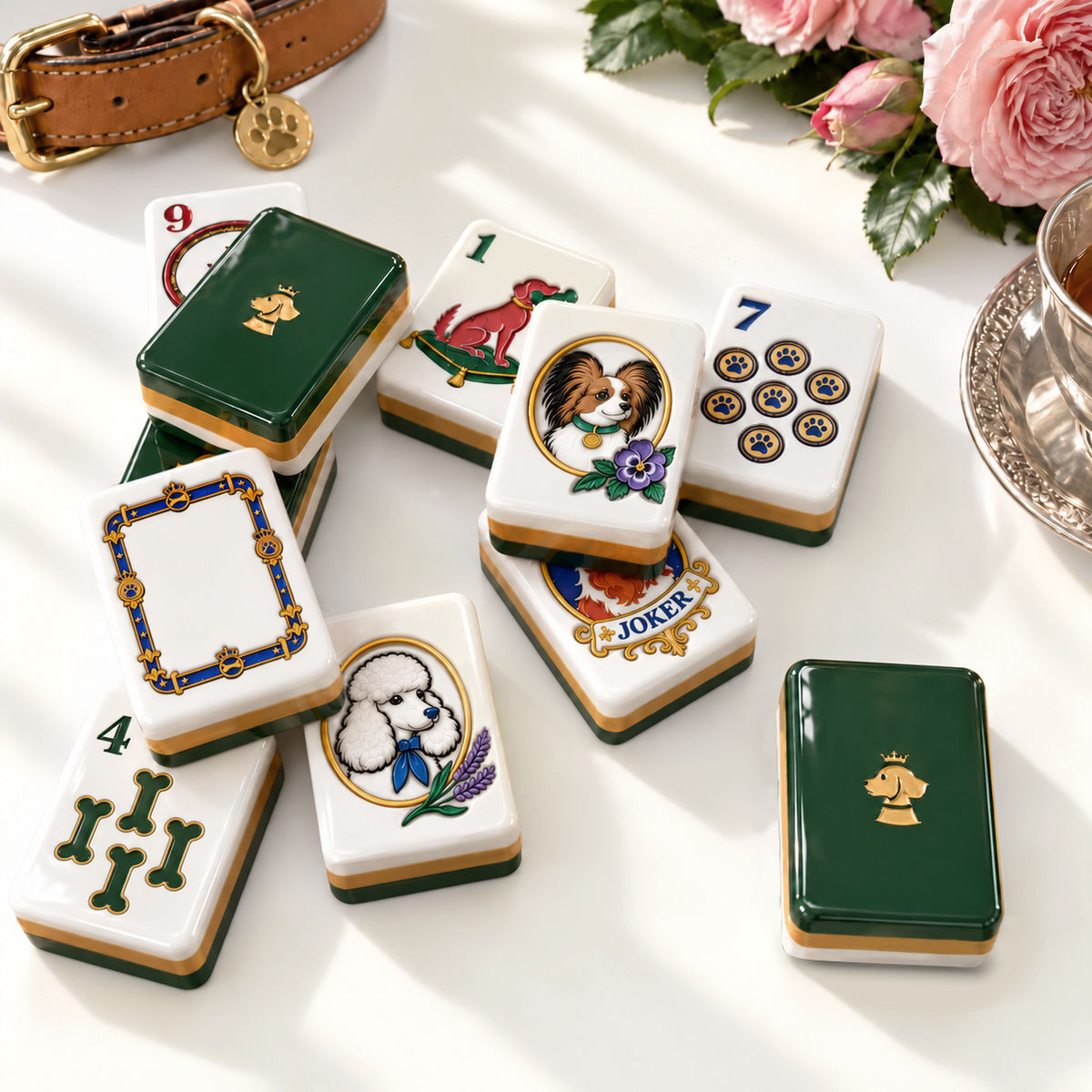
Japanese mahjong (riichi mahjong) uses 136 tiles across suits, winds, and dragons—fewer than American mahjong's 152. The core difference: players can call and expose sequences (chows), pungs, kongs, and pairs from the wall mid-game, unlike American mahjong where only pungs, kongs, and melds are exposed. A riichi hand contains four melds (sets or sequences) plus a pair; you draw from the wall and discard, calling when another player's discard fits your hand. The game ends when someone declares mahjong (tenpai hand complete) or the wall empties. Scoring is based on the hand pattern, dealer status, and win type (self-drawn vs. discard). Setup requires the standard 136 tile set, wind tiles, a discard layout, and tracking of round markers—very different equipment and rhythm from American play.
How many tiles does Japanese mahjong use, and what suits are included?
Japanese mahjong uses exactly 136 tiles: three main suits (Bam, Crak, Dot) numbered 1–9, four copies each (108 tiles); plus 16 wind tiles (four each: North, East, South, West); and 12 dragon tiles (four each: Red, Green, White). There are no flower tiles, jokers, or blanks in riichi play—the tile count is fixed and rigid. Each player draws 13 tiles at the start and receives 1 more to make 14; melds reduce hand size. The 136-tile standard makes riichi sets incompatible with American mahjong sets, which are designed for 152-tile play with jokers and flowers.

What's the difference between American and Japanese mahjong hands?
American mahjong hands are dictated by the current year's National Mah Jongg League card—you must match one of hundreds of printed patterns. Japanese mahjong has no card; instead, players combine any four melds (pungs, kongs, or sequences) plus a pair, following only a few fixed rules: pairs must be identical tiles; sequences must be three consecutive numbers in the same suit (e.g., 2–3–4 Crak); pungs and kongs are three or four identical tiles. Crucially, in riichi you can call and expose a chow (sequence) mid-game if another player discards a tile you need—American mahjong forbids this entirely. This makes riichi far more reactive and competitive at the table; American play is more puzzle-like and hand-driven.
How does calling (and riichi itself) work in Japanese mahjong?
When a player discards a tile and you can complete a meld with it, you call "pon" (for a pung) or "chow" (for a sequence in order) and take that tile from the discard pile, exposing the meld. Your hand shrinks, and you discard a tile. If you're one tile away from mahjong and your hand is closed (no exposed melds), you can declare riichi: you pay 1,000 points, freeze your hand, and draw from the back of the wall instead of the standard draw pile. After riichi, you can only win on a tile that completes your exact winning pattern—this adds tension and scoring bonus if you win. You cannot call melds after declaring riichi; only the discard pile (not the wall) can complete your hand. This mechanic has no equivalent in American mahjong, where hands are solved before play begins and calling is not live.
What's the setup process—walls, winds, and scoring?
To start Japanese mahjong, four players sit around a table. Assign East (dealer), South, West, and North using wind tiles. The dealer shuffles the 136 tiles face-down and creates a wall: each player stacks two rows of 17 tiles (34 per side), 4 walls of 34. The dealer draws 14 tiles, others draw 13. Tiles are organized into melds and a pair in hand; discards are placed in front of each player in rows for other players to call. Scoring is tracked with a marker and chips; points change hands based on the hand pattern, winning method (self-drawn or off a discard), dealer vs. non-dealer status, and bonus conditions like riichi or all-simples (no honors). A round ends after four hands (one per wind); the dealer may stay dealer or rotate. Games are often best-of-three rounds.
Setup Element | Japanese Riichi | American Mahjong | Why it matters |
Tile count | 136 (no jokers, flowers, blanks) | 152 (108 + 16 winds + 12 dragons + 8 flowers + 8 jokers) | Riichi sets are incompatible with American sets |
Hand source | Any four melds + pair | Must match current year NMJL card pattern | Riichi is open-ended; American is fixed-puzzle |
Sequences (chows) | Can call mid-game | Never allowed, not exposed | Riichi play is reactive; American is pre-solved |
Pair in hand | Always one, visible during play | One pair, may be jokers | Riichi pairs are always identical tiles |
Jokers | None | Eight required | American sets larger; riichi minimal |
Scoring method | Pattern-based (fu, han, points table) | Point values on NMJL card | Completely different scoring logic |
Dealer role | Draws first; rotates after round | Rolls to determine wall break | Different pacing and advantage |
How do you score a winning hand in Japanese mahjong?
Japanese mahjong scoring is based on hand complexity, not a pre-printed card. Every winning hand earns points based on fu (base points, from hand structure: open/closed, melds, tile pairs, winning method) and han (hand pattern multiplier: "all simples" is 1 han, "two dragons" is 2 han, etc.). A scoring table converts fu and han into point values; for example, a 3-fu, 2-han closed hand drawn from the wall is worth 2,000 points from non-dealers, 3,000 from the dealer. Bonuses stack: riichi adds points, self-drawn wins pay from all players, discarded wins pay from the discarder only. The dealer role (East) earns and pays 50% more. Because scoring is computed in real time from hand patterns, every round teaches you hand value instantly—unlike American mahjong, where you verify the card after announcing.
🀄 Shop best-selling mahjong sets →

What equipment do you need to play Japanese mahjong?
You need a 136-tile riichi set (Bam, Crak, Dot suits, winds, and dragons—no jokers or flowers). Most riichi sets come as compact acrylic or bakelite tiles. You also need: a mat or table large enough for a discard layout (riichi discards pile horizontally, not vertically); a rack for holding your 13 tiles angled; dice (one pair) for determining the starting player and wall position; wind-marker tiles or chips to track dealer rotation; and a scoring pad or app to record points. Because riichi melds are exposed mid-game and called frequently, a larger table and mat are more forgiving than a tight American mahjong setup. Many riichi players in Dallas and other US cities use compact acrylic sets and play on a standard dining table—a mat designed for mahjong protects the surface and keeps tiles organized.
🎁 See our most-loved mahjong sets & accessories →
Can you play Japanese mahjong with an American mahjong set?
No. American sets contain 152 tiles, including flowers, jokers, and blanks—riichi requires exactly 136 with no jokers or flowers. If you try to play riichi rules with an American set, you'll have too many tiles and no way to create a standard wall or manage hand draws. Conversely, a riichi set lacks the jokers and design elements American mahjong requires. If you know you want to learn riichi, buy a dedicated 136-tile Japanese mahjong set; trying to adapt an American set will create confusion and mistakes. Similarly, American players visiting Japan or joining a riichi game online should acquire a proper riichi set to avoid misunderstandings about tile identification and hand potential.
What's the learning curve compared to American mahjong?
Japanese mahjong rules take longer to internalize than American rules because there's no card to reference—you must memorize hand patterns, fu/han tables, and scoring formulas. American mahjong is simpler to learn (match the card, call melds, win) but requires sharp recall of the annual NMJL card patterns. Riichi is harder conceptually (scoring math, hand pattern logic) but more forgiving socially—your hand is visible and reactive, so confusion about what you need is less likely. Most players report 10–20 hours of guided practice before riichi feels natural; American mahjong takes 5–10 hours. If you prefer puzzle-solving and memorization, American mahjong suits you; if you like live decision-making and learning patterns over time, riichi is the better match. Our best-selling mahjong sets are designed for American play, so if you're starting riichi, you'll need to source a riichi-specific set from a specialty retailer that stocks the 136-tile standard.
What common mistakes do new riichi players make at setup?
Tile count errors: forgetting you're short to 136 and accidentally mixing in jokers or flowers. Wall orientation: Japanese walls are typically taller stacks (two rows of 17 per player, creating a square). Discard piling: riichi discards are laid in horizontal rows in front of each player, not vertical stacks like American; getting this wrong makes calling harder to see. Winning moment confusion: you don't announce mahjong after the hand is solved; you call mahjong when a tile completes your hand (self-drawn or discarded), and announce immediately. Scoring table mix-up: applying American card-based logic instead of computing fu/han. Riichi commitment: declaring riichi but misunderstanding that you cannot change your hand shape or call melds afterward. To avoid these, set up with a riichi-experienced player or reference a riichi rulebook before your first game. Practice the wall build and discard layout on an empty table a few times—muscle memory prevents mid-game delays.
✨ Find your Mahstead set — free US shipping →
What to check before you buy a riichi set
Tile material: acrylic (durable, affordable, quiet), bakelite (vintage feel, heavier), or bamboo/bone (expensive, authentic). Acrylic is best for regular play.
Tile size: standard is 25–26mm. Smaller tiles (22mm) suit tight spaces; larger (28–30mm) suit players with vision or grip challenges.
Completeness: verify the set includes all 136 tiles, no blanks or extras. Riichi sets are unforgiving—missing even one tile halts play.
Markers included: some riichi sets come with wind tiles and scoring chips; others do not. Check the listing.
Language on tiles: if you're learning in English, look for sets with English numerals or a reference card. Traditional Chinese or Japanese characters require familiarity.
Sourcing: buy from a retailer experienced with riichi sets; American mahjong retailers may not stock riichi-compliant tiles or may confuse the two systems.

FAQ
Is Japanese mahjong the same as Chinese mahjong?
No. Chinese mahjong uses 144 tiles, no jokers, and allows sequences mid-game like riichi, but has entirely different hand patterns, scoring, and no riichi mechanic. Japanese riichi is a 20th-century adaptation of Chinese mahjong rules; they share structure but diverge significantly in scoring and strategy.
Can I learn American mahjong first, then switch to Japanese mahjong?
Yes, but the skills don't transfer directly. American mahjong teaches tile recognition and hand-solving; riichi teaches pattern memorization and real-time calling strategy. Many players play both, but each requires separate rule mastery. Starting with whichever variant is available in your area is faster.
Do I need a special table or mat for Japanese mahjong?
A standard dining table works, but a mat is helpful to protect the surface and define the discard area. Japanese mahjong discards pile horizontally in front of each player, so a wider mat (40–48 inches) is preferable to a narrow one. Standard mahjong mats designed for American play also suit riichi with minor adjustment.
How long does a game of Japanese mahjong take?
A single hand (one dealer's turn) takes 10–20 minutes; a full round (four hands, one per wind) is 40–80 minutes. A best-of-three tournament takes 2–3 hours. American mahjong hands are often faster (8–15 minutes) because hands are pre-solved, but riichi paces vary with player skill and hand draws.
Where can I find a Japanese mahjong set in the US, and what should I expect to pay?
Riichi sets are available from online retailers specializing in Japanese games, import shops, and some Asian markets. Prices vary widely based on material (acrylic entry-level, bamboo/bone premium). Comparison-shop by tile count (verify 136), material, and included accessories (chips, wind markers, reference cards).
What's the best way to learn riichi rules if I already play American mahjong?
Join a local riichi club or online community, or watch tutorial videos from established riichi organizations. Read a riichi rulebook alongside play—the National Riichi Mahjong Association (NRMA) offers free guides. Practice hand-solving and fu/han scoring offline before joining a real game; riichi scorekeeping is faster and less forgiving of errors than American play.


View More
View More
View More
