
Japanese Mahjong Cheat Sheet: Rules, Hand Patterns & Strategy Tips
Last updated: Nov 23, 2026
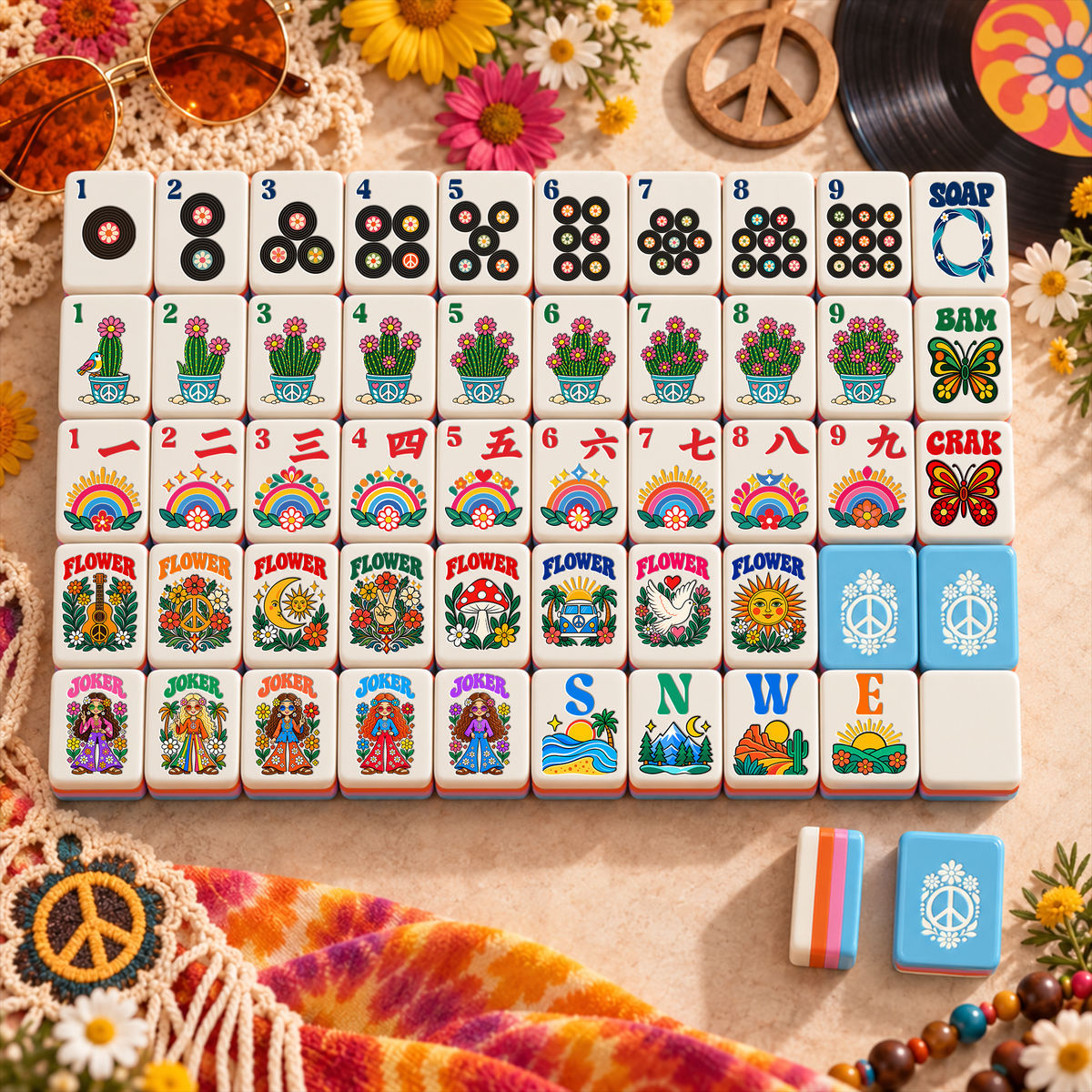
Japanese mahjong, or Riichi mahjong, is played with 136 tiles (34 unique types × 4 copies each) across three suits (Honors, Characters, Bamboo, Circles, Winds, Dragons). Unlike American mahjong—which uses 152 tiles, the annual NMJL card, and no sequences—Riichi allows chows (sequences like 1-2-3 Bamboo), calls on open melds, and scoring based on fu (hand complexity) and han (doubled points). A hand typically requires a combination of pungs (3 identical), kongs (4 identical), pairs, and sequences. Winning by drawing the tile you need (tsumo) scores higher than winning on an opponent's discard (ron). The game emphasizes hand reading, the strategic discard pile, and waiting patterns. Players cannot use external cards; tile sets are closed and standardized. While American players enjoy our best-selling mahjong sets built for 152-tile American rules, Riichi players source 136-tile sets designed for Japanese play.
Why Does Japanese Mahjong Feel So Different from American?
American mahjong relies on a published yearly card—you only win hands listed on that year's card. Japanese mahjong uses fixed, unchanging hand categories (yaku). American forbids sequences and adds jokers; Japanese requires sequences alongside pungs and makes every tile count. American play feels like puzzle-matching; Japanese feels like high-stakes poker. Your discard choices in Japanese mahjong telegraph your hand strategy to opponents and invite them to call your tiles—a risk not present in American play.
🀄 Shop best-selling mahjong sets →

What Tiles and Hand Structure Do You Actually Need?
A Japanese mahjong hand consists of 14 tiles: four melds (each 3 or 4 tiles) plus a pair. A meld can be a pung (3 identical: 5-5-5 Bamboo), a kong (4 identical), or a chow (sequence: 3-4-5 Characters). You must discard one tile per turn, keeping exactly 13 in hand. The winning tile brings you to 14. You cannot "steal" a tile unless you can use it to form an immediate meld on your turn—unlike American mahjong, where melds must match the card pattern. Fu measures hand complexity: a pung of dragons scores higher fu than a simple chow. Han counts the number of matching yaku patterns—a hand scoring 3 han + 40 fu pays more than 2 han + 30 fu. The scoring table is fixed; no external card is needed.
How Do You Read Waiting Patterns and Position?
In Japanese mahjong, a waiter is the tile you need to win. Common patterns:
Single waiter: one specific tile wins (high risk, high reward).
Pair waiter: two different tiles complete your hand (twice as likely).
Side waiter: the middle tile of a sequence-in-progress (less obvious to foes).
Position affects strategy: the player discarding before you influences which tiles enter the center pile. If you discard a 5 Bamboo and three 5 Bamboos are already visible in melds or the discard pile, the fourth is locked—your opponent cannot win on it. Reading the discard trail—which tiles remain, which are gone, how many of each suit—lets you calculate safety and aggression. Opponents watching your tile grabs and discards decode your hand shape. A safe discard often means a terminal (1 or 9) or an honor tile (Wind or Dragon) recently discarded by someone else.
What Are the Most Common Yaku (Winning Patterns)?
Below are foundational yaku you'll encounter:
Yaku Name | Tile Requirement | Han | Notes |
Tanyao (All Simples) | Only 2–8 of any suit; no Honors, no 1/9 | 1 | Clean, common early-game pattern |
Yakuhai (Pung of Dragons/Wind) | One or more pungs of Dragons or round Wind | 1 | Easy to build; stacks with others |
Tsumo (Self-Draw Win) | Win by drawing from the wall, not discard | 1 | Bonus for drawing your own tile |
Pinfu (No Scoring Melds) | All chows except pair; no fu from tiles | 1 | Deceptive; low fu masks strength |
Iipeikou (Two Sets Same) | Two identical chow patterns | 1 | Risky; requires precise tile flow |
Toitoi (All Pungs) | All four melds are pungs; no chows | 2 | Harder to complete; higher payoff |
Honitsu (Half Flush) | One suit + Honors only; no other suits | 3 | Tiles from other suits block it |
Chinitsu (Full Flush) | One suit only; no Honors | 6 | Rarest, highest-scoring common hand |
Each yaku adds a han. Combinations (example: Tanyao + Tsumo + two Yakuhai pungs = 4 han minimum) multiply the score. Many beginner hands score just 1–2 han; competitive players chase 3+ han hands.
How Do Calls and Open Melds Change the Game?
In Japanese mahjong, you can call a tile from an opponent's discard to complete a pung or kong immediately (pon, kan, or minkan). Unlike American play—where you cannot expose sequences—Riichi lets you open a chow by calling a discard (chi), but only from the player to your left and only if you discarded before them in that sequence. This rule prevents kingmaker dynamics. Calling a tile locks you into a meld you cannot rearrange; it reduces your tile options but accelerates your win. An open hand (melds visible to all) scores lower: a hand with all four melds open pays 3/4 of a hand with all melds concealed. The opposite is riichi: you declare "ready" (one tile away) after discarding, freeze your hand pattern, and collect bonus points if you win—but you must win within a few turns or the bet is forfeit.

What Should You Master to Move from Beginner to Intermediate Play?
Learn these core skills:
Discard order: Discard unpaired tiles first; keep pairs for your final meld.
Tile reading: Notice which tiles appear in melds; avoid discarding tiles that match opponent pungs.
Efficiency: Build hands with overlapping tile ranges (example: 2-3-4, 3-4-5, 4-5-6 of one suit uses many of the same numbers).
Menzen: Keep your hand concealed as long as possible; bonus points reward zero open melds.
Honor strategy: Early-game, discard terminals and Honors; late-game, hoard them—opponents fear them less when the pool is thin.
Furiten: If you discard a tile you needed to win, you lose that waiter for the rest of the round, even if someone discards it later.
Dealer rotation: The dealer (east) wins slightly higher payouts; rotate dealer each hand; a dealer who wins again stays dealer.
🎁 See our most-loved mahjong sets & accessories →
Riichi Mahjong vs. American Mahjong: A Side-by-Side Comparison
Aspect | Riichi (Japanese) | American |
Tile Count | 136 (34 types × 4) | 152 (jokers, blanks added) |
Hand Source | Fixed yaku categories | Annual NMJL card |
Sequences (Chows) | Legal and required | Forbidden |
Jokers | None | 8 in play |
Exposed Calls | Pon, chi, kan on melds | Pung/kong/quint only; no sequences |
Scoring | Fu (complexity) × han (patterns) × multiplier | Points/limits from card |
Win Types | Tsumo (self-draw) + higher; ron (discard) | No distinction |
Round Wind | Rotating per hand | Rotating per round (4 hands) |
Play Speed | 15–20 min/hand (faster) | 20–30 min/hand |
Skill Depth | Reading, psychology, probability | Pattern matching, card memory |
Japanese Mahjong Strategy: The Discard Pile Is Your Teacher
Every tile discarded tells a story. Early in a round, opponents discard high-value tiles (Honors, terminals) they don't need. Mid-round, discards reveal suit preferences. Late-round, a tile 20 seconds in the discard pile means no one wanted it—safe to discard a similar tile. If three 5 Bamboos are visible and someone discards a Bamboo, they're signaling they don't have 4-5-6 or 5-6-7 Bamboo. Don't chase a 5 Bamboo they may discard; they're not holding it. Conversely, if a tile hasn't appeared and you need it, assume it's in an opponent's hand—risky territory. Aggressive players play the first 2–3 discards openly, then pivot to safer tiles. Conservative players stretch longer before committing to a specific hand. Your pile position (what order you sit in) lets you read neighbor hands: the player to your left telegraphs their chows early, since they prefer left-neighbor calls on chows.
What to Check Before You Buy a Japanese Mahjong Set
Tile count: Confirm 136 tiles, not 144 or 152. Japanese sets are 34 types × 4 copies.
Character encoding: Kanji, numerals, or symbols? Verify readability for your language preference.
Tile size and weight: Japanese tiles are often smaller and lighter than American sets; handle before buying if possible.
Rack style: Japanese racks are often slanted and shorter than American racks; a mat designed for American play may crowd a Japanese set.
Case durability: Japanese mahjong is portable; your case must survive frequent transit.
If you play both variants, you'll need two dedicated sets. American players love our engraved American mahjong sets designed for 152-tile play and NMJL card reading.
✨ Find your Mahstead set — free US shipping →

FAQ
Can I use American mahjong tiles to play Japanese mahjong?
No. American sets contain 152 tiles plus jokers; Japanese mahjong requires exactly 136 with no jokers. The tile distributions differ: American has winds and dragons in different counts. You need a dedicated 136-tile Japanese set.
How long does a typical Japanese mahjong game take?
One hand (round) lasts 15–20 minutes. A full session (east round: 4 hands) takes roughly 60–80 minutes, faster than American mahjong because play is more fluid and no yearly card is referenced.
What's the difference between calling "pon" and "chi"?
Pon creates a pung (three identical tiles) from any opponent's discard. Chi creates a chow (sequence) only from the player to your left's discard. Chi is more restrictive; pon is open to all discard sources.
Do I need to memorize yaku patterns before playing?
Start with 5–10 basic yaku (Tanyao, Yakuhai, Tsumo, Toitoi, Honitsu). Most beginner hands cluster around these. Advanced yaku can be learned hand-by-hand as you encounter them in live play.
How do I know if my hand qualifies as "menzen" (all concealed)?
Your hand is menzen if all four melds are hidden in your hand and you haven't called any opponent tile. Bonus points reward menzen at scoring time. Open a single meld and you forfeit the menzen bonus.
What's "furiten" and why does it matter?
Furiten means you've discarded a tile you needed to win. That tile becomes dead for you for the rest of the round; even if an opponent discards it, you cannot win on it. Avoid discarding your waiter tiles.


View More
View More
View More
