
Is Mahjong Solitaire Hard to Learn? A Real Answer
Last updated: Nov 23, 2026
Mahjong solitaire is not hard to learn—it takes most people 5–10 minutes to grasp the core rule: match and remove pairs of identical, unblocked tiles from a pyramid or other layout. Unlike American mahjong (a four-player game with hands, scoring, and an annual card), solitaire is purely visual and mechanical: you see the board, spot connected pairs, remove them, and work toward clearing all tiles. No strategy card, no negotiation, no luck beyond the initial shuffle. Beginners typically play competently in their first session; mastery—knowing which pairs to remove first to unlock others—comes through 10–20 games. Digital versions are free and infinite; physical tile sets from Mahstead and others offer a tactile, screen-free alternative that feels more engaging to many players.
Mahjong solitaire and American mahjong table play are fundamentally different games. The confusion matters because it shapes whether you'll find the learning curve intimidating or trivial.
American mahjong—played by four people, with tiles drawn from a wall, hands hidden, and a scoring card consulted every round—has genuine complexity. Mahjong solitaire is the opposite: one player, all tiles visible, one rule, no scoring card. If you can tell two tiles match and click or touch them, you can play solitaire. The real learning curve isn't "how to play"; it's "how to play well," which is optional and takes longer.
🀄 Shop best-selling mahjong sets →
Why solitaire feels harder than it is
Many newcomers expect solitaire to be "easier than the real game" and then panic when they realize they don't know the rules at all. That paradox—no rules to learn, yet a sense of confusion—trips people up. Here's why: solitaire has exactly one rule (match pairs), but the strategy is hidden. You can remove any two matching pairs, but some choices block your path to victory while others clear it. That's not rule complexity; it's puzzle-solving depth. Beginners often mistake puzzle difficulty for "hard to learn" and give up before they've actually started playing. Once you remove that mental block, the game clicks.

The one rule that governs everything
Tiles must match in both symbol and number—a 3 Dot matches only another 3 Dot—and both tiles must be unblocked. A tile is blocked if another tile covers its top or right edge; remove the blocking tile first, and the buried one becomes available. That's it. No suits combining into sequences. No wild cards changing value. No hidden hands. The entire game lives in this single constraint. Most people internalize it in under two minutes of watching; playing three hands cements it forever. The "hardness" isn't understanding the rule; it's predicting, five moves ahead, which pair to clear now so that a better pair becomes available later.
How long before you play your first full game
Five to ten minutes from zero to clear (or stuck). A typical solitaire board has 144 tiles arranged in a classic pyramid: seven layers, widest at the base. Removing pairs one by one, with no time pressure, takes roughly 8–12 minutes if you win and 5–7 if you get stuck early. Digital versions often run four to five minutes per round because animations are faster. Physical tile sets, like those in our best-selling collection, give you the same pace—maybe slightly slower because you're physically moving acrylic or bamboo tiles, but that tactile slowness is often the appeal. No one rushes solitaire.
Physical vs. digital: what changes the learning curve
Format | First-game time | Tactile feel | Learning curve | Best for |
Digital app (free) | 3–5 min | None | Fastest | Testing interest; travel |
Physical tile set | 8–12 min | High | Same rules, slower | Regulars; gift-givers; tabletop feel |
Board (e.g., wood) | 10–15 min | Medium | Same | Permanent setup |
The rules don't change, but the experience does. A digital version zooms and animates; a physical tile set requires you to reach, pick up, and place tiles—slower, but many players find it more satisfying. If you're buying physical tiles and mats for solitaire, expect the same learning pace as digital, plus better memory retention because you're engaging your hands. Neither is "harder"; they're just different rhythms.

Common first-game mistakes (and how to avoid them)
Mistake 1: Assuming you must play fast. You don't. Take your time spotting pairs. Solitaire rewards patience.
Mistake 2: Removing any available pair. If you see two matches, pause and ask: "Which one unblocks more tiles?" Remove that one first.
Mistake 3: Forgetting to check both edges of a tile. A tile is blocked if another tile overlaps its top or right side. Many beginners miss "right" and think a tile is available when it isn't.
Mistake 4: Playing the same layout twice and expecting different results. The board doesn't shuffle mid-game. If you got stuck at move 15, you'll get stuck there again unless you choose differently. That's not "hard"—it's learning through repetition.
Mistake 5: Quitting after one loss. Solitaire boards are often unwinnable by design—the shuffle puts you in a dead end. That's not your fault. Play another round.
🎁 See our most-loved mahjong sets & accessories →
What to check before you buy physical tiles
If you're drawn to solitaire and want to move from digital to a physical set, here's a quick checklist:
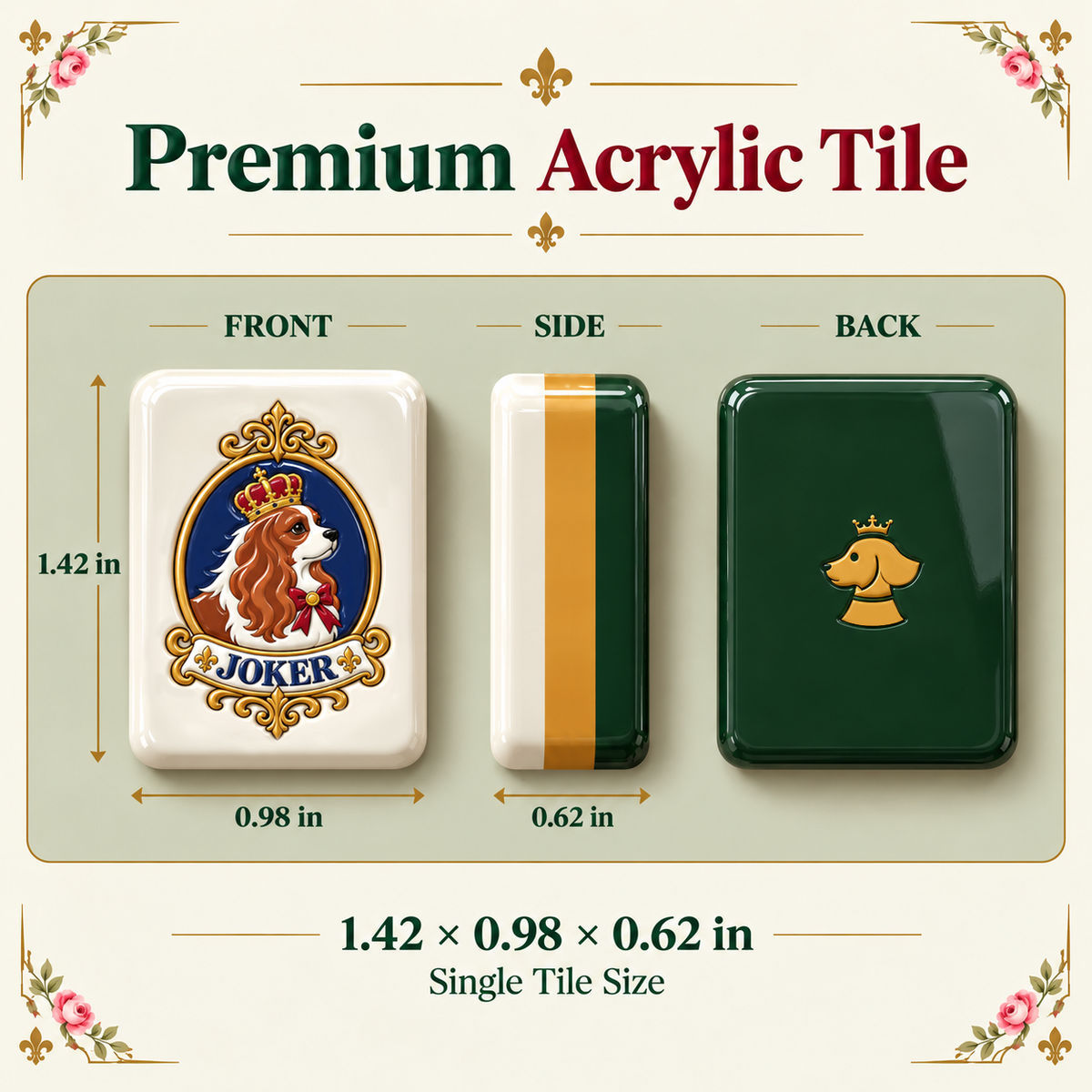
Tile size: Look for tiles at least 1 inch across; smaller tiles strain your eyes during longer play sessions.
Finish: Polished acrylic (common in our collections) is smooth and durable; bamboo has a warmer feel but needs occasional cleaning.
Jokers and spares: A standard solitaire set includes 144 tiles. Mahstead's 160-tile sets contain extra spare tiles, which doesn't change solitaire play but gives you backups if any tile cracks.
Storage: Ensure your set comes with a bag or case if you plan to move it; tiles scatter easily in a box.
Mat: A padded mat isn't required for solitaire, but it quiets the click of tiles and protects your table.
None of these affect the learning curve, but they shape whether you'll keep playing after week one.
How solitaire compares to other tile games
Solitaire's learning curve is gentler than Rummikub (tile combinations that shift), far gentler than American mahjong (four players, hidden hands, an annual card), and gentler than most card games. It's closest to classic solitaire—one rule, infinite depth. You can teach it to a child in two minutes; a grandparent can play it for years. The "hardness" isn't the entry; it's the mastery, which is optional.
✨ Find your Mahstead set — free US shipping →
The real question: do you want to learn?
Mahjong solitaire is hard to learn only if you're avoiding it. The moment you sit down and play one round—digital or physical—the rule becomes obvious, the rhythm becomes natural, and the "hardness" evaporates. What remains is a puzzle that rewards attention, strategy, and patience. Most people who walk away saying "that's too hard" haven't actually played; they've watched a video and assumed complexity where there is none. Play one game. You'll know in 10 minutes whether it's for you.

FAQ
How long until I can win a game consistently?
Most players win roughly half their games after 5–10 plays, based on solitaire design. Consistency depends on the shuffled board, not your skill—many layouts are unwinnable from the start. Focus on improving your pair-selection strategy, not your win rate.
Is mahjong solitaire the same as the American four-player game?
No. American mahjong is a four-player table game with hidden hands, an annual scoring card, and tile-drawing strategy. Solitaire is a one-player puzzle with all tiles visible and one rule: match pairs. The names overlap, but the games are separate.
What's the difference between a 144-tile set and a 160-tile set?
A standard solitaire board uses 144 tiles. Mahstead's 160-tile sets include those 144 playing tiles plus spare tiles for replacements if any tile breaks. For solitaire, both work identically; the extra tiles are a durability feature, not a gameplay feature.
Do I need a mat to play solitaire?
No. A mat is optional and adds comfort and noise reduction, but solitaire plays fine on any flat surface. A padded mat protects your table and muffles the tile clicks if you play regularly.
Can a beginner play solitaire with friends?
Solitaire is a single-player game, so you'd each play your own board at the same time. If you want a group game, American mahjong involves all four players in one hand and takes 15–25 minutes to learn properly. For casual group play, Rummikub or dominoes are simpler entry points.
How do I know if a tile is blocked?
A tile is unblocked if no other tile covers its top edge or its right edge. If either edge is covered, the tile is locked. Flip or move the covering tile first, and the blocked tile becomes available.


View More
View More
View More
