
Is Mahjong Similar to Dominoes? Key Differences Explained
Last updated: Nov 23, 2026
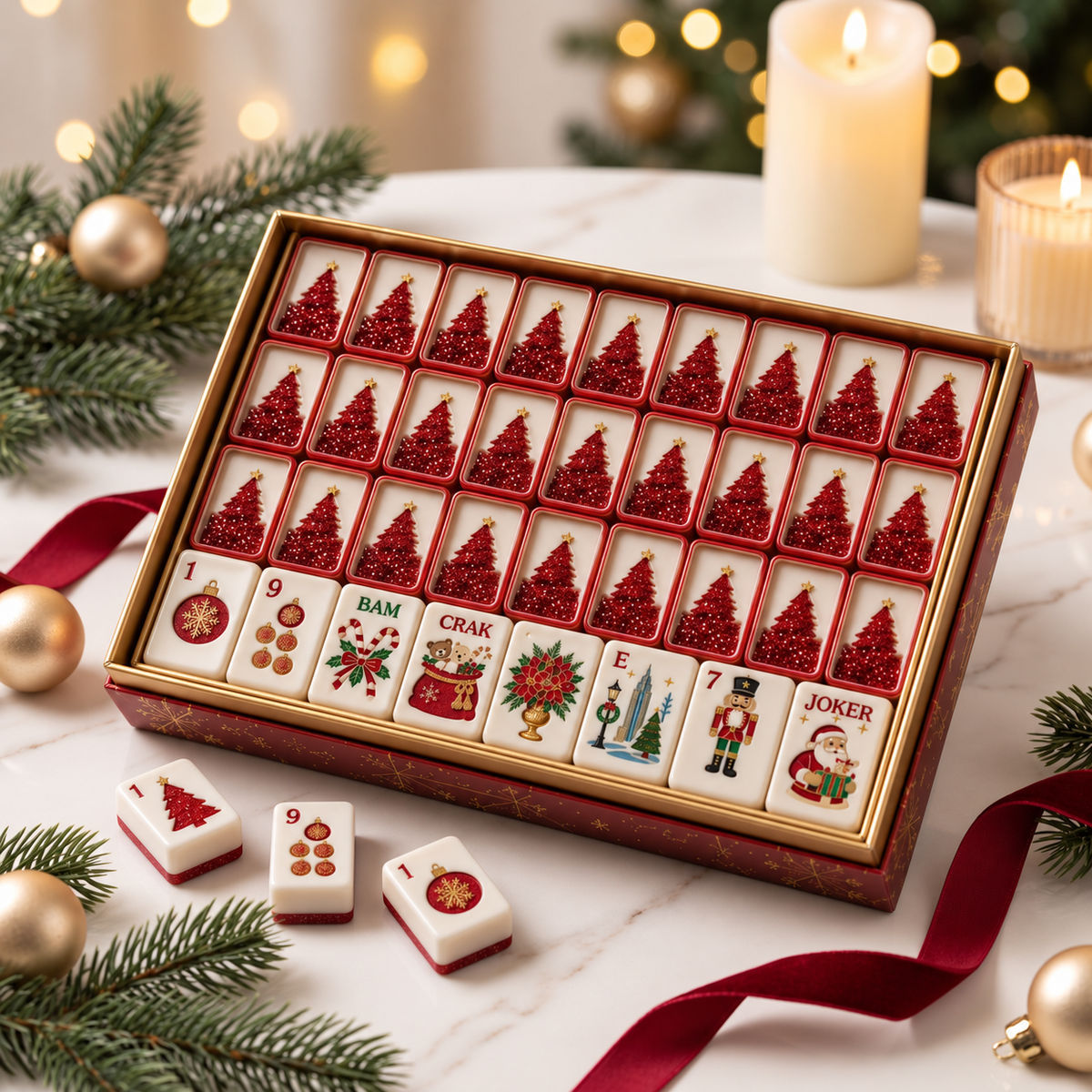
Mahjong and dominoes share a tile foundation but diverge completely in play. Both use rectangular pieces and reward pattern recognition, yet mahjong requires luck (the draw), strategy (hand-building), and an annual card showing valid winning combinations—none of which exist in dominoes. A standard American mahjong set holds 152 tiles plus 8 jokers; dominoes use 28 to 55 pieces depending on the variant. Mahjong games run 45 minutes to two hours with four players; dominoes finish faster. Mahjong suits players seeking mental depth and seasonal learning; dominoes suit casual, rule-light evenings. Both are social, but mahjong demands committed study of the current year's National Mah Jongg League card. Start with a quality set from our best-selling mahjong sets to experience the difference firsthand.
Do mahjong and dominoes use the same tiles?
No. Dominoes are 28 rectangular dots-only pieces (or up to 55 in extended versions), divided by a center line into two ends, each showing zero to six pips. Mahjong tiles—152 in the American standard—display three suits (Bams, Craks, Dots) plus winds, dragons, flowers, and jokers. A Dot tile resembles a domino face, but mahjong's depth comes from suit variety, honor tiles, and color. Dominoes are monochrome; mahjong sets are often engraved or painted in multiple colors, making them easier to read during fast play.

Why is mahjong harder to learn than dominoes?
Mahjong requires memorizing the current year's National Mah Jongg League card—a sheet of hundreds of valid winning patterns. Dominoes follow one simple rule: match the number of pips on your tile to one end of the line on the table. Mahjong has four phases: the Charleston (passing tiles), drawing, building your hand toward a named pattern, and calling "Mah Jongg" when you complete it. You must know pung (three identical tiles), kong (four identical), quint (five), sextet (six), and pair rules, plus joker placement. Dominoes have no hidden hands or calling—play is open and nearly automatic. For a beginner, mahjong takes weeks of study; dominoes, an afternoon.
🀄 Shop best-selling mahjong sets →
What does the mahjong card do that dominoes don't?
The mahjong card is the rulebook and winning dictionary combined. It lists all legal hands for that season—no hand outside the card wins, ever. It includes hand type (like "Like Number" or "Dragon Pung"), tile count, and joker limits. Dominoes have no such list; a winning configuration is simply "no tiles left in hand" or "no legal play remains." The card transforms mahjong from a memory game into a strategy puzzle: you must balance what's possible, what's probable, and what your opponents might be holding. The card changes every spring, keeping the game fresh for returning players. This annual refresh is why serious mahjong players form groups and commit to learning together. See our mahjong for beginners guide to understand how the card shapes each decision at the table.
How do luck and strategy compare?
Aspect | Mahjong | Dominoes |
Tile draw | Random; heavily influences outcome | Random; less dramatic |
Hand visibility | Hidden until play; bluffing possible | Mostly open; little mystery |
Strategy depth | High: discard timing, reading opponents, pattern recognition | Low: forced plays, minimal choice |
Luck vs. skill ratio | 40% luck, 60% skill (over time) | 60% luck, 40% skill |
Game length | 45–120 minutes per round | 10–30 minutes |
Comeback factor | High; one lucky draw shifts advantage | Low; early tile draws set trajectory |
Mahjong rewards patient, observant players who learn the card and track discards. A player down after three rounds can still win decisively if they draw the right tiles and read the table. Dominoes are more passive—your hand is dealt, and the order of play is largely predetermined. Mahjong players talk about "winning hands" and "dead hands"; dominoes players talk about "bad luck" and move on.
🎁 See our most-loved mahjong sets & accessories →

Which game should your group choose?
Choose dominoes if your group wants a quick, social evening with minimal setup and no study. Dominoes work for mixed-age groups, people new to tile games, or nights when everyone's tired. Rules fit on a page; a set costs little and lasts forever.
Choose mahjong if your group values depth, seasonal learning, and the ritual of a committed game night. Mahjong suits players who want to improve, remember past hands, and discuss strategy between rounds. American mahjong is a four-player game built for conversation and focus. If your group meets weekly or biweekly, mahjong transforms casual tile time into a real practice.
The honest truth: dominoes are a game you play. Mahjong is a game you join. Both deserve a place on your shelf, but they satisfy different moods.
What does a mahjong set include that dominoes don't?
An American mahjong set contains 152 tiles divided into suits, plus 8 jokers, a wind indicator, and often a rack system to organize your hand. Dominoes are just 28 to 55 flat tiles—no accessories, no indicator, no sorting tools. Most serious mahjong players add a mat (to protect tiles and mark seating), racks with pushers (to hold and organize tiles neatly), and a travel bag or case. A domino set rarely needs more than the tiles themselves.
When you're ready to host weekly games, invest in a quality set with clear engraving and a mat. Our mahjong mats protect your table and make tile visibility instant; many players find them essential for speed and accuracy during competitive rounds. Paired with mahjong racks with pushers, your setup looks professional and runs smoothly.
✨ Find your Mahstead set — free US shipping →
What to check before you buy
Game frequency: Will your group play weekly or once a month? One-time players can skip racks; regular groups benefit from organized tile management.
Player count: Mahjong is always four players; dominoes work with two to six. If you have irregular attendance, dominoes scale better.
Learning appetite: Does your group enjoy studying a new card each spring, or do you prefer stable rules? Mahjong requires the former.
Tile durability: Engraved acrylic tiles like ours resist scratching and fading over years of play; cheap plastic tiles cloud quickly, making them hard to read mid-game.
Storage: Mahjong sets need a home—a bag or case keeps tiles safe and organized. Dominoes fit anywhere.

FAQ
Can you play mahjong with domino tiles?
No. Dominoes lack the suit variety, dragons, winds, flowers, and jokers that mahjong requires. The two games' tile systems are incompatible.
Is mahjong more popular than dominoes?
Dominoes dominate casual play globally; mahjong thrives in tight weekly groups and cultural communities. Neither is "more popular"—they serve different audiences and occasions.
Do I need to buy a special mahjong mat if I play dominoes?
No. Dominoes work on any flat surface and don't require a mat. Mahjong mats are optional but widely used by serious players for tile protection and clearer sightlines.
How long does a mahjong game take versus dominoes?
A mahjong round typically runs 45 minutes to two hours; a domino game finishes in 10 to 30 minutes. Mahjong pace depends on player experience and card familiarity.
Can mahjong and dominoes be played by the same two people?
Dominoes, yes—two players work fine. Mahjong requires exactly four players in the American version; variants exist for two and three, but they're uncommon and require rule adjustments.
Where do I find players for mahjong if dominoes is all I know?
Check local community centers, libraries, synagogues, country clubs, and online meetup boards—search "mahjong group near me" or "[your city] mahjong club." Most groups welcome beginners and provide a card.


View More
View More
View More
