
Is Mahjong Harder Than Gin Rummy? A Real Comparison
Last updated: Nov 23, 2026
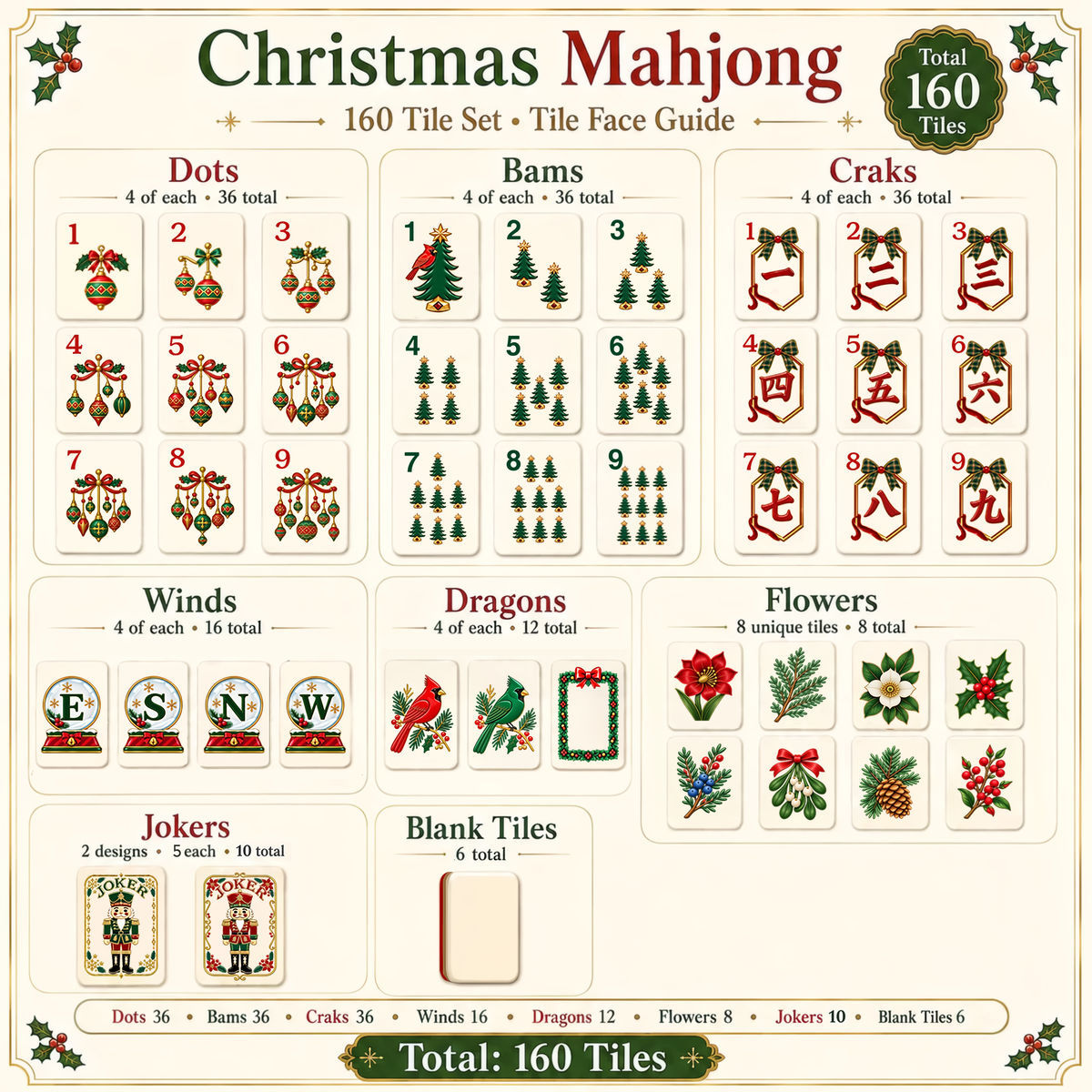
Mahjong is not harder than gin rummy—they're different. Gin rummy has one rule set; American mahjong changes yearly via the League card, which creates ongoing study. Mahjong's speed is slower, giving you time to think; gin rummy is faster and rewards snap decisions. Mahjong requires memorizing the current year's hand patterns (roughly 100+ combinations); gin rummy strategy is fixed. Both take 2–3 weeks of casual play to feel comfortable. Mahjong's barrier is remembering the card; gin's is hand valuation and discard psychology. Neither is objectively "harder"—mahjong feels more social and ritualized, gin rummy more compact and cutthroat. Most players find mahjong easier to start because the rules are simpler; gin rummy's difficulty lives in decision-making speed. A best-selling mahjong set paired with the current year's League card removes mahjong's learning friction.
What makes gin rummy feel "easier" at first glance?
Gin rummy has a stable rulebook that hasn't changed in decades. You learn it once, play forever. Mahjong's American variant requires a new card yearly—spring 2026 brings fresh legal hands. New players often assume this makes mahjong harder, but it's really just a refresh, not a reinvention. Both games need 15–20 minutes to explain; both take three casual sessions to want to play again. Gin's advantage is consistency; mahjong's is surprise.

How does the "card memory" problem actually affect beginners?
American mahjong's single biggest learning curve is the National Mah Jongg League card. It's a photocopied A4 sheet listing every legal hand—grouped by type (Like Numbers, Consecutive Run, Pairs, etc.), numbered 1–104 or so. A gin rummy player never touches a reference sheet. Beginners often hold the card in one hand and tiles in the other for the first five sessions. This feels slow, but it's exactly the point: mahjong forces you to study the card structure, so you internalize pattern recognition faster than you'd expect. By week four, most players remember 40–50 hands and flip the card only for edge cases. Gin players spend the same mental energy learning which discards are "safe" and which kill your hand—different knowledge, same time cost.
Why is mahjong often called "slower" and what does that mean for difficulty?
A gin rummy hand lasts 3–7 minutes. A mahjong hand averages 8–15 minutes. Slower ≠ easier; it means more thinking time. In gin, you decide in seconds whether to draw or knock; wrong choice costs money or points in moments. Mahjong's longer clock lets you calculate pung/kong exposure risk, track discards, and weigh joker placement. This actually lowers difficulty for anxious players: you can't panic in mahjong because the pace won't allow it. Gin rummy's speed punishes hesitation. A newer player often thrives in mahjong's rhythm; a card-sharp type prefers gin's tempo.
Which game punishes mistakes more harshly?
Gin rummy's scoring is immediate and harsh. Knock with 8 points when your opponent has 5 ("knock gin"), and you lose double. One bad discard—throwing a card that lets your opponent meld—ends the hand in their favor. Mahjong's penalty is that you don't win the hand; you pay nothing. This makes mahjong psychologically safer for learning. You can't "blow" a mahjong hand in the same way you can wreck a gin game. Over 20 hands, gin rummy's variance is high; mahjong's is lower. For competitive players, that makes gin harder because stakes feel higher. For social players, mahjong wins because failure doesn't sting.

Skill ceiling: which game rewards long-term study more?
Both are games of incomplete information and probability, but they train different skills. Gin rummy masters excel at speed-reading hand equity and discard inference (reading your opponent's hand from what they throw). Mahjong masters excel at positional memory, joker economy, and hand path-finding (spotting legal melds before you draw them). A strong gin player can beat a beginner in week two. A strong mahjong player needs a beginner to play badly—mahjong has lower skill-expression in short samples because luck (the draw) matters more. Both have high ceilings; gin's ceiling is higher if you love psychological warfare, mahjong's if you love pattern recognition.
Which actually matches your personality?
Aspect | Gin Rummy | Mahjong | Winner For |
Setup time | 2 min | 8 min (Charleston) | Gin |
Rule changes | Never | Yearly | Gin |
Hand length | 3–7 min | 8–15 min | Gin (fast) / Mahjong (thinkers) |
Reference material | None needed | Card essential first month | Gin |
Penalty for error | Immediate, visible | Deferred (you just lose) | Mahjong |
Social ritual | Competitive | Ceremonial | Mahjong |
Speed of learning basics | 15 min | 20 min | Gin |
Speed of playing competently | 3 weeks | 3 weeks | Tie |
Long-term pattern depth | High (inference) | High (recognition) | Tie |
🀄 Shop best-selling mahjong sets →
Why "harder" is the wrong question—try this instead
Stop asking which is harder and ask which suits how you think. Gin rummy is a duel; mahjong is a symposium. If you love real-time decision-making and reading faces, gin wins. If you love ritual, community, and having time to reason, mahjong wins. Both are easy to start; both are hard to master. A player who says "mahjong is impossible" usually hasn't sat through three hands with the card in hand. A gin player who says "mahjong is just luck" hasn't faced a table that knocks gin three times in a round. Get started with mahjong for beginners—the framework is straightforward; the depth is there when you want it.
If you're choosing a game to host weekly, mahjong creates tighter groups because the ritual (Charleston, seasonal card update, ceremonial tile-touching) builds habit. Gin rummy is pick-up-and-play ideal for trips and reunions. Neither is objectively harder. The real question is: which community do you want to join?
🎁 See our most-loved mahjong sets & accessories →
What to check before you buy a set
If you choose mahjong, buy a real American set with the current League card. A Chinese set (bamboo/bone, 144 tiles, chows allowed) is not the same game and will confuse you. Our best-selling mahjong sets are acrylic American 160-tile sets—they ship with pushers, racks, and jokers ready to play. Print the 2026 League card free online (nationalmahjonggleague.org). Get a mat if you're playing weekly; it protects tiles and speeds setup. Gin rummy requires only a deck of cards and a pencil—lower barrier, same entry friction as mahjong's card-printing step. Don't buy vintage tiles unless you love antiques; modern sets are consistent and easier for beginners.
✨ Find your Mahstead set — free US shipping →

FAQ
Can I learn mahjong if I've never played gin rummy?
Absolutely. Mahjong and gin rummy are separate games. No prior card knowledge helps. Start with the League card, three casual hands, and you'll catch on. Most people feel comfortable by hand five.
Is mahjong harder because the card changes yearly?
No. The card changes in spring, but the structure stays the same—you still match patterns and jokers work the same way. It's like a new crossword puzzle book, not a new game. Returning players update in 30 minutes.
How long before I stop needing the card in front of me?
Most casual players reference the card for 4–6 weeks, then know 60–70% of hands by sight. Competitive players memorize 90+ hands. Gin players reach "no reference" speed in 2–3 weeks because the rules are fixed and smaller in scope.
Which game is better for hosting weekly with the same group?
Mahjong. The ritual (Charleston, seasonal renewal, tile appreciation) builds tradition and keeps people coming back. Gin rummy works too but feels more transactional. Mahjong feels like a club.
If I'm fast and decisive, should I play gin rummy instead of mahjong?
Not necessarily. Speed helps in gin, but mahjong rewards calm planning. Some fast thinkers love mahjong's slow burn because it lets them see more. Some methodical players love gin's snap decisions. Try both if you can.
What's the minimum setup cost to start playing mahjong at home?
One 160-tile American mahjong set (see current price on the product page), the free 2026 League card printed, and a table. A mat (optional) improves the experience. Gin rummy needs only a card deck. Mahjong's setup is slightly higher but worth it for weekly groups.


View More
View More
View More
