
Is Mahjong Harder Than Bridge? A Player's Honest Comparison
Last updated: Nov 23, 2026
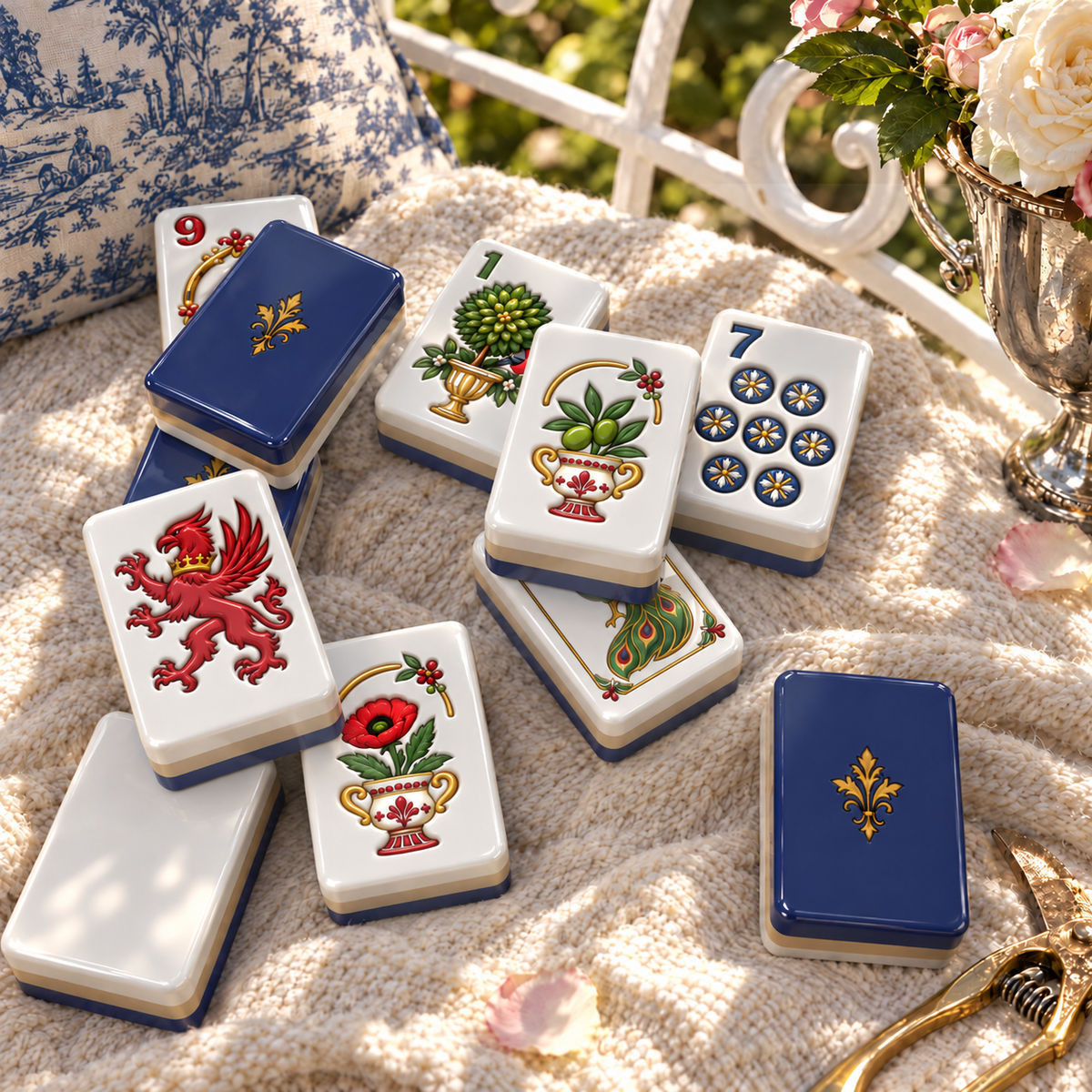
Mahjong and bridge are hard in completely different ways. Bridge demands bidding conventions, partner communication, and card memory across thirteen tricks; one wrong bid derails the whole hand. Mahjong (American variant, played with 152 tiles across four players) requires pattern recognition against a legal hand chart, fast tile-calling reflexes, and managing a live discard pile—but no partner dependency or verbal bidding. Bridge beginners spend weeks on conventions; mahjong players can join a game after 2–3 hours of rule-learning. Bridge penalizes a single memory lapse; mahjong penalizes missed joker-calling windows. Most bridge players find mahjong's tile-reading easier but its pace startling. Most mahjong players find bridge's silent logic cold. Neither is harder—mahjong feels faster and more social, bridge feels deeper and more strategic. A best-selling mahjong set lets you test the game risk-free with friends.
Bridge rewards long-term memory of partner bidding systems; mahjong rewards split-second visual pattern-matching against a printed hand card. Bridge's difficulty curve climbs steeply in week three (conventional bidding). Mahjong's learning cliff comes in hour one (recognizing pung/kong/quint exposure rules and the pass ritual called the Charleston), then flattens fast.
What makes bridge harder for most mahjong players?
Bridge requires learning and remembering bidding conventions—a shared language you and your partner must speak identically. One missed or miscommunicated signal costs you the hand. Mahjong has no convention layer. You see the tiles, you recognize the legal pattern, you call it or discard. Bridge newcomers spend the first month saying "I bid 1 No Trump" without understanding what it means; mahjong newcomers spend the first hour asking "What's a quint?" and are playing within ninety minutes.

What makes mahjong harder for bridge players?
Mahjong's chaos factor—four simultaneous hands, unpredictable discards, live joker-calling windows—feels chaotic to bridge minds trained on deterministic bidding. Bridge players are accustomed to slow, silent reasoning across an entire deal; mahjong demands you glance up every two seconds to see if you can claim someone's discard before it hits the table. Speed matters. Distractions sink you. In bridge, you control the tempo; in mahjong, the table does.
Why do bridge players sometimes find mahjong less strategic?
Bridge has seventeen high cards (A, K, Q, J, T per suit plus honors); mahjong has only eight jokers and a printed hand list. Bridge demands counting, inferring, and deducing which cards remain in play; mahjong is concrete—you either see the tile or you don't. Bridge players miss the deduction puzzle mahjong doesn't offer. Yet mahjong offers something bridge lacks: the art of the safe discard under pressure, live reading of three opponents' hands, and the mathematics of drawing blind.
Skill | Bridge | Mahjong | Winner (for whom?) |
Convention memory | Heavy | None | Bridge players |
Visual pattern-matching speed | Low | Critical | Mahjong players |
Partner dependency | Absolute | Zero | Solo thinkers |
Hand complexity | 13 cards, 4 suits | 13–14 tiles, 3 suits + honors | Tie |
Luck factor | ~30% (card distribution) | ~45% (discard luck, wall) | Bridge (skill matters more) |
Time to join a game | 3–4 weeks training | 2–3 hours | Mahjong wins |
Silent vs. social | Silent, coded speech | Loud, joyful | Mahjong wins |
🀄 Shop best-selling mahjong sets →

How does luck affect difficulty in each game?
Bridge's outcome is 70% skill, 30% luck (who has the high cards); mahjong is closer to 55% skill, 45% luck because the wall is blind and discards are unpredictable. This makes mahjong feel more forgiving to beginners—you can play well and lose, so no one blames you. Bridge punishes mistakes mercilessly; a wrong bid is written down. Many people find mahjong less intimidating because luck absorbs the shame of learning. Bridge rewards study; mahjong rewards instinct plus quick hands.
Which should you choose?
Start with mahjong if: you like fast-paced games, enjoy visual puzzles, want zero convention memorization, or prefer playing with four friends where no one dominates the narrative. You can play a complete game in ninety minutes without weeks of prep.
Start with bridge if: you love abstract logic, partner communication, long tactical planning, or don't mind silent, focused play. You'll spend a month learning conventions, but the depth of bidding strategy is unmatched.
The real answer: difficulty is not the question. Fun is. Mahjong players describe the game as "joyful, loud, and forgiving." Bridge players describe it as "deep, quiet, and demanding." Neither is objectively harder. Mahjong is harder if you hate time pressure; bridge is harder if you hate convention tables. Play both. Most players who love one tolerate but don't love the other.
If you're ready to test mahjong, a standard American mahjong set includes everything four players need: 152 tiles, 8 jokers, a hand card (updated yearly), and space for the Charleston. New to the game entirely? Our mahjong for beginners guide walks you through the Charleston, exposure rules, and how jokers work in live play.
🎁 See our most-loved mahjong sets & accessories →
What to check before you buy a set
If you've decided mahjong is your game, you'll want a set you actually enjoy handling. Acrylic tiles are durable, loud, and easy to read at a glance; bamboo sets are heavier and noisier but traditional. Check that your set includes all 152 playing tiles plus the hand card (the legal hand list changes every spring). A quality mat makes discards and exposures clearer, especially if you're hosting weekly games. Consider whether racks with pushers suit your hand strength or if you prefer holding tiles. A protective bag or case matters only if you carry your set to other players' homes.
✨ Find your Mahstead set — free US shipping →

FAQ
Can I switch between bridge and mahjong without confusing the two?
Yes. They use different suits, hand-making logic, and social rhythms. Players often enjoy both. The mental muscle is distinct enough that one doesn't erase the other—similar to playing tennis and swimming.
Is mahjong easier to learn in 2026 than it was ten years ago?
The rules haven't changed, but YouTube tutorials, online play, and starter guides have reduced the barrier. Learning speed depends on your teacher and peers, not the year.
How long does a mahjong game take compared to a bridge rubber?
A mahjong game (one hand) takes 10–20 minutes; a bridge rubber (best-of-three hands) takes 45–90 minutes. Mahjong's pace is faster and more social.
Do I need a table to play mahjong, or can I use my kitchen table?
Any flat surface works. A dedicated mat prevents tiles from sliding and makes it clearer who owns which discard, but it's not required.
If I learned American mahjong, can I play Chinese or Hong Kong mahjong with the same set?
No. American mahjong uses a legal hand card; Chinese variants have no card and allow sequences (chows). The tile set is the same 152 tiles, but the rules are fundamentally different. You'd need to learn a new game.
What's the best starter set for someone coming from bridge who wants to test mahjong?
A best-selling acrylic set with engraved tiles is ideal—acrylic lasts through years of weekly games, engravings help tile recognition, and the price is modest enough that if mahjong isn't your game, you haven't overcommitted.


View More
View More
View More
