
Is Mahjong Good for Visually Impaired Players?
Last updated: Nov 23, 2026
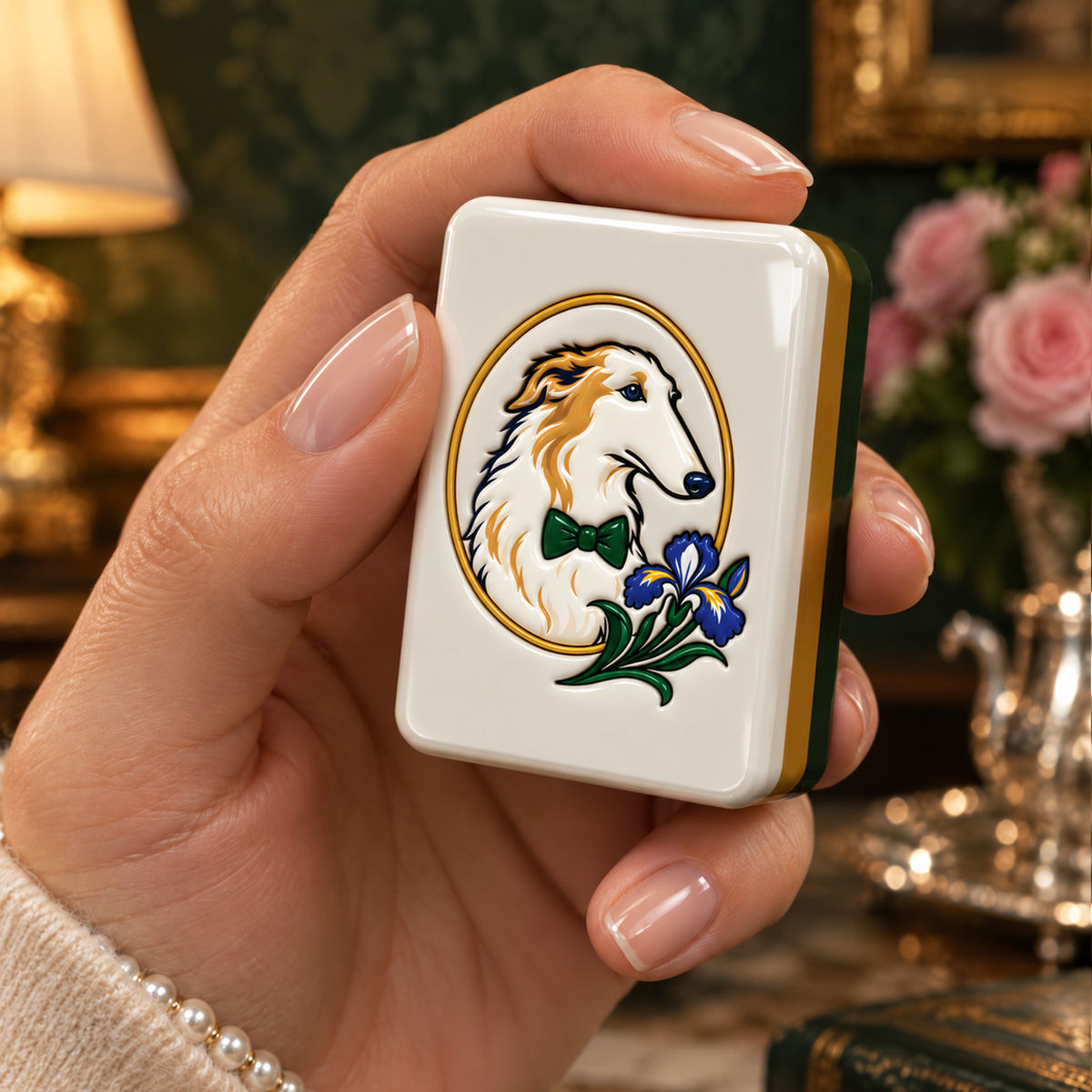
Yes, mahjong is genuinely good for visually impaired players. The game relies on memory, pattern recognition, and verbal communication rather than sight alone—core strengths blind players often excel at. American mahjong requires memorizing the year's tile patterns from a card (not reading it live during play), tracking discards by ear, and managing a hand you hold and arrange tactilely. Low-vision players benefit from large-print tiles, high-contrast colors, and mats with raised edges; blind players use tactile tile markers, verbal calling conventions, and sighted partners or assistants at the table. The social, strategic depth—and the fact that you can play seated, indoors, year-round—makes it ideal for accessibility. Mahstead's best-selling mahjong sets include bright acrylic tiles in traditional Bam, Crak, Dot colors that work well under magnification or adapted lighting.
Can you play mahjong if you're blind or have low vision?
Absolutely. Mahjong is fundamentally a memory and strategy game played with your hands and ears; sight enhances but doesn't determine play. Blind players and those with significant low vision regularly play American mahjong in inclusive groups. The key is tactile tile design, consistent verbal communication (calling exposures aloud), and a seating arrangement where players can hear discards clearly. Your teammate, partner, or a sighted guide can describe the discard wall and track the game's flow. The game's fixed hand size (13 tiles) and rule-based structure (no free-form decisions about which tiles to hide) actually level the playing field: all four players follow the same card, the same scoring rules, and the same exposure protocol.

What tile features help visually impaired players?
Raised, textured tile faces and high-contrast colors are the two essentials. Acrylic tiles with deep embossing—where you can feel the pips (dots), bamboo segments, or character strokes—let players distinguish a 5 Crak from a 1 Crak by touch alone. Bright primary colors (red Craks, green Bams, black Dots, white Winds) with bold printing serve low-vision players reading tiles from 4–6 inches away. Avoid tiles with dull finishes, muddy color combinations, or flat printing. If a player uses a magnifier or wears strong prescription lenses, ask about tile size: standard tiles are roughly 1.5 inches wide; some sets run slightly smaller. Request samples or photos with strong backlighting to see contrast before buying. Mahstead's acrylic sets prioritize crisp color separation and readable face stamps, making them a practical choice for inclusive home games.
How should the table and seating be set up?
Seat blind players where they can reach the discard wall with a short lean or guide (typically north or south position) and where they can hear all four players' speech clearly—so avoid corners or backs to the table. Use a mat with a defined, raised edge so players can locate the boundary between their hand and the discard pile by feel. The player on the blind player's left (or a designated caller) must verbally announce every discard tile, suit, and number in a consistent format: "Discarding 3 Dot," not "Three." Position the year's mahjong card where a sighted player can reference it; blind players should have the card read aloud beforehand or use a large-print or braille version prepared in advance. Keep the table clear of clutter. A mahjong mat with a textured surface or raised perimeter is far better than a bare table; the mat itself becomes an accessibility aid.
🀄 Shop best-selling mahjong sets →
What adjustments to the rules make the game more inclusive?
Standard American mahjong rules remain unchanged; the game itself is already inclusive. However, you can adapt the practice of play:
Hand management: Let blind players use racks with pushers (the pushers help keep tiles upright and separate by feel; the rack's wings signal when your hand is full).
Calling and confirmation: Require all exposures (pung, kong, quint, sextet) to be called loudly and repeated by another player before tiles leave a player's hand. This auditory confirmation prevents mistakes.
Discard announcement: Every discard must be voiced. This is standard in tournament play anyway and aids all players.
Meld spacing: Ask that exposed melds be placed at a consistent distance from the center, so players can locate them by tapping or leaning.
Play speed: Allow blind players slightly longer thinking time between turns (common house-rule accommodation in inclusive games).
Scoring: Designate one player to read scores aloud at the end of each hand. Keep a written or braille-format running tally if a player prefers to track it independently.
The 2026 National Mah Jongg League card is only available in large-print or standard print, so groups often prepare a braille or enlarged version in advance through accessibility services.

What equipment matters most for visually impaired mahjong players?
Equipment Type | Who It's For | Why It Works |
Acrylic tiles with deep embossing | Blind & low-vision players | Readable by touch and sight; high contrast color |
Racks with pushers | All players, especially blind | Keeps 13 tiles upright, manageable by feel; wings signal fullness |
Textured mahjong mat | Low-vision players | Raised edges define play area; surface helps player locate discard wall |
Large-print or braille mahjong card | Blind players | Pre-game prep: memorize patterns before tiles are drawn |
Pushers (separate) | Blind & low-vision players | Easier discard management than hand-only play |
Consistent discard callout script | All players | Auditory confirmation replaces visual scanning |
Mahstead's mahjong racks with pushers are the single most important accessory: the pusher lets you move tiles one-handed, the wings prevent tiles from falling, and the tactile spacing is intuitive for both sighted and blind players.
How do visually impaired players study the year's mahjong card?
The card—the rule book for the year—lists every legal hand pattern (pung, kong, pair combos). Blind players traditionally memorize the card's structure before game night, either by having it read aloud section-by-section or by using a large-print version. Some groups prepare a braille card through library accessibility programs or mahjong clubs; check your local library's adaptive services or contact blind-services organizations in your area for leads. A sighted teammate can also quiz a blind player on common patterns ("What hand has two pungs, a quint, and a pair?") so memory stays sharp. The card isn't consulted during play—only during post-hand validation—so advance study is essential. Many inclusive mahjong groups dedicate their first 20 minutes to a quick card review aloud, which benefits new sighted players too. Once you know the card's logic, the game flows.
🎁 See our most-loved mahjong sets & accessories →
What's the best way to learn mahjong as a visually impaired player?
Start with a sighted teacher or mentor who knows American mahjong well. Request a 1-on-1 session where they describe the tiles, the hand management sequence (draw, discard, expose), and the card's structure slowly. Have them assign you a fixed position (e.g., always North) for your first 5–10 games so you learn the table's geography by feel. Play with best-selling tile sets that have clear tactile and color separation. Join an inclusive mahjong group (community centers, senior centers, synagogues, and mahjong clubs often welcome adaptive players) where the table culture expects clear verbal calling. Don't try to memorize the entire card before your first game—learn five common patterns, play two hands, then add five more patterns. The game's logic (matching numbered suits, collecting multiples) becomes intuitive fast. Pair play—where you and a sighted partner manage one hand together—is another excellent way to build confidence early.
What to check before you buy
Tile embossing depth: Request photos or order a sample set; run your fingers across the pips to ensure they're raised at least 1mm.
Color consistency: Acrylic tiles should show true red, green, black, and white; avoid yellowed or faded sets.
Rack design: Does the rack's wing lock? Is the pusher handle ergonomic for repeated one-handed use?
Mat edge height: A mat's perimeter should be tactilely distinct (raised, not just a printed line) so players can locate it by touch.
Accessible card access: Confirm you can get a large-print, braille, or recorded version of the 2026 card before game night; contact the National Mah Jongg League or your local blind services office.
✨ Find your Mahstead set — free US shipping →
For a comprehensive introduction to American mahjong basics, see our mahjong for beginners guide. If you're building an inclusive home game, racks with pushers and a quality mahjong mat are your best investments.

FAQ
Can a blind player win a hand of mahjong?
Yes. Winning depends on memorizing patterns and strategy, not sight. Blind players regularly go out and score; the discard callouts and verbal confirmation ensure fair play.
Do the tiles need to be larger than standard?
Not necessarily. Standard acrylic tiles work if they have good tactile embossing and high contrast. Low-vision players often use magnifiers instead of larger tiles.
What if I'm playing with one blind player and three sighted players?
The blind player is a full, equal player—not an observer. All players must announce discards and exposures aloud (standard in good mahjong culture). The blind player's left neighbor can help track the discard wall, but the blind player calls their own hand.
How long does it take a blind person to learn mahjong?
3–5 games with a patient sighted teacher; the basic rules are simple. Mastering hand patterns takes weeks, same as for sighted players. Memory and card knowledge, not sight, are the learning curve.
Are there blind mahjong leagues or clubs?
Not formally national, but many local senior centers, synagogues, and community centers run adaptive mahjong groups. Contact your local blind services office, library, or community center to find groups near you.
What's the best pusher design for blind players?
A short, flat pusher with a large handle and a stopped slider (so it doesn't fall off) is easiest. The pusher should let you move one tile at a time with one hand while your other hand rests on the rack.


View More
View More
View More
