
Is Mahjong Good for Empty Nesters? Yes—Here's Why
Last updated: Nov 23, 2026
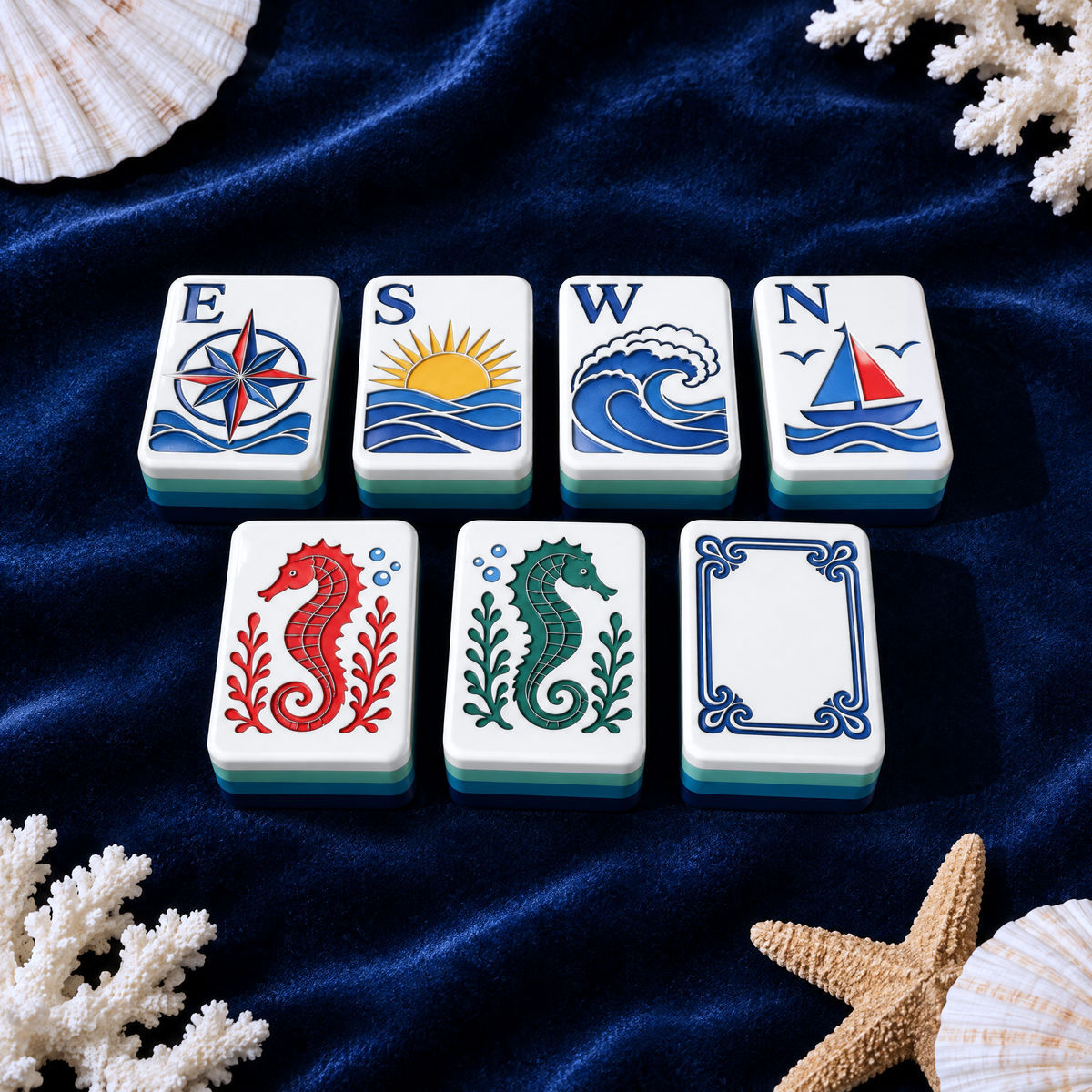
Yes. Mahjong is genuinely good for empty nesters because it combines three powerful things: a structured social ritual that requires consistent commitment, cognitive challenge that keeps your brain engaged (tile recognition, memory, strategy, quick arithmetic), and a built-in community of players who meet weekly. American mahjong takes 2–3 hours per game, plays best with four people, and has a manageable learning curve if you start with a modern guide. You'll need a 160-tile acrylic set, a mat, and access to the current year's National Mah Jongg League card. Most players report that within 4–6 weeks of weekly play, they stop thinking about the rules and start enjoying the friendships. The social structure—the same time, same place, same people—is what keeps empty nesters coming back, more than the game itself.
What does mahjong do for your brain that other games don't?
Mahjong demands active pattern recognition, short-term memory, and rapid decision-making under time pressure. Unlike passive activities, every tile draw requires you to evaluate your hand against the current year's official card, remember what other players have discarded, and decide whether to pass or take a tile. Research published in journals studying cognitive leisure activities shows games with these demands—real-time strategy, social interaction, and novel rule-application—show measurable improvement in processing speed and executive function. You're not memorizing rote facts; you're building and rebuilding a live puzzle for two hours. The novelty (the card changes every year, so no two seasons play the same) is what keeps your brain from coasting into autopilot. This is why many empty nesters find mahjong sticks when bridge or canasta didn't—it feels fresh every game.

How does mahjong create the kind of friendships empty nesters actually need?
Mahjong is a friendship delivery mechanism disguised as a game. You sit in a foursome for 2–3 hours every week, talking, laughing, competing together. Unlike a coffee meetup (which can feel forced if you run out of things to say), mahjong gives your conversation a natural container. You're not sitting in silence staring at each other; you're talking while you play. Over time, you know your friends' habits (which player always forgets to draw a tile, who rushes, who goes quiet when they're close to winning), and that familiarity breeds genuine affection. Many groups also build in snacks, wine, or lunch around the game. The recurring schedule—Thursday night at 6:30 p.m., same four people, 50 weeks a year—creates the reliable rhythm that empty nesters tell us they miss most. Unlike book club or yoga class (which can shift members month to month), your mahjong group becomes your group.
🀄 Shop best-selling mahjong sets →
Where do you actually start if you've never played?
Start by finding a beginner-friendly group in your area. Check community centers, libraries, synagogues (mahjong is popular in many Jewish communities), country clubs, and Meetup-style boards—search for "American mahjong" plus your city. When you find a group, be honest: say you've never played and ask if they teach beginners. Most established groups either have a teaching night each week or will buddy you with an experienced player. You don't need to own a set before joining; experienced players bring extras. After 3–4 weeks, you'll understand when it's time to buy. Read the mahjong for beginners guide and ask your group what they play (almost all US groups use American mahjong, but a few play Chinese or Riichi, and the rules are different). Then pick a durable acrylic set that feels good in your hands during a 2-hour game—weight, tile size, and racks matter more than you'd think.
What's the difference between "trying it out" and "actually playing"?
Real play means weekly commitment, a scored game, and genuine stakes (even if just bragging rights). Casual trial means learning the rules in a low-pressure setting with patient teachers. Here's the decision framework:
Phase | Time Commitment | Best For | Why It Matters |
Try-out | 1–2 sessions, 3 hours each | Confirming you like the pace and people | You'll discover if the cognitive load feels fun or frustrating |
Regular player | 1–2 evenings/week, 52 weeks/year | Building real friendships and skill | Consistency is what transforms "a game I play" into "my people" |
Serious player | 2–3+ evenings/week + annual tournament | Competing and studying strategy | Skill progression takes time; most beginners don't want this |
Most empty nesters land in "regular player" and stay there for 5–10 years. The game itself doesn't get boring because the National Mah Jongg League issues a new card every spring, reordering which hand combinations are legal. You'll have favorite hands you chase each year, but the puzzle is always different.

What gear do you actually need, and what's overkill?
Essential: A 160-tile acrylic set (durable, lasts years, plays smoothly), a mat to define the play area and protect tiles, and a copy of the current year's National Mah Jongg League card. That's it.
Helpful: Racks with pushers (they make handling 13 tiles for 2+ hours less tiring on your hands). Drawstring bags to carry your set between games without scratching it. If you're hosting, a dedicated storage case keeps everything organized.
Overkill: Multiple sets in different colors, custom tile stands, or expensive tournament-grade equipment. You play once or twice a week; your tiles don't need to be competition-grade unless you're entering tournaments (most beginners never do). Buy a best-selling set that feels good, a mat you like looking at (you'll stare at it for 2 hours), and stop.
🎁 See our most-loved mahjong sets & accessories →
What should you check before you buy a set?
Before purchasing, answer these questions:
How many people will play at your table? (Almost always four; if you know you'll play 2–3 player games, rules are different—research this first).
Where will you store the set? (Acrylic lasts longest and handles humidity better than bamboo or bone; if you live in a damp climate or an older house, acrylic is the safer bet.)
Will you travel with it? (If yes, a travel bag is not optional—loose tiles in a box will scratch and shift during a car ride; a drawstring bag is 15 minutes of protection.)
Do you want your set personalized? (Engraved sets add a personal touch and make a thoughtful gift for someone you know who plays; they're also easy to identify if you play in multiple groups.)
What's your actual weekly schedule? (Be honest: if you can't commit to the same night for at least 12 weeks, you won't build the friendships that make mahjong worth it. A once-a-month game is fun but won't feel like "your people.")
Read how to choose a mahjong mat and what's in an American mahjong set to get specific about tile count, size, and care.
✨ Find your Mahstead set — free US shipping →
How do you know if mahjong is actually for you?
Mahjong works for empty nesters who:
Want a structured reason to see the same people every week.
Enjoy games that reward both memory and quick thinking.
Like sitting still for 2+ hours; it's not a high-energy activity.
Value learning something new well enough to tolerate the first 3 weeks of rule confusion.
Live in an area where a beginner-friendly group exists (this is the real gate; if your city has no mahjong community, it's much harder).
Mahjong might not work for you if:
You travel frequently or have unpredictable weeks; the same-time-same-people structure breaks down.
You're competitive in a way that makes losing frustrating (most groups play for fun, not money, but ego is real).
You prefer games where luck plays less of a role (the tile draw is random; strategy only does so much).
You need a game that plays in 30–60 minutes (mahjong is a 2–3 hour commitment per session).
The honest answer: Try it first. Ask a friend who plays if you can watch a game, or find a teaching group. You'll know within 20 minutes if the pace feels right.

FAQ
How long does it take to be decent enough to play in a regular group?
3–6 weeks of weekly play. By week 4, you'll stop needing the card for every hand. By week 6, you'll think strategically, not mechanically. Most groups welcome beginners as long as you show up consistently and ask questions.
Is American mahjong harder than other variants (Chinese, Riichi, Hong Kong)?
They're different, not harder. American mahjong has no sequences (chows), only groups of identical tiles, and relies on a published card that changes yearly. Chinese mahjong is purely memorized patterns. Riichi is highly tactical. If you live in the US, learn American first; that's what you'll find.
Can you play mahjong online, or does it have to be in person?
You can play online, and some groups do hybrid during bad weather. But for empty nesters, the in-person, weekly, same-four-people version is what delivers the friendship and ritual. Online play is convenient but loses the core benefit.
What does a mahjong set actually contain, and why does the number matter?
A standard American set has 152 playing tiles (108 numbered tiles across three suits, 16 winds, 12 dragons, 8 flowers, 8 jokers). Mahstead sells 160-tile sets, which include 8 spare tiles. The extra tiles rarely come into play; they're insurance against damage or loss. You play with exactly 152 tiles every game.
If I buy a mahjong set, how often will it need to be replaced?
Acrylic tiles last 10+ years with normal use (weekly play). They don't chip easily, don't absorb odors or moisture, and don't fade. Most players retire a set because they want a new design or color, not because the old one broke. With basic care (keep it in a bag, don't leave it in a hot car), your investment is solid.
How much does it cost to start playing—set, mat, card, everything?
See current pricing on the product pages for individual items. A basic startup (set, mat, card) is a manageable one-time cost. The National Mah Jongg League card is issued every April and costs much less than the set. Budget what feels comfortable; you don't need premium gear to have a great experience.


View More
View More
View More
