
Cantonese mahjong house rules: the 13 variations most players use
Last updated: Nov 23, 2026
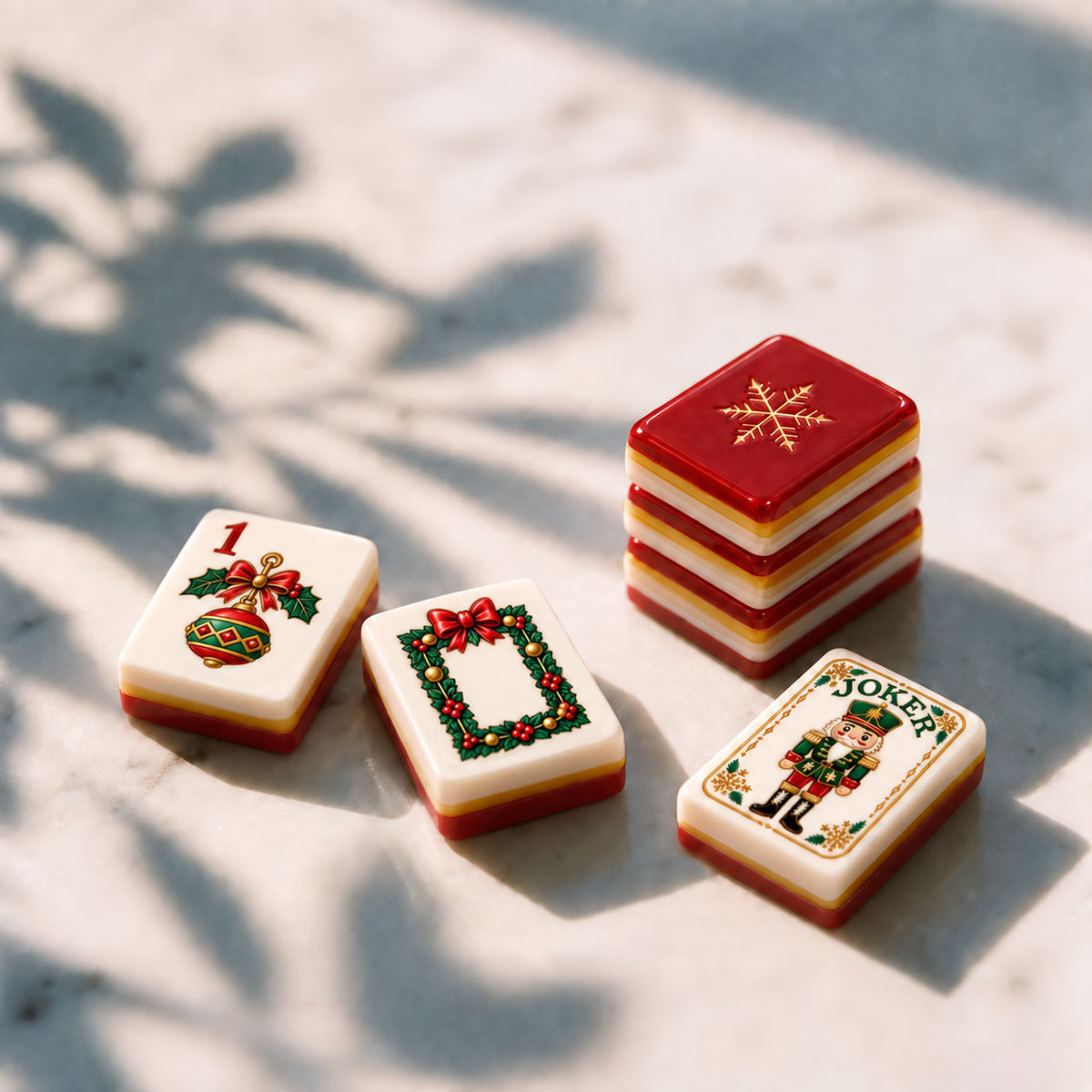
Cantonese mahjong house rules are local or table-specific modifications to winning hands, scoring, and tile usage that vary by region, family, and club. They're not part of the formal printed ruleset; instead, they emerge from decades of play in Hong Kong, Macau, and diaspora communities. Before every game, players should announce which rules are in effect—especially regarding concealed kongs, bonus tiles (flowers and seasons), joker use, all-honors or all-terminals hands, payment multipliers, and limit hands. Common disagreements arise over whether flowers grant bonus draws, whether a discard already touched counts as played, and whether certain declaring patterns count as true winning hands. Negotiate these before the first shuffle to keep the game friendly and fair. Our best-selling mahjong sets include a score pad; jot house rules on the back so everyone has a reference.
What is the difference between Cantonese mahjong and Hong Kong standard rules?
Cantonese mahjong refers to the formal Hong Kong ruleset and the sprawl of house variations that evolved from it. The formal standard uses 152 tiles with one standard winning condition: a hand of four melds plus a pair. However, Cantonese house rules often introduce bonus points for flowers and seasons, allow certain joker placements forbidden elsewhere, permit limit hands (like all honors or all terminals), and alter the payment structure. The broadest difference: formal play follows a published standard, while house rules are negotiated live at the table. Always confirm which version your group plays before the first game.

Do flowers and seasons grant bonus draws in Cantonese house rules?
In many Cantonese house rules, drawing a flower or season tile grants an immediate bonus tile draw from the wall—but not always. Some groups award the bonus only for flowers, others for both flowers and seasons, and some award no bonus at all and simply count the flower as a hand tile. A few groups require you to draw a bonus tile and draw an extra tile from the wall, effectively giving you two chances. The rule directly affects hand-building speed and strategy: bonus draws accelerate winning, so games feel shorter and more volatile. Before sitting down, always ask: "Do flowers draw?" If the answer is yes, ask whether seasons count too. If unclear, offer to play without bonus draws on round one so everyone agrees before money is on the table.
Can you use jokers in a single tile or a pair in Cantonese house rules?
This is one of the most common disputes in Cantonese play. Some house rules permit a joker to substitute for a single tile (so a hand can contain a lone joker plus three other tiles to complete a meld). Others forbid jokers in singles but allow them in pairs. Still others prohibit jokers entirely and play a pure-tile game. A fourth group allows jokers in singles, pairs, and melds (the most permissive variant). The strictest rule—jokers only in three- or four-tile melds—matches Riichi and formal Hong Kong standard play. Joker rules have enormous impact: loose rules make hands easier to complete, so the winning threshold drops and games accelerate. Clarify this rule before the first discard; if you disagree mid-hand, the error can cascade.
What happens when you declare a concealed kong in Cantonese house rules?
A concealed kong (four identical tiles drawn from your own hand, never previously exposed) is handled three different ways in Cantonese house rules. The most common rule: you may declare it and draw a bonus tile from the wall, just like a normal kong. A second rule permits you to declare it only if you also draw a winning tile on that same draw; otherwise, the four tiles stay hidden. A third rule forbids concealed kongs entirely and requires all kongs to be melded openly on the table. The strictest versions also impose a scoring penalty on a concealed kong to discourage their strategic value. Before the game, confirm: "Are concealed kongs allowed, and if so, do they draw a bonus tile?" Write the answer on your score sheet.
How do limit hands and bonus patterns affect Cantonese house scoring?
Cantonese house rules often recognize "limit hands"—special, difficult patterns that are worth the maximum payout regardless of other factors. Common limit hands include: all honors (winds and dragons only), all terminals (1s and 9s only), all the same suit, a pair of dragons, or a hand containing a concealed kong and a pair of dragons. Other groups add bonus patterns like "all pungs" (every meld is a pung, not a chow or kong) or "one suit plus honors." The key difference from American mahjong: American play uses only the current year's published card, while Cantonese groups define their own bonus patterns live. Scoring is often tiered: a normal hand = 1 point, a bonus pattern = 2–5 points, a limit hand = double the maximum. Always ask your group: "What counts as a limit hand here?" and have someone write the list before play begins.
Hand Pattern | American Mahjong | Cantonese House Rules | Scoring Impact |
All honors | Not recognized | Limit hand (bonus 2×–5×) | Major payout |
All terminals | Not recognized | Limit hand (bonus 2×–5×) | Major payout |
One suit only | Not recognized | Bonus pattern (1.5×–2×) | Medium payout |
All pungs | Recognized on card | Bonus pattern (varies) | Varies by house |
Concealed kong | Not used | Bonus meld or forbidden | Varies by house |
Flowers + bonus draw | Not applicable | Often yes, sometimes no | Speeds winning |
🀄 Shop best-selling mahjong sets →
When does a discard become "played" in Cantonese house rules?
This rule prevents disputes about whether someone took back a discarded tile. The most common Cantonese rule: a discard counts as played the moment it leaves your hand and reaches the center of the table (or the discard rack). Once placed, no one may reclaim it except to call it for a meld. A stricter rule: a tile is only "played" after the next player draws from the wall, making early calls impossible. A looser rule: a tile may be retracted until the next player completes their draw. The difference matters hugely: if a player mistakenly discards a tile they need and tries to take it back, a strict rule forbids it; a loose rule allows it if no one has called or drawn yet. Agree on this before the first discard, especially in friendly games with newer players who may make honest mistakes.

Do you split the pot or pay winner-takes-all in Cantonese house rules?
Cantonese groups typically use one of three payment structures. The most common: each player pays the winner a fixed amount per point (e.g., 1 point = 1 chip, 5 points = 5 chips from each loser). A second rule: the winners split the full pot (loser pay model: losers pay into a central pot, winners divide it equally). A third rule: payment is tiered by position (East/Banker pays double, South/West/North pay single), so a winning East player collects more than a winning North player for the same hand. Some groups add "losers double" rules: if all four players go bankrupt before anyone wins, players reset chips and play a bonus hand. This is purely a house rule—none of these structures is mandated by Cantonese standard. Confirm the payment model before money changes hands.
What counts as a "waiting hand" or "ready hand" in Cantonese play?
A "waiting hand" (also called a "ready hand" or hand in ting 聽) is one that can win on the very next draw or discard. In formal Cantonese play, a waiting hand usually requires exactly one tile to complete (e.g., you need a 5 Dot to win). Some house rules extend this: a hand is "waiting" if it can win on one of two or more specific tiles (wider victory conditions). Other groups forbid declaring you are waiting until a specific signal is given. The most permissive rule: any player may claim they are waiting at any time, and other players may play more cautiously in response. The strictest rule: no player may announce "waiting"; they must win silently. This rule affects psychology and table talk, so clarify it early. In American mahjong, there is no "waiting" concept; you either have a completed hand matching the card or you don't.
🎁 See our most-loved mahjong sets & accessories →
How do you settle disputes over whether a hand is "valid" in Cantonese rules?
Cantonese house rules often include ad-hoc validation steps that differ from formal play. The most common: if a player declares a winning hand, each player may review the melds and ask questions before paying. A second rule requires the winner to prove their hand matches one of the house-recognized patterns (e.g., "This is all terminals and a pair"). A third rule delegates disputes to the strongest player at the table or a pre-appointed "referee." The loosest rule: if no one objects within 10 seconds, the hand is valid and payment is final. The strictest rule: a hand is only valid if all players agree it meets the house rules before the next game begins. To avoid chaos, establish before the first game: "If someone objects to a winning hand, how do we decide?" Write it down.
What is the "East wind advantage" or banker rule in Cantonese house rules?
In many Cantonese games, the East player (also called the Banker or dealer) has special privileges. The most common: East draws first and the wall passes counterclockwise instead of clockwise (or vice versa, depending on house). A second rule: East pays single and collects double (or pays double and collects single, reversing the usual penalty). A third rule: if East wins, East remains the dealer for the next hand; if East loses, the next player becomes East. Some groups add a "double East" rule: if East wins twice in a row, East collects double payment on the next hand. These rules are entirely optional and vary by region and family tradition. Confirm the East rule before the first game, especially in casual play where the banker role rotates.
When should you negotiate house rules, and what should you write down?
The golden rule: agree on house rules before anyone picks up tiles, preferably before the first hand is dealt. Negotiation should take 5–10 minutes and involve all four players. Start by asking: "What house rules do we play?" If the group is experienced, someone will likely rattle off the list. If it's a mixed group, ask these 13 questions in order:
Do flowers draw bonus tiles? (If yes: do seasons too?)
Are jokers allowed? (If yes: in singles, pairs, melds, or all three?)
Are concealed kongs allowed? (If yes: do they draw a bonus?)
What counts as a limit hand or bonus pattern?
When is a discard "played"?
What payment structure do we use (fixed, split pot, tiered)?
Do we announce "waiting"?
How do we settle disputes over hand validity?
Does East have special privileges?
Can you retract a discard before the next player draws?
Do you need an empty hand to win, or can you go "self-drawn"?
Is there a "robbing the kong" rule?
What is the absolute maximum payout per hand?
Write down the answers on a piece of paper and place it where everyone can see it. Update the list if rules change mid-session. This takes one minute and prevents hours of frustration.
What to check before you buy:
Tile clarity: Cantonese play relies on quick tile recognition, so buy a set with engraved or embossed suits that are easy to read under table lighting. Engraved American mahjong sets are durable and remain legible after years of play.
Rack quality: If players expose melds frequently, invest in racks with pushers to organize tiles neatly and prevent accidental reveals.
Discard management: A good mahjong mat includes a discard row or section so there is no ambiguity about which tiles have been played.
Scorekeeping: Keep a pen and paper (or a laminated score sheet) within arm's reach so house rules are visible and disputes are minimal.
✨ Find your Mahstead set — free US shipping →

FAQ
Is Cantonese mahjong the same as Hong Kong mahjong?
Formally, yes—Hong Kong is the standard ruleset. In practice, "Cantonese" often refers to the many house variations played in Hong Kong, Macau, and Cantonese diaspora communities. House rules are negotiated per group and vary widely.
Can I play Cantonese mahjong with an American mahjong set?
Not easily. American sets have jokers and no seasons tiles, and hands are drawn from a printed card—very different from Cantonese play. You need a Chinese or Hong Kong mahjong set (152 tiles, with flowers and seasons, no jokers) to play Cantonese correctly.
What happens if someone forgets a house rule mid-hand?
Stop the hand immediately, review the rules sheet you wrote down before the game, and decide as a group whether to resume or restart. Never let a hand finish if there is doubt; it creates resentment and future disputes.
Is there an official Cantonese mahjong rulebook?
Hong Kong publishes a standard ruleset, but house variations are local and unofficial. Before every game, assume the rules are different unless you've played with that exact group before. Always ask.
How do I teach Cantonese mahjong to beginners if house rules keep changing?
Start with the formal Hong Kong standard (no house rules), teach the basics of melds and winning hands, and only add house rules once everyone wins a few hands. Then add one house rule per session until the group's full rule set is active.


View More
View More
View More
