
Is Hong Kong Mahjong Hard to Learn?
Last updated: Nov 23, 2026
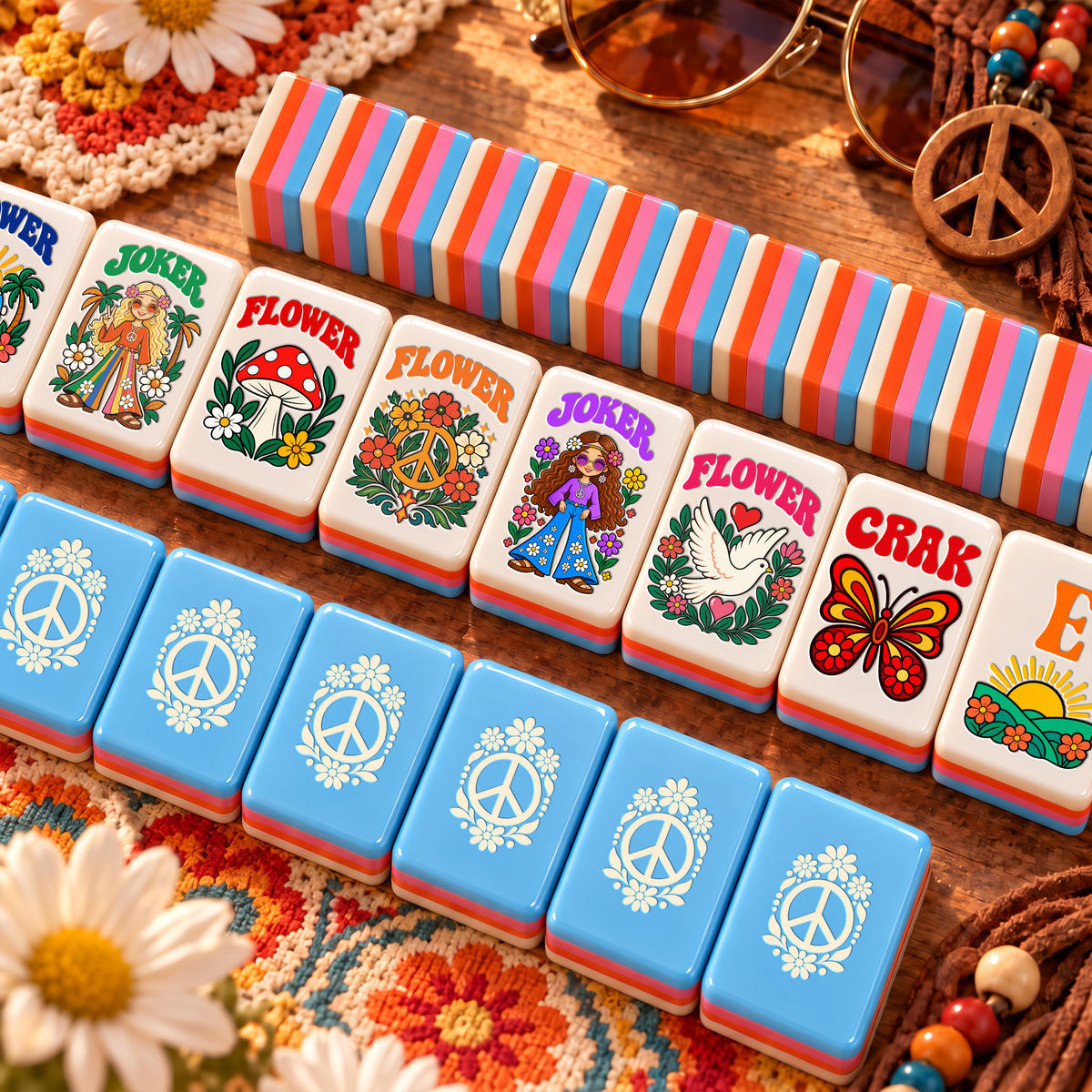
Hong Kong mahjong is objectively harder than American mahjong for Western beginners. You face 108 tiles (no flowers, winds, or dragons in the basic game), faster play, no printed hand reference card, and strict memory of all 81 possible winning patterns. Hands form from sequences (chows: 1-2-3 of the same suit), identical triplets (pungs), and pairs—quite different from American rules. Most players need 4–6 weeks of weekly games to grasp core tactics; fluency takes months. The real barrier isn't tile count—it's the absence of a safety net. You must internalize hand shapes and read the table in real time. We recommend starting with a skilled player's table and using a printed hand chart until patterns stick.
🀄 Shop best-selling mahjong sets →
Why is Hong Kong mahjong faster than American mahjong?
In Hong Kong play, rounds move at nearly double the American tempo. No Charleston pass-ritual burns time; players begin once tiles are dealt. You draw and discard in one fluid motion—no tableau building, no hand-calling window, no joker negotiation. Decisions land in seconds. The absence of a printed card means you can't pause to look up a hand; you either know it or you don't. Discards matter immediately—one wrong tile exposes your intention to three opponents who are already calculating your danger zone. American mahjong is turn-based and forgiving by comparison; Hong Kong is a continuous inference game.

What tile combinations are different in Hong Kong mahjong?
The fundamental difference is the chow—a sequence of three consecutive numbers in the same suit (e.g., 3 Bam, 4 Bam, 5 Bam). American mahjong allows chows only in your closed hand; they're invisible. Hong Kong mahjong exposes chows the moment you meld them, and opponents instantly know your range. You also build pairs (any two identical tiles) and pungs (three identical tiles). Kongs (four identical) exist but lock tiles away immediately. No winds or dragons sit in the basic game; no flowers award bonus points. Every hand is built from suit tiles alone—just Bams, Craks, and Dots. This constraint forces repetition: you'll memorize 15–20 core hand types in your first month. The lack of variety is actually a learning advantage—your brain locks onto patterns faster because there's less noise.
How long does it take to stop making rookie mistakes?
Milestone | Timeframe | What You'll Know |
First game | 2 hours | Tile names, basic pung/chow recognition, discard panic |
Weekly player (4 games) | 1 month | 30% of winning hands by sight, safe vs. risky discards |
Competent player | 6–8 weeks | ~70% of hands, hand reading, dealer advantage tactics |
Solid intermediate | 3–4 months | Defensive play, tile math, probability of opponent's win |
Advanced player | 1+ year | Pattern prediction, suitcase draws, blocked tiles intuition |
The biggest rookie mistakes: holding onto "pretty" tiles (consecutive numbers that don't form a meld), discarding from your current suit (telegraphing your strategy), and not tracking discarded tiles. You'll make all three for your first 6–8 games. We watch newcomers play every week; the mistake pattern is identical. The fix is deliberate tracking—write down the first 10 discards from each opponent each round. Your brain will auto-scan after three weeks.
How does hand memory work if there's no card to reference?
In American mahjong, the printed card is a crutch and a timer—you scan it during your turn. Hong Kong players don't have this. Instead, they drill hands before play. Serious players spend 20 minutes beforehand reviewing a chart. The chart lists maybe 15–20 pattern families (all one suit, mixed suits, high tiles, low tiles, edge hands). After three weeks of games, your pattern-matching muscle memory activates without conscious effort. You'll discard a tile and suddenly "see" that you need 6-7-8 Craks to complete a chow; the visual fires before logic kicks in. This is learnable but it's not passive—you must study. We recommend printing a beginner's hand sheet and keeping it at the table for your first month. After that, remove it. The withdrawal is real but temporary.
🎁 See our most-loved mahjong sets & accessories →

What's the hardest part—and how do you actually beat it?
The hardest part is simultaneous threat assessment. You hold eight tiles and must instantly weigh: "Which discard loses me the least if one of three opponents wins?" In American mahjong, you have a turn window and the card. Here, you have three seconds and your intuition. The opponent on your left is half-way through a suit you just discarded from; the player across built a small pung last round; the player on your right never discards Dots. Which tile is safest? Your brain will be wrong for the first two weeks. The antidote is conservative discard discipline. Always lead with tiles that two or more players have already discarded. This is cowardly but effective. Avoid edge tiles (1s and 9s) until you're confident they're safe; most beginners call 1 and 9 of the suit they're not building. Second, sit at a teaching table at least twice. The moment you call a losing discard, an experienced player will explain the read. You'll absorb two months' worth of pattern logic in one evening.
How does learning Hong Kong mahjong change how you play American mahjong?
Learning Hong Kong variants actually sharpens American play. You internalize tile flow and probability faster; the American card becomes a tool rather than a crutch. You start recognizing which hands cluster together (all consecutive, all one suit) and pre-planning your strategy in the Charleston pass. You learn to track joker density and read discards as a map of opponents' holdings. The downside: American mahjong may feel slow after Hong Kong. That's fine. Both games are learnable. The key difference is that American rewards patience; Hong Kong rewards speed and memory. If you're buying tiles for a group interested in exploring both, look for best-selling mahjong sets made from durable acrylic—you'll want to play both variants often enough that tiles see real wear.
✨ Find your Mahstead set — free US shipping →
What to check before you buy
If you're buying a set specifically to learn Hong Kong mahjong, verify that the tile faces are large and clear. Hong Kong play is fast; you need to read a tile in half a second. Smaller tiles or faint printing will slow you down and frustrate beginners. Check that your set includes at least 108 usable tiles (most modern sets include extra jokers and blanks, but those aren't used in base Hong Kong play). Make sure the case or bag fits comfortably on a small table—Hong Kong requires more rapid tile access than American play. Finally, pair your set with a printed hand reference sheet specific to your variant (British, Cantonese, or Singaporean rules differ slightly). We ship free across the US and our best-selling mahjong sets include acrylic versions built for fast, frequent play.

FAQ
Can I learn Hong Kong mahjong from a book or app alone?
No. Hong Kong requires live play and real-time feedback from experienced players. Apps and books teach rules, but only table time teaches rhythm and discard reading. Expect 6–8 live games minimum before app drills make sense.
Is Hong Kong mahjong played with jokers like American mahjong?
Not in the basic game. Hong Kong uses 108 tiles (three suits, 1–9, four copies each). No winds, dragons, flowers, or jokers. Some advanced variants and house rules introduce wildcards, but beginners should learn the pure version first.
How many tiles do I need to play Hong Kong mahjong?
Exactly 108 tiles (36 per suit). If you're buying a Western set, it likely includes 152 or more tiles. Use only the Bams, Craks, and Dots; set the rest aside. You'll need one flat surface and clear tile visibility.
Should I learn American mahjong first, or jump straight to Hong Kong?
Jump straight to Hong Kong if you have an experienced player at your table. The rule systems are separate; learning both simultaneously causes confusion. If you're self-teaching, American is easier—the card is a safety net.
What's the biggest culture shock when switching from American to Hong Kong?
Silence and speed. American tables talk strategy and joke during turns. Hong Kong tables enforce quiet play and near-constant activity. If you value relaxed social play, American suits you better.


View More
View More
View More
