
Is Filipino Mahjong Hard to Learn? Complete Guide for Beginners
Last updated: Nov 23, 2026
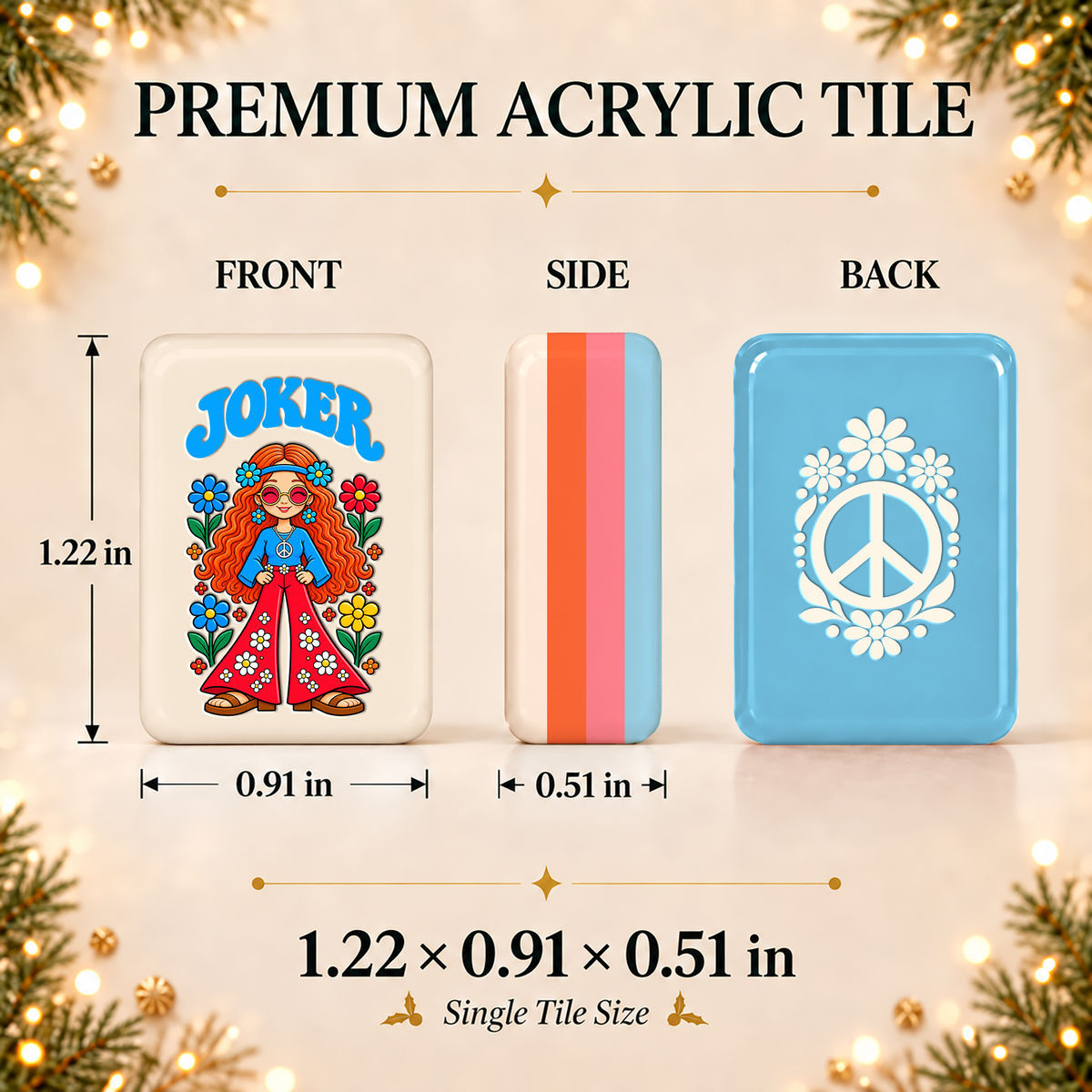
Filipino mahjong—played with a 144-tile set (not the 152-tile American standard)—is genuinely easier to learn than American or Chinese mahjong. The core reason: no hand chart to memorize, no complex scoring, and matching is purely visual and pattern-based. A beginner grasps the fundamentals in 30 minutes and plays a full game within an hour or two. The hand types are simpler (pairs, sequences, triplets) and you draw and discard one tile at a time, creating immediate, intuitive rhythm. No Charleston (tile-passing ritual), no joker mechanics to decode. Filipino variants range from Mahjong Solitaire (a solo tile-matching puzzle, not a multiplayer game) to social multiplayer formats. If you've played card games or dominoes, the logic feels familiar. The main learning curve isn't difficulty—it's understanding which sequences score and how quickly the game tempo moves. We recommend starting with a clear mat and well-made tiles from best-selling mahjong sets so you can see patterns clearly.
What makes Filipino mahjong simpler than American?
Filipino mahjong requires no memorized hand card because hands are built on visual logic alone—match pairs and sequences that form natural patterns. American mahjong demands reference to an annual card printed by the National Mah Jongg League; every valid hand on that year's card must be learned or kept visible. Filipino play is "freestyle": if a sequence looks like a run, it counts. You also don't need jokers to complete hands—the 144 tiles are sufficient. American sets use 152 tiles plus jokers because hands often require them. Result: Filipino mahjong feels instantly approachable to newcomers; American mahjong demands upfront study. That said, American mahjong offers deeper strategy and social ritual (the Charleston is half the fun); Filipino mahjong is faster and more casual.
🀄 Shop best-selling mahjong sets →

Is the 144-tile set the standard for Filipino mahjong?
Yes. Filipino mahjong uses exactly 144 tiles: three suits (Bams, Craks, Dots) × numbers 1–9 × four copies each (108 tiles) + 16 winds + 12 dragons + 8 flowers. No blanks, no extra jokers. This compact size is why the game plays faster and feels less overwhelming than the American 152-tile variant. All four players get 13 tiles at the start; the dealer draws one more. The smaller pool makes every tile more significant—discards carry weight immediately. If you're buying a set for Filipino play and plan to also learn American mahjong later, a new arrival set designed for multipurpose use is worth considering, though dedicated 144-tile sets are ideal for pure Filipino play.
How long does a typical Filipino mahjong game take?
A single game usually lasts 15–25 minutes once all players know the hand patterns. The first game of your life might take 45 minutes; your third or fourth session will feel twice as fast. The speed comes from: no hand chart lookup (you see it, you know it), fast discard rhythm, and clear win conditions. American mahjong games average 30–45 minutes per round because players constantly reference the hand card and scoring involves detailed tallying. Filipino games reward pattern recognition over memory, so pace accelerates quickly. Teach a group of four in under an hour; they'll play seriously by the second round. Speed is part of the appeal—many players choose Filipino mahjong for casual, social evenings when time is tight.
What are the main hand types in Filipino mahjong?
Filipino mahjong recognizes three core hand types: pairs (two identical tiles), pungs (three identical tiles), and chows (sequences of three consecutive tiles in the same suit, e.g., 4–5–6 Bams). Some variants add kongs (four identical tiles). Winning requires 14 tiles arranged as one pair plus four sets (each set is a pung, chow, or kong). Unlike American mahjong, chows are visible, drawable, and callable—you can claim a discarded tile to complete a chow on your turn, forcing play tempo. This mechanic is huge: beginners grasp it immediately ("it's like rummy"). American mahjong forbids exposed sequences entirely; you only expose pungs and kongs. That restriction is why American mahjong feels abstract to newcomers. Filipino mahjong's chow-calling rule makes progress tangible and keeps all players engaged even when it's not their turn. Once you learn these three types, you've learned the foundation.
🎁 See our most-loved mahjong sets & accessories →
What mistakes do beginners make when learning Filipino mahjong?
Mistake | Why it happens | How to avoid it |
Holding too many unrelated tiles | Thinking every tile "might fit later" | Discard early; assume your drawn tile will not complete a waiting hand—prioritize fast progress |
Forgetting which tiles are discarded | Eyes on your hand, not the discard wall | Use a mahjong mat with clear discard zones; keep them visible and orderly |
Calling melds too aggressively | Chows are allowed, so call everything | Each call locks you into that set; wait for strong melds only |
Confusing suit symbols | Bam bird looks different than Crak | Study tiles before play; quality sets with clear markings (thicker numerals, bold colors) speed learning |
Ignoring other players' discards | Thinking "it's not my turn" | Winning sometimes comes from another player's discard; always track the wall |
Most beginners overcomplicate strategy. Start by simply building your hand, calling melds that feel safe, and listening to experienced players. A second or third game drops the confusion sharply.

How does Filipino mahjong scoring differ from American?
Filipino mahjong scoring is much simpler: winners are typically paid a fixed amount (often one unit per player) plus bonuses for special finishes like drawing the winning tile yourself versus claiming a discard. Some regional variants add modest multipliers for specific hand types, but nothing approaches American mahjong's intricate point system involving hand type, drawn-tile versus claimed-tile, pung versus chow mixes, and the dragon/wind bonuses that fill entire score sheets. American scoring requires a calculator and reference table; Filipino scoring is mental math. This simplicity is partly why Filipino mahjong attracts casual players: money changes hands quickly, nobody's standing around arithmetic. If you come from American mahjong, Filipino scoring will feel almost comedically fast—and liberating.
Can you learn Filipino mahjong from American mahjong experience?
Partially, yes. Core tile knowledge transfers: you already know suits, winds, dragons, flowers, and the idea that patterns matter. However, American and Filipino mahjong diverge sharply on three fronts: (1) hand building logic – Filipino mahjong uses visual sequences, American uses a reference card; (2) melds – Filipino allows chows to be called and exposed, American forbids it; (3) tempo – Filipino is fast and immediate, American is methodical and reference-heavy. If you're an American mahjong regular, picking up Filipino takes one instructional session and perhaps two practice games. The tile symbols are identical, so your existing best-selling set can be repurposed if you separate out the extra jokers and blanks (American sets are 152 tiles; Filipino uses 144). That said, switching variants mid-week can cause confusion—most clubs stick to one variant to avoid mental whiplash. Think of Filipino and American mahjong as two languages that share an alphabet: cognates help, but grammar is different.
✨ Find your Mahstead set — free US shipping →
What you'll need to start learning Filipino mahjong
A complete 144-tile set is the foundation. Because Filipino mahjong is often played informally at kitchen tables, a mahjong mat with clear zones for the wall, your hand, and discards transforms learning: it enforces play discipline and keeps tiles from sliding. If you play regularly, racks with pushers stabilize your hand so tiles don't tip—especially valuable when teaching because it looks professional and reduces nervous fumbling. A travel bag or case protects your set and makes hosting portable. Dice are optional but traditional (some Filipino variants use them for distributing tiles). The single biggest mistake beginners make: playing on a bare table without a mat. Tiles scatter, discard order becomes unclear, and it becomes hard to see patterns. A mat costs less than one dinner and cuts learning time by 30%.
Should you start with American or Filipino mahjong?
If you have no prior experience: Filipino mahjong is the faster entry point. You'll play recognizable games within two hours. American mahjong demands a 2–3 session investment before you're comfortable consulting the hand card mid-play.
If you have access to both groups: Learn American mahjong if your community plays it. Regional culture matters—American mahjong dominates in certain areas (parts of Texas, California, and the Northeast); Filipino mahjong is common in other pockets and among purely casual players. Join whoever plays locally; the social game is half the learning.
If you're buying a set: A 152-tile American set is the safer long-term investment because it unlocks both American and (with tile removal) Filipino play. But if you're certain your group plays Filipino exclusively, a dedicated 144-tile set is ideal because it's built for that rhythm and won't confuse you with extra tiles.
What to check before you buy
Tile size and weight – Heavier tiles (thicker acrylic or composite) feel professional and are easier to shuffle; lighter tiles slide too much on bare tables.
Numeral clarity – Can you see 1–9 from across the table without glasses? Blurry print means slower learning.
Suit color separation – Bams, Craks, and Dots should be visually distinct (not pastels that blur together under bad lighting).
Set completeness – Verify you have all 144 tiles (or 152 if buying for American play). Count the flowers and winds; incomplete sets ruin a night.
Case design – Does it close securely? Will loose tiles rattle during travel?

FAQ
Is Filipino mahjong the same as Mahjong Solitaire?
No. Mahjong Solitaire is a solo tile-matching puzzle played on a computer or with physical tiles arranged in a pattern; you match pairs until the board clears (or you lose). Filipino mahjong is multiplayer, turn-based, real-time social play. Both use 144 tiles but are entirely different games.
Can I play Filipino mahjong with only three players?
Yes. Three-player variants exist and are straightforward: each player takes 14 tiles instead of 13, and wall-drawing shifts slightly. American mahjong has formal three-player rules; Filipino play is more flexible, so ask your group how they handle it—most add a dummy fourth hand or redistribute tiles.
How long do I need to practice Filipino mahjong before I'm "good"?
Competence (knowing hand types, calling melds safely, tracking the wall) takes 3–5 games. Strategy (knowing when to hold versus discard, reading other players' waits) takes 10–20 games. Most casual players never study strategy and enjoy the game indefinitely—Filipino mahjong rewards patience and observation more than memorization.
What's the biggest difference between Filipino and Chinese mahjong?
Chinese mahjong has more complex hand types, scoring bonuses (flowers and seasons provide points), and kong mechanics that chain—it's somewhere between Filipino and American in complexity. Filipino mahjong is simpler and faster; Chinese is richer in pattern variety but harder to learn. Both allow chows and calling; American forbids both.
Do I need an expensive set to learn Filipino mahjong?
No. Any complete 144-tile set with clear markings works. Expensive sets (heavy acrylic, engraved tiles, luxury cases) improve the feel and durability but don't make learning faster. A mid-range set is perfect for a beginner; upgrade to a premium set once you know you'll play regularly.
Can I use American mahjong tiles to play Filipino mahjong?
Yes, if you remove the eight extra jokers and any blanks, leaving 144 tiles. However, it's awkward—you'll have to set aside tiles every session and risk leaving them in the game by mistake. If you're serious about both variants, own two sets.


View More
View More
View More
