
American Mahjong vs. Competition Rules: What Changes at the Table
Last updated: Nov 23, 2026
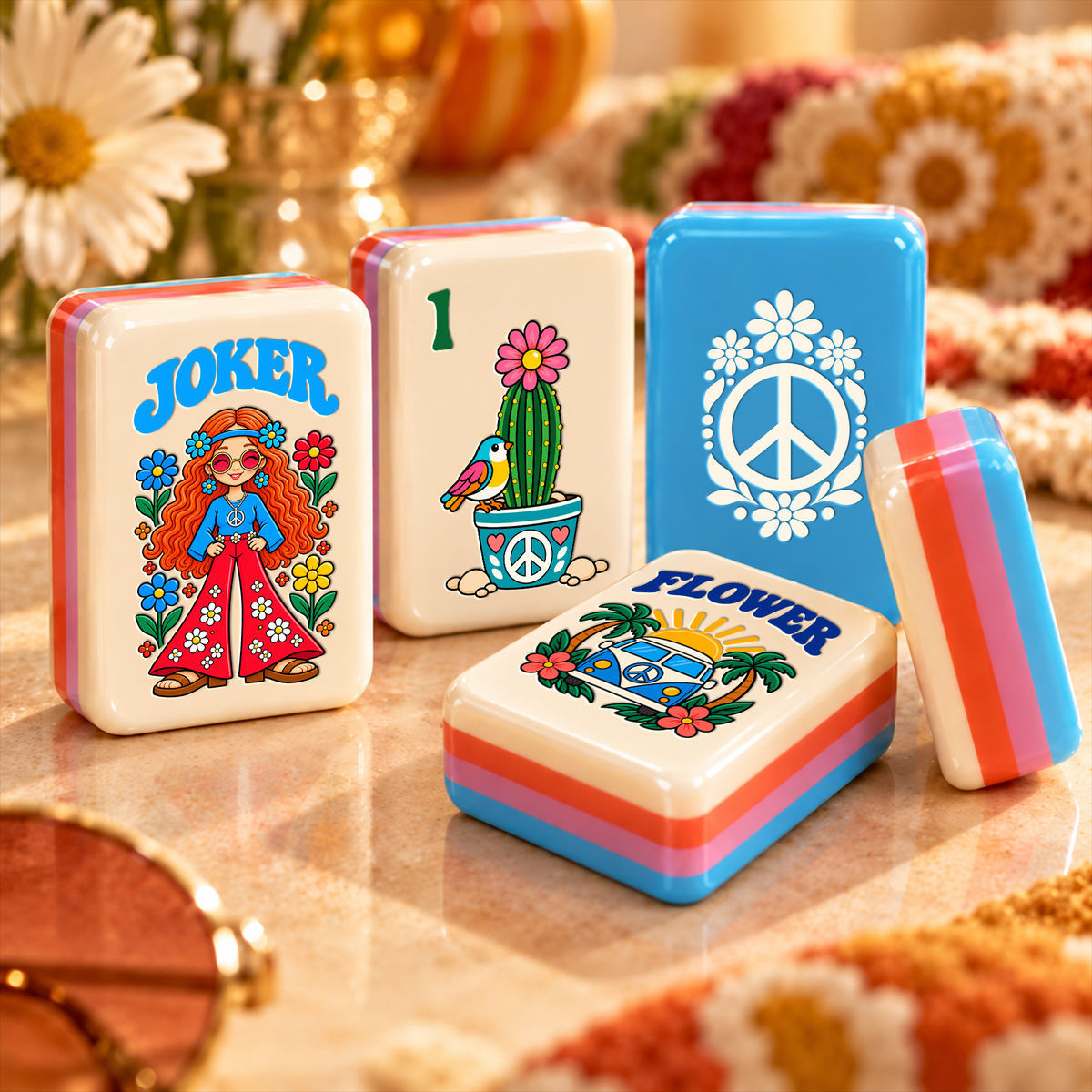
American mahjong uses 152 tiles (108 from three numbered suits, 16 winds, 12 dragons, 8 flowers, 8 jokers), fixed hands from the annual National Mah Jongg League card, no sequences/chows you can expose, and a tile-passing ritual called the Charleston. Competition mahjong—Chinese, Hong Kong, Riichi, Taiwanese variants—uses 136–144 tiles, lets players build hands freely from any combination of sequences and triplets, allows melds to be called and exposed mid-game, and plays with no flower passing or yearly card. American play is scripted and pattern-driven; competition play is improvisational and strategic. Both are legitimate; the choice depends whether you value structured variety or open hand-building. Mahstead's best-selling mahjong sets ship with all 152 American tiles, so you're equipped for American rules out of the box. 🀄 Shop best-selling mahjong sets →
What tiles are in each game?
American mahjong contains exactly 152 tiles: three suits (Bam, Crak, Dot) numbered 1–9, four copies each; four Winds (North, East, West, South); three Dragons (Red with Craks, Green with Bams, White/"Soap" with Dots, and Soap also acts as zero); one set of eight Flowers; and eight Jokers. Competition mahjong uses 136 or 144 tiles depending on variant—typically four copies each of suited tiles 1–9 in three suits (108 tiles), plus 16 Honors (winds and dragons), no flowers, no jokers, no Soap. American play requires exactly 152 tiles and 8 jokers; competition variants ban jokers entirely. This tile count shapes every hand you'll build and every call you can make.

Can you expose melds during play?
In American mahjong, you may only expose a pung (three identical tiles), kong (four identical), quint (five), or sextet (six) on your turn—and jokers cannot be used to complete a single tile or fill a pair position. You cannot expose a chow (sequence like 1-2-3 of the same suit). Competition mahjong allows you to call and expose both triplets and sequences at any time during your turn; this makes the game much more reactive and less scripted. American melds are rigid and number-based; competition melds are flexible and sequence-based. For a weekly American game, you're building hands from the published card only; in competition play, you and your opponents are all inventing hands simultaneously, watching for discards you need.
How do you get your starting hand?
American mahjong begins with the Charleston—a complex tile-passing ritual where players exchange sets of three tiles to the right, left, and center before anyone draws a tile from the wall. After Charleston, players draw from the wall in turn order (East, South, West, North). Competition mahjong skips the Charleston entirely. Each player draws 13 tiles from a shuffled wall at game start; the player in the East position then draws a 14th. No pre-game exchange happens. This makes American play more social and give-and-take at the start; competition play is immediate and individual. If you're learning American mahjong, understanding and executing the Charleston correctly is your first hurdle—it's the ritual that marks American play as distinct and sometimes baffling to outsiders.
How do hands work and where do they come from?
American mahjong hands come only from the current year's National Mah Jongg League card, issued every spring. The card displays all legal hand patterns for that year—typically hundreds of patterns organized by section (Consecutive Run, Like Numbers, Pair Plus, etc.). Players study the card and aim to build hands that match one of those patterns exactly. You cannot win on a pattern not on the card. Competition mahjong has no card and no fixed patterns. You win when you complete any legal combination of triplets and sequences that includes one pair—the same basic math as American play, but infinite possible winning combinations. American mahjong rewards pattern recognition and card memory; competition rewards tile-reading, probability, and fast decision-making. Both are skill-based, but American play feels like puzzle-solving, while competition feels like chess.
How is scoring different?
American mahjong scoring is based on the hand pattern you achieved, your position at the table, and which wind you played in that round. Each hand on the card carries a point value; you calculate payouts based on whether you won by drawing or being dealt the winning tile. Competition mahjong scores differently by variant—Chinese, Hong Kong, and Riichi each have their own point systems—but most award bonus points for special circumstances (all simples, all terminals, concealed hand, etc.). American scoring is printed on the card; competition scoring requires memorizing a rulebook. American play is more egalitarian (payouts are standardized); competition play rewards strategic risk-taking and special situations. If you're a cash player, American rules are simpler to audit and settle at the table.

Comparison: American vs. Competition Mahjong at a Glance
Feature | American Mahjong | Competition Variants |
Total tiles | 152 (fixed) | 136–144 (no jokers) |
Hand source | Annual League card only | Any legal triplet + sequence combination |
Sequences allowed? | No—cannot expose chows | Yes—call and expose melds anytime |
Jokers | 8 built into play | None |
Starting ritual | Charleston (tile exchange) | Direct draw from wall |
Scoring system | Card-based, standardized | Variant-specific, bonus-heavy |
Winning logic | Pattern matching | Triplet + pair math |
Learning curve | Steep (card memory) | Steep (rulebook + probability) |
Social pace | Methodical, strategic | Fast, reactive |
Why would you choose one over the other?
Choose American mahjong if:
You want structured variety and a defined puzzle each year.
You're playing with friends who value consistency and repeatability.
You're in North America (American mahjong is the dominant regional standard).
You prefer a level playing field where skill is card knowledge and pattern recognition.
You're hosting a weekly game where everyone can learn the same card and build skill together.
Choose competition mahjong if:
You want infinite hand possibilities and hand-building freedom.
You're traveling internationally and want to join a game anywhere.
You enjoy fast, high-pressure decision-making under uncertainty.
You're interested in the rich history of East Asian mahjong culture.
You want a game where luck and probability play a larger role.
Most players in the US play American mahjong because it's what they learned and because best-selling mahjong sets are sold with 152 tiles as standard. If you're new to the game, start with your local community (check community centers, libraries, synagogues, and country clubs) to see which variant is dominant in your area—then play that one first. Switching later is easy; learning two at once is overwhelming.
🎁 See our most-loved mahjong sets & accessories →
What to check before you buy a set for your preferred variant
Tile count: American play requires 152 tiles exactly. Competition play uses 136–144 depending on ruleset. Mahstead ships 160-tile sets (152 playing tiles plus spares), so you'll have what you need for American games.
Jokers: American mahjong needs 8 jokers built in. Competition play uses zero jokers. If you're buying used, count the jokers before you commit.
Acrylic vs. bamboo: Acrylic sets are durable, easy to clean, and audible on the table (some players enjoy the click). Bamboo and bone sets feel traditional but require care.
Thickness and weight: Thicker tiles (acrylic: ≥10mm) feel substantial and resistant to warping. Thinner sets are lighter for travel but can wear faster.
Mat and accessories: American play benefits from a mat with a score pad, a mahjong mat with racks, or a sturdy travel bag if you're game-hopping between locations. Racks with pushers help keep your hand organized during long games.
Honest truth: Which should a beginner choose?
If you're in North America and have found a local group, play what they play—usually American. If you're starting alone or online, American mahjong is easier to learn from a single resource (the current year's card) and offers a clear progression. Competition mahjong rewards mathematical intuition and split-second decisions; American mahjong rewards pattern memory and patience. Neither is "better"—they're different games with the same ancient roots. The best variant is the one your friends are playing. If no friends are playing yet, pick American, find a local game, and join. You'll know within three sessions whether you love it.
✨ Find your Mahstead set — free US shipping →

FAQ
Can I play American mahjong rules with a competition mahjong set?
No. American play requires jokers and the 152-tile count; competition sets have neither. You can't substitute. Buy the right set for your variant.
Is the Charleston mandatory in American mahjong?
Yes. The Charleston is part of every American hand. If players skip it or modify it, they're not playing American rules. The ritual takes 1–2 minutes and is non-negotiable.
Can you call a meld on someone else's discard in American mahjong?
You can only expose melds on your own turn. You cannot call a discard mid-turn like you can in competition play. American play is turn-based and strict.
How long does it take to play one hand of American mahjong vs. competition?
American typically takes 15–25 minutes per hand (slower, more methodical); competition can be 8–15 minutes (faster, more reactive). Skill level affects timing in both.
Can I learn both American and competition mahjong at the same time?
It's possible but confusing for a new player. The tile counts and allowed melds conflict. Learn one variant well first, then cross-train. Most players stick with one.
What happens if someone goes out on a hand that's not on the American mahjong card?
That hand is invalid. No one wins. The tiles are collected, shuffled, and a new hand begins. This is why card knowledge is central to American play.


View More
View More
View More
