
Is an Expensive Mahjong Case Worth It? A Buyer's Guide
Last updated: Nov 23, 2026
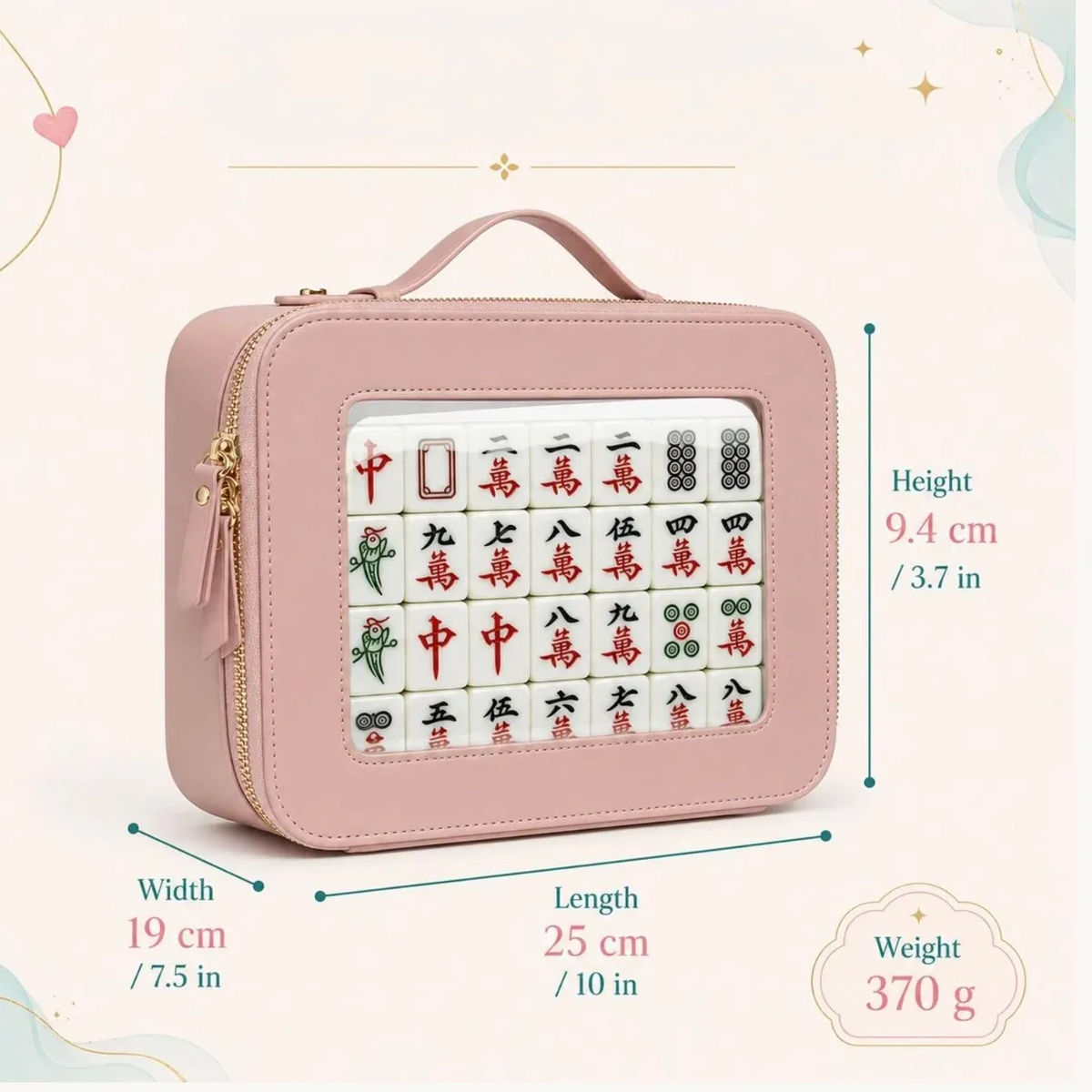
A mahjong case sits between casual bags and serious travel gear: it's designed to protect your 160-tile set, racks, mats, and accessories from dust, dents, and damage during car trips and weekly games. Cases range from soft nylon pouches to hard-shell carriers with foam inserts. The cost difference reflects material durability, compartment count, and how often you move your set. If you play in one home weekly and store it in a closet, a basic bag may suffice; if you carry tiles to tournaments, friends' homes, or travel frequently, a reinforced case with dedicated slots for racks and mats is worth the investment. Mahstead offers travel bags and cases in both styles, so you can choose based on your actual transport habits, not guesswork.
🀄 Shop best-selling mahjong sets →
What does a mahjong case actually protect?
Your set sits inside it—160 tiles, 8 jokers, racks, a mat, dice, and pushers. Without a case or bag, tiles scatter in car trunks, get dented from a bump, accumulate dust in closets, or leak out of loose boxes. A case contains everything in one place, with compartments or foam that keep tiles from sliding around and scratching each other. The real protection question is about frequency: a case only matters if you move your set at least twice a month. If your game lives on the same table year-round, protection is less urgent than if you're loading and unloading every week.

How do soft bags differ from hard cases?
Soft bags (usually nylon or canvas with padding) weigh less, fold flat for storage, and fit under car seats or in closets. Hard cases (ABS or polycarbonate shells) survive drops, resist punctures, and keep tiles dry in rain or spills. Soft bags cost less than hard cases because they use cheaper materials, but they wear faster if you drag them over rough surfaces. Hard cases last longer but take up permanent shelf space. A soft bag suits players who carry their set gently in one hand; a hard case is for those who toss bags in trunks or travel by plane. Most weekly home players choose soft bags; tournament travelers and people who move frequently choose hard cases.
Style | Best for | Durability | Storage footprint | Weight |
Soft nylon/canvas bag | Weekly home games, short car rides | 2–3 years | Folds flat | Light |
Hard-shell case | Frequent travel, tournaments, outdoor transport | 5+ years | Rigid box shape | Heavier |
Basic drawstring pouch | Casual play, same-room storage | 1–2 years | Minimal | Very light |
Padded compartment case | Mixed play (home + friends' homes) | 3–4 years | Medium | Medium |
When is a premium case a smart investment?
A premium case makes financial sense if your set cost more than a few hundred dollars and you move it weekly. If you've invested in engraved American mahjong sets or a custom-designed tile set, the case is insurance against theft, cracking tiles, or losing pieces. Players who host games at multiple locations—their home, a friend's house, a community center—benefit most from reinforced cases with labeled compartments. Racks and mats can slide around loose; a case with foam inserts keeps everything in place. Tournament players who transport sets across state lines or fly with their tiles almost always use hard cases. The question isn't really "Is the case expensive?" but "Is the cost of a new set—if I lose or damage this one—more painful than the case price?" If yes, buy the case.
🎁 See our most-loved mahjong sets & accessories →
What should you actually check before ordering a case?
Measure your mat, racks, and tiles together in a bag to know the real dimensions you need. Check the case's interior width, depth, and height against your pile of tiles (a full set with racks and mat can be 16 inches long and 6 inches tall). Read the compartment layout: some cases have one big space; others have slots for racks, a flat area for the mat, and zippered pockets for dice and scorecards. If you also carry pushers, card holders, or a score notepad, make sure the case has pockets or a top tray. Look at seams and zippers—cheap zippers jam and seams split after six months of weekly use. Check if the case opens from the top (faster) or the side (more awkward when the game table is crowded). If you play in humid climates or transport your set outdoors, soft cases can absorb moisture; hard cases shed water. Finally, confirm the case fits in your car's trunk or under your seat without having to remove other items each time—an oversized case that doesn't fit in your regular travel routine will sit unused in a closet.
How do you avoid overpaying for a case you won't use?
Rent or borrow a case from a friend for a month before buying. Play a full month of games and note how many times you move the set and whether it travels by car, by hand, or stays in one room. If you move it once weekly by car, a soft padded bag is enough. If you move it three or more times weekly or it spends time in a trunk being loaded with groceries or gym gear, upgrade to a hard case. Don't assume you need "the best" case on your first day of owning a set; start simple and upgrade only if you actually feel the lack of protection. A simple travel bag costs less than a hard case and solves most weekly-game scenarios. Many players buy premium cases and never fill half the compartments; they could have saved money with a smaller soft bag and donated the difference to a next set or a mat upgrade.
✨ Find your Mahstead set — free US shipping →
What to Check Before You Buy
Actual dimensions: Measure your full set (tiles + racks + mat stacked together) and compare to the case interior dimensions on the product page.
Compartment count: Count the items you carry (tiles, mat, two racks, pushers, dice, card). Confirm the case has enough sections or one big space that fits all.
Seam and zipper quality: Look at photos and read descriptions; cheap zippers fail after 50+ opens and closes.
Fit in your vehicle: Will it slide into your trunk, under a seat, or in a cupholder? Test-fit before committing.
Your actual transport frequency: If you move your set fewer than twice a month, a soft bag suffices; if weekly or more, consider reinforcement.
Climate: Humid environments favor hard cases; dry storage suits soft bags.
Weight tolerance: Will you carry it by hand, or stay in the car? Heavier cases are fine if they stay in your trunk.

FAQ
Do I really need a case, or will a shoebox work?
A shoebox shifts during transport and tiles crack or escape if the box tips. A case keeps everything sealed, compartmented, and protected from spills. If you move your set more than twice a month, a case pays for itself in tile replacement cost avoidance.
How long does a soft bag last before it needs replacing?
A quality padded soft bag lasts 2–4 years of weekly use before seams fray or zippers stick. Hard cases typically last 5+ years if not dropped repeatedly. Lifespan depends on material thickness and how roughly you handle transport.
Can I fit a mat and racks in a small soft bag, or do I need a large hard case?
Most soft bags with padding are designed to hold a full set (tiles, mat, and two racks if folded). Check the product's interior dimensions; mats roll or fold into roughly 18 × 6 inches, so a bag claiming 20 × 8 inches should work. Hard cases are larger and often have more compartments, but a soft bag is usually sufficient if it's labeled for mahjong sets.
What's the real difference between a mahjong case and a generic tool bag or makeup case?
Mahjong cases have flat, wide compartments for mats and tiles; tool bags have narrow slots for hammers and wrenches, which won't hold a mat properly. Makeup cases are typically too small. Use a bag designed for mahjong or board games if you want the right fit and durability.
Should I buy a case the same year I buy my set, or wait to see if I actually use it?
Buy a basic soft bag first; wait 3 months. If you move your set weekly, upgrade to a hard case or a premium soft bag later. If your game stays in one room, the soft bag is all you'll ever need. This avoids spending on a case you won't use.
Do I need separate storage at home and a travel case, or just one?
One good case works for both if it fits your closet shelf or under a bed. If your closet is tiny, keep the set in a hard case in a cabinet and use a soft bag only for travel. Most players prefer one versatile case over two.


View More
View More
View More
