
How to Use the South Wind Tile in American Mahjong
Last updated: Nov 23, 2026
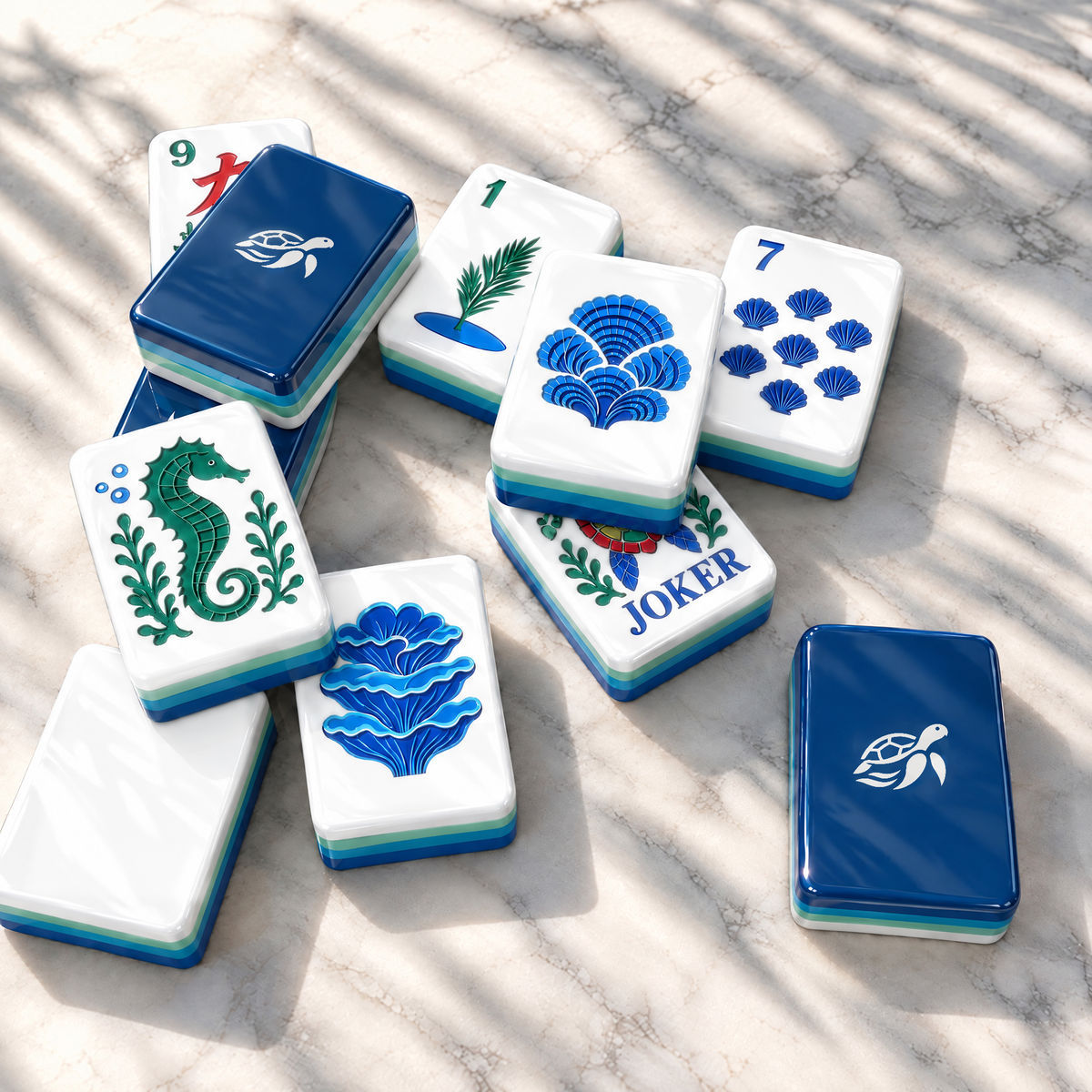
The South Wind tile is one of 16 wind tiles in an American mahjong set, appearing in sets of four identical copies (North, East, West, South). South Wind works only in exposed combinations: a pung (three South tiles), a kong (four South tiles), or larger sets like quints and sextets. You cannot use South as a single tile or as part of a pair in American mahjong—winds must always appear in groups of three or more identical tiles. South combines with other winds (North, East, West) on the current year's National Mah Jongg League card in specific hand patterns, usually marked by wind symbols or wind-number combinations. Unlike suit tiles (Bams, Craks, Dots), winds have no number rank; the four identical copies are completely interchangeable. When you expose a pung or kong of South Wind during play, you announce it clearly and lay it face-up on the table, using any jokers or blanks as needed to fill the group. Our best-selling mahjong sets include all 16 winds—four of each direction—ready to play immediately. --- 🀄 Shop best-selling mahjong sets →
Where is South Wind on the mahjong card?
The National Mah Jongg League card organizes hands by pattern type. Wind combos appear in dedicated sections alongside dragons, flowers, and number tiles. South Wind is printed as a wind symbol on the current year's card (usually an abbreviation like "S" or a directional graphic). To find South Wind hands, scan the card's middle or lower sections for rows marked "winds" or "quints"—these sections show exactly which wind combinations plus paired tiles make a winning hand. A typical hand might require "South, South, South + East, East, East + pair" or similar pung patterns. The card uses columns to show how many jokers you can use and whether you're building exposed or concealed combinations. Since the card changes every spring, always verify which year's card you're using before checking for wind-based hands.

What's the difference between South Wind and other winds?
All four winds—North, East, West, South—function identically in American mahjong. None ranks higher than another; they're purely identity tiles with no numerical value. The key distinction is game position: the player designated as South Wind (dealer or a specific seat) sits in a given location, but the South Wind tile works the same way as North, East, or West. You cannot mix South with East to make a "sequence" or "chow"—American mahjong has no sequences at all. You must always use identical copies. If you need South, East, and West in one hand, you must call three separate exposed groups (pung of South, pung of East, pung of West), never a single run. This separation from number tiles is why wind tiles are crucial to hand building: they let you block certain combinations and force your opponents into different patterns.
How do you expose South Wind during play?
When you declare a pung of South Wind (or any larger group containing South), you announce it aloud—"South pung"—and lay three identical South tiles face-up on the table in front of you, visible to all players. If you use jokers to substitute, place them clearly with the South tiles so everyone sees the complete group. You cannot use blank tiles in American mahjong (blanks are strictly spares and never enter play). Once exposed, the pung becomes "open"; your opponents see it and must adapt their strategy. Exposing early signals what you're building and may signal you're seeking a specific hand. Many experienced players delay exposing winds until necessary—especially South, which appears in fewer hands than dragons—to keep their intentions hidden. If you hold South Wind tiles but don't need to expose them yet, you keep them in your rack. When you win, you either expose your final South groups as part of your hand or hold them concealed if your winning hand doesn't include South at all.
🎁 See our most-loved mahjong sets & accessories →
Which winning hands include South Wind?
Every National Mah Jongg League card (issued annually in spring) contains multiple hand patterns built on wind tiles. South Wind appears in hands that require:
Wind pungs: three identical South tiles + other exposed groups (dragons, other winds, or suit tiles) + a pair
Wind kongs: four identical South tiles + other groups + a pair
Wind quints or sextets: five or six of the same wind (usually using jokers as substitutes) + other tiles + a pair
Mixed wind patterns: South combined with East, West, or North in separate exposed groups
Bonus hands: special card patterns that reward players who expose unusual wind combinations early
The exact hands change yearly, so you must check the current card to see which hands your South tiles can fulfill. Most hands require South to appear as an exposed group (pung, kong, or larger), never alone or as part of a pair. This restriction is strict: you cannot call "mahjong" on a hand where South appears only as a single tile or pair. Professional players memorize the wind-heavy hands on the card each season because they're rarer and often high-value opportunities.

What mistakes do players make with South Wind?
Forgetting the "identical only" rule: Beginners sometimes try to build a sequence like South, East, West—this is illegal. Only identical winds work together.
Mixing South with pairs: You cannot use South Wind as a pair. If your winning hand requires two South tiles, one must be paired with a different suit tile (like two 5 Bams), and your South tiles must form a separate pung or larger group.
Exposing too early or too late: Exposing a South pung early telegraphs your strategy but keeps options open. Waiting too long risks missing a chance to call if an opponent discards a South tile you desperately need. Read the current card before the game to know how many hands use South, so you can judge the strategic timing.
Confusing South with blanks or jokers: South is its own identity tile, distinct from jokers and blanks. A blank tile can substitute for any other tile (Bam, Crak, Dot, wind, or dragon), so if you're short one South Wind tile in a pung, a blank fills it—but you cannot use a blank instead of understanding whether your hand actually needs South.
Using the wrong year's card: Wind patterns shift yearly. A hand you memorized last season might not exist on this year's card, or South might fit different combinations. Always verify the current card before play.
How does South Wind scoring work?
American mahjong scoring is point-based, and the value of your hand depends on the pattern on the National Mah Jongg League card, not on individual tiles. A hand with South Wind pungs scores the exact points listed on the card for that pattern—there is no bonus or penalty for using winds specifically. If a hand requires "three South Wind pungs" and is marked as 30 points on the card, you earn 30 points regardless of whether the South tiles came easily or were called late. However, the rarity of certain wind patterns can make them valuable strategically: if few hands on the card use multiple South combinations, controlling the South tiles in your hand forces opponents into narrower options. Some players track how many hands on the card use South heavily versus rarely—this knowledge influences whether holding South tiles is a winning tactic. For detailed scoring rules, read how American mahjong scoring works to understand point multipliers and bonuses tied to your winning hand type.
Hand Type | South Tiles | Other Tiles | Pair | Exposed? | When to Use |
Wind pung | 3 South | 2 other groups | Any pair | Yes | Rare, only on card |
Wind kong | 4 South | 1 other group | Any pair | Yes | Rare, only on card |
Mixed winds | 1 South + 1 East + 1 West | 2 other groups | Any pair | Each wind separate | Depends on card |
Standard hand | 0 South | 3–4 groups (any tiles) | Pair | As needed | Most common |
✨ Find your Mahstead set — free US shipping →
What to check before you buy a mahjong set
Every American mahjong set must contain exactly 16 wind tiles—four North, four East, four West, four South—to play legally. When you purchase a standard 160-tile acrylic mahjong set, verify that all four South tiles are present and unmarked by cracks or missing paint. South Wind tiles should be clearly labeled with a directional symbol or letter; if you cannot distinguish South from the other three winds by sight, ask the seller before checkout. Our sets are precision-engraved acrylic, so South tiles print cleanly and remain legible through hundreds of games. Store your South tiles in your set's rack or bag along with the rest of your tiles; don't separate winds, as this creates tracking headaches. If you host weekly games, invest in a mahjong rack with pushers to organize all four winds safely in one place—you'll never misplace a South tile again. When purchasing a gift set, confirm the current year's card is included; wind patterns change annually, so a set without the newest card may frustrate recipients trying to match South Wind hands.
Real-world example: Building a South Wind pung
You're holding six tiles: three South, two 5 Bams, and one 7 Dots. The current card shows a hand pattern: "South, South, South + 5 Bam pung + Dragons pair." Your three South tiles match the first group exactly. You're waiting for a 5 Bam tile (to complete your second pung) and a dragon pair. When an opponent discards a 5 Bam, you call it and expose your South pung face-up on the table: three identical South tiles laid horizontally. Now everyone knows you're building toward the dragon pair. If the next player discards a Red Dragon, you grab it and immediately call "mahjong," laying the complete hand on the table. Your three South Wind tiles were the anchor of your winning hand.

FAQ
Can you use a joker to replace a South Wind tile in a pung?
Yes. If you hold two South tiles and need a third to complete a pung, a joker substitutes for the missing South. Lay the two South tiles and the joker together as an exposed pung—all three are counted as "South Wind pung" for hand purposes.
Is there a South Wind pair that wins on its own?
No. In American mahjong, no pair of identical tiles (including South Wind) alone creates a winning hand. A pair must be paired with other groups totaling at least three additional tiles to be legal. South Wind pairs appear only as the required pair in a hand pattern that also includes other exposed or concealed groups.
What happens if you discard a South Wind tile and no one calls it?
The discard enters the discard pile and cannot be recalled. Play moves to the next player. If you need South later, you must draw it from the wall or wait for another player to discard South. Discarding South early is a strategic choice—many players hold it until they know which hand they're building.
Do all four South Wind tiles look identical in every mahjong set?
Yes. In American mahjong sets, all four copies of each tile (including South Wind) are identical in size, color, engraving, and symbol. This ensures fair play and prevents players from accidentally identifying tile position or wear. Mahstead's acrylic sets engrave South uniformly across all four tiles.
How many hands on the card typically use South Wind?
This varies yearly—the National Mah Jongg League card changes every spring. Some seasons feature 8–12 hands with South Wind combinations; others feature fewer. Always count the South hands on your current card at the start of the season to gauge how valuable holding South will be strategically.
Can South Wind be used in a chow or sequence?
No. American mahjong has no sequences or chows. Winds like South must appear in exposed groups of three or more identical tiles (pung, kong, quint, sextet), never as part of a run with other winds or suit tiles.


View More
View More
View More
