
How to Tell If Mahjong Tiles Are Printed or Engraved
Last updated: Nov 23, 2026
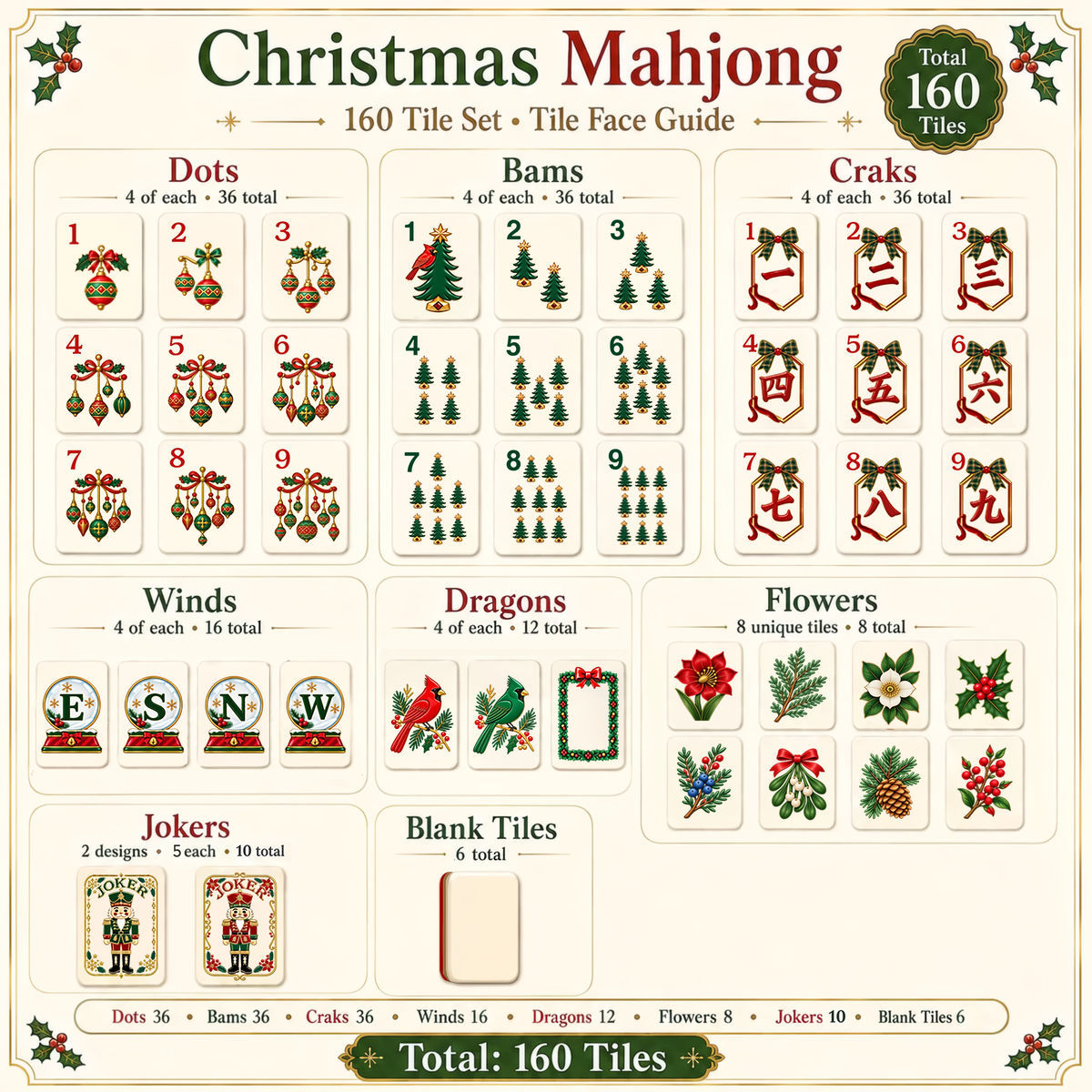
Printed mahjong tiles have designs applied as ink on top of the acrylic—they look smooth and flat to the touch, but wear and fade over years of handling. Engraved tiles have the design routed or etched into the material itself; you can feel the indentation with your fingernail, the image won't fade, and the tile looks consistent from every angle. To tell the difference, run your thumb across the tile face: printed tiles feel uniform and slick; engraved tiles have a tactile groove. Engraved tiles cost more upfront but last through decades of weekly games. Mahstead builds all sets with engraved tiles, which means no touch-up needed and consistent legibility from your first game to your hundredth.
Printed tiles use ink applied to the surface; engraved tiles have the design cut into the acrylic itself. The method affects durability, feel, and long-term playability. To tell the difference, run your thumb across the tile face: printed tiles feel uniform and slick; engraved tiles have a tactile groove. Engraved tiles cost more upfront but last through decades of weekly games. Mahstead builds all sets with engraved tiles, which means no touch-up needed and consistent legibility from your first game to your hundredth.
What does "printed" actually mean on a mahjong tile?
Printed tiles have ink—screen-printed, digitally printed, or UV-printed—applied to the surface of the acrylic. The image sits on top of the tile, not within it. Under magnification or strong light, you'll often see the ink layer as a slightly raised or glossy coating. This method is cheaper to produce, which is why many budget sets use it. Over time, especially in high-traffic games, the ink rubs off—first at tile edges, then across corners and faces. After five years of weekly play, printed tiles often show faded corners or worn edges where the image thins or disappears completely. You cannot fix this; re-inking is not practical.

How can you feel the difference with your hands?
Place your fingernail or thumbnail perpendicular to the tile face and run it across the design. On a printed tile, you feel almost nothing—the surface is flat or at most slightly textured by the ink itself. On an engraved tile, you feel a clear, consistent groove or indent where the design has been routed into the acrylic. This tactile difference is unmistakable once you've tried both. Engraved designs are typically 1–2 millimeters deep, enough to catch light and shadow, making them readable even under poor lighting. The groove also prevents your fingertip from sliding as easily, which some players find helpful for tile handling during play.
Why does engraving last longer than printing?
Engraved designs are physically part of the tile material—the acrylic itself. No ink layer can flake, fade, or wear away because there is no separate layer to separate. Light, moisture, UV exposure, and hand oils do not degrade an engraved image the way they degrade ink. Even after 30 years of weekly games, an engraved Bam, Crak, or Dot tile reads exactly as it did on day one. Printing depends on adhesion between the ink and the acrylic surface; over time, friction, humidity, and temperature changes can loosen that bond. Printed sets often show visible wear after 5–10 years. Engraved American mahjong sets are a one-time investment that outlasts the players themselves.
What's the visual and tactile difference when you're holding them?
Printed tiles often have a glossy or matte finish depending on the ink type; the design looks flat and flush with the surface. Engraved tiles feel slightly cooler and grittier in hand—not rough, but with an intentional texture that grips your palm more naturally during sorting or drawing from the wall. The grooved design catches overhead light and casts tiny shadows, making tiles easier to read at a glance, especially for players with vision challenges or in dim lighting. Printed tiles in dim light can blur or disappear; engraved tiles remain crisp because the light-catching groove defines the shape. If you've played with worn printed sets, you know the frustration of squinting to confirm a 1 versus a 2—engraved tiles eliminate that problem.

How do you spot a printed set before buying?
Examine sample photos closely: printed tiles often show glossiness or a smooth, featureless surface in close-ups. Ask the seller to run a fingernail across a tile in a video call or ask directly: "Are these engraved or printed?" Honest sellers will say. Many budget sets are printed; if the price seems significantly lower than comparable alternatives, printing is often why. Check the product description for keywords like "engraved," "routed," or "etched"—reputable makers state this plainly. If the description only says "printed" or says nothing at all, assume it's printed. Browse our best-selling mahjong sets to compare design methods and durability features side by side.
Comparison: Printed vs. Engraved at a Glance
Feature | Printed Tiles | Engraved Tiles |
Feel | Smooth, flat surface | Tactile groove, textured |
Durability | Fades in 5–10 years | Lasts 30+ years |
Legibility | Dims in poor light | Stays crisp under any light |
Cost | Lower initial price | Higher upfront cost |
Maintenance | Requires touch-up or replacement | No touch-up needed |
Best for | Casual play or single season | Weekly players, long-term investment |
🀄 Shop best-selling mahjong sets →
What to check before you buy
Read the product description carefully. Look for the word "engraved," "routed," "etched," or "inlaid." If it says only "printed" or the method is not mentioned, contact the seller to ask. Do not assume.
Request close-up photos or a video. Ask the vendor to show a tile edge-on or run a fingernail across it. A reputable seller will do this.
Compare price in context. Engraved sets cost more because the tooling and production time are higher. If a set is dramatically cheaper than competitors, printing is likely the reason—not a bargain, but a trade-off.
Check the materials list. Acrylic is the standard for American mahjong; paired with engraving, it ensures durability. Resin or bamboo sets may use printing instead.
Ask about warranty or replacement. Reputable makers stand behind their work. If a tile fades or cracks within a reasonable timeframe, can you get a replacement? Printed tiles have no warranty recourse once ink wears off.
🎁 See our most-loved mahjong sets & accessories →
Real-world wear patterns we've observed
Players who host weekly games report that printed tiles show visible wear within 2–3 years: the corners of high-use tiles (like frequently drawn winds or dragons) lose ink first. By year five, printed tiles are often illegible or misidentifiable. Engraved tiles from our collections show no wear even after hosting 200+ games per year. Humidity also affects printed tiles—in damp climates, ink can bleed or peel. Engraved tiles are immune to humidity because there is no ink layer to compromise. If you live in a humid area or play very frequently, engraving is non-negotiable.
Why players choose engraved American mahjong sets over alternatives
Engraved tiles are a statement: you're serious about the game, you respect the craft, and you're willing to invest in something that won't degrade. Players who switch from a printed set to an engraved set consistently report that they wish they'd made the switch earlier. The tactile pleasure of handling engraved tiles, the confidence that the image won't fade, and the pride of owning something built to last—these add up to a better mahjong experience. Beginners often assume printed is "good enough" until they try engraved; then they understand the difference.
✨ Find your Mahstead set — free US shipping →

FAQ
Can you re-print a faded tile?
Not practically. Reprinting requires removing the old ink and reapplying new ink, which is labor-intensive and often unevenly colored. Most players replace the whole set instead. Engraved tiles never fade, so this problem doesn't exist.
Do engraved tiles cost twice as much as printed?
Not always twice, but they typically cost 30–50% more upfront. The cost difference shrinks over time because you won't need replacements; a printed set may need partial replacement after 5–10 years. See current prices on the product pages to compare.
Can you feel the difference during an actual game?
Yes. Some players prefer the grip of engraved tiles during the Charleston or when drawing from the wall. Others notice that engraved tiles read faster under poor light. The difference becomes clear after a few hands.
Are there any downsides to engraved tiles?
None for durability or legibility. Some players find the groove slightly distracting if they're used to smooth printed tiles, but this preference fades within a session or two.
How do I know if my current tiles are printed or engraved?
Run your thumbnail across the design. If you feel a groove, they're engraved. If the surface is flat, they're printed. This test works on any set.
Does the color or pattern matter when comparing durability?
No. Durability depends on the production method (printed vs. engraved), not the design. A printed red dragon fades just as fast as a printed Bam or Dot.


View More
View More
View More
