
How to Tell If Mahjong Tiles Are Melamine: A Player's Guide
Last updated: Nov 23, 2026
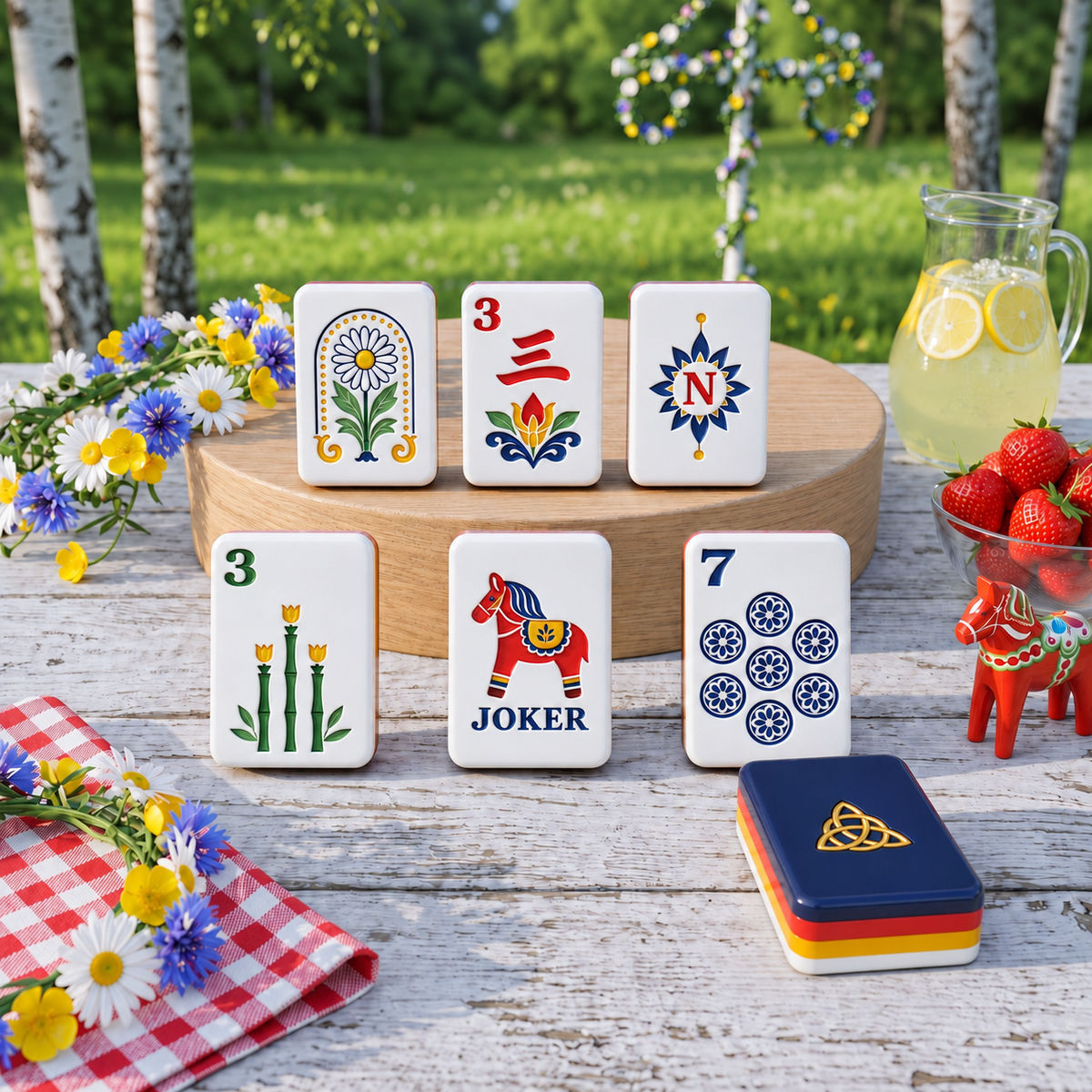
Melamine mahjong tiles have a smooth, slightly waxy surface that feels uniform under your fingers; real melamine is warmer to the touch than brittle plastic and won't crack if dropped once. You'll spot melamine by its glossy painted finish (tiles feel uniform, not rough), consistent weight across all tiles, and a subtle hollow sound when stacked—cheap plastic feels lighter, sounds sharper, and often has visible brush marks or inconsistent color depth in the engravings. The faces of melamine tiles show crisp, even engraving where the paint sits level with the tile surface; plastic substitutes have paint that sits in tiny pits or flakes during shuffling. Mahstead's engraved American mahjong sets use cast melamine with hand-finished engraving that won't blur after a hundred games, unlike laser-printed plastic that fades fast.
Melamine tiles are what we shuffle at the table nearly every week. If you've played American mahjong for more than a season, you've handled dozens of sets—and noticed that some feel solid while others feel flimsy and cheap. Melamine is a thermosetting plastic that's harder and more durable than standard injection-molded plastic. It's the industry standard for American sets because it holds up to the friction of pushing, sorting, and stacking for years. But not all tiles sold as "melamine" are made equal, and plenty of sets marketed as melamine are actually cheaper plastic. Learning to identify real melamine protects your investment and keeps your game smooth and fair.
What does real melamine feel like in your hand?
Pick up a tile from a genuine melamine set and run your thumb across the face. Real melamine has a warm, slightly waxy finish that's smooth but not slippery—your finger should glide without skating. The back and sides feel uniform in texture; there are no rough spots, inconsistent matte patches, or sticky residue. When you stack several tiles, a real melamine set produces a soft, muted clack—not a sharp click like plastic. Drop a single tile from six inches onto a hard table: melamine won't chip or crack (though it may mark slightly); cheap plastic either bounces strangely or shows a stress fracture instantly. Weight is deceptive—don't assume heavier means better—but consistent weight across all 160 tiles is a sign that the mold was held at steady temperature and pressure, which is what separates melamine from plastic batch-poured in inconsistent conditions.

How do you spot melamine by looking at the engravings?
Open the set box and look at the tile faces under natural light. Real melamine shows crisp, even engraving: the painted character or symbol sits level with the tile surface, and the paint color is consistent edge-to-edge. You won't see feathering (fuzzy edges where paint spreads into the plastic), pooling (paint thicker in valleys), or flaking (paint lifting at corners). Run your fingernail gently over an engraving—on genuine melamine, your nail catches slightly on the edge of the paint but doesn't lift it. On cheap plastic, paint often flakes or peels if you press hard. Laser-printed tiles (a cost-cutting shortcut) show an ever-so-slightly dull or matte face where the laser burned the surface; these tiles fade after fifty games because the print sits on top, not bonded into the material. Hand-engraved melamine tiles, like those in our best-selling mahjong sets, have paint that's chemically bonded during the curing process, so the image stays sharp for hundreds of games.
🀄 Shop best-selling mahjong sets →
What's the difference between melamine and plastic under magnification?
Zoom in with a loupe (10× magnification) or a smartphone macro lens at the edge of a tile. Real melamine shows a dense, uniform grain—almost like compact wood fiber—because melamine is made by pressing layers of paper impregnated with melamine resin under heat. You'll see fine parallel lines running through the material, which is the layered structure. Cheap plastic shows either a glossy, featureless surface (indicating a thin coating over hollow injection-molded core) or visible air bubbles and swirls (a sign the plastic cooled unevenly). If you examine the back of a tile, melamine feels slightly textured—almost sand-papery—because the mold release powder or mold surface imprint remains; plastic is either perfectly smooth or has visible sprue marks (the channel where plastic flowed into the mold). A tile with a hollow center or audible rattle when shaken is definitely not melamine.

How do melamine and plastic perform during normal play?
We've hosted weekly games for years, so we know what happens to tiles over time. Melamine sets stay consistent: edges don't soften, faces don't blur, and the tiles don't absorb humidity or warp. After a season of three games per week, a real melamine set looks nearly identical to day one. Cheap plastic tiles degrade noticeably: engravings fade as the paint wears, edges become slightly fuzzy from friction, and tiles begin to feel sticky or slippery (sign of breakdown in the plastic binder). Some plastic sets absorb moisture and become slightly bloated—tiles fit too tightly in the rack or won't slide smoothly during shuffles. Melamine is hygroscopic but only marginally; it may swell by a few microns in very humid conditions, but the effect is imperceptible during play. If a set feels different after sitting in a humid room for a week, it's likely plastic, not melamine.
✨ Find your Mahstead set — free US shipping →
What should you check before buying a melamine set?
Feature | Real Melamine | Cheap Plastic | What to Look For |
Surface feel | Warm, waxy, uniform | Cold, slippery, or tacky | Run your thumb; should glide without sliding |
Engraving finish | Sharp, level, consistent paint | Fuzzy, dull, or flaking | Inspect under light; paint edge should be crisp |
Sound when stacked | Soft muted clack | Sharp click or rattle | Close your eyes and listen to ten shuffles |
Drop test | Won't crack from 6 inches | Cracks, chips, or bounces strangely | Drop one tile; real melamine absorbs impact |
Weight distribution | All tiles consistent | Some tiles feel noticeably lighter | Weigh a sample of ten tiles on a digital scale |
Grain under magnification | Dense, parallel lines | Smooth, glossy, or bubbly | Use a loupe to inspect the edge cross-section |
Humidity response | Negligible swelling | Tiles become sticky or bloated | Store in a dry space; check fit after one week |
Before you buy, ask the seller these questions: Is this cast melamine or injection-molded plastic? (Cast = real melamine.) Are the engravings hand-painted or laser-printed? (Hand-painted bonded to melamine lasts longer.) What's the warranty or return policy if tiles crack within the first month? (Real melamine manufacturers stand behind durability.) Do you have a sample tile I can inspect in person? If the seller can't answer clearly or avoids the question, the set is likely plastic rebranded as melamine. When you receive your set, unbox it immediately and run through the touch, sight, and sound tests before storing it. If anything feels off—tiles are too light, engravings are dull, or the surface is sticky—contact the seller within the return window.
What to check before you buy
In hand:
Touch the tile surface: should feel warm and waxy, not cold or sticky.
Inspect engravings under natural light: paint must be crisp and even, not fuzzy or flaking.
Stack ten tiles: listen for a soft clack, not a sharp click.
Drop one tile from 6 inches: real melamine won't crack.
From the seller:
Ask if tiles are cast melamine (yes = good) or injection-molded plastic (no = pass).
Ask if engravings are hand-painted or laser-printed (hand-painted on melamine = best).
Request a sample tile or high-resolution photos of the cross-section.
Check the return policy: credible sellers accept returns within 30 days if tiles are defective.
Our engraved American mahjong sets are cast melamine with hand-finished engravings designed to stay crisp through hundreds of games. Every set ships with 160 tiles (152 for play, 8 spares) and free US shipping. If you're upgrading from plastic or starting fresh, order one and compare it side-by-side with what you've been playing—the difference in feel and longevity will be immediate.
🎁 See our most-loved mahjong sets & accessories →

FAQ
Is melamine toxic or safe to handle during long game sessions?
Melamine is food-grade in many applications and safe for regular hand contact. The resin is inert once cured; it doesn't off-gas or leach chemicals. Plastic tiles carry no inherent safety risk either, but melamine's stability makes it the better choice for extended play comfort.
Do melamine tiles feel slippery compared to plastic, and does that affect shuffling?
Real melamine has a slightly waxy surface that feels smooth but controlled; it's not slippery in the way treated plastic can be. Shuffling melamine tiles feels consistent because the surface doesn't change with humidity. Plastic tiles sometimes become tacky or slick as they absorb moisture, which can throw off your muscle memory during fast shuffles.
Why do some melamine sets feel heavier than others?
Tile weight depends on the thickness and density of the melamine cast during manufacturing. Thicker tiles (common in professional-grade sets) feel heavier and more substantial but aren't necessarily more durable. Consistent weight across all tiles—regardless of whether they're light or heavy—is what matters; inconsistency signals poor quality control.
Can I tell melamine from plastic by price alone?
No. Price is a poor indicator because markup, shipping, and branding vary widely. A cheap plastic set can be marked up to look expensive; a high-quality melamine set can be sold affordably if the maker has low overhead. Always inspect the tiles in hand rather than rely on price.
Will my old plastic set eventually become unusable if I keep playing?
Not unusable, but degraded. Plastic tiles lose engraving definition, edges soften, and the surface becomes inconsistent, which can affect how tiles stack and shuffle. They'll still be playable, but after two or three years of weekly games, you may notice the difference. Melamine sets often outlast players' interest in the game.
How do I restore shine or color to melamine tiles if they dull over time?
Light dust or minor surface dullness can be cleaned gently with a soft, dry microfiber cloth. Avoid water or solvents on the engravings; they can lift paint if the tile is old or poorly finished. Real melamine shouldn't dull with normal use; if your tiles are dulling fast, they're likely plastic or were laser-printed rather than hand-painted.


View More
View More
View More
