
How to Tell if Mahjong Tiles Are Engraved
Last updated: Nov 23, 2026
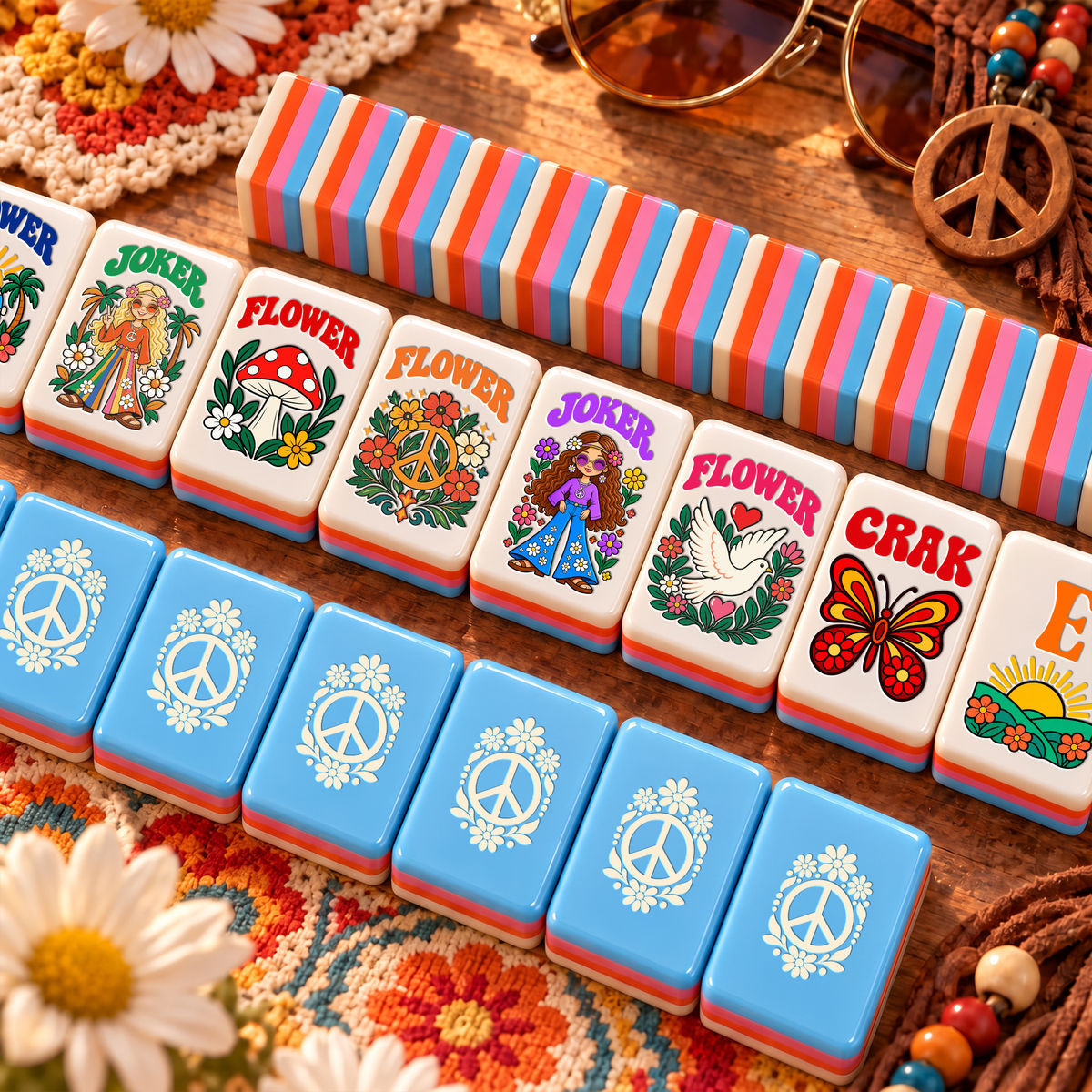
True engraving cuts into acrylic tile material, leaving grooves you can feel and see from any angle—the design doesn't fade with shuffling or time. Hold the tile to light: engraved marks show shadow depth, while printed designs sit flat on the surface. At Mahstead, we cut designs into 160-tile acrylic sets using UV-resistant methods so markings remain crisp and readable after years of weekly play. Printed tiles rely on ink adhesion and wear dull within months; engraved sets maintain contrast indefinitely. Check the tile edge under magnification—engraving leaves clean, consistent groove walls, whereas printing creates only a surface layer that catches light uniformly. Cost-wise, engraved sets command a premium because the production process is slower, but the investment pays off in longevity and tactile satisfaction at the table.
What does engraving actually look like close-up?
Engraved designs have physical depth—you'll see a shadow line where the material has been cut away. Run your fingernail over an engraved tile and you'll feel a slight groove or ridge. Under a phone flashlight held at a low angle, the carved area casts a subtle shadow; printed tiles show uniform flat color with no relief. Engraving depth varies by design: simple symbols (winds, dragons) cut ⅛ inch or less, while detailed artwork or custom names may cut slightly deeper for clarity. The groove walls remain sharp and defined even after aggressive shuffling, because the mark is part of the tile's physical structure, not a surface coating.

How do you spot printing versus engraving before buying?
Before purchase, ask the seller directly: "Are these tiles engraved or printed?" Most reputable makers state this clearly in product descriptions. If photos are available, zoom into the Bam, Crak, and Dot suit symbols—engraved marks show dimensional shadow in photos taken from an angle, while flat printing looks uniform under all lighting. Request a sample photo with side lighting if you're ordering online. Check whether the seller mentions UV-resistant methods or laser engraving in their process notes; these are hallmarks of genuine engraving. Printed sets often use cheaper descriptors like "decorated" or "marked" without specifying the technique. Avoid sellers who won't clarify or who emphasize only color and design without mentioning durability—that's often a sign of printing.
Why does engraving last so much longer than printing?
Printing applies ink or dye to the tile surface; with repeated shuffling, handling, and exposure to tabletop friction, that layer wears away gradually. Within a season or two of weekly games, printed tiles lose contrast—black Bams start to gray, red Dragons fade to pink, white Soap becomes dingy. Engraving removes material from the tile itself, so there's no "coating" to wear off. The groove stays as deep and defined as the day it was cut, and the contrast remains sharp because the design is structural, not chemical. UV-resistant engraving methods also protect against sun damage that might fade printed inks over time.

What's the best way to inspect a tile you already own?
Gather a strong light source (phone flashlight works), a magnifying glass, and the tile in question. First, run your fingernail or a soft brush across the symbol or text—engraved tiles feel textured, printed ones feel smooth. Next, hold the tile face-on to bright light: engraved marks cast subtle shadows visible from the side; printed marks show no relief. Finally, examine the edges of the design under magnification at a low angle—engraved edges are crisp and uniform, with consistent groove depth; printed edges are sharp but flat, with no thickness to the mark. If the tile is older and worn, engraved sets still show crisp detail, while printed sets will look blurred or faded at the symbol borders.
What should you check before buying an engraved set?
Aspect | What to verify | Why it matters |
Engraving confirmation | Seller states "laser engraved," "UV-resistant," or "machine carved" | Ensures durability, not printing |
Design clarity | Symbols and text remain sharp in zoom photos | Prevents illegible marks after shuffling |
Suit color contrast | Bams appear golden, Craks red, Dots green in product photos | Printed sets fade; engraved hold color for years |
Tile edge finish | Edges are smooth and beveled (visible in close-ups) | Poor edge quality signals cheap production, may indicate printing too |
Joker and blank inclusion | Confirm 160-tile count and spare tile inventory | Ensures you have replacement tiles if damage occurs |
Grip and weight | Acrylic tiles feel slightly textured, not slippery | Printed tiles often feel slicker; engraved acrylic has micro-texture from cutting |
Before committing, ask whether the set comes with a mat and storage case—these protect engraved tiles from dust and UV exposure that could eventually yellowing the acrylic itself (though the engravings won't fade). Request a return or exchange window in case the engraving doesn't meet your expectations in person.
🀄 Shop best-selling mahjong sets →
Common mistakes when evaluating engraving
Many players mistake embossed printing for engraving—embossing raises the design slightly on the surface, creating a small 3D effect, but it's still ink-based and will wear. True engraving removes material, not adds it. Another error: judging durability by tile thickness alone. Thick plastic can still be printed, and printed marks fade regardless of tile weight or hardness. Don't assume all acrylic sets are engraved; some acrylic sets are printed, and some are hybrid (engraved symbols with printed text or vice versa). Ask specifically about each element of the design. Finally, avoid comparing engraved sets to paper tiles—paper tiles are inherently short-lived and cannot be engraved meaningfully; the comparison isn't relevant to evaluating acrylic quality.
Our engraved American mahjong sets collection features designs cut directly into acrylic, with options ranging from classic tournament symbols to personalized names and dates for gifts or milestone sets. Each set includes jokers and blanks sufficient for a full 160-tile game, and the engraving process ensures your symbols remain readable after thousands of shuffles.
What to check before you buy
Ask about the engraving method: laser, UV-resistant, or machine-carved. Avoid vague terms like "decorated."
Request a close-up photo: shine light at a low angle to confirm shadows and depth in the design.
Feel a sample tile if possible: genuine engraving feels textured underhand; printing feels smooth.
Compare printed vs. engraved pricing: engraved costs more upfront but eliminates replacement costs from fading.
Check tile count and spares: confirm you're getting 160 tiles with extra jokers for long-term replacement.
Inspect the suite colors: Bams, Craks, Dots should hold bold contrast for years, not fade within a season.
✨ Find your Mahstead set — free US shipping →
For serious players who host weekly games, investing in engraved tiles transforms your set from a disposable purchase into a heirloom you'll use for decades. Pair your set with a quality mat and storage case to protect the engraving from dust and UV exposure.
🎁 See our most-loved mahjong sets & accessories →

FAQ
Can printed tiles ever be as durable as engraved tiles?
No. Printed ink wears away with friction and light exposure over months to a year; engraved marks are cut into the material and cannot fade. Printing is a surface treatment; engraving is structural. Durability comparison always favors engraving.
Is embossing the same as engraving?
No. Embossing raises a design on the surface using applied material or pressure; engraving removes material to create grooves. Embossed designs still rely on surface coating and fade like printing. Only engraving is genuinely permanent on acrylic tiles.
How can I tell the difference in person without tools?
Rub your fingernail or soft brush over the symbol—engraved tiles feel textured and catch your nail slightly; printed tiles feel smooth. Then hold it to bright light at an angle—engraved marks show shadow depth; printed marks lie flat.
Do engraved sets cost significantly more than printed sets?
Yes, engraved sets cost more upfront because the production is slower and more precise. The price difference reflects durability—engraved tiles outlast printed ones by many years, so the per-game cost is actually lower over time.
What happens to engraved tiles if they're left in sunlight for long periods?
The acrylic itself may yellow slightly over extreme time, but the engraved marks will not fade because they're carved into the material, not inked on. Store sets indoors or in cases to minimize UV exposure and keep acrylic clarity.
Can engraved tile symbols become unreadable if they're worn down?
Engraved symbols cannot become unreadable through normal play because the groove depth is permanent. Heavy factory or industrial use might theoretically wear acrylic very slightly, but in home game environments this does not occur—engraved marks stay sharp indefinitely.


View More
View More
View More
