
Chinoiserie American Mahjong Set: Design, Style & Buyer's Guide
Last updated: Nov 23, 2026
Chinoiserie American mahjong sets fuse ornamental Asian-inspired motifs—pagodas, bamboo, silk patterns, jade tones—with the standard 160-tile American game (152 playing tiles plus spares). These sets prioritize visual storytelling over bold graphics, attracting players who want cultural depth without sacrificing function. Available in acrylic or wood with engraved details, chinoiserie sets range across price tiers at Mahstead and competitors; costs vary by tile material, case finish, and whether they include engraved personalization. Unlike minimalist or novelty designs, chinoiserie honors traditional East Asian art while keeping the NMJL-compliant tile layout intact. Quality chinoiserie sets should have crisp hand-painted or laser-engraved imagery, readable suit symbols at arm's length, and snug-fitting cases that protect the tiles during transport—avoid sets where decorative finish obscures tile numbers or where cases feel loose after a few uses.
A chinoiserie American mahjong set is built on the standard 160-tile framework we all play with: three numbered suits (Bam, Crak, Dot), winds, dragons, flowers, jokers, and spare tiles, all designed to work with this year's National Mah Jongg League card. The chinoiserie twist is aesthetic. Instead of primary colors or club logos, you'll find jade greens, celadon blues, gold accents, and hand-rendered scenes of gardens, temples, and classical motifs. The tiles themselves remain crisp acrylic or weighted resin; the design language is what separates them from standard sets.
We've noticed new players often assume a "prettier" set plays differently. It doesn't. A chinoiserie set follows the same rules, hand structure, and scoring as any other American mahjong set. The difference is how it feels in your hand during a long Thursday night game—and whether your table photographs well.
What makes a chinoiserie set different from other decorative styles?
Chinoiserie prioritizes narrative and cultural symmetry over novelty or humor. A dragon tile in a chinoiserie set will feature classical brushwork or jade-carved detail; the same tile in a novelty set might show a cartoon character. Chinoiserie respects the traditional symbolism (dragons tied to specific suits, flowers marking seasonal games) while modernizing the finish through acrylic or engraved wood. The result appeals to players who value heritage but want contemporary durability—no hand-painted wear, no warping across seasons. Our best-selling mahjong sets include chinoiserie designs that balance detail with everyday playability.

Should you choose engraved chinoiserie or printed decoration?
Engraved tiles—where the design is etched into the acrylic and filled with color or left as negative space—last longer than surface printing. During years of play, printed designs fade or chip at tile edges. Engraved designs stay crisp through shuffles and storage. Engraving also photographs sharply and feels more sophisticated under table lighting. Printed designs cost less upfront but show wear faster, especially on tiles your group handles most (Bams, dragons, winds). If you're hosting weekly games and want a set that ages well, engraving wins. Browse our engraved American mahjong sets to compare finish quality.
How do you compare chinoiserie sets across materials and price?
Aspect | Acrylic chinoiserie | Wood-frame chinoiserie | Budget engraved | Premium hand-painted |
Weight | Light (shuffles fast) | Heavier (feels premium) | Light | Variable |
Durability | Excellent (10+ years) | Good (7–10 years if sealed) | Good (5–7 years) | Varies by coating |
Tile clarity | Sharp engraved edges | Carved detail | Printed, can fade | Hand-done, risks chips |
Storage case | Acrylic box or fabric | Often wood or felt-lined | Cardboard or vinyl | Often custom |
Typical tier | Mid-range | Mid to premium | Budget | Premium |
Best for | Frequent play, travel | Display + occasional play | Learning | Collectors |
Our best-selling collection includes acrylic chinoiserie sets that balance cost, durability, and aesthetic appeal for weekly game groups.
🀄 Shop best-selling mahjong sets →

What tile size and case pairing works best for chinoiserie sets?
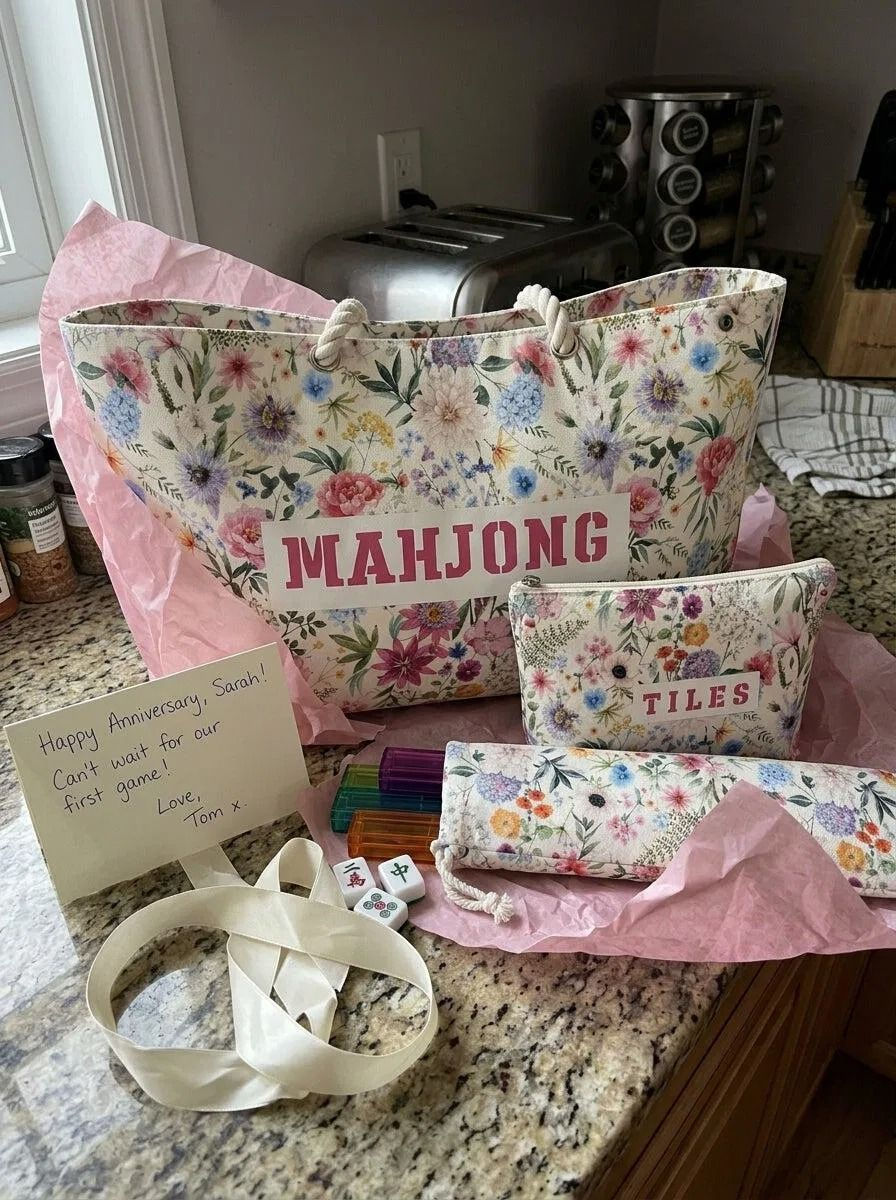
American mahjong tiles come in two standard widths: 1 inch (standard) and 1.25 inches (jumbo). Chinoiserie detail scales with tile size—smaller tiles compress design into tight spaces, while jumbo tiles let engraving breathe. We recommend jumbo tiles if you're hosting players over 60 or anyone with vision concerns; the larger canvas shows off chinoiserie artistry better. Standard tiles work fine for younger or experienced groups who shuffle quickly. Pair your tile choice with a coordinating mahjong mat (felt or felt-backed acrylic) to protect the playing surface and anchor tile placement. A mat also prevents chi from shifting during long games. For travel, add a fitted bag or case with internal compartments; chinoiserie sets often ship in basic boxes, so a padded case keeps tiles safe and organized between games.
🎁 See our most-loved mahjong sets & accessories →
Does a chinoiserie set work for beginners, or is it better for advanced players?
A chinoiserie set works equally well for beginners and veterans—the game rules don't change. What matters is tile legibility. If you're teaching the National Mah Jongg League card to new players, ensure your chosen set has large, clear suit symbols and numbers visible from across the table. Avoid ultra-ornate designs where decoration obscures the Bam bird, Crak character, or Dot circles. Beginners benefit from racks with pushers, which stabilize tiles while they learn; chinoiserie sets pair well with clean wooden or acrylic racks that don't compete visually. If you're hosting a beginner group weekly, pick a standard-size chinoiserie set with bold tile markers and a matching rack. Experienced players often prefer jumbo chinoiserie for the visual and tactile experience. Either way, the aesthetic choice is personal; the gameplay is identical.
What to check before you buy
Tile readability: Hold a sample Bam, Crak, and Dot tile at arm's length. Can you spot the suit symbol instantly? Does engraving catch light without glare obscuring numbers?
Case fit: Open the case and place a tile in its slot. Should be snug but not forced. Loose cases damage tiles during transport; overly tight cases break plastic dividers.
Joker count: Standard American mahjong uses 8 jokers during play. A 160-tile set includes 152 playing tiles plus spares; never add extra jokers during a game. Confirm your set includes the correct 8 for active play.
Engraving depth: Run your fingernail across an engraved tile. You should feel a crisp indentation, not just surface printing. Shallow engraving wears faster under repeated play.
Suit consistency: Check that all Bams look alike, all Craks match, all Dots are identical. Inconsistent coloring or detail across the same suit suggests quality control issues.
Case material: Does your set ship in cardboard (risky for weekly play) or acrylic/wood? If cardboard, budget for a separate protective case immediately.
Spare parts: Confirm the set includes spare tiles (typically extra jokers and blanks). You'll lose a tile eventually; spares let you keep playing.
✨ Find your Mahstead set — free US shipping →
When shopping for a chinoiserie American mahjong set, prioritize clarity over decoration. A beautiful set that obscures tile symbols creates confusion mid-game; a clear set with refined aesthetic detail builds your table's confidence and joy. We recommend starting with our best-selling mahjong sets, comparing tile size, case durability, and design finish side-by-side. Chinoiserie appeals to players seeking cultural resonance without sacrificing practicality—and that balance makes for the best Thursday nights.
FAQ
Can I use a chinoiserie set for the National Mah Jongg League card?
Yes. Chinoiserie sets follow the standard 160-tile American mahjong format and are fully compliant with current NMJL card hands. The aesthetic doesn't affect gameplay or scoring rules.
Do engraved chinoiserie sets cost more than printed ones?
Generally, yes. Engraving adds labor and precision; printed designs are faster. However, engraved sets outlast printed designs across years of play, making them better long-term value for weekly game groups.
What tile size shows chinoiserie detail best?
Jumbo (1.25-inch) tiles display engraved chinoiserie artwork more vividly than standard (1-inch) tiles. Standard tiles work fine for experienced players; jumbo suits groups with vision concerns or those prioritizing aesthetic enjoyment.
Should I buy a mat and racks to go with a chinoiserie set?
Not required, but recommended. A mahjong mat protects tiles and playing surface; racks with pushers stabilize your hand and complement the set's visual appeal without visual clash if colors coordinate.
How do I protect a chinoiserie set during travel?
Most chinoiserie sets ship in basic boxes. Invest in a padded mahjong bag or case with compartments for tiles, racks, mat, and score sheet. This protects engraved details and keeps sets organized between games.
Can beginners play with a chinoiserie set, or should they start simple?
Beginners can absolutely play with chinoiserie sets. Focus on clarity: choose sets with large, visible suit symbols and numbers. Pair with racks with pushers to stabilize tiles while learning hand structure and the NMJL card.


View More
View More
View More
