
How to Teach Mahjong to Visually Impaired Players
Last updated: Nov 23, 2026
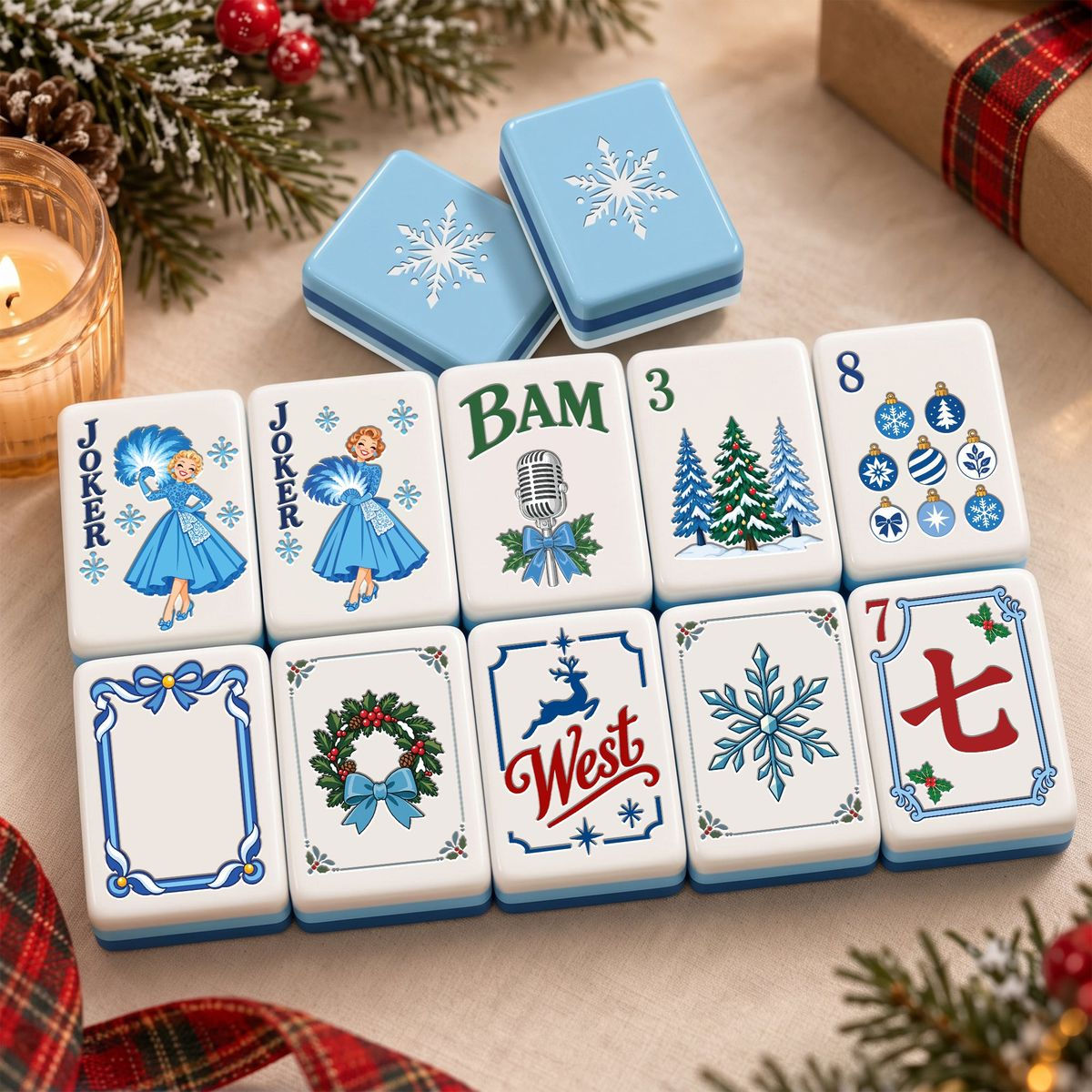
Teaching mahjong to visually impaired players requires three core adaptations: tactile tile identification (raised dots, Braille labels, or color-coded grooves), consistent verbal callouts of discards and drawn tiles, and simplified hand layout using racks that keep tiles upright and organized by suit. Start with one sighted player seated as "reader"—calling all public plays aloud—and teach orientation through preset seating and a stationary discard pile. Progression typically takes 3–4 sessions. Use an acrylic set with clear tile faces; pair it with a rack system that separates tiles visually for other players while keeping the blind player's hand stable. Avoid cluttered rules explanations; focus on the feeling of pattern completion and the social rhythm of the game.
What's the best way to mark tiles for tactile recognition?
Tactile identification turns the tile into a puzzle your fingers already know. The most reliable method combines raised markers with verbal shorthand. Drill small adhesive dots on each tile face—one dot for 1s, two for 2s, and so on—positioned consistently (e.g. always top-left corner). Suit separation works through grooved edges: sand the Bam tiles slightly, gloss the Craks, leave Dots untouched. Pair this with spoken suit names ("Bam, Bam," "Crak, Crak") during every draw and discard. Winds and dragons need unique shapes: a small tab glued to wind tiles, a circular indent for dragons. The learning curve flattens after the first 20 tiles your player touches—repetition locks the pattern into muscle memory faster than sight-based memory ever could.
🀄 Shop best-selling mahjong sets →

How should the discard pile be organized for easy tracking?
A stationary, linear discard pile is the single biggest accessibility win. Instead of the traditional scattered layout, place all discards in a single row along the center of the table, perpendicular to the blind player's position. Call each discard aloud as it's thrown ("East plays 5 Dot, discard pile now seven tiles"). Assign a sighted "discard keeper" to stack them in consistent order and ensure no tile shifts. This eliminates the blind player's need to search the table; they hear the count and know which tiles are out. Rotate the keeper role each hand if possible. The linear pile also helps teach tile-reading to other players: they must stay alert to the called sequence. Never cluster or fan discards randomly; predictability is accessibility.
What's the best hand management system for a blind player?
Racks with pushers do the heavy lifting here. A rack with pusher design holds tiles upright and separated, so the blind player can slide fingers along the row to identify tiles by feel and position without knocking pieces over. Position the rack directly in front of the player, parallel to the table edge. Organize tiles by suit from left to right (Bams, Craks, Dots) and within each suit in numerical order—1 through 9. This layout becomes muscle memory: "I'm looking for a middle-range Crak, it's between the 4 and 8." Ask the player to keep their hand closed; they initiate all reaching. When drawing or discarding, they voice the tile: "I'm drawing" (you place it in the rack); "I'm playing the second Bam" (you confirm and remove). This verbal handshake prevents confusion and keeps play flowing.
✨ Find your Mahstead set — free US shipping →
How do you explain American mahjong rules without overwhelming a new blind player?
Simplify ruthlessly. Start with the core only: you need 14 tiles and a "hand" from this year's National Mah Jongg League card. A hand is always a pung (three identical tiles) plus another pung, or a pair plus two pungs—no sequences, no complex logic. Skip the Charleston entirely for the first session; just deal 13 and draw 1. Teach two hands maximum before real play. Describe the winning hand as a "click"—the moment when all 14 tiles form the pattern you both planned. Use metaphors: "A pung is three twins"; "a pair is partners." Focus on the social rhythm: draw, play, listen, repeat. Lean on the sighted reader to narrate wins and explain which tile completed the pattern. The real learning happens at the table, not in theory. Our beginner's guide covers all American rules; use it as reference, not lecture.

What role should the sighted "reader" play during the game?
The reader is a narrator and umpire combined. Their job: call every public tile ("North discards 9 Crak"; "East draws and plays 3 Bam"), confirm if a blind player's called hand is valid, and describe the board state only if asked. They do not guide strategy or suggest plays—that's cheating. Position the reader across from the blind player so their voice travels clearly. Speak in a steady rhythm matching the table's pace. When the blind player asks "What tiles are visible?", answer with suit and number only: "Bams 1, 4, 7; Craks 2, 5; Dots 3, 6, 8; winds North, East; dragons Red, Green." Keep it factual. If a hand is won, the reader confirms the tiles match the card (you'll need a sighted person to cross-check the current year's card). This role is tiring; rotate it every few hands or pair two readers per game. The reader's tone sets the table's energy—matter-of-fact, warm, patient.
How should beginners practice between games?
Tactile familiarity is everything. Send your player home with a single suit—nine tiles (1 through 9 Bams, or Craks, or Dots)—and ask them to touch and name each tile five times daily for one week. Build a second suit the next week. Introduce winds and one dragon after two weeks. By week four, a full set feels manageable. Pair practice with audio: record yourself calling tiles aloud and play it back while your player touches the corresponding tile. Ask them to predict: "I'm going to touch a 5 Bam—what does it feel like?" Muscle memory replaces sight-based learning in 4–6 weeks of consistent 10-minute sessions. Host mini-games with one other sighted player and your learner; keep hands short (just two pungs and a pair) and play for fun, not score. Progress from 3-tile hands to full 14-tile hands over six weeks.
🎁 See our most-loved mahjong sets & accessories →
Adaptation | What it solves | How to implement | Timeline |
Raised tactile dots | Tile identification by feel | Adhesive dots on tile faces, consistent placement per suit | Week 1 (prep) |
Linear discard pile | Easy tracking of out-tiles | Center row layout, verbal callout per discard | Game 1 |
Rack with pushers | Hand stability & organization | Suit-ordered tiles left-to-right, player-initiated reaching | Game 1 |
Sighted reader | Board narration & validation | Positioned for clear voice, factual callouts only | Game 1 |
Daily touch practice | Speed & confidence | 5–10 min/day single suits, audio pairing, prediction drills | Weeks 1–4 |
What to check before you buy
Tile size matters. Standard acrylic tiles (roughly ¾ inch) are easiest to grip and distinguish. Avoid mini sets; they're frustrating to handle. Verify the set includes 8 jokers—you'll need all of them for a legal 160-tile game. Check that the acrylic is smooth (no sharp edges) and the tile faces are deeply engraved so raised markers stick well. If you're adding Braille labels, order extras; not all tiles will take permanent adhesive equally. Test one tile's tactile potential before committing to marking the full set. A travel-friendly bag or case makes it easy to transport a marked set to your weekly game without damage.
A practical teaching checklist
[ ] Prepare one suit (9 tiles) with adhesive dots; test tactile recognition yourself first
[ ] Choose one sighted reader and brief them on the narration role
[ ] Set up a linear discard pile along the center of the table
[ ] Arrange racks so the blind player sits comfortably and can reach all tiles without leaning
[ ] Deal 13 tiles; let your player touch and name each one aloud
[ ] Teach one two-pung hand; play five rounds for feel
[ ] Record feedback: which tiles were confused? Which markers slipped?
[ ] Refine tactile markers and practice again next session
[ ] Introduce the second suit after two sessions; third suit after four
[ ] Play a full 14-tile hand by week 3–4
[ ] Invite a second blind player once both are confident; play in pairs

FAQ
Can a blind player call a winning hand if they don't see the card?
The sighted reader holds the current year's National Mah Jongg League card and verifies the hand matches before announcing the win. The blind player declares the hand pattern aloud ("Three Bam pung, three Crak pung, pair of Dots"), and the reader confirms it's legal. Never let a blind player guess; accuracy matters for scoring and fairness.
What if two blind players want to play together?
Pair them with two sighted readers, one per player. Each reader calls only their partner's tiles and the public board state, reducing confusion. Position readers opposite their partners. The game moves slightly slower but remains fully social and competitive. After experience, one reader can manage both if the game is extremely quiet.
Should we use Chinese or Hong Kong mahjong rules instead of American?
American mahjong is ideal for visually impaired beginners because hands are fixed each year (National Mah Jongg League card), simplifying verification. Chinese and Hong Kong variants require on-the-fly scoring calculation—harder for a sighted reader to confirm quickly. Stick with American mahjong until your player is confident, then introduce other variants if they wish.
How do I attach Braille labels to tiles without damaging them?
Use self-adhesive Braille labels meant for office equipment (not homemade). Place one label on the upper-left corner of each tile face, perpendicular to the raised dots. Test the adhesive on one tile first; some acrylics repel sticky-backs. If labels slide off during play, use a thin bead of clear acrylic glue around the label edge—do not glue the tile shut. Allow 24 hours to cure before play.
How long before a blind player can play in a standard four-player game without slowing it down?
With consistent weekly practice and marked tiles, 6–8 weeks is realistic. The critical milestone is naming a tile from feel alone in under two seconds. Once that's solid, public game rhythm maintains pace. Sighted players will adapt their tempo slightly—that's normal and welcomed by any table valuing inclusion.
Can we use a regular table, or do we need a mahjong mat?
A dedicated mahjong mat creates consistent tile placement and dampens sliding, which helps a blind player predict where tiles land after a discard. A bare table works if you're disciplined about returning the discard pile to the same spot. A mat is a small investment that eliminates variables and speeds learning; highly recommended for weekly games.


View More
View More
View More
