
How to Teach Mahjong to Expats: A Practical Starter Guide
Last updated: Nov 23, 2026
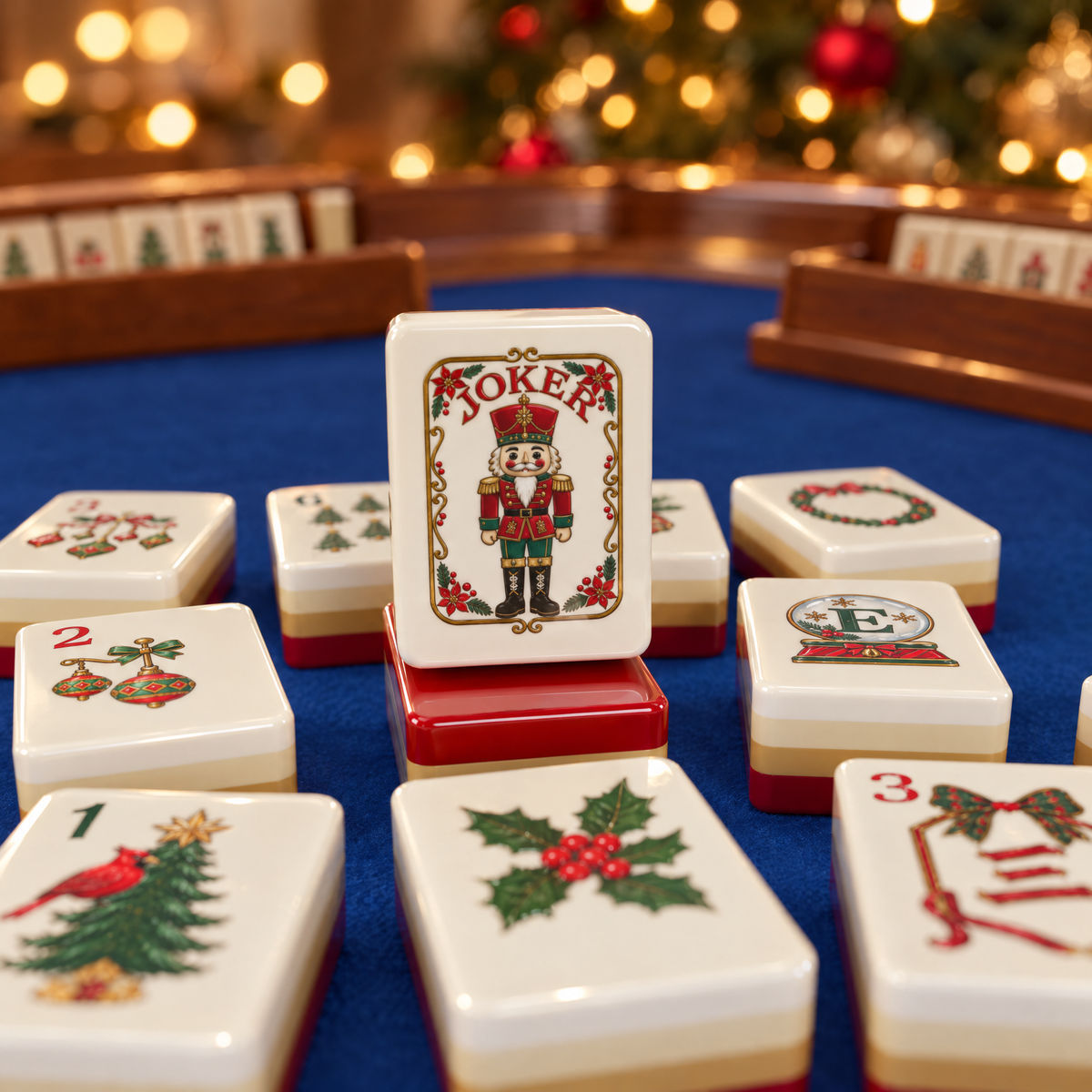
Teaching expats mahjong starts with settling on a variant—American is the most beginner-friendly for English-speaking groups because hands come from a single annual card, reducing memorization. Gather four players, explain that the 152-tile set contains three numbered suits (Bams, Craks, Dots numbered 1–9 in four copies each), plus 16 Winds, 12 Dragons, and 8 Flowers. Begin with tile recognition and the Charleston (tile-passing warmup), then deal 13 tiles and show how to match the current year's card to build a hand. A full game takes 1–2 hours; expect three teaching rounds before fluency clicks. Skip complex scoring initially—focus on how to spot a winning hand and how jokers replace missing tiles. Set a firm start time, use a mat to keep tiles organized, and keep rules sheets printed; expats absorb best when play is visual and the pace feels social, not academic.
Why Do Expats Struggle to Learn Mahjong at All?
Expats often hit three walls: tile overwhelm (160 pieces with Chinese characters or numbers), rule density (three suits, Winds, Dragons, exposed melds, joker rules), and the assumption that mahjong has one "correct" version. Many try to learn from a mixture of sources—YouTube videos mixing American and Hong Kong rules, relatives teaching different house variants, or solo rule books—and walk away confused. The fix is simple: commit to one ruleset from day one and stick with it for the first ten games. American mahjong works well abroad because the rules are standardized by the National Mah Jongg League card (issued every spring), so all games in your city follow the same hands and scoring—no debate. Start with how to play American mahjong as your group's single source of truth.
🀄 Shop best-selling mahjong sets →

Which Mahjong Variant Is Easiest for Expat Beginners?
American mahjong is the most forgiving choice because players cannot improvise; the hand must match a printed card, so there is no "is that a valid hand?" debate that kills teaching momentum. Chinese mahjong (played in Mainland and Hong Kong variants) demands pattern memory (chows: sequences like 1-2-3, paired with pungs: triplets), no annual card, and quick mental calculation—overwhelming for first-timers. Japanese Riichi involves complex tile discards and closed hands, unsuitable for newbies. Taiwanese and Vietnamese variants layer regional house rules. American mahjong's digital card (available free online each year) and fixed tile layout mean a beginner can flip the card mid-game and ask, "Is this hand on here?" and immediately know if they're building correctly. For expats in any country, this binary feedback loop builds confidence fast. Start with American rules and only pivot if your group specifically requests a different tradition.
What Equipment Makes Teaching Expats Easier?
A good mat is non-negotiable—it creates a clear boundary for each player's tiles, prevents pieces rolling off tables in apartments or offices, and visually organizes the four walls of tiles. Expats accustomed to compact city living rarely have a dedicated table, so a folding mat that lays flat and rolls away afterward removes friction from "where do we play?" A set of best-selling mahjong sets with crisp, readable tiles (sharp numbers or unambiguous characters) cuts learning time by half because players spend less mental energy decoding tiles and more on hand-building strategy. Acrylic sets stay clean and loud—loud is good in teaching, because the satisfying clack of a tile connect gives auditory feedback that keeps the room engaged. Racks with pushers help expats organize their 13-tile hand into clear suit groups, a visual crutch that lets them focus on the hand-matching task rather than fumbling tile arrangements. Avoid ornate sets with faded artwork or tiles smaller than a thumbnail; expats wearing reading glasses will frustrate and quit.
🎁 See our most-loved mahjong sets & accessories →
How Do You Explain Tiles and Suits to Someone Who Has Never Played?
Start with the three numbered suits, not the Winds or Dragons—a 5 Bam, a 5 Crak, and a 5 Dot are the easiest tiles to recognize because they are purely visual. Draw a quick sketch or show a printed image:
Suit | Symbol | Count in Set | Why It Matters |
Bam | Bamboo stalks (or a bird on the 1) | 36 tiles (1–9, four copies each) | Fastest to recognize by shape |
Crak | Coins or circles | 36 tiles (1–9, four copies each) | Second-easiest—round shapes stand out |
Dot | Dots in a grid (numbered 1–9) | 36 tiles (1–9, four copies each) | Smallest visual marker—teach last |
Winds | N, E, W, S letters/symbols | 16 tiles (4 copies each) | Used in pairs or triplets; no numbers |
Dragons | Red, Green, White (Soap) symbols | 12 tiles (4 copies each) | Red pairs with Craks, Green with Bams, White with Dots |
Flowers | 1–4 flowers, 4 seasons | 8 tiles | Rarely used; introduce after first game |
Lay out one copy of each tile type on the mat so new players can touch and name them. Spend 5 minutes drilling "What suit is this?" with random tiles. This tactile step—hearing their own voice say the names aloud—embeds recognition in short-term memory far better than reading. Then explain: "A hand is always 14 tiles (13 in hand plus 1 drawn each turn). Your job is to find a pattern on the card and collect the exact tiles shown." That's it. Save Flower strategy, Winds hierarchy, and Dragon scoring for game three.

What Is the One Biggest Mistake When Teaching Expats?
Teaching the full scoring system first is the killer. Expats fixate on point math (this pung is worth X, that kong is worth Y, multiply by position, add bonuses) and never develop intuition for what a hand looks like. Their brain is overloaded before they even draw their first tile. Instead, play games one through three with a house rule: "Everyone who goes out wins the same amount, and we'll learn scoring next session." This removes pressure, accelerates recognition, and keeps the mood playful. By game four, when they already understand the tile flow, exposing melds, and how to use jokers, then show American mahjong scoring. The math will click because they have context. Also avoid explaining the Charleston completely before play—show it in motion instead. Say, "We pass tiles three times in a specific way to randomize luck," then do it while calling out steps aloud. Seeing beats talking.
How Should You Host the First Game with Expats?
Set expectations: "Game one is slow. We'll pause every three turns and check the card together. Ask questions. No winner is declared." Meet one hour before the formal start to let arrivals settle, use the bathroom, and grab water. Lay out the mat, fan the tiles face-down, and spend 10 minutes on tile names using the visual approach above. Then run the Charleston—this pass-and-swap ritual is the fun intro and teaches that all players have equal input on randomness, which expats find reassuring. Deal the starting hand, have each player sort their 13 tiles into suits on a rack, then hold the card where everyone can see it and ask, "Who sees a pattern on the card that matches your tiles?" Let them call out matches. A beginner will spot a simple pair (two identical tiles) or a triplet (three 5 Bams) within the first hand. Every recognition breeds confidence. Keep the first game to four rounds (roughly 20 minutes) so it ends on a high note; expats are more likely to come back if the session felt quick and social, not exhausting.
✨ Find your Mahstead set — free US shipping →
What to Check Before You Buy a Mahjong Set for Teaching Expats
Tile readability: Can you clearly see numbers or symbols from across a table without squinting? Request high-contrast tiles or sample images before ordering.
Set completeness: Confirm the set includes a current-year card or a reliable online link to the card for your teaching year.
Mat compatibility: If you buy a mat separately, ensure it fits your table size (most expat spaces are 36–42 inches wide). Check folding dimensions so it stores upright in a closet or under a bed.
Rack quality: Racks should hold 13 tiles firmly and have smooth pushers; wobbly racks frustrate beginners more than no racks at all.
First-game scenario: Will you teach in a living room, a coworking kitchen table, or a community center? Pick a set and mat suited to that exact space before the first gathering.
How Is Mahjong Different for Non-Native English Speakers?
Non-native English speakers often worry that the card is text-heavy, but the card is mostly visual—a grid of tile patterns. The card's text is secondary (hand names, point values). For expats with lower English proficiency, print the card in a larger size (16–18 points), highlight the current hand with a highlighter, and read the hand name aloud before play resumes. Pair each expat with a partner during their first game so they have one designated person to ask, "Is this a chow or a pung?" Instead of explaining joker rules verbally, show it: "Joker replaces the missing tile—like this," and physically swap a joker into a partial hand. Many expats think mahjong is a memory game because they have played other tile games; clarify early: "You have the card in front of you the entire game. You're not memorizing; you're matching." This reframes mahjong as a logic puzzle, not a test of recall, and removes anxiety.
When Should Expats Move from Teaching Games to Real Games?
After three teaching sessions, call a reset meeting: "Next week, we play by the real rules and keep score." This signals a transition and gives people time to prepare mentally. By session four, beginners usually know the tile suits, recognize a winning pattern on the card, understand exposed melds (pung, kong), and have seen jokers in action. They can handle scoring, the discard pile, and the idea that a hand called "off" (no tiles drawn yet) is harder to win than a hand called "on." The moment they stop looking at the card for every tile is when they're ready. Some expats will lag—that's normal; slow players often become the best long-term players because they think deeply. Stick with the same group for at least six sessions before inviting new people or changing rules, so the community stabilizes.

FAQ
Can expats play American mahjong if they don't speak English fluently?
Yes. The mahjong card is a visual grid—mostly tiles, not words. Pair each learner with a fluent speaker during early games, use printed card images (enlarge for clarity), and rely on hand-pointing and tile placement to explain rules. By game three, language becomes secondary.
What is the minimum time commitment for an expat to learn mahjong?
Three sessions of 90 minutes each gets a beginner to "can build a hand and recognize when someone wins." Real confidence—calling tiles quickly, knowing exposure rules, basic scoring—arrives after six to eight games over 2–3 months.
Do I need to buy a special set for teaching expats, or can I use any American mahjong set?
Any full 160-tile American mahjong set works. The key is readability: tiles must be large enough to distinguish suits across a table, and numbers must be crisp. Acrylic sets with bold numerals teach faster than bone or embellished tiles because learners waste less energy decoding.
Should I teach the Charleston to expats on their first day?
Yes, but show it in motion, not in a rulebook. Say, "We pass tiles three ways to mix things up," then do the passes aloud while calling steps. Expats learn by doing, not reading. The Charleston becomes fun, not confusing, when it's a ritual they perform together.
How do I prevent expats from quitting after the first game if they lost?
Never keep score in games one and two. Play for fun, and announce before play: "This is practice. Everyone who goes out wins." Winning a first game—any game—builds commitment. Once players have tasted victory and understand hand-building, introduce scoring and point stakes in session three.
Can expats play if they only show up occasionally—not every week?
Yes, but teach the rules fresh each session for irregular players until they show up three times. Consistent players (the same four or five people) learn faster because continuity builds memory. Mixed groups (regular plus drop-in) work if you reserve 15 minutes before each game for quick tile review and the current hand of the season.


View More
View More
View More
