
How to Store Mahjong Tiles: Keep Your Set Safe & Ready
Last updated: Nov 23, 2026
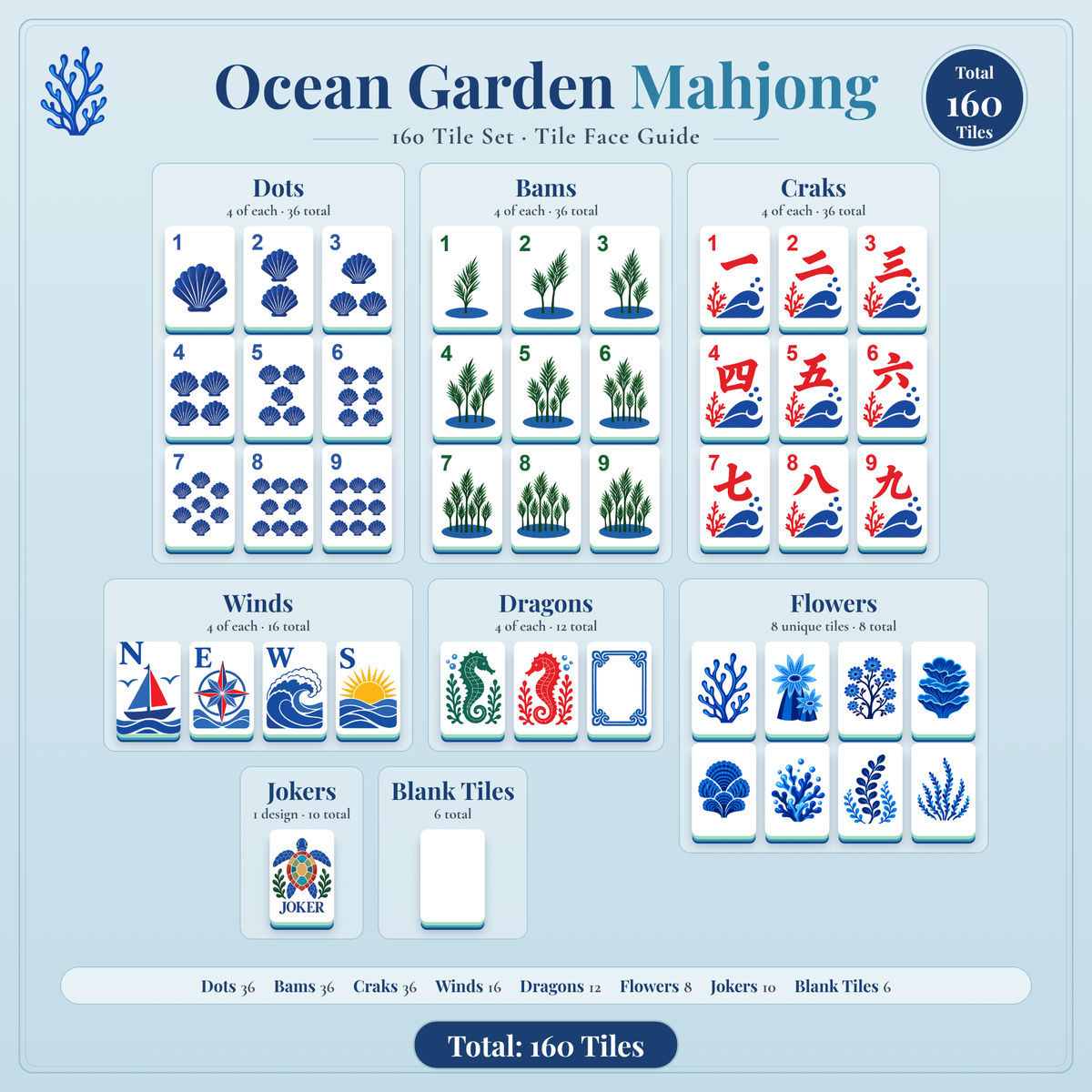
Store your 152-tile American mahjong set in a rigid case or bag designed for mahjong, kept in a cool, dry spot away from direct sunlight and extreme temperature swings. Acrylic tiles absorb moisture and warp in heat above 100°F or humidity above 70%; wood and bone tiles crack similarly. Store the set indoors, never in a car trunk or garage. Before each game, check tiles for warping or sticking. If your set arrives in a flat box, transfer it immediately to a proper mahjong case—the cardboard offers no long-term protection. We store our sets in cloth or leather cases after each weekly game, then in a closed shelf in our living room, and they stay crisp and true for years. Invest in a quality case from the start; it costs far less than replacing a full set.
Why does storage matter for acrylic tiles?
Acrylic mahjong tiles are porous at the microscopic level. They absorb humidity, swell unevenly, and can stick to each other or warp into a bow shape that won't shuffle or stack. Heat above 85°F accelerates this; extreme swings (cold garage to hot car) cause micro-cracking. Unlike solid resin gaming dice, mahjong tiles have engraved faces that fill with dust and moisture if left exposed. We've seen tiles from sets left on open shelves near windows become unplayable within two years—the White Soap dragons would stick to each other, and the bamboo pip tiles would develop a rough feel. Proper storage slows this degradation to decades, not months.

What's the ideal temperature and humidity range?
Store mahjong sets between 55°F and 75°F, with humidity between 30% and 60%. This mimics a climate-controlled living room or bedroom—not a basement, attic, garage, or climate-controlled storage unit that cycles on and off. Your home's main living area is ideal. If your home naturally stays above 75°F (common in Texas, Florida, Arizona), use a dehumidifier in the storage room or opt for cases with silica gel packs. We keep spare packs in our cases; they absorb excess moisture over months and can be refreshed by heating in an oven. Never store sets near a water heater, in a humid bathroom, or under a window where condensation forms in winter.
🀄 Shop best-selling mahjong sets →
Which type of case is best for long-term storage?
Case Type | Climate Control | Portability | Long-Term Safety | Cost Basis |
Rigid hard case with handle | None (up to you) | Easy | Excellent; tiles don't shift | Mid to high range |
Cloth or leather bag | None (up to you) | Very easy | Good if kept indoors | Lower to mid range |
Original flat box | None | Hard | Poor; cardboard absorbs moisture | Included with set |
Airtight plastic bin + silica gel | Passive (gel absorbs humidity) | Moderate | Very good; sealed environment | Low to mid range |
Rigid cases prevent tiles from sliding or crushing. Cloth bags are portable for weekly games but offer no protection against pressure or spills. We use a combination: a rigid case for storage at home, and a reinforced cloth bag for transport to game night. If you order engraved American mahjong sets, check what case it ships in; many come in basic boxes that must be replaced immediately for long-term storage.
What should I do with the original packaging?
Keep the original flat box for the first month only—to ensure nothing is damaged and to reference the tile count or any instructions. Then transfer all tiles and jokers to a mahjong bag or case designed for the purpose. The cardboard box is not waterproof and doesn't keep tiles organized; it's meant for shipping, not storage. If the box had dividers, remove them too—they often don't fit standard tile dimensions and can cause pressure marks on the tiles over time. Store spare jokers and blank tiles (if your set has them) in a small pouch inside the main case; loose tiles attract dust and can get lost.

How do I protect tiles during transport and between games?
Use a mahjong bag or case that holds tiles in compartments or a padded interior. Avoid plastic grocery bags or unpadded cloth totes; tiles can rattle, crack, or collect debris. Before and after each game, visually inspect tiles for cracks, stickiness, or warping—especially the edge corners, which break first. Wipe tiles with a soft, dry, lint-free cloth if they feel dusty; never use water or cleaning solution. Keep the bag in a cool part of your car during transport; never leave it in a trunk on a hot day. We store our game bag in a climate-controlled living room between Wednesday and the next Tuesday night's game, and we've had the same set for seven years without a single replacement tile.
✨ Find your Mahstead set — free US shipping →
What environmental risks should I avoid?
Risk | Why It Harms Tiles | How to Avoid It |
Humidity > 70% | Tiles swell, stick together, warp | Use a dehumidifier or silica gel packs in the case |
Heat > 85°F sustained | Acrylic warps, engraving fills with debris | Store in main house, not attic or garage |
Direct sunlight | Fades engraving, heats the case | Keep in a closed cabinet or opaque bag |
Freezing temperatures | Causes micro-cracking if then warmed | Never leave set in an unheated car overnight in winter |
Spills or proximity to water | Moisture enters tiles and causes warping | Store away from kitchen, bathroom, or leaky windows |
Pressure or stacking | Cracks tiles or warps edges | Use a rigid case, never stack heavy objects on top |
Never store mahjong under a window, near a radiator, in a garage, or in a car. These are the most common mistakes we've seen—and each leads to at least one unplayable tile per year.
Should I use silica gel or desiccant packs?
Yes, especially if your home is naturally humid or if you live in a region with seasonal humidity swings (spring and fall). Buy small, reusable silica gel packs (the kind that change color when saturated) and place 1–2 in your mahjong case. Replace or refresh them every 6–12 months by heating them in a 250°F oven for 2–3 hours until they return to their original color. This costs almost nothing and is the single most effective passive protection for tiles. We refresh our packs every spring and fall as part of seasonal game prep. If your case doesn't have a small pouch for gel packs, you can slip a pack into a small cloth sachet and lay it flat on top of the tiles inside the case.
🎁 See our most-loved mahjong sets & accessories →
What to check before you buy a new case
Rigid or reinforced interior: Does it protect against pressure and spills?
Compartments or dividers: Will tiles stay organized, or will they rattle loose?
Size: Does it fit a full 152-tile set plus jokers, or will you cram tiles in?
Ventilation or seal: Some cases have mesh or air vents (good for passive humidity control); others are airtight (good for active desiccant packs).
Portability: Does it have a handle? Can you carry it one-handed or does it need two hands?
Material: Leather or canvas cases age well and breathe; plastic cases trap moisture unless you add silica gel.
Cleaning: Is the interior washable or wipeable in case of spills?
Most travel-ready mahjong bags and cases sold today meet these standards. If you're unsure, ask the seller whether it's recommended for storage longer than one season; if they hesitate, it's likely meant for transport only, not long-term care.

FAQ
Can I store mahjong tiles in a sealed plastic container?
Yes, but only if you add a desiccant pack inside. Sealed plastic traps moisture; the gel absorbs it and keeps tiles dry. Without gel, plastic is worse than cloth—tiles will warp in weeks.
How often should I check stored tiles?
Inspect them monthly if you play weekly, or before each game. Look for stickiness, warping, or cracks at the corners. Catching warping early (when barely visible) means you can adjust humidity; waiting weeks means tiles become unplayable.
Will my tiles warp permanently if left in a hot car once?
One exposure won't cause lasting damage, but repeated heat cycles will. If your tiles feel slightly warm to the touch after sitting in a car, let them cool slowly indoors (don't put them in a cold room immediately—temperature shock can micro-crack acrylic). Leave them unopened for 2–3 hours before playing.
What if I live in a very humid climate (Florida, Louisiana, etc.)?
Use a rigid case with silica gel packs inside, stored in an air-conditioned room. Refresh gel packs every 3–4 months instead of every 6–12 months. Consider a small electric dehumidifier in your game or storage room (set it to 50–60% relative humidity). We know players in coastal Texas who do this year-round and have no tile issues.
Do wooden or bone tiles need different storage than acrylic?
Yes—they're even more sensitive. Wood and bone crack in dry conditions (below 30% humidity) and warp in wet conditions (above 60%). Store bone and wood tiles at 40–60% humidity, and never in direct sunlight (which bleaches bone). Acrylic is actually more forgiving than traditional materials.
Can I stack my mahjong case with other items on top?
Not long-term. Pressure from above can warp tiles or crack the case. Store your case on a shelf, in a cabinet, or upright in a closet, with nothing stacked on top. If space is tight, use a tall, narrow case or bag that stands vertically. --- ✨ Find your Mahstead set — free US shipping →


View More
View More
View More
