
How to Play Vietnamese Mahjong: Rules & Setup Guide
Last updated: Nov 23, 2026
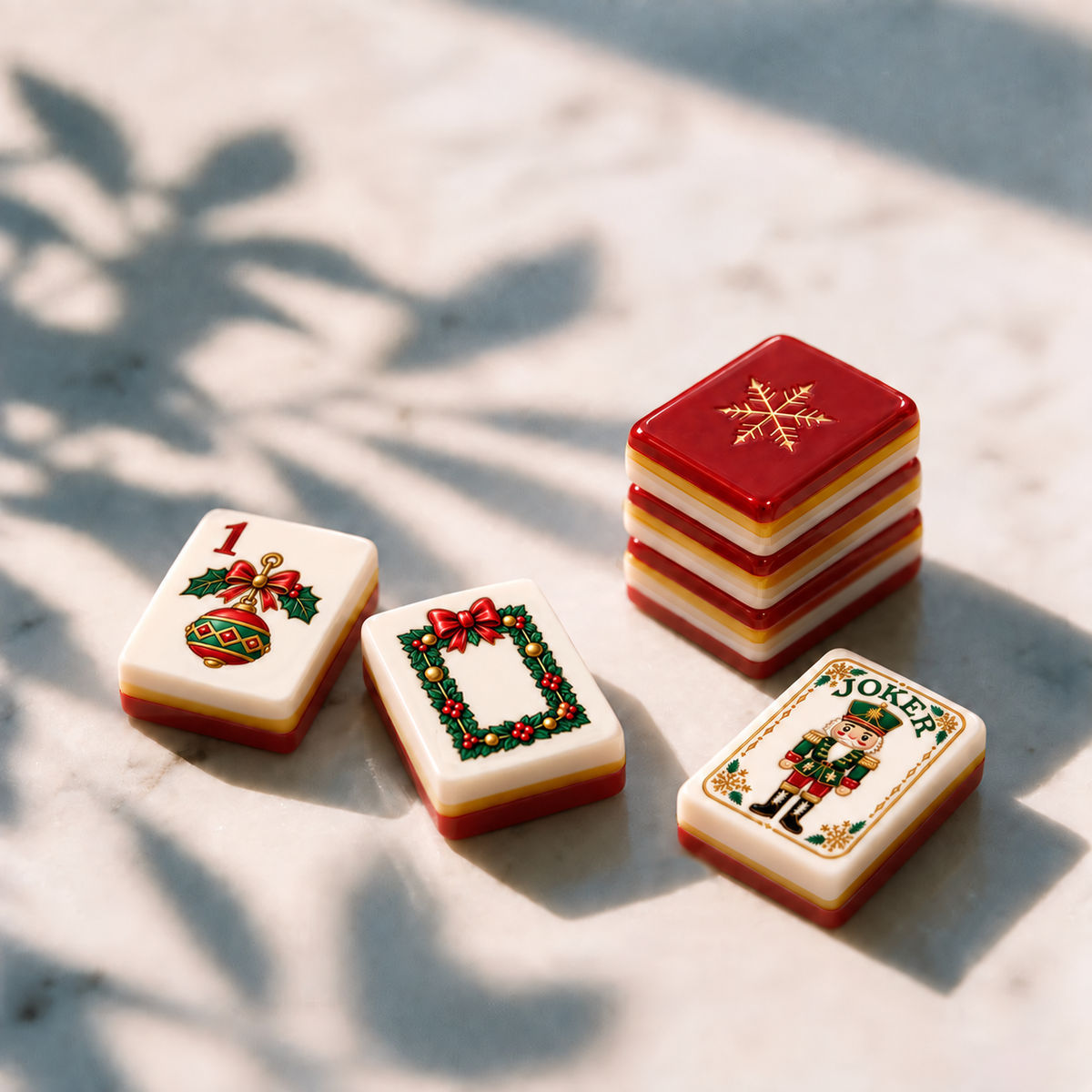
Vietnamese mahjong uses 144 tiles (three suits—Bams, Craks, Dots—numbered 1–9 in fours each, plus 16 winds, 12 dragons, and 8 flowers), played by four players seated at a table. The game begins with a tile draw and wall break similar to Chinese mahjong, but winning hand patterns follow Vietnamese-specific requirements that blend sequences (chows: 1-2-3 consecutive numbers), triplets (pungs: three identical tiles), and honor tiles. A round typically lasts 20–40 minutes depending on player skill. Unlike American mahjong, Vietnamese play allows chows to be called and exposed during play, and the hand card is not consulted—instead, winning patterns are memorized or announced verbally by players. Setup requires a dealing table, a way to track wind rounds, and clear tile racks; we recommend sturdy acrylic sets for durability in frequent play.
How does Vietnamese mahjong differ from American mahjong?
American mahjong is card-driven: you consult the current year's National Mah Jongg League hand card to build winning combinations, and sequences (chows) cannot be called or exposed during play—only triplets, quints, and sextets. Vietnamese mahjong is pattern-driven and allows chows: you memorize or learn hand types and call them openly. American uses 152 tiles plus jokers; Vietnamese uses 144 tiles with no jokers. American rounds involve a ritual tile-exchange called the Charleston; Vietnamese omits this. Both use identical tile layouts (four of each number, wind, dragon), but Vietnamese speed is typically faster, with less downtime between moves.
🀄 Shop best-selling mahjong sets →

What tiles are in a Vietnamese mahjong set, and how do you set up?
A standard set holds 144 tiles: 36 per suit (Bams, Craks, Dots—each numbered 1–9 in fours), 16 wind tiles (four each: North, East, South, West), 12 dragon tiles (four each: Red, Green, White), and 8 flower tiles (labeled 1–4 in duplicates). To set up: shuffle all tiles face-down, then each of the four players draws 34 tiles and arranges them on their rack in order (by suit and number). Stack remaining 8 tiles as the "dead hand" (reserved for kongs and the final draw). This differs from American setups because there is no dealer rotation via the Charleston—instead, players often rotate wind positions each hand to ensure fairness. A strong mat and clear racks help keep tiles organized and prevent accidental reveals.
What are the winning hand patterns in Vietnamese mahjong?
Winning hands in Vietnamese mahjong typically consist of five melds (sets) plus a pair: each meld is either a triplet (three identical tiles) or a sequence (three consecutive numbers in one suit, e.g., 3-4-5 Bams). Hands like "all sequences," "all triplets," "mixed suits with honors," and "special combinations" (such as all terminals or only dragons) score higher points. Common patterns include Chicken Hand (basic five melds any type), Special Seven Pairs, Big Three Dragons, All Winds, and Big Four Winds. Point values vary by regional rules—some regions honor melds that mix suits, others require uniformity. The key difference from American play: no hand card guides you; memory and experience matter. Study reference sheets or ask experienced players to learn the high-scoring patterns before your first game.
How do you draw, play, and call tiles in Vietnamese mahjong?
Play begins with one player (often East Wind, rotated each hand) drawing a tile from the wall. That player then discards one unwanted tile face-up. The next player (clockwise) may call that discard if it completes a meld—if so, they expose the meld on their rack and remain the active player (they draw a tile from the wall and continue play). If no player calls the discard, the next player in turn order draws from the wall, discards, and play continues. Unlike American mahjong, called melds are exposed and remain visible to all players, which speeds gameplay and adds strategy: you read opponents' exposed melds to predict safe discards. Calls are immediate and vocal—no physical cards to reference. Winning is declared when a player completes their hand (five melds plus a pair) after drawing or calling a discard. Ties (multiple players completing valid hands on the same discard) are resolved by precedence: the player who drew wins; if a discard caused the tie, closest player in turn order from the discarder wins.
🎁 See our most-loved mahjong sets & accessories →

How do you score, and what's the point system?
Scoring depends on regional rule sets—no single Vietnamese standard exists. Common approaches: assign a base point value per hand type (e.g., Chicken Hand = 1 point, All Triplets = 2 points, Special Hands = 3+ points), then multiply by the number of players who did not win (winners collect from all three losers). Alternatively, losers pay winners a fixed amount per hand type. Some tables use a sliding scale: if you complete a hand on your own draw (not a called discard), you earn bonus points. Honors and terminals (1 and 9) in melds may be worth extra if your region plays them that way. Before starting, agree on your table's rules—write them down or ask an experienced player. Scoring is faster than American mahjong because winning hands are simpler to evaluate: no hidden melds, no tile combinations to decode from a card.
What are the common mistakes beginners make, and how do you avoid them?
Mistake 1: Discarding too early. New players throw high tiles (dragons, honors) without thinking long-term. Strategy: track opponents' exposed melds to guess which tiles are safe; hold terminals and dragons longer unless you're chasing a specific hand.
Mistake 2: Ignoring the dead hand. The 8 reserved tiles affect your draw count—if you forget where the wall ends, you'll miscalculate when to stop. Solution: mark the dead hand clearly or use a physical divider.
Mistake 3: Calling too greedily. Calling every possible meld slows you down and telegraphs your hand to opponents. Strategy: call only if it moves you closer to completion and doesn't expose a pattern too early.
Mistake 4: Confusing sequences with triplets. A sequence must be three consecutive numbers in one suit (not mixed). A triplet must be three identical tiles. Mixing these up invalidates a hand.
Mistake 5: Not learning the high-scoring patterns. Playing blindly without knowing which hands pay best means you'll chase low-value wins. Study the 5–10 most common patterns for your region before your first game.
Common Mistake | Why It Happens | How to Fix It |
Discarding high tiles early | Panic or unfamiliarity with safe plays | Watch three games first; hold honors and terminals until late-game |
Calling too slowly | Hesitation or rule uncertainty | Agree on rules before play; call within 5 seconds or pass |
Miscounting melds | Rushing or not visualizing the hand | Lay tiles out mentally before declaring; count aloud |
Confusing suit sequences | Forgetting that chows must be consecutive and one suit | Write or say "3-4-5 Bams" aloud when calling to confirm |
Ignoring wall and dead hand | Not tracking tile draws | Count draws aloud or use a chip tracker; reset counter each hand |
✨ Find your Mahstead set — free US shipping →
What equipment do you need to host a Vietnamese mahjong game?
A 144-tile Vietnamese set is the core requirement (non-negotiable for authentic play). Beyond that, a sturdy mat keeps tiles organized and reduces noise; mahjong mats with printed sections for each player simplify setup. Clear racks with pushers let players manage their tiles neatly and prevent accidental reveals—especially useful in faster Vietnamese play where turns move quickly. A travel bag or case protects your set between games and makes transport easy if you play at multiple locations. Dice help randomize the initial draw if your table doesn't use a traditional wall-breaking method. Write down your table's scoring rules on paper or a scorecard to avoid disputes.
What to check before you buy a Vietnamese mahjong set
Tile count: Confirm the set includes exactly 144 tiles (36 per suit, plus honors and flowers). Acrylic or bamboo-core sets are durable for weekly play; plastic or resin tiles wear faster.
Suit labels: Ensure Bams, Craks, and Dots are clearly marked—avoid unmarked sets that rely on icon recognition alone, as they slow new players.
Size and weight: Tiles should be ¾–1 inch wide and substantial (not flimsy). Hold a sample if possible, or check product dimensions online.
Completeness: Verify the set includes all winds (4 of each direction), all dragons (4 of each color), and all flowers (1–4 in pairs). Missing tiles invalidate hands mid-game.
Packaging: Look for sets that arrive in a sturdy case or bag (not loose in a box), so you avoid losing tiles in transit.

FAQ
Can I use an American mahjong set to play Vietnamese mahjong?
No. American sets have 152 tiles plus jokers, while Vietnamese mahjong requires exactly 144 tiles with no jokers. The additional tiles and different joker rules break Vietnamese hand patterns. Use a dedicated 144-tile set.
How long does a typical Vietnamese mahjong game last?
One hand (round) usually takes 15–40 minutes, depending on player speed and hand complexity. A full session of four hands lasts 1–2.5 hours. Experienced players play faster than beginners.
Is Vietnamese mahjong harder to learn than American mahjong?
No—Vietnamese is often easier for beginners because it doesn't require a hand card or memorizing hundreds of specific combinations. You learn 5–10 basic patterns and build from there. American mahjong requires studying the current year's card.
Do I have to play with wind rotation (East, South, West, North)?
Wind rotation is traditional in Chinese and Vietnamese mahjong but not mandatory. Many casual tables rotate winds each hand for fairness but skip the formal ritual. Confirm your table's preference before starting.
What happens if two players complete a winning hand on the same discard?
Turn order determines the winner. If a discard triggers two simultaneous wins, the player closest to the discarder in clockwise order (usually the next player) takes the hand. Some tables split the payout; check your local rules first.
Can I play Vietnamese mahjong with three or two players?
Traditional Vietnamese mahjong is four-player only. You can modify it for fewer players (using fewer tiles per hand or a shorter wall), but rules vary widely by region. Ask experienced players at your table for their three-player variant.
Are there free resources to learn Vietnamese mahjong rules online?
Yes—YouTube channels and mahjong forums cover regional Vietnamese rules, though they vary. Consistency matters more than perfection: pick a rule set with your table and stick to it for the season.


View More
View More
View More
