
How to Play Tianjin Mahjong: Rules, Hands & Setup
Last updated: Nov 23, 2026
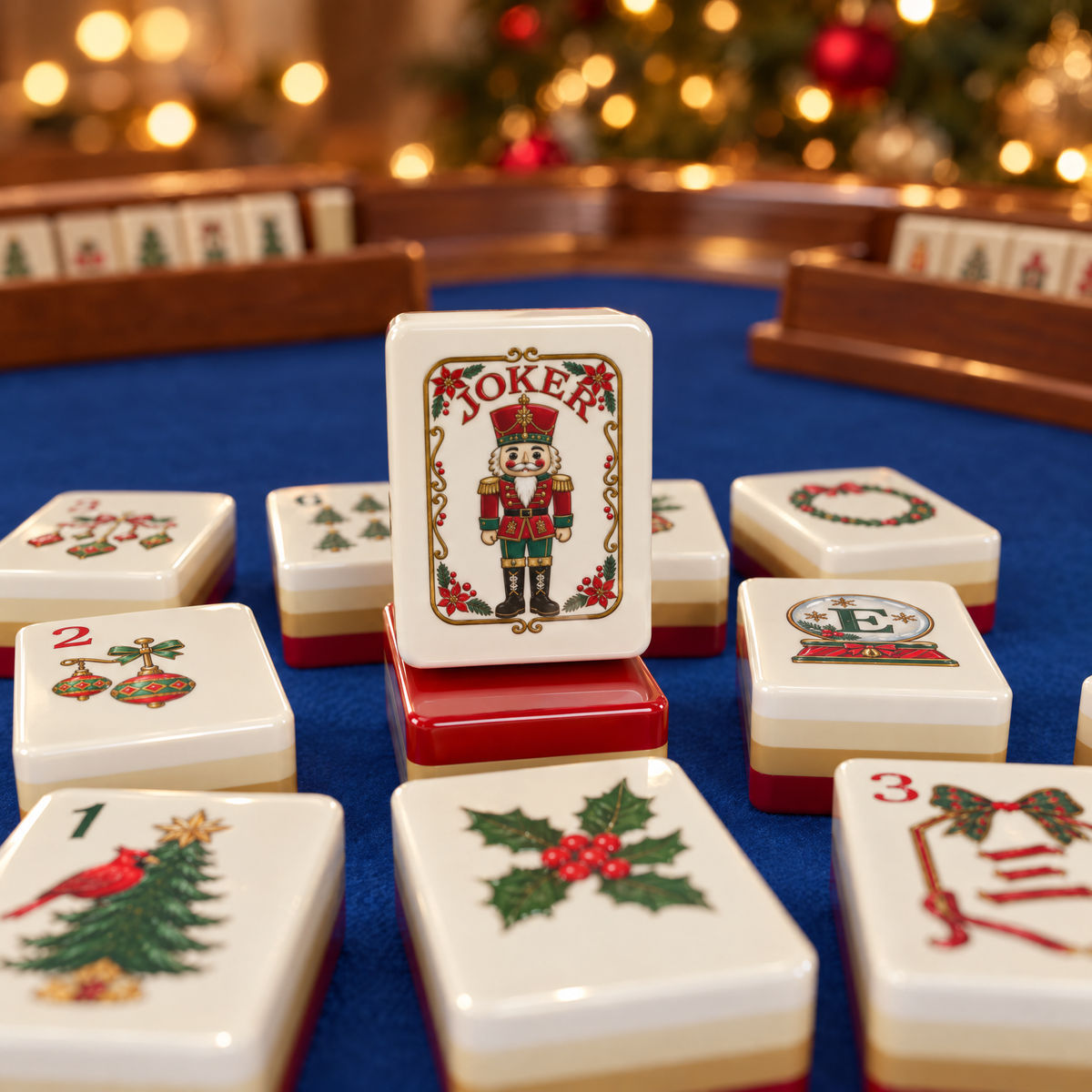
Tianjin mahjong (天津麻将) is a regional Chinese variant played with 108 tiles—three Bam, Crak, and Dot suits numbered 1–9, plus eight winds and no honor tiles or jokers. A complete game involves four players, a dealer-and-discard phase, and winning by forming four melds (three of a kind, four of a kind, or sequences called chows: 1-2-3, 4-5-6, etc.) plus one pair. Unlike American mahjong, which uses a League card with fixed hands and no chows, Tianjin allows chows and runs faster—typically 15–20 minutes per round. Hands are drawn tile-by-tile from the wall; no Charleston passes occur. The player who completes a legal hand first wins and scores points based on melds' composition and concealment. Tianjin favors quick pattern recognition and defensive discard reading over memorized card layouts. We host weekly Tianjin games and recommend building familiarity through practice rounds before joining formal play.
Tianjin mahjong feels like a different game from American mahjong because the rules prioritize speed and open-strategy calling over rigid hand patterns. If you've played American mahjong, forget most of what you know: there is no National Mah Jongg League card, no fixed hands, and chows (sequences like 3-4-5 Dots) are not only allowed but central to play. If you're new to mahjong entirely, Tianjin's simpler tile count (108 vs. 152 in American sets) and direct winning logic make it an approachable entry point.
We'll cover the setup, basic turn structure, hand-winning conditions, and scoring framework so you can sit at a table with experienced players and follow the action confidently.
What tiles do you use in Tianjin mahjong?
Tianjin mahjong uses 108 tiles: three numeric suits (Bam, Crak, Dot) each numbered 1–9 with four copies of each number (36 tiles per suit = 108 total), plus wind tiles (East, South, West, North) and no dragons, flowers, or jokers. All 108 tiles remain in play throughout the game; none are set aside as spares. This smaller tile count than American mahjong means faster hand completion and fewer decision branches per turn. The player rotating position every round changes who deals and keeps East seat throughout the match. Wind tiles are honor tiles that, unlike in American mahjong, form their own melds or pair in a hand. Because Tianjin uses only numbers and winds, the game emphasizes numeric pattern-chasing rather than honor-tile collecting.

How do you set up and deal in Tianjin mahjong?
Setup begins with players seating themselves: dealer (East) sits at the front-center; players rotate positions clockwise so that South, West, and North fill the remaining seats. The dealer shuffles all 108 tiles face-down into a wall roughly 18 tiles per edge, then draws tiles to form the initial hand of 14 tiles (dealer takes 14; other players take 13 each). The dealer then discards one tile face-up in the center; play moves left from the dealer clockwise. On each turn, a player draws one tile from the wall, forms or reviews melds in hand, and discards one tile. Other players may call a discard if it completes a meld (pung = three identical, kong = four identical, chow = three consecutive numbers of the same suit) or wins the hand outright. Unlike American mahjong, which uses no sequences, Tianjin chows are the most common meld type and drive most games. If no one calls a discard, it remains face-up and play continues. The wall shrinks as tiles are drawn; the game ends when either a player wins or the wall is exhausted (a draw).
What counts as a winning hand in Tianjin mahjong?
A winning hand in Tianjin contains four melds (pung, kong, or chow) plus one pair of identical tiles, for a total of 14 tiles (or 13 if drawn on your turn as a "self-draw" or 14 if you call a discard). Melds must use three, four, or five consecutive numbers of the same suit (1-2-3, 4-5-6, etc.) or three or four identical tiles across all suits. The pair must be two of the same tile and cannot be a meld; it serves as the terminal piece. A hand wins immediately upon completion—either by drawing or calling a discard—and does not require the tiles to match any external card or pattern book. This freedom from a fixed hand list is the core difference from American mahjong: in Tianjin, any four-meld-plus-pair combination is legal. Concealed hands (all tiles drawn, no melds called) score higher than exposed hands (one or more melds called during play). If a player completes a hand using only the highest-value numeric ranges (typically 5–9 Dots, 5–9 Bams, 5–9 Craks, or rare wind sets), bonus points apply.
How is scoring calculated in Tianjin mahjong?
Scoring in Tianjin awards points to the winner based on melds' composition, concealment, and in some rule sets, bonus multipliers. A basic framework: a simple hand (four ordinary chows or pungs plus a pair) scores 1 point; a hand with all pungs (no chows) scores 2 points; a hand with all chows scores slightly less or the same depending on local rules; a concealed hand (no called melds) doubles the base score. Hands using high numbers (5–9 in one or more suits) or all winds earn bonus multipliers. Some clubs apply a "no-rank" system where all wins are worth a flat score regardless of composition, then rank the scores after each round to determine who pays whom. Losers pay the winner; the amount varies by house rules (often a flat chip or point unit per win, sometimes scaled by hand value). Unlike American mahjong, which has complex point-multiplying formulas, Tianjin scoring tends toward simplicity: players who track winning vs. losing rounds over a session often settle easily at the end. We recommend asking the table host for their specific scoring rules before the first hand; most clubs post a cheat sheet or run one practice round to align on payouts. Regional variations exist (Tianjin proper vs. nearby cities), so confirming the rule set at the start saves confusion mid-game.
🀄 Shop best-selling mahjong sets →
What are the key differences from American mahjong?
Aspect | American Mahjong | Tianjin Mahjong |
Tile count | 152 tiles (three suits + honors + jokers) | 108 tiles (three suits + winds only) |
Hand patterns | Fixed yearly League card, memorized | Open-ended, four melds + pair |
Chows allowed? | No; only pungs, kongs, quints, sextets | Yes; sequences 1-2-3 through 7-8-9 |
Tile passing | Charleston pass ritual before play | No passes; deal and play immediately |
Game duration | 16+ hands per session | 15–20 minutes per round |
Winning logic | Pattern recognition from card | Pattern recognition from play |
Joker role | Wild tiles in sets/pairs | None; no jokers used |
Scoring | Multiplier-based, points formula | Meld-based, often simpler payouts |
American mahjong relies on players studying and memorizing the year's National Mah Jongg League card; hands are fixed and rigid. Tianjin eliminates that memorization burden: you win by spotting opportunities at the table in real-time. American mahjong uses a Charleston (three rounds of tile-passing between players before play) to balance hands and add strategy upfront; Tianjin deals directly and plays immediately. Because American mahjong prohibits chows and allows only closed melds (pung, kong, quint, sextet) plus jokers as wild cards, it demands longer rounds and deeper calculation. Tianjin's chow mechanic and wind-heavy honor structure speed up play and reward quick thinking. If you love the social rhythm of American mahjong but find the memorization steep, Tianjin offers a refreshing reset: same core skill of reading tiles and opponents, faster payoff, and fewer tile combinations to track. Most players who try both appreciate each variant for different reasons—American for depth, Tianjin for flow.

What are common mistakes beginners make in Tianjin?
Forgetting that chows must be consecutive in the same suit. A beginner often assumes 1-2-3 of mixed suits counts as a chow; it does not. 1 Bam, 2 Crak, 3 Dot is three separate tiles, not a sequence. Only 1-2-3 Bam, 1-2-3 Crak, or 1-2-3 Dot form a legal chow. Check suit color and number before calling a meld.
Calling melds reflexively without thinking ahead. Early in a hand, holding a pung (three identical tiles) is tempting to reveal—but exposing it signals your tile needs to the table and gives opponents valuable information for defense. Sometimes keeping a pung concealed, completing your hand quietly, and winning with a concealed bonus is worth more than the safe intermediate win. Experienced players watch which melds get called and by whom; they adapt discard strategy accordingly.
Discarding too predictably. If you always discard high-number tiles first or favor certain suits, savvy opponents learn your pattern and defend or attack based on it. Vary your discard order and read the table: if three players are collecting Dots, holding Craks and Bams longer may be wiser. Defensive discard means throwing the tile least likely to help any opponent—often a tile that someone has already discarded (they probably don't need it) or an honor like a wind that only one player is collecting.
Not tracking the wall. As tiles are drawn, fewer remain. Near the end of the wall, the likelihood of a "draw" (no one wins, wall exhausted) rises. Play more aggressively in the late game to avoid a scoreless round. Conversely, if the wall is rich and many players are still building, a slow, conservative game may let you complete a high-value concealed hand before others.
When hosting a Tianjin table, we run one practice hand without scoring so that new players feel the flow before real money or points are at stake. Most learners catch these habits by the second or third real hand and play much more confidently afterward.
🎁 See our most-loved mahjong sets & accessories →
Where can you learn Tianjin mahjong in person?
Most Tianjin mahjong communities live in North American cities with large Chinese populations—particularly in the Pacific Northwest, California, Texas, and the Northeast. Look for community centers, library bulletin boards, or local senior centers; many host open mahjong nights or announce club meetings. Synagogues and country clubs in some areas also run mahjong groups and occasionally host players from multiple variants, including Chinese. Online meetup boards and neighborhood social media groups often list game times and welcome newcomers—search for "[your city] mahjong club" or "[your neighborhood] mahjong." When you find a group, arrive early, introduce yourself as a learner, and ask if someone can walk you through one hand. Experienced players almost always enjoy teaching; Tianjin's relative simplicity means a 10-minute primer often suffices. If you're starting a game from scratch with friends, watch tutorial videos from regional Chinese broadcasters (search "天津麻将教程" on video platforms) to see the hand movements and discard tempo in real-time. We recommend watching at least one full hand played before sitting down with actual tiles—the rhythm and pace will feel much less foreign after seeing it once.
What equipment do you need to play Tianjin mahjong?
To play Tianjin mahjong, you need a 108-tile set (no American set with jokers or extra honor tiles will work directly). Many traditional Chinese mahjong sets are designed for both Tianjin and other regional Chinese variants; they use bamboo or plastic tiles printed with Bam, Crak, Dot, and wind symbols. A mat or cloth is helpful to protect tiles and muffle the shuffling noise—helpful if you're playing at home and want to preserve your table finish. A mahjong mat with labeled areas for each player's hand and the discard pile keeps the game organized and speeds up disputes. Dice (typically two or three standard dice) determine the starting dealer and wall break position. A scoring pad or note card tracks wins and losses across multiple rounds if money or points are at play. If you're playing casually at home, you can skip the mat and dice and simply agree on the starting dealer and wall break; the core game doesn't change.
Most traditional 108-tile sets are not sold by us, as we specialize in American mahjong. However, if you have access to an engraved American mahjong set and want to adapt it for Tianjin learning, you can remove the jokers and play with the 144-tile subset (three suits 1–9, winds). This is not ideal long-term—American tiles are sometimes printed with joker indices that clutter a Tianjin game—but it works for practice rounds. Once you're serious about Tianjin play, source a traditional 108-tile set from a specialist supplier that stocks Chinese mahjong equipment.
✨ Find your Mahstead set — free US shipping →
What to check before you buy a Tianjin mahjong set
If you're shopping for a 108-tile Chinese mahjong set to play Tianjin:
Tile count confirmation: Verify the set contains exactly 108 tiles. Some sellers bundle in extra blank or joker tiles; count the box contents or ask before purchase.
Tile size and weight: Chinese sets vary from compact (smaller tiles, lighter) to full-size (larger tiles, heavier feel). Try holding a sample if possible; smaller tiles suit travel, larger tiles suit serious home games.
Suit and symbol clarity: Check that Bam, Crak, and Dot symbols are clearly printed or carved, and that wind tiles are labeled in English or your language of choice (East, South, West, North—or Chinese characters 東, 南, 西, 北 if you read them).
Condition and finish: Tiles should be smooth, without chips or cracks. If purchasing online, check return policies in case tiles arrive damaged.
Bag or storage: Some sets include a cloth bag for portability; if that matters for your play style, confirm it's included.
Most 108-tile sets cost less than American 152-tile sets because fewer tiles are needed. Budget accordingly and prioritize a reputable seller with clear product photos and customer reviews.

FAQ
Can I use an American mahjong set to play Tianjin?
Partially. An American set contains 152 tiles, including jokers, dragons, and flowers that Tianjin doesn't use. You can extract the three numeric suits (108 tiles) and play Tianjin with those, setting aside the honor tiles. However, American tile designs often include joker indices or Western numerals that clutter a Tianjin game. A traditional 108-tile Chinese set is cleaner and recommended.
How long does a typical Tianjin game take?
One hand typically lasts 15–20 minutes depending on table speed and skill level. A full session of 4–8 hands takes 1–2 hours. Experienced players move faster; beginners are slower. The wall runs out sooner than American mahjong, so rounds conclude quicker on average.
Is Tianjin harder than American mahjong?
Tianjin is different, not harder. American mahjong requires memorizing a yearly card and recognizing fixed patterns; Tianjin requires spotting chows and reading opponents in real-time. Beginners often find Tianjin easier to learn because there's no card to study, but both games reward strategic thinking and tile memory.
What happens if no one wins before the wall is exhausted?
The hand ends as a draw (no winner, no payout). Play moves to the next hand, and the dealer typically rotates clockwise or remains if house rules permit. This outcome is uncommon but becomes more likely in very slow or defensive games.
Do wind tiles have special scoring value in Tianjin?
In basic Tianjin, winds form melds like any other tile—a pung of East winds is treated like a pung of 5 Dots. Some regional house rules award bonus points for rare wind sets (all four winds, for example). Always confirm bonus rules with your table host before play begins.
Can I play Tianjin with two or three players?
Standard Tianjin uses four players and one wall. Some regions offer two-player or three-player variants, but they use modified rules and tile counts. We recommend learning the four-player version first; once comfortable, asking an experienced local player to teach house variants is straightforward.


View More
View More
View More
