
Do You Need Mahjong Chips and Coins for American Mahjong?
Last updated: Nov 23, 2026
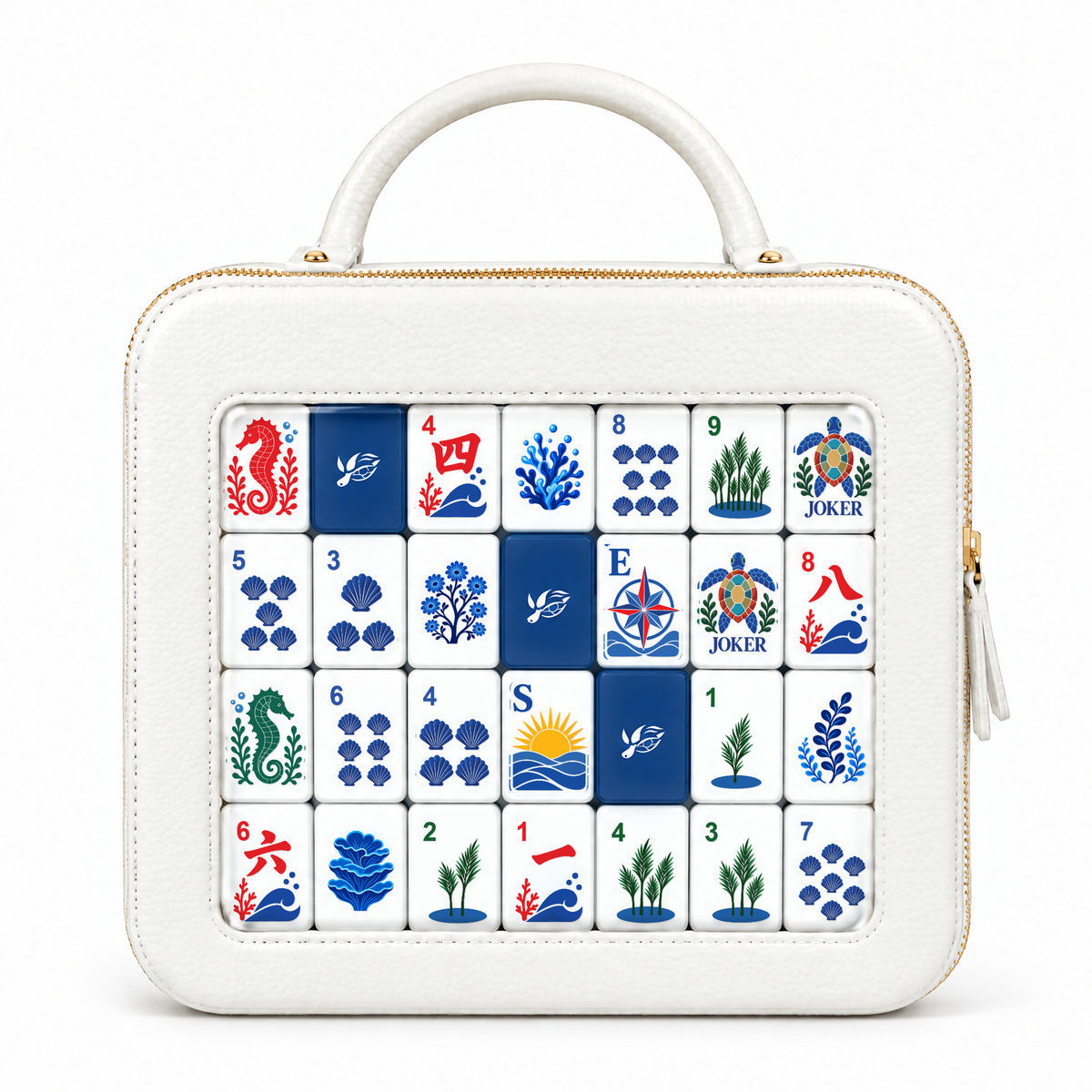
No, you do not need mahjong chips or coins to play American mahjong. Scoring is built into the game: each winning hand earns points determined by the National Mah Jongg League card pattern you complete, calculated by multiplying base points (4 to 8 points) by the tile values you hold. Players track totals on paper, notepads, or phone calculators—all legitimate. Some home groups use chips, coins, or point counters purely for convenience or tradition; they're optional aids, not rules. If you're hosting weekly games or teaching beginners, a clear scoring system (written or digital) keeps games moving faster than relying on memory. Mahstead's best-selling mahjong sets come with everything needed to play; you add scorekeeping tools based on your table's preference. 🀄 Shop best-selling mahjong sets →
What happens if you don't use chips?
You'll still play a complete, legal game. Write or type each round's score—round one, round two, and so on—then total at the end. This is how thousands of home games run successfully. The only friction: mental math at the table slows the pace if you're also reading the card, calculating tile values, and checking who discarded what. Pencil-and-paper scorekeeping works best when one player (often the scorekeeper or dealer) handles calculations while others draw or discard.

Who actually uses chips in American mahjong?
Home tournaments, competitive clubs, and teaching groups sometimes do. Chips provide three benefits: (1) they make the running total visible to all four players at once—no one feels cheated or confused; (2) they add a tactile, social ritual to payouts between rounds; (3) they slow the game's rhythm enough for learners to absorb strategy. Traditional Hong Kong mahjong players often use chips for money play; American league-card players almost never do. The choice reflects your table's culture, not the rules.
Scoring method | Best for | Speed | Clarity | Setup time |
Paper/pen | Casual home games | Medium | Fair—depends on handwriting | 30 seconds |
Phone calculator | Quick casual play | Fast | Good—screen shows total | 10 seconds |
Chip stacks | Tournaments, teaching, groups | Slow | Excellent—chips don't lie | 2–3 minutes |
Mental math only | Experienced players | Fast | Poor—easy errors | None |
How do you calculate points in American mahjong without chips?
The National Mah Jongg League card lists every hand by pattern type (e.g., "3 Consecutive Pungs," "2 Like Numbers"), and each pattern carries a base score (4, 6, or 8 points). You multiply that base by the tile values in your hand: a tile's value is its rank (1–9 in Craks, Bams, or Dots), 5 for winds, 10 for dragons. A hand worth 6 base points + 40 tile value = 46 points. This is easiest on paper or a calculator because you're listing your tiles anyway. If you're learning to read the card for the first time, paper scorekeeping lets you pause, double-check, and verify without pressure.
🎁 See our most-loved mahjong sets & accessories →
Should you use chips at a beginner table?
Yes—if you're teaching new players, chips simplify the post-hand ritual. New players already struggle to find their winning pattern on the card, count jokers correctly, and check for illegal tile combinations. Adding mental arithmetic stalls the game. Chips (or a paper scoresheet one person maintains) remove that cognitive load. Many hosts use a simple chip stack: each player starts the game session with, say, 100 points in chips; winners earn chips from losers each hand. At the end, chips convert back to points or settle in cash (if your group plays that way). This makes outcomes tangible and reduces disputes. For a one-time home game with friends, paper is fine. For weekly recurring play, chips or a running scorecard (printed or digital) pay for themselves in goodwill.

What's the honest trade-off: chips vs. paper?
Chips require storage space and setup/cleanup time; they also require someone to manage the exchange fairly. Paper requires legibility and honesty (players must trust the record). A phone app eliminates both downsides if everyone at the table accepts it. We've hosted games where one player kept a score notebook for an entire season—never a problem. We've also hosted games where chips added so much fun that a few players asked to buy their own set to take home. Neither is wrong. Choose based on your group's style: formal or casual, competitive or social, frequent or rare. Our best-selling collection focuses on the tiles and equipment that matter most—the rest is your table's call.
Do mahjong chips change how you play?
Chips do not affect the rules of play. You still draw tiles, discard, call hands, and follow the card exactly as you would without them. Chips only affect scoring administration—how fast the game moves and whether disputes over totals arise. In league or tournament play, where money or rankings are at stake, chips (or an electronic scoreboard) create a record that's harder to challenge. In casual home play, they're decorative and functionally optional. Think of chips as analogous to having printed scorecards at a golf course: they're convenient, they look professional, but you can play without them.
What to check before you buy chips for your group
Confirm your table plays American mahjong (NMJL card–based) and not Chinese, Hong Kong, or Riichi—those games have different scoring and chip conventions.
Ask: How many players show up regularly? Chips or paper works for four; for five or more, one scorekeeper on paper or a phone app is clearer.
Decide: Are payouts involved? If yes, chips or a written record prevents "he said, she said" disagreements. If no, paper is usually fine.
Test on paper first. Run one game with a notepad. If it feels slow or confusing, then invest in chips or a running scoreboard.
Pair chips with a clear scoring reference card. Chips mean nothing if no one remembers how to calculate base points.
✨ Find your Mahstead set — free US shipping →
Why Mahstead tiles matter more than scoring tools
A beautiful, durable tile set encourages weekly play—and frequent play is where scoring rituals settle into routine. We hand-engrave acrylic sets so they stay crisp through hundreds of shuffles; players naturally handle them more carefully, games run smoother, and scorekeeping feels less like a chore. If your tiles are cheap or chipped, the whole experience suffers, and no chip system saves it. Start with a set you'll enjoy handling, then layer on scoring tools only as your group's needs demand.
FAQ
Can you play American mahjong with no scoring system at all?
No. Someone must track points each hand and record final totals—that's how winners are determined. How you record (paper, chips, phone) is your choice, but the record itself is mandatory.
If I buy chips, do they come with a scoring guide?
Most chip sets sold independently do not. If you want chips, check the listing carefully. For American mahjong scoring specifically, we recommend pairing chips with our scoring guide blog post or a printed NMJL card reference.
Are there apps that replace chips and paper?
Yes. Several free and paid mahjong score-tracking apps exist for iOS and Android. They work well for casual games. In formal club or tournament play, paper or chips are preferred because they leave a physical record less prone to accidental deletion.
What if one player always forgets the running total?
Designate one player as scorekeeper for that season—their job only. Or print a scorecard template and fill it after every hand. For a casual group, this often prevents the single biggest source of friction.
Do expensive chips play better than cheap ones?
No. Chips are purely functional in American mahjong—they're not even mentioned in the NMJL rules. Any set with clear denominations (e.g., 1-point, 5-point, 10-point) works equally well. Save money and buy a better tile set instead.
Can you use coins or tokens from other games instead of mahjong chips?
Yes, if the denominations are clear and all players agree. Poker chips, Yahtzee tokens, or even buttons with labels work fine. The game doesn't care; your table does.


View More
View More
View More
