
How to Deal in Malaysian Mahjong: Step-by-Step Rules
Last updated: Nov 23, 2026
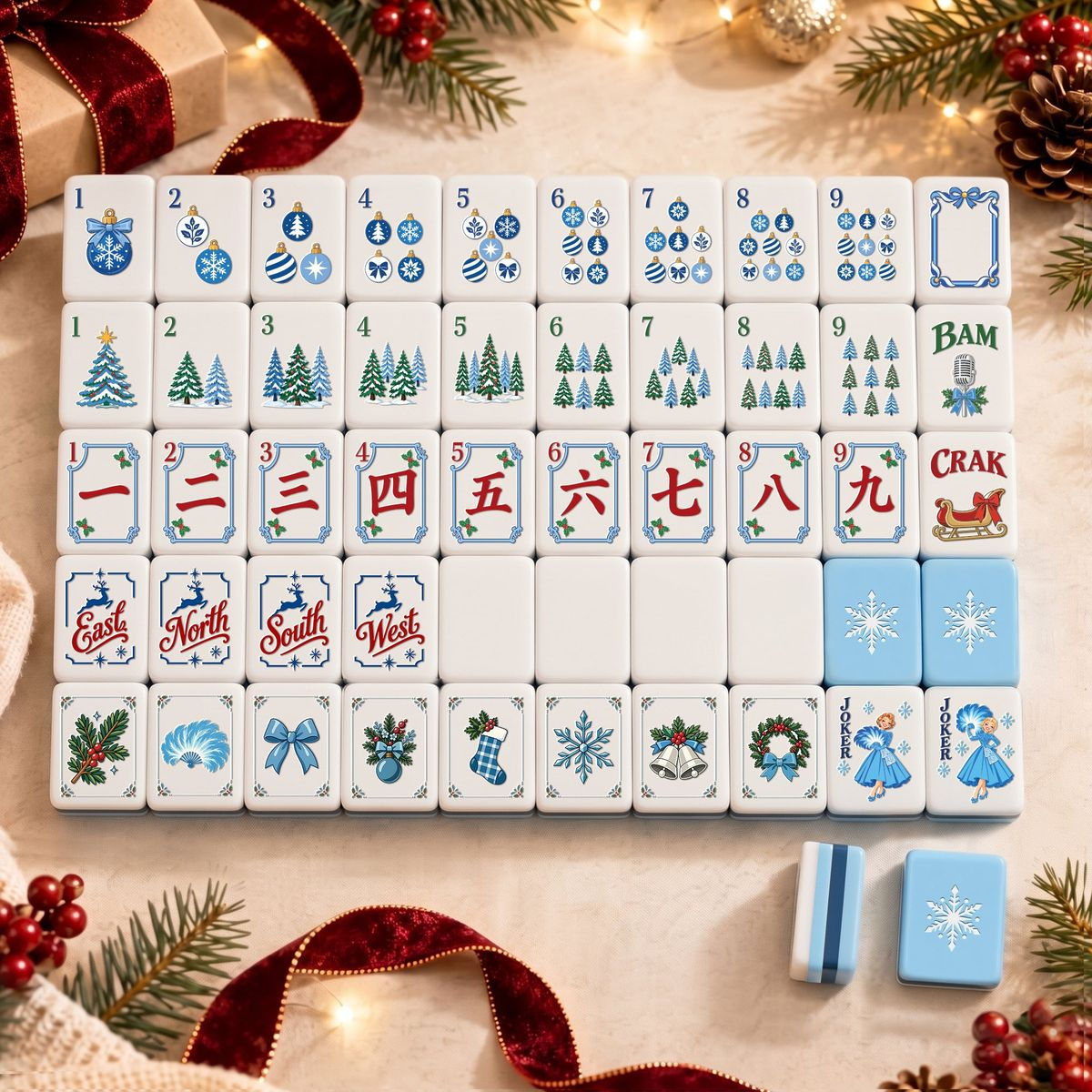
Malaysian mahjong dealing follows a strict sequence tied to wind positions and wall position. The dealer (East Wind) sits opposite the breaker; the other three players occupy South, West, and North seats. After walls are built, the dealer sits opposite the breaker, who counts a number from 1 to 16 based on dice, then breaks the wall at that spot. From the break, the dealer draws fourteen tiles in sets of four (drawing from the right end of their wall), then each player draws fourteen in turn; finally, the dealer draws one more tile to reach fourteen. In Malaysian rules, the dealing pace is steady—four tiles per player per draw, no acceleration. American dealing, by contrast, uses the 152-tile wall plus the Charleston pass before any tiles move. Malaysian dealing is simpler: no Charleston, no jokers are exposed during the deal itself. Understanding wall position and turn order prevents most dealing errors and keeps games running smoothly.
What is the exact order of drawing tiles in Malaysian mahjong?
Malaysian mahjong dealing flows in rounds: the dealer draws four tiles, then South, West, North each draw four in turn, then the dealer draws four more. After three full rounds (thirteen tiles per player), the dealer takes one final tile to reach fourteen, then each other player draws one. The sequence ensures fair tile distribution and is the same every game, based on wind positions assigned before the deal starts.
🀄 Shop best-selling mahjong sets →

How do you set up the wall and break it correctly?
The wall begins as four stacks of thirty-four tiles each, arranged in front of each player in their designated wind position. The dealer's wall sits on the right side of the table; players build their walls leftward. Dice are rolled; the sum determines how far along the wall to break. The breaker counts that number along the wall, and tiles are drawn from the break point forward—never from the left edge. A common mistake is breaking too early or counting the break wrong; double-check the dice sum before announcing the break point.
Why does wind seating matter before dealing starts?
Wind positions (East, South, West, North) assign both drawing order and wall responsibility. The dealer is always East; the player opposite the dealer (West) breaks the wall. South and North follow in turn. If wind seats are mixed up, the deal becomes unfair: one player might draw from the wrong wall, or the dealer's privilege is lost. Before building walls, announce wind assignments aloud so all four players agree—this single step stops 90 percent of dealing disputes.
What are the top mistakes to avoid during the deal?
Mistake | What Goes Wrong | How to Avoid It |
Breaking the wall at the wrong tile | Players draw from incorrect positions; hand balance is skewed | Count dice sum twice; point at the break tile before anyone draws |
Drawing tiles out of sequence | One player gets more or fewer tiles than intended | Call out each player's name as their turn comes; pause between draws |
Building walls of unequal height | Visual confusion; hard to know where the break lies | Stack tiles carefully in sets of two; all walls should look identical |
Forgetting the dealer draws last | Dealer doesn't get the final one-tile draw | Remind all players: dealer draws 1, 4, 1 (total 14); others draw 4, 4, 4, 1 (total 13, then 14) |
Moving the wall after breaking it | Tiles shift; the break point becomes unclear | Lock the wall position once broken; do not slide or reposition it |

How does Malaysian dealing differ from American mahjong dealing?
American mahjong uses a 152-tile wall that players build together, then pass tiles through a ritual called the Charleston before any melds form. No tiles are exposed until after the Charleston ends. Malaysian dealing skips the Charleston entirely and exposes live tiles as they're drawn; melds can form immediately. American dealing emphasizes the wall-passing exchange; Malaysian dealing emphasizes the wall break and wind order. Both are equally fair—they're just different templates. If you've learned American rules, Malaysian dealing will feel faster and more intuitive because it has fewer setup steps.
What should you check before you deal the first hand?
Before the dealer touches any tile, confirm these five points:
Wind seats are announced and agreed. Each player knows their wind; East (dealer) and West (breaker) are correctly identified.
Walls are built to full height and width. All four walls are roughly equal; no wall is shorter or leaning.
Dice are rolled and the break point is marked. The breaker has announced the sum aloud; everyone sees the break tile.
All tiles are face-down and scrambled. No peeking; every tile in the wall is shuffled before building.
Players are seated and ready to draw. No one is still talking, eating, or adjusting their seat once the wall is broken.
This five-point checklist takes thirty seconds and prevents nearly every dealing restart.
🎁 See our most-loved mahjong sets & accessories →
What tiles should you have in a Malaysian mahjong set?
Malaysian mahjong uses the same 152-tile format as American: three suits (Bams, Craks, Dots) numbered 1–9 with four copies each, sixteen Winds (four each of North, East, South, West), twelve Dragons (four each of Red, Green, White), eight Flower tiles, and eight Jokers. Some Malaysian players use regional rule variations that affect which tiles are "active" or "live" during certain rounds, but the tile count and names are universal. A best-selling mahjong set with clear markings on each tile—especially on the Winds and Dragons—makes dealing faster because players don't have to squint to confirm what they've drawn. Acrylic or resin tiles with engraved numbers last longer than printed tiles, especially during fast dealing sessions where tiles are shuffled many times per evening.
✨ Find your Mahstead set — free US shipping →
What to check before you buy a mahjong set for Malaysian dealing
Tile size and weight: tiles should be at least 1 inch on a side and heavy enough not to slide during dealing. Light plastic tiles slip across the table and make wall building difficult.
Clear, legible markings: Winds and Dragons must be instantly recognizable, even in low light. Engraved tiles beat printed ones because the markings don't wear off after hundreds of deals.
A complete tile count: verify the set includes all 152 playing tiles plus spares (extra jokers). Do not buy a set that claims to be "complete" without counting.
A sturdy bag or case: if you plan to transport the set to a friend's home or a club, a reinforced mahjong bag protects tiles from breaking and keeps walls organized between games.

FAQ
Can I break the wall from any position, or must it always be West?
West (the player opposite the dealer/East) breaks the wall. If West is unavailable or a player chooses to rotate dealership, West changes accordingly. Breaking always falls to the player directly opposite the dealer—never to North or South.
If I roll double sixes (twelve), do I count twelve tiles along the wall or count in a different way?
Count exactly twelve tiles along the wall from the designated starting point (usually the right side of the dealer's wall). Count aloud so all players hear it; the twelfth tile is the break point. No special rules for doubles in standard Malaysian dealing.
What happens if I break the wall at the wrong tile by accident?
Call a stop immediately. Acknowledge the error, reset the tiles to the wall, re-roll the dice, and count again. Do not proceed with an incorrect break; the game loses fairness and credibility. It takes ten seconds to reset; it takes ten minutes to argue about a bad deal.
Can the dealer draw all tiles before the other players, or must they take turns?
No. The draw must rotate: dealer draws four, then South, West, North each draw four in strict turn. Only after the first three rounds does the dealer draw the final one-tile draw. Skipping turns or letting one player draw ahead breaks the sequence.
Do jokers ever get mixed into the wall before breaking, or are they always set aside?
In standard Malaysian mahjong, jokers are set aside and not dealt face-down in the wall. They're held in hand and used during play to substitute for tiles in melds. Some regional rules treat jokers differently; ask your table before the first deal.


View More
View More
View More
