
How to Choose Mahjong Racks with Pushers: A Buyer's Guide
Last updated: Nov 23, 2026
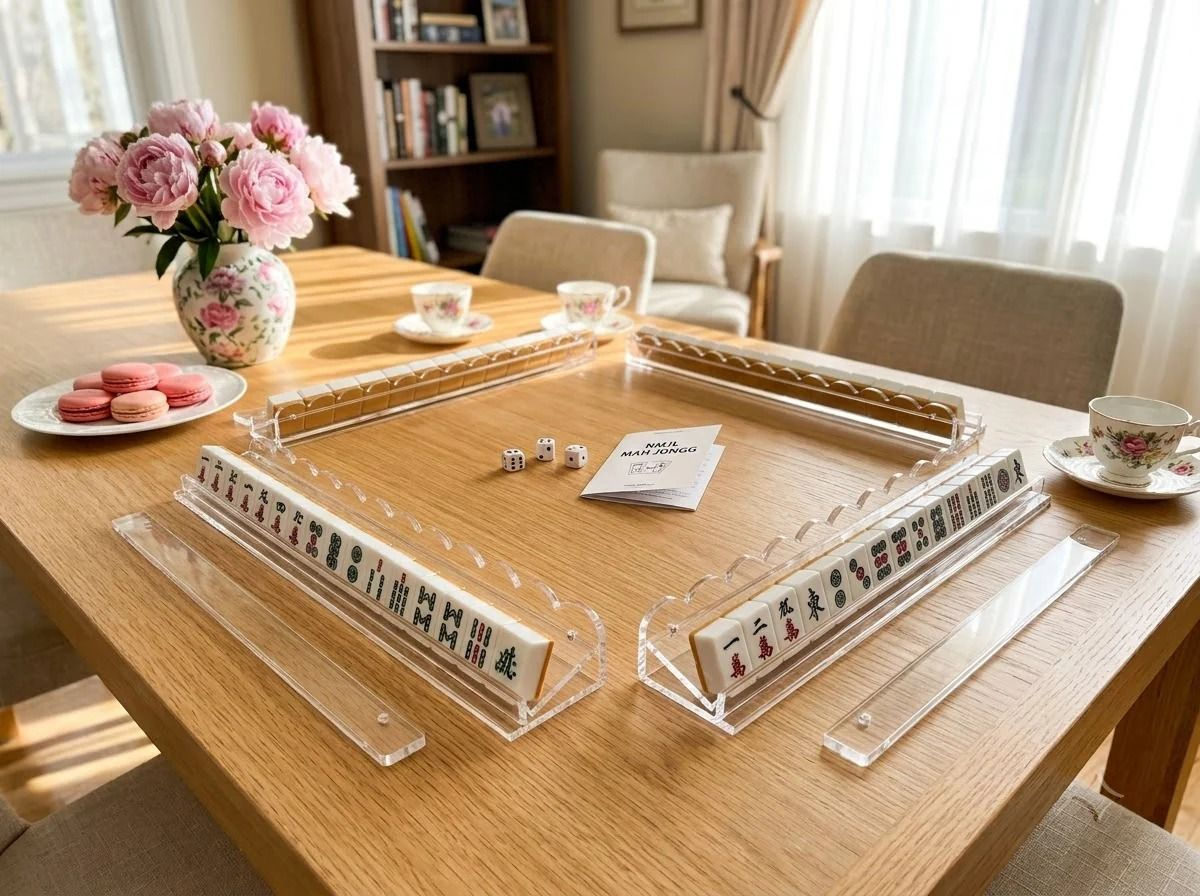
A mahjong rack is a wooden or acrylic holder that displays your 13 tiles and keeps them upright and hidden from other players during the hand. Racks come in pairs (two per player), and each holds a row of tiles. The pusher—a stick attached to the rack—slides tiles along the base so you can manage discards and draws smoothly without fumbling. Wood racks feel classic and absorb sound; acrylic is lighter and brighter, matching modern tile sets. Pushers vary from simple integrated sticks to full mechanical slide systems. Most players buy racks that match their tile set material for visual harmony. Before ordering, confirm your set's tile height (standard American tiles are about ½ inch thick) and whether you prefer a smooth pusher action or traditional friction fit. Mahstead offers paired racks in finishes that pair with our best-selling mahjong sets and custom engraved options.
What does a rack's pusher actually do?
The pusher is a mechanical feature, not optional flair. When you draw a new tile, you push it into the back of your rack with the stick; older tiles slide forward off the front edge into your hand or discard area. A well-designed pusher requires minimal force—too stiff and it jams; too loose and tiles fall out of sequence. The best pushers use a curved or angled groove that guides tiles smoothly without binding. Test by simulating a draw-and-discard cycle: push one tile in, watch the front tile move out cleanly. If the pusher requires two-handed effort or leaves gaps between tiles, the mechanism is underdesigned. A good pusher means faster, quieter play and fewer dropped tiles during a tense hand.
Wooden racks or acrylic—which is right for your game?
Rack Material Comparison
Material | Best For | Sound | Feel | Durability | Pairs With |
Wood (bamboo/oak) | Home clubs, traditional players | Quiet, muted | Warm, tactile | 10–15 years | Bone/bamboo tiles |
Acrylic (clear/frosted) | Modern sets, bright décor | Slight click | Smooth, cool | 8–12 years | Acrylic tiles |
Laminate composite | Budget games, travel | Varies | Plastic feel | 5–8 years | Any tile type |
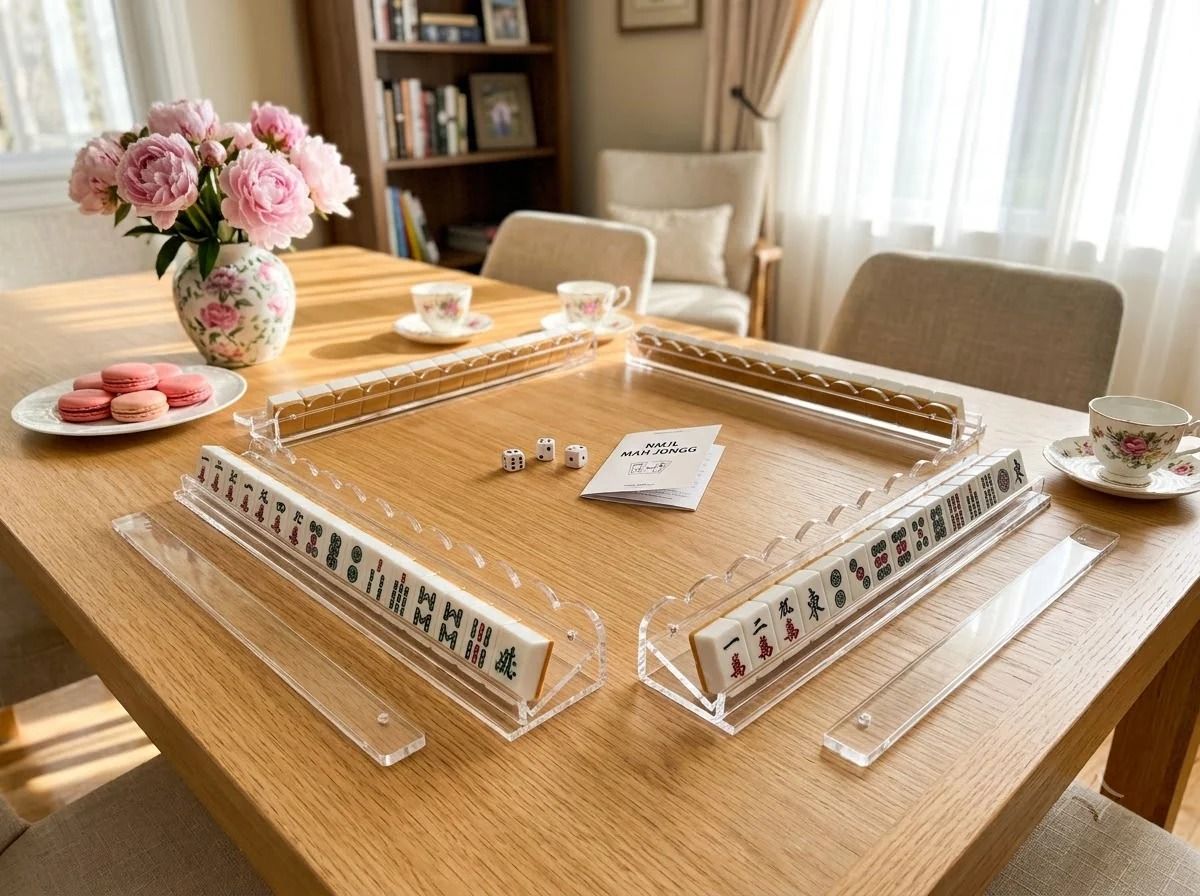
Wood racks absorb impact and sound—crucial if your table is tile-heavy and noise carries. They pair naturally with bone or bamboo tile sets. Acrylic racks match best-selling modern tile sets and are easier to clean (wipe with a damp cloth; wood needs drying time). Composite racks are the cheapest option but show wear faster. For a weekly game, invest in wood or acrylic matched to your tiles—the tactile consistency matters after 50 hands. Don't mix materials; a wood rack with acrylic tiles feels disjointed and throws off hand balance.
🀄 Shop best-selling mahjong sets →
How do you measure a rack to fit your tiles?
Before buying, measure one tile's height (thickness). Standard American mahjong tiles are approximately ½ inch thick; some premium sets run slightly taller. Racks are sized to hold 13 tiles standing upright, plus 1 drawn tile in reserve, for a total visual depth of about 7–8 inches from back to front. Check the rack's inner width: it must accommodate 13 tiles laid side by side. If your tiles are narrower (typical width ~1 inch per tile), confirm the rack's groove isn't so wide that tiles wobble. Most racks come in a universal size for standard American tiles, but always cross-reference the tile set's dimensions with the rack's specifications before ordering. A mismatch means tiles stick or fall; there's no fix short of replacement. Measure twice, order once.
What pusher mechanics should you actually check?
Three pusher designs dominate: friction-fit (the pusher stick rests in a groove and depends on tile friction), ball-bearing (small wheels or grooves reduce resistance), and rail-guided (the stick slides along a fixed track). Friction-fit is traditional and cheapest but requires practice—too much force and you'll knock tiles off the back. Ball-bearing pushers are smoother and forgiving; they cost more but feel less "thick" and easier on wrists during long games. Rail-guided systems are rare and usually found in tournament-grade racks; they're overkill for home play. Test the pusher by moving it empty (no tiles). It should glide with light two-finger pressure and stop dead when you release it—no drift. A pusher that slides back under its own weight is poorly designed and will misalign tiles mid-hand.
Why matching your rack to your set matters more than you think
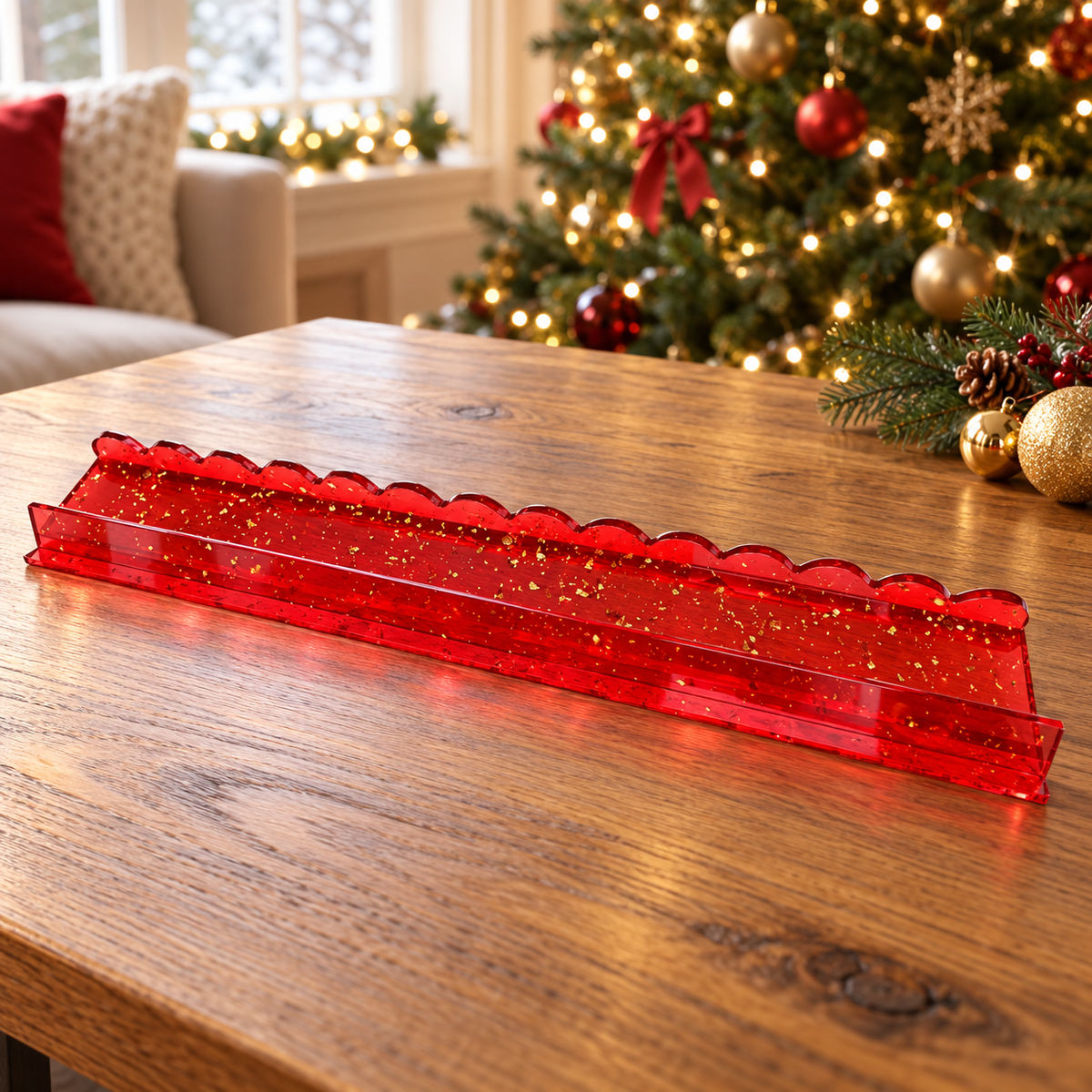
We've all inherited or bought mismatched racks and tiles. The visual discord is the first hint: clear acrylic racks with cream bone tiles look fractured, and dark wood racks with neon modern tiles clash. More important: the weight distribution changes. Lighter acrylic tiles feel twitchy in wood racks; heavy bone tiles press hard on plastic pushers and may crack them over time. Matched sets (tile + rack from the same maker or era) are engineered for balance—the pusher's resistance and the tile's mass align. For engraved American mahjong sets or custom tiles, buying paired racks from the same source ensures compatibility and a cohesive table look. If you already own tiles and need new racks, ask the rack maker's support team for a material recommendation before ordering. A simple email saves a wrong purchase.
What to check before you buy
Rack Purchase Checklist
Confirm your tile set's thickness (height) and width in inches.
Check the rack's weight limit if it's acrylic (some flex under pressure).
Test the pusher mechanism in person if possible, or watch a video demo.
Verify you're ordering a pair (two racks per player × 4 players = 8 racks total for a full game).
Read the return policy—racks are non-standard and rarely returnable.
Confirm free shipping and delivery timeframe before checkout.
Inspect photos for crack, warping, or uneven groove depth.
Racks are ordered by the pair, so for a four-player game, you need 8 racks total (two per player). A common mistake: ordering just one pair assuming you can rotate them—you can't. Every player holds tiles simultaneously during a hand, so all racks must be in play at once. If you're starting fresh, explore the Mahstead rack collection alongside mahjong mats and tile sets. A coordinated table setup (matching racks, mat, and tiles) elevates the game without added cost.
✨ Find your Mahstead set — free US shipping →
Real talk: when to upgrade your racks
If you play weekly, racks last 7–10 years before pushers wear or grooves warp. Acrylic racks yellow under sun or smoke; wood racks can split if stored near heat. If the pusher sticks or requires force to move, replace the pair—a worn pusher throws off tile management and slows the game. Don't patch or sand; a replacement pair costs less than dinner out and restores flow. If you're hosting tournaments or bringing racks to a club, invest in a travel bag or case to protect them from knocks and dust. Racks in a case last 50% longer because they're insulated from temperature swings and dryness. Think of racks as the foundation of your table; good racks make play effortless, and worn racks make every hand feel slow.
🎁 See our most-loved mahjong sets & accessories →
FAQ
Do I need to buy racks if I already have a mahjong set?
Yes, unless your set includes them (rare). Racks are sold separately and are essential for hiding your tiles and managing draws. Without racks, all players can see each tile you hold, eliminating strategy.
Can I use the same racks with different tile sets?
Only if the tile sizes are identical (thickness and width). Mixing—say, bone tiles in acrylic racks—causes misalignment and wears down the pusher faster. Match material to material when possible.
What's the difference between a pair and a set of racks?
A pair is two racks (one player's hand). A full set of racks for four-player mahjong is 8 racks (four pairs). Always order by the number of players or confirm the total count before checkout.
Should I buy wood or acrylic racks for a beginner?
Acrylic is lighter and easier to manage for new players; wood feels more traditional but requires gentle handling. If your tile set is acrylic, choose acrylic racks. If bone, choose wood. Beginner-friendly matters less than material match.
How do I clean racks without damaging the pusher?
Use a damp cloth and mild soap on wood; acrylic can handle the same. Never submerge or use harsh chemicals. Dry immediately with a soft towel. For the pusher mechanism, wipe the groove with a dry cloth only—no oil, which traps dust.
Can I repair a stuck or cracked pusher?
A cracked pusher usually requires replacing the entire rack (glued in on most designs). A stuck pusher may loosen with gentle, repeated movement or a tiny amount of dry lubricant (graphite powder, not oil). If it doesn't free up, replacement is safer than forcing it.
How much does a pair of quality racks cost?
Prices vary by material and maker; see the current price on our product page. Budget for 8 racks (four pairs) if you host regular games. Many players spread purchases across seasons.
What's the ideal pusher length and angle?
Most pushers are 4–6 inches long and angled at 10–20 degrees for ergonomic hand position. The angle lets you push with your thumb or two fingers without bending your wrist. Longer isn't better—it catches on other players' tiles.


View More
View More
View More
