
How to Choose a Mahjong Tile Tray: Racks vs. Mat Holders
Last updated: Nov 23, 2026
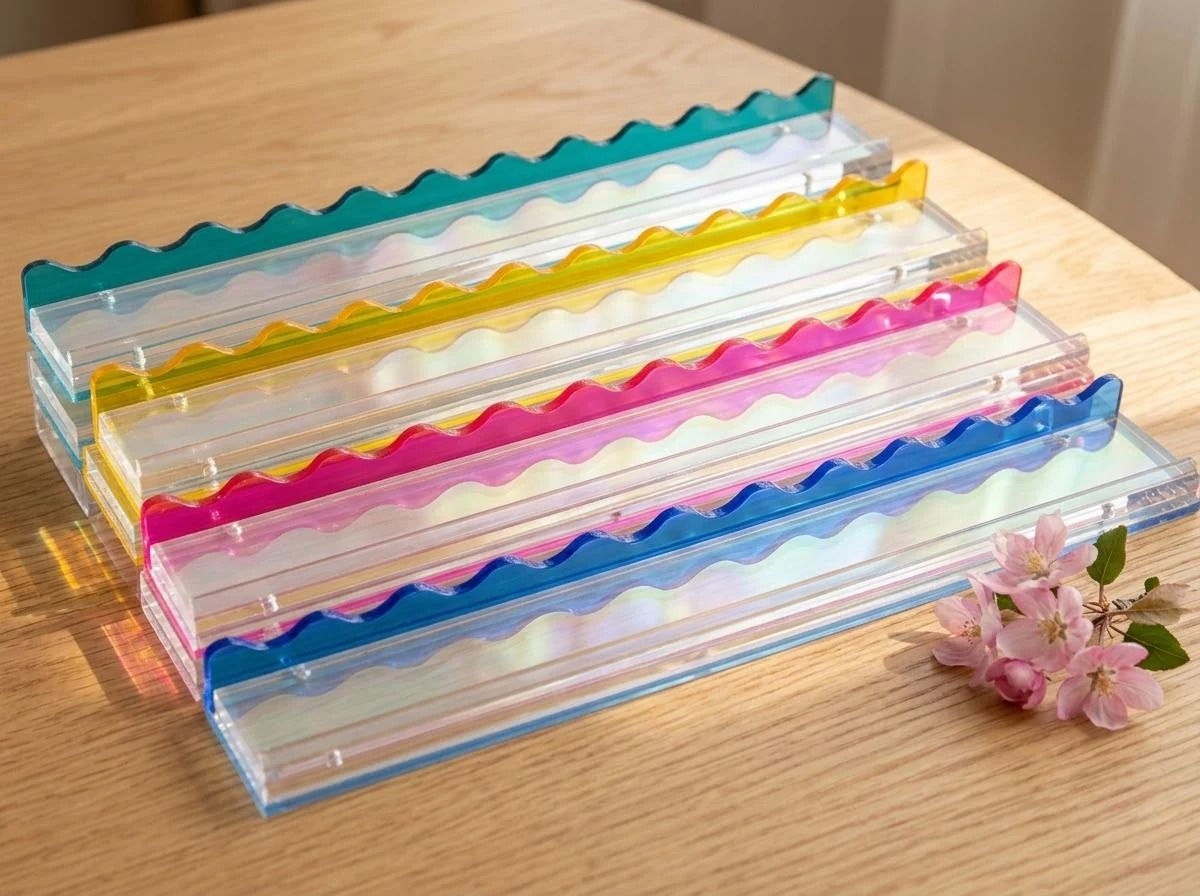
A mahjong tile tray holds and organizes your 13 tiles during play, keeping them upright and hidden from opponents. The main options are racks with pushers—wood or acrylic stands with mechanical pushers to slide tiles—mat-integrated holders, and soft hand organizers. Racks with pushers are the standard for serious American mahjong players; they sit on the table in front of you. Mat holders are fabric pockets built into some playing surfaces. Hand organizers are portable, affordable stands for casual play or travel. All are optional—you can hold tiles in your hand—but a tray prevents accidental tile drops, speeds up tile counting, and reduces hand fatigue in long games. Choose based on: do you play weekly (racks); travel often (hand organizers); or want an all-in-one surface (mat with integrated holder). Mahstead offers engraved racks with pushers in acrylic and wood, paired with tiles and mats for complete sets. 🀄 Shop best-selling mahjong sets →
What's the difference between a rack with pushers and a hand holder?
A rack with pushers is a rigid stand, usually 12–14 inches wide, that holds all 13 tiles in a row. Pushers—small levers underneath—let you slide tiles up to expose or hide them without touching them. A hand holder is a smaller, softer stand (often fabric or light plastic) that holds fewer tiles or organizes them loosely. Racks are for stationary play; hand holders are for travel or casual games where speed and equipment footprint matter less.
Who should buy a rack with pushers?
Buy a rack if you play American mahjong weekly or more often, value hand ergonomics in long sessions, and have dedicated table space. Racks prevent fumbling, reduce tile drops, and let you manage your hand one-handed—critical when tracking the discard pile, reading the card, or reaching for a tile to claim. If you play casually or travel frequently, a hand holder or soft organizer may suit you better. Racks are an investment in comfort and game speed.
How do rack designs differ—wood vs. acrylic vs. fabric?
Material | Best for | Durability | Aesthetic | Portability |
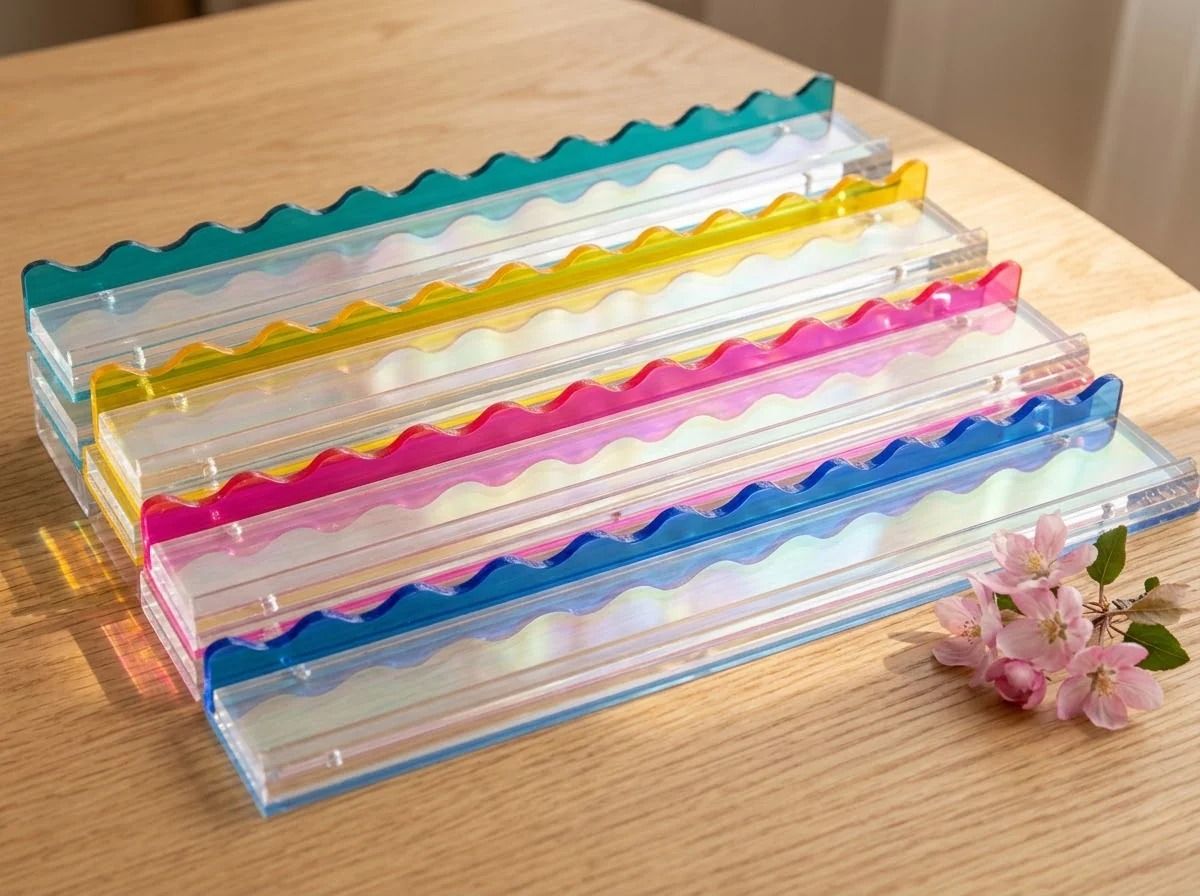
Acrylic | Color-coordinated sets; modern look | High; dishwasher-safe | Bright, customizable; matches engraved tiles | Moderate; lightweight but bulky |
Wood | Traditional play; heirloom feel | High; oiled maintenance | Warm, classic; ages well | Lower; heavier |
Fabric/Hand organizer | Casual play; travel; small budgets | Moderate; soft material wears | Simple, minimal | High; rolls or folds flat |
Acrylic racks pair seamlessly with best-selling mahjong sets that include matching tiles and accessories. Wood racks add gravitas to long-standing game groups. Fabric holders are throwaway-price options for beginners or backups.
🎁 See our most-loved mahjong sets & accessories →
What size rack fits your table and hand?
Standard racks are 12–15 inches wide and 2–3 inches tall. Measure your table depth from the edge inward; a rack should not crowd the discard pile or your neighbor's play space—typically 8–12 inches of clear space per player on a 36–48-inch round or square table. Test hand fit: your hand should rest naturally on the pusher bar without arching or leaning. Shorter players or those with smaller hands may prefer narrower or low-profile racks. Taller players or those with mobility issues benefit from higher racks that don't require bending. If you play on a mat, check that the rack height aligns with the mat's tile wells—misalignment causes tiles to slip.

How do racks work with mahjong mats and the rest of your setup?
A mahjong mat defines the center play area and discard pile; racks sit outside the mat, one per player. The mat holds the wall, the discard river, and shared tiles. Your rack holds only your 13 hand tiles and any pungs, kongs, or quints you've exposed (shown on the table). Some mats have integrated tile trays or pockets—these are built-in alternatives to freestanding racks and suit players who want a unified surface. If you own a mat already, check whether it has tile holders before buying a rack; if not, add racks afterward. Complete setups—mat, four racks, and tiles and dice—create the fastest, most organized play experience.
What should you check before buying a rack?
Measurement checklist:
Verify table dimensions (diameter or width/depth) and player count.
Confirm rack width fits your hand size and table edge clearance.
Check whether your tiles are American (160-tile sets with standard sizes) or another variant; some racks assume American tile proportions.
If you own a mat, measure its tile pockets or border height and ensure rack top aligns so tiles don't jam.
Test pusher resistance in person if possible—too stiff causes hand strain; too loose makes tiles slip.
Compatibility checklist:
Verify the rack's tile slot depth matches your tile thickness (acrylic tiles vary slightly by manufacturer).
Confirm the pusher bar doesn't bind against the mat's seam or edge.
If buying a set with a mat, ensure the mat's integrated holders (if any) match the rack style you prefer—some come paired, others separate.
Longevity checklist:
Acrylic: dishwasher-safe; check the pusher mechanism for cracks after drops.
Wood: inspect for splinters or warping if it's been in humid storage; oil lightly before play.
Fabric: look for loose seams or backing separation; not meant for outdoor or wet play.
✨ Find your Mahstead set — free US shipping →
Why pair a rack with a mat and a full set?
Playing without a rack is possible—many casual players hold tiles in one hand—but a coordinated mat, racks, and tile set speed up play, reduce errors, and make the game social rather than mechanical. A mat defines turns and discard flow. Racks keep hands organized and prevent miscounts. Matching tiles (especially engraved or color-coordinated acrylic) and accessories show respect for the game and make setup rituals satisfying. If you host weekly games, this investment pays dividends in player retention and game quality. See our mahjong racks collection for full options.

FAQ
Can I use any rack with any mat?
Most racks fit most mats if the rack is narrower than the mat's edge width and the tile slot depth matches your tiles. Always measure before ordering; some mats have fixed integrations that conflict with freestanding racks.
Do I need a rack, or can I just hold tiles in my hand?
Holding tiles is legal and done casually. Racks reduce hand fatigue, prevent drops, and speed tile counting—essential for weekly serious play. Beginners and casual players often skip racks initially.
What's the difference between pushing a tile with a pusher and moving it by hand?
A pusher lets you manage tiles one-handed and hides your tiles from opponents during adjustment. Hand-moving is slower and can expose your tile count or discard intention through hesitation.
Do racks work for 2 or 3-player mahjong?
Yes. Two and three-player variants use the same hand size and rack styles; just use fewer racks at the table. The wall and discard layout change, but racks function identically.
How much does a good rack with pushers cost?
See current price on the product page; prices vary by material and design. Budget for a rack as part of a broader set investment (tiles, mat, dice, bag) rather than as a standalone item.
What if my rack's pusher gets stuck or breaks?
Acrylic pushers can crack if dropped or forced; wood pushers swell in humidity. Check mechanism smoothness before buying. If a pusher fails after purchase, some makers offer replacement parts—confirm the seller's policy beforehand.
Should I buy a rack if I travel to different game locations?
If you travel once a month or less, a soft hand organizer is lighter and more portable. If you host or co-host games weekly, owning a coordinated rack, mat, and set ensures you always have reliable equipment.


View More
View More
View More
