
How to Choose a Mahjong Card Holder
Last updated: Nov 23, 2026

A mahjong card holder is a stand or rack that displays the current National Mah Jongg League card—the annual hand reference you consult during every round—at eye level and within arm's reach. Most holders mount onto a mat, clip to a rack, or stand freely on the table; some are built into acrylic sets or mats. Acrylic holders suit players with our best-selling mahjong sets and custom mats, while fabric-loop or clip designs work with any surface. Cost varies by material and attachment method; browse styles and current pricing on the product page. The most common mistake is buying a holder that doesn't fit your tile size (standard American sets use 1-inch tiles) or your mat width. Mahstead offers holders designed to integrate with our 160-tile sets and mats, ensuring proper fit and sightlines. 🀄 Shop best-selling mahjong sets →
What does a mahjong card holder actually do?
A card holder keeps the season's hand reference upright and visible throughout the game so you don't have to hold, unfold, or pass a flimsy card. During play, the dealer and non-dealers all need to see the same patterns simultaneously—especially when calling a hand or checking a discard. A good holder prevents the card from sliding, tearing, or blocking sightlines. It also reduces fumbling and keeps play moving faster. A fixed holder is essential if you're hosting regular games or playing on a dedicated mat for hours.

How do I know what size card holder to buy?
The National Mah Jongg League card is always the same size—a standard card stock sheet roughly 8.5 × 11 inches. Most holders accommodate that without issue. What varies is whether the holder fits your playing surface. If you use a standard mat or mahjong mats from Mahstead, check the mat's top width and layout—some mats have a built-in card slot or edge, while others have open space above the rack area. Holders designed to integrate with our mats account for standard tile height (1 inch) and mat depth. If you play on a bare table, a freestanding holder works anywhere. Measure your mat width and the clearance above your tiles before ordering; that detail prevents the card from blocking your hand or tipping the racks.
Which card holder works best with my mahjong setup?
Your holder choice depends on three factors: where you play, how often, and what your tile set and mat look like.
Setup | Best holder type | Who it's for | Why it works |
Dedicated mat + mahjong racks with pushers | Built-in mat slot or clip-on frame | Regular players, serious hosts | Integrates seamlessly; one less item to manage |
Bare table or borrowed mat | Freestanding acrylic stand | Casual players, travelers | No installation; works anywhere |
Compact play, limited space | Compact wall-mount or edge clip | Small apartments, game cafés | Saves table real estate |
Portable setup with mahjong bags and cases | Lightweight fabric pouch or flat sleeve | Tournament players, commuters | Fits inside bag; easy to carry |
Look at product photos and dimensions before ordering. If you own our engraved American mahjong sets and matching mats, our card holders are engineered to fit the mat's layout and tile proportions.
🎁 See our most-loved mahjong sets & accessories →
What materials should I choose—acrylic, plastic, or fabric?
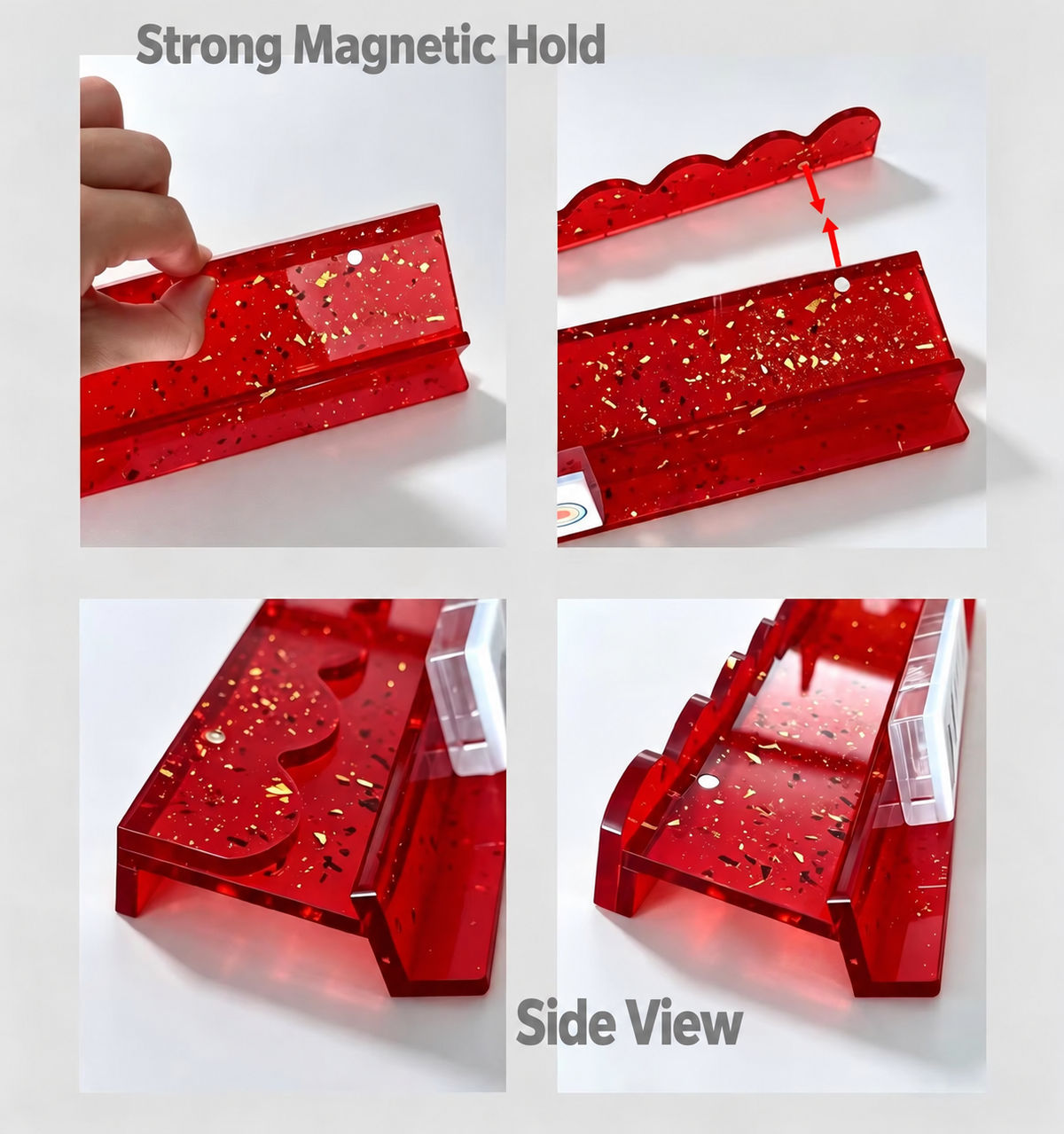
Acrylic holders are durable, scratch-resistant, and look elegant on a formal mat setup; they resist humidity from a kitchen table and don't warp. Plastic holders are lighter and cheaper but can flex or yellow over time. Fabric loops or clips are minimal and portable but offer no protection for the card itself.
If you host weekly games indoors, acrylic or rigid plastic holds up best. If you travel or play at different venues, a lightweight or fabric holder saves weight. Check whether the material matches your tile aesthetic—our acrylic sets pair naturally with clear or tinted acrylic card holders. Fabric holders work well in casual home settings or clubs with mixed equipment.
What are common mistakes when buying a card holder?
Mistake 1: Wrong tile size assumption. Assuming all card holders fit all tile sizes. American mahjong tiles are standardized at 1 inch per tile, but some Asian-market sets use smaller or larger tiles. Always confirm your tile size before ordering; our sets are American standard.
Mistake 2: Not measuring mat clearance. Buying a tall holder that blocks the view of your hand or tiles above the rack. Measure the space between your rack tops and the overhead sightline.
Mistake 3: Forgetting portability. Choosing a fixed holder when you play at multiple locations or travel. A freestanding or clip-on design is worth the trade-off in stability if flexibility matters.
Mistake 4: Skipping card protection. A holder without a protective sleeve leaves the card exposed to moisture, wrinkles, and wear. Some mats include laminated card pockets; standalone holders sometimes come with a clear sleeve.
Mistake 5: Buying before you have your set. Ordering a holder that clips to a specific mat width or rack style before your set arrives. Wait until you unbox your tiles, set up your mat, and know your exact playing surface.
What should I check before I buy?
Compatibility checklist:
Confirm your tile size is American standard (1 inch per tile).
Measure your mat width or table space where the holder will sit.
Check the card holder's attachment method (clip, slot, freestanding, wall-mount) against your mat or table design.
Verify the holder's weight capacity if it's a clip or standing frame.
Look for a protective sleeve or cover to keep the card clean and readable.
If traveling, weigh the holder and ensure it fits in your travel bag or case.
Read the product description for tile-size notes and mat-compatibility info.
Choose acrylic or rigid plastic if your card sits in humid or high-traffic play zones; fabric is fine for occasional, climate-controlled home play.
✨ Find your Mahstead set — free US shipping →
How do I set up and maintain my card holder?
Most holders require no tools or assembly. If your holder clips onto a mat edge or rack, align the clip perpendicular to the edge and tighten gently—over-tightening can crack acrylic or warping plastic. Position the card at a 45–60-degree angle so all four players can read it without leaning. Wipe acrylic holders monthly with a soft, lint-free cloth and mild soap; avoid harsh chemicals that cloud or scratch the surface. Fabric holders can be hand-washed in cool water and air-dried flat. Store the card in the holder's sleeve or a protective sleeve when not in play to prevent folding, fading, and moisture damage. Check clips or fasteners at the start of each season to ensure they're tight and the card hasn't shifted.

FAQ
Can I use any card holder with my American mahjong set?
Most card holders fit standard American tiles and card stock, but attachment points (clips, mat slots, freestanding feet) vary by design. Check your mat type and table setup before buying; Mahstead holders are tested with our mat and set dimensions.
Do I need a card holder if I play casually once a month?
No, but a holder saves time and prevents card damage during play. Casual players often get by with propping the card against a tile rack or case, but a holder eliminates fumbling and keeps the card readable and safe.
What's the difference between a built-in mat card slot and a standalone holder?
A built-in slot is part of the mat design and integrates seamlessly; standalone holders attach separately and offer more flexibility if you switch mats or play on bare tables. Built-in slots are neater; standalone holders are more portable and adaptable.
Can I use a card holder if I play with a table cover instead of a mat?
A clip-on or freestanding holder works with table covers or bare tables. Avoid holders that require a specific mat pocket or edge slot, as table covers have no anchor points. Check product photos to ensure the holder type suits your surface.
How do I protect my card if I transport my mahjong set?
Use a holder with a protective sleeve, or store the card separately in a clear plastic sleeve inside your case or bag. Acrylic card holders are sturdy enough for travel; fabric holders pack flat. Check that your case or bag has room for the holder without crushing it.
Is an acrylic card holder worth the extra cost?
Yes, if you host regular games, play in humid spaces, or want a durable, professional look. Acrylic holders resist warping, scratching, and discoloration over years of play. For occasional casual play, fabric or plastic holders are adequate.


View More
View More
View More
