
How Much Does the Mahjong Card Cost?
Last updated: Nov 23, 2026
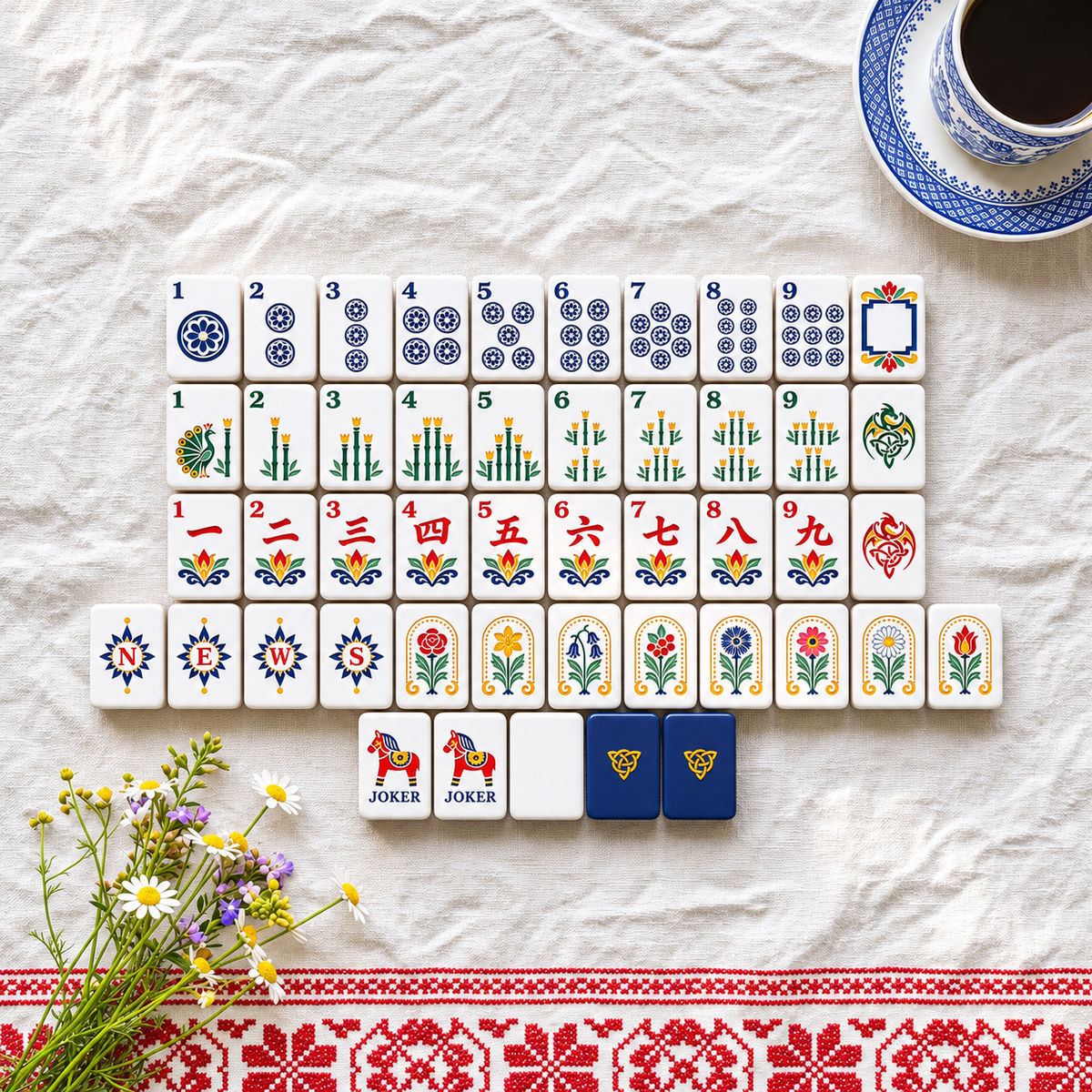
The National Mah Jongg League (NMJL) card costs very little—typically a few dollars—and is available through the League directly or at local game shops. It's printed and updated every spring, so a new card arrives in April each year. The card shows all legal hand combinations you can play in that season, organized by number of tiles and tile type. You cannot play American mahjong without the current year's card; it's not optional equipment, it's the game itself. Most players buy one card per player at the table, though groups often share. Mahstead recommends pairing your new card with our best-selling mahjong sets, which arrive with clear instructions and sizing to match your mat. #
What exactly is the mahjong card, and why do you need it?
The NMJL card is a small printed guide—roughly the size of a notepad—that lists every legal winning hand in American mahjong for that playing year. Unlike Chinese or Riichi mahjong, which use standing rules, American mahjong is rule-set by the NMJL card. The card changes each season, so the hands you can win with in 2026 are different from 2025. You need the current card at the table because players must verify hands against it before they're paid out. Without it, you can't confirm whether a hand is legal or not. Every serious player keeps a card within arm's reach during play.

Where do you buy the mahjong card?
The NMJL card is sold through the National Mah Jongg League's official website (nationalmahjonggLeague.org). You can also find it at brick-and-mortar game shops, many community centers, libraries with game collections, and synagogues that host mahjong groups. Some retailers stock cards seasonally; your best bet is to order directly from the League or call ahead to confirm stock. The card is printed in limited runs each spring, so supplies can dwindle by late summer. Ordering early (April through June) ensures you get the version you want. Mahstead customers often ask us where to source cards—the League is the official answer, though many local game groups pool orders.
Is there only one mahjong card, or are there different versions?
There is one official NMJL card for each playing year, but it comes in a few formats: the standard large-print card, a compact travel size, and occasionally a deluxe laminated version. All contain the same hands and rules; the difference is physical size and durability. The large-print version is easiest to read during play; the compact card fits in a bag or purse. The laminated version resists spills and creasing—useful for frequent players. Some players buy both sizes: a large card for home games and a travel card for playing away. The rules are identical across formats, so choose based on your hosting setup and eyesight comfort.
How many players need their own card at the table?
In practice, one card per table works if players sit close together and read it quickly. However, we've found that two cards—one on each side of the table—reduces disputes and speeds up verification. Four cards (one per player) is overkill unless someone's vision is poor. Many weekly game groups buy a shared set of three cards and pass them around. Since the card costs very little, buying a personal copy is a smart investment if you host regularly. A mahjong mat with scoring markings pairs well with your card, giving you a dedicated play zone and reference space.
🀄 Shop best-selling mahjong sets →

What happens if you don't have the current year's card?
You cannot play a legal American mahjong game without the current card. If someone calls "mahjong," players must verify the hand against the card—no verification, no payout, no win. Some casual groups play "memory" or "house rules" versions without the League card, but that's not American mahjong; it's a house game. If you're playing in a tournament or with strangers, they will require the official card. If you're learning to play, using an older card teaches you the wrong hands, and you'll lose money or embarrassment when you play with rule-aware players. Always confirm you have the current year's card before sitting down to play for stakes.
Before You Buy: A Quick Checklist
Confirm the year. The card printed in 2026 is labeled "2026" on the cover. Never use a card from a previous year.
Check the format. Choose standard size for home games, compact for travel, or laminated if you play several times weekly.
Order early. April through June is peak stock season; late summer cards may be backordered.
Pair with a mat. A dedicated play mat with clear tile zones and your card create a professional table setup.
Buy once per player (or share one card per two players). Verify before your first game, not mid-game.
How does the mahjong card differ from other mahjong variants?
American mahjong is the only version played with a printed hand guide that changes annually. Chinese, Hong Kong, Riichi, and Taiwanese mahjong all use fixed, memorized rules that never change. Players of those variants think the NMJL card is strange; for American players, it's essential. Learning how to read the mahjong card takes about one session once you understand tile notation. The card organizes hands by like-tile patterns (all same suit, all winds, etc.), so scanning it during play becomes fast. This is why American mahjong is considered more accessible to beginners—the card is your reference, not your memory.
A Comparison: Card Cost vs. Other First-Game Expenses
Item | Typical Cost Range | Why You Need It |
NMJL Card (current year) | Very low | Confirms all legal hands; required to play |
Mahjong set (152 tiles, acrylic) | Mid-range | Tiles, racks, pushers, jokers—the game itself |
Mahjong mat (36"–48") | Low to mid-range | Cleanses tiles, organizes play, protects table |
Racks with pushers (set of 4) | Low | Holds tiles upright; included in some sets |
Scoring pad | Very low | Tracks points; optional if you track mentally |
Dice (pair) | Very low | Determines dealer and draw order; included in sets |
The card is your smallest expense but your most critical tool. Pair it with a quality 160-tile acrylic set and a mat, and you have everything needed for a legal home game.
🎁 See our most-loved mahjong sets & accessories →
What's printed on the mahjong card, and how do you use it during play?
The card contains numbered sections (1, 2, 3, etc.) representing the number of tiles in each hand pattern. Under each number are subsections for tile type: like-number patterns (all 1s, all 2s), like-suit patterns (all Bams, all Craks, all Dots), mixed patterns, honor tiles (winds and dragons), and flowers. Each pattern shows valid combinations using the notation: suit abbreviations (B, C, D for Bam, Crak, Dot), numbers, and joker slots. When someone calls "mahjong," they announce their winning hand—for example, "Quint 2 Craks, quint 4 Craks, 5 Crak pair"—and other players check the card to confirm it's listed. If it appears on the card, the player wins. If not, the call is void. Learning how to read the mahjong card removes this mystery entirely and speeds up your first five games.
✨ Find your Mahstead set — free US shipping →
Can you play without buying a card if you're just learning?
Yes—but only for practice. If you're learning the rules in a casual setting, you can photocopy a friend's card or view it online (the League's website hosts a digital preview) to understand tile notation and hand patterns. Many beginner guides to American mahjong include simplified hand charts so you can start learning. However, once you're playing with others—especially for points or money—you must have an official, current card at the table. There is no legal substitute. If you're serious enough to host or join a weekly game, buying a card is non-negotiable and costs very little compared to the enjoyment you'll get from playing correctly.
#

FAQ
Can you use an old mahjong card from a previous year?
No. The NMJL issues a new card every spring, and hands change each year. Using an old card teaches you invalid hands and will cause disputes. Always confirm the year on the card cover before playing for stakes or in any competitive setting.
Where is the best place to buy the mahjong card in the US?
The National Mah Jongg League's official website is the primary source. Local game shops, community centers, libraries, and synagogues often stock cards during spring and early summer. Ordering directly from the League ensures you get a current copy and supports the organization that maintains American mahjong rules.
Do all four players at the table need their own card?
No. One card per table is legal; two cards (one per side) is practical for faster verification. Buying a personal card is helpful if you host regularly or play multiple times per week, since it speeds up hand checks and prevents disputes.
Is the mahjong card the same for all types of American mahjong?
Yes. The NMJL card is the universal standard for American mahjong, whether you're playing in a home game, a club, or a tournament. All hands come from the same card, and all players use the same rules.
What do I do if someone calls "mahjong" and you're not sure if the hand is legal?
Check the card. Locate the hand on the card by its pattern (e.g., "three of a kind," "suit combinations") and verify the tiles match. If the hand isn't on the card, the call is void, and play continues. This is why having the card at the table is non-negotiable.
Can you play American mahjong using rules from the internet instead of a physical card?
In casual practice, yes—but not in any legitimate game. The NMJL card is the only official reference. Games played without the current card are "house rules" mahjong, not American mahjong, and scores won't be recognized by clubs or tournaments.
How long does the mahjong card last before a new one comes out?
The card is updated every spring and is valid for one year of play. In April, the new year's card is released; the old card becomes obsolete. Many players buy a fresh card each spring; some keep old cards for reference or teaching, but only the current card is used for play.


View More
View More
View More
