
How Many Tiles in Western Classical Mahjong
Last updated: Nov 23, 2026
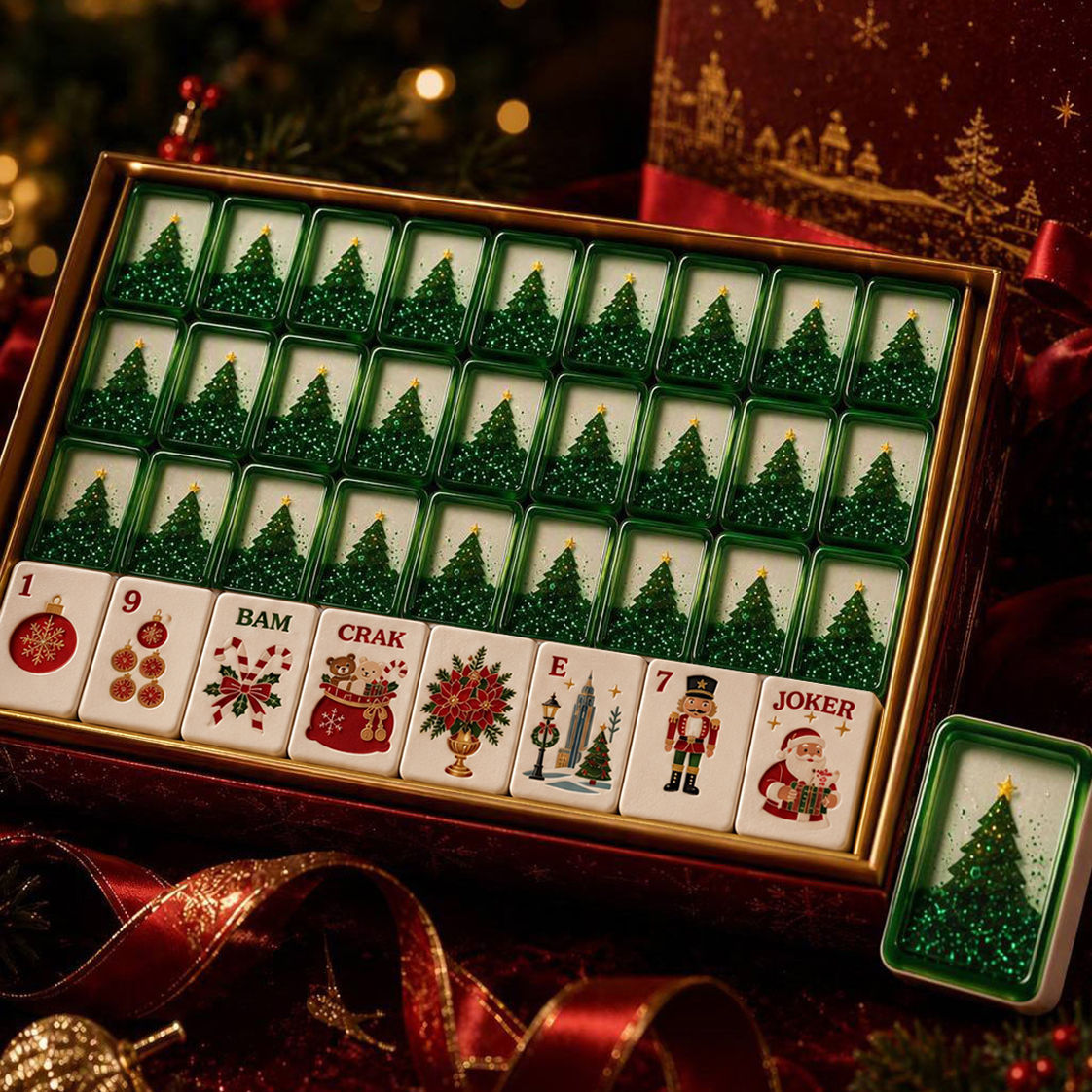
Western, or American, mahjong uses 160 tiles total: 152 tiles active in play plus 8 spare tiles (extra jokers and blanks). The 152 playing tiles consist of three number suits—Bams, Craks, and Dots—numbered 1–9 with four identical copies each (36 per suit, 108 total); 16 winds (four each: North, East, West, South); 12 dragons (four each of Red, Green, and White); and 8 flowers. American mahjong hands come from the National Mah Jongg League card (updated every spring) and include no sequences or chows—only pungs (3 identical), kongs (4 identical), and jokers as wildcards. Jokers never stand alone or form a pair. A best-selling mahjong set ships with all 160 tiles in racks, a mat, and pushers, ready to host a four-player game immediately.
Why does American mahjong use exactly 160 tiles, not 144 or 152?
American mahjong standardized on 160 tiles to include spare tiles for damaged or lost pieces during regular play. The core 152 playing tiles—three suits with four copies each, winds, dragons, and flowers—form the legal hand-building inventory; the eight additional tiles buffer against wear. Chinese classical mahjong uses 136 or 144 tiles (depending on the variant), with simpler suits and no flowers; Hong Kong mahjong uses 144 tiles; Riichi uses 136. American's 160-tile standard reflects decades of league play in North America, where durability and consistency across thousands of weekly games demanded redundancy. The spare tiles stay off the table and serve only as replacements if a tile chips or goes missing.
🀄 Shop best-selling mahjong sets →

What is the exact breakdown of the 152 playing tiles?
The 152 active tiles divide into six categories. Number suits (108 tiles): Bams, Craks, and Dots, each numbered 1–9 with four identical copies (36 per suit). The 1 Bam typically shows a bird and carries special significance in many hands; the 5 Dots often wears a distinctive mark. Winds (16 tiles): four North, four East, four West, four South, used in pairs or sets within hands. Dragons (12 tiles): four Red (linked to Craks), four Green (linked to Bams), four White—sometimes called "Soap"—linked to Dots and also acting as zero in certain numeric contexts. Flowers (8 tiles): four Spring/Summer and four Autumn/Winter, each played once per hand and retired to the rack. All 152 tiles are drawn from the wall or earned through play; the eight spare tiles remain in the box unless a playing tile becomes damaged.
How does the 160-tile count compare across mahjong variants?
Variant | Playing Tiles | Spare Tiles | Total | Suits | Sequences Allowed |
American | 152 | 8 | 160 | 3 (Bam, Crak, Dot) | No |
Chinese Classical | 108–136 | 0–8 | 108–144 | 3 (similar) + winds/dragons | Yes |
Hong Kong | 144 | 0 | 144 | 3 + winds/dragons | Yes |
Riichi (Japanese) | 136 | 0 | 136 | 3 + winds/dragons | Yes, limited |
Taiwanese | 144–160 | varies | 144–160+ | 3 + honors + jokers | Yes |
American mahjong's 160-tile inventory is the largest among modern variants, reflecting the game's emphasis on durability and replacement tiles. Most other variants operate with 136–144 tiles and no official spares; they rely on re-shuffling or house rules if a tile is damaged. American play, by contrast, never disrupts the active 152-tile pool; a damaged tile simply moves to the spare pile and is replaced before the next hand.
What role do jokers play in the 160-tile set?
Jokers are the wildcards of American mahjong. A standard 160-tile set contains 8 jokers total: these are part of the active 152-tile playing inventory and can substitute for any tile a player needs to complete an exposed set (pung, kong, or quint). Jokers follow strict rules: they cannot form a single tile or a pair on their own, and they cannot be swapped out once placed in an exposed set. When a hand is won, the player's final tile must be a real tile—not a joker. Jokers make high-scoring hands possible; without them, many hands on the National Mah Jongg League card would be unplayable in any reasonable timeframe. Because jokers are so valuable, experienced players manage them carefully during the Charleston (the tile-passing ritual before play) and watch which jokers appear on the wall as play progresses.

How should you choose a 160-tile set for your weekly game?
Start by confirming the set includes all 160 tiles: 152 playing tiles plus 8 spares, delivered in racks, a mat, and pushers. Look for acrylic tiles (durable, easy to read, lightweight for travel) or bone-and-bamboo (traditional, heavier, slower play). Decide if you want engraved tiles—names, dates, or group logos printed on the rack—or standard designs; engraved American mahjong sets make memorable gifts and host sets. Check that the mat fits your table (most are 26×27 inches or 30×30 inches) and includes push guides for each player. If you host regularly or travel, pair your set with a travel bag or case that protects tiles and racks. Confirm the tiles ship with a mahjong mat and pushers; some budget sets omit the mat or racks, forcing you to buy those separately. Count the tiles before your first game to ensure nothing was lost in transit.
🎁 See our most-loved mahjong sets & accessories →
What mistakes do new players make about tile count?
Mistake 1: Assuming you need 144 or 166 tiles. American mahjong is always played with exactly 152 tiles; 160-tile sets add only spares, never additional playing tiles. Sets with fewer than 160 or more than 166 tiles are either non-American variants or incomplete. Mistake 2: Using spare jokers or blanks in active play. The eight spare tiles stay in the box; you never add them to the wall or play. Doing so creates an illegal 160+-tile game and ruins hand validation. Mistake 3: Assuming jokers substitute for a pair. Jokers can complete a pung, kong, or quint—never a pair. A pair must be two identical real tiles; jokers cannot sit together in a winning hand. Mistake 4: Not checking tile condition on arrival. Open your set as soon as it ships; inspect all 160 tiles for cracks, chips, or missing pieces. If a playing tile is damaged, move it to spares and request a replacement. If spares are used up, the set is compromised. Mistake 5: Mixing tiles from two different sets. Each set's tiles have slightly different weight, thickness, or engraving; mixing them makes shuffling unpredictable and upsets the river. Keep each set's 160 tiles together and separate from other sets, even if you own multiple.
✨ Find your Mahstead set — free US shipping →
What to check before you buy
Tile count: Confirm 160 tiles total (152 playing + 8 spares) listed on the product page.
Included accessories: Mat, racks, pushers, and dice should ship with the set; if not listed, contact the seller.
Material: Acrylic, bone, or bamboo? Your preference; acrylic is lowest-maintenance for weekly home games.
Tile readability: Large, clear numbers and suit symbols; avoid sets with tiny or faded printing.
Replacement policy: What happens if a tile arrives damaged? Can you request a replacement tile, or must you buy a whole new set?
Shipping packaging: Does the seller use padded boxes or cases to prevent damage in transit?
Spare tiles marked: The eight spares should be clearly labeled or set aside so you don't accidentally add them to play.

FAQ
Do all American mahjong sets contain exactly 160 tiles?
Yes. Any set marketed for American play must include 160 tiles—152 active and 8 spares. Sets with 144, 152-only, or 166+ tiles are either non-American variants, incomplete, or incorrectly labeled. Always verify the count on the product page before purchasing.
Can I replace a damaged playing tile with a spare?
Yes. If any of the 152 playing tiles cracks or chips, move it to the spare pile and use one of the eight spare jokers or blanks in its place. Once all spares are used, the set is no longer legal for American play; you cannot resume the game until you repair or replace the damaged tile.
Why does American mahjong have more tiles than Chinese or Riichi?
American mahjong includes eight official spare tiles as standard, reflecting the league's long history of durable play and the need for piece replacement. Chinese, Hong Kong, and Riichi variants historically omit spares, relying on re-shuffling or house rules if damage occurs. The American 160-tile standard ensures consistency across thousands of weekly games in homes and clubs.
Are the eight spare tiles ever used during a hand?
No. The eight spare tiles remain in the box and are never shuffled into the wall or played. They serve only as replacements if a playing tile is damaged. Using a spare tile in active play creates an illegal game and invalidates all hands until the extra tile is removed.
Do jokers count toward the 152 or the 8 spares?
Jokers count toward the 152 active playing tiles. A standard 160-tile set contains eight jokers (part of the 152 inventory) plus eight additional spare tiles (extra jokers or blanks). The jokers in active play are precious because they can substitute for any tile; the spare jokers replace damaged tiles if one of the active eight is lost.
What happens if I'm missing one tile when I open a new set?
Contact the seller immediately. A complete set must arrive with all 160 tiles intact. If one is missing or arrives damaged, request a replacement tile or set before your first game. Never begin play with fewer than 160 tiles; this invalidates hand verification and scoring.


View More
View More
View More
