
How Many Tiles in Two-Player Mahjong?
Last updated: Nov 23, 2026
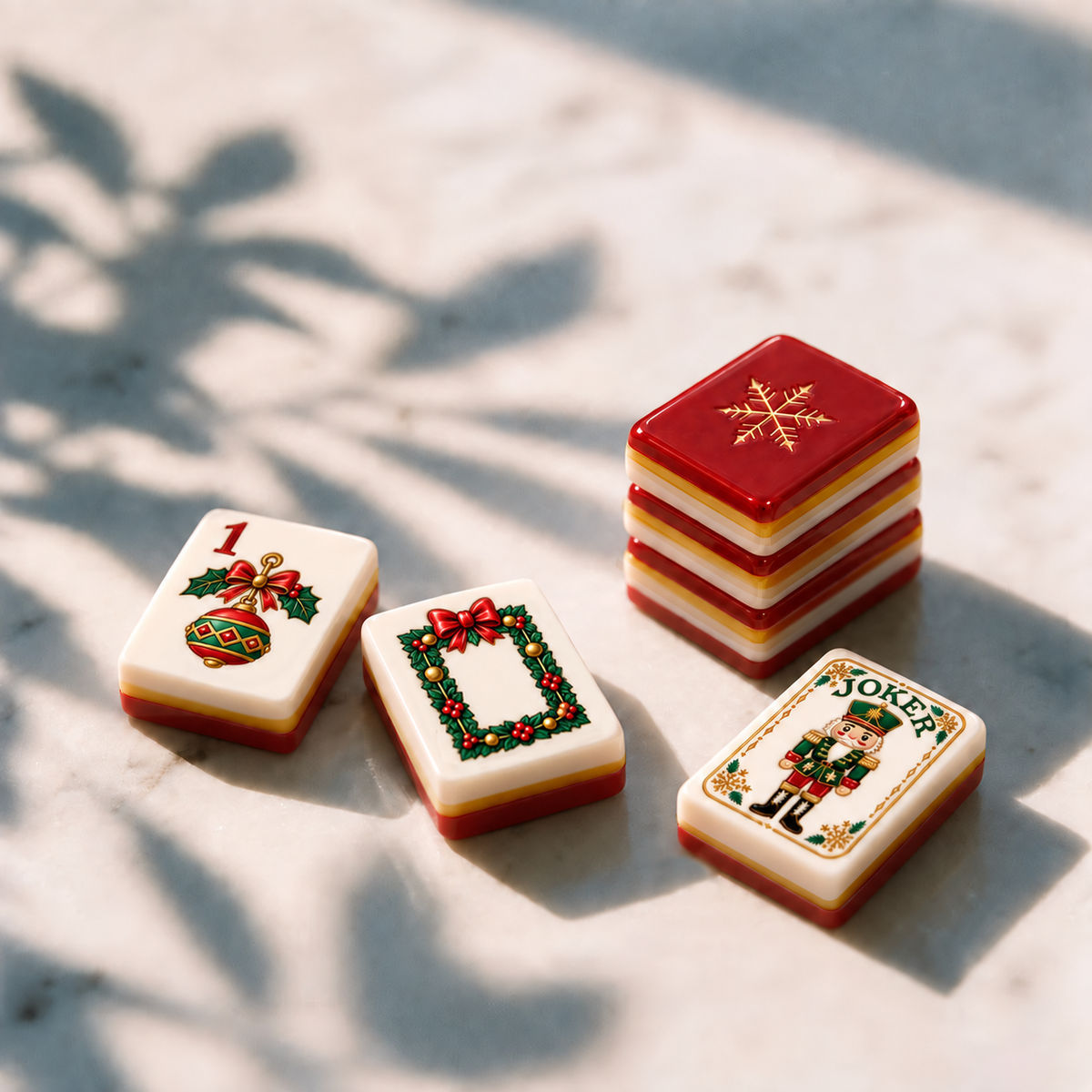
Two-player mahjong uses the same 152 tiles (108 from three suits, 16 winds, 12 dragons, 8 flowers, plus 8 jokers) as four-player American mahjong. The tile count never changes—what differs is how they're distributed. In two-player, you typically deal 20 tiles per player instead of 13, and the wall is split differently between players. The dead wall (used for kong draws and the replacement wall) shrinks because fewer players mean fewer wall segments. You still draw from the wall in turn, discard one tile each round, and play hands from the current year's National Mah Jongg League card. The key constraint: you can still only use one winning hand per deal, and jokers follow all standard rules (no single tiles, no pairs). Most serious two-player variants come from Chinese or Hong Kong mahjong traditions, not American; if you're playing American rules with two players, confirm house rules first—deal sizes and wall draws vary widely.
Two-player mahjong uses all 152 tiles plus 8 jokers—the same deck as four-player American mahjong. The difference isn't tile count; it's distribution. In four-player, each player draws 13 tiles and plays turn-by-turn around a complete table. In two-player, you deal 20 tiles each and adjust wall breaks, kong draws, and hand-winning mechanics to fit a head-to-head game. If you're learning American mahjong rules, two-player isn't the standard format—the game was designed for four—but many home groups adapt it, especially when a fourth player can't join.
What tiles does each two-player setup include?
You use all 152 tiles in American mahjong two-player: 36 Bams, 36 Craks, 36 Dots (the three suits), 16 winds (four each of North, East, West, South), 12 dragons (four each of Red, Green, and White), 8 flowers, and 8 jokers. This is the exact deck from any standard best-selling American mahjong set. The 160-tile sets sold by Mahstead include spare jokers and blanks beyond the 152 playing tiles, so if a joker is damaged mid-game, you have a replacement. Don't add the spares to play—use only the 152 tiles on the table, always.

How many tiles does each player hold in two-player?
In standard four-player American mahjong, each player holds 13 tiles. In two-player, most house rules deal 18–20 tiles per player at the start. Some groups use 18 to match the wall distribution more fairly; others use 20 for faster gameplay and more decision-making. Check with your group before the first game—this single rule varies dramatically. After the Charleston (the pre-game tile-passing ritual), the dealer draws one tile to bring their hand to 14 (or 21 or 23 if you're using a higher starting count). From then on, both players draw from the wall and discard one tile per turn as usual. The winning hand still comes only from the current year's National Mah Jongg League card, and joker rules stay identical.
Does the wall divide differently with two players?
Yes. In four-player, the wall forms a square, and each player sits on one side. The wall breaks into four segments. In two-player, you break the wall into two segments, one for each player. The dead wall (the last 14 tiles, used for kong replacements and the replacement wall) is still taken from one end of the wall before play begins; it doesn't double. This means the playing wall in two-player is 138 tiles total, split roughly in half. If you're using mahjong racks with pushers to organize your hand, you'll have more tiles to manage (18–20 instead of 13), so a full-height rack is more helpful in two-player than four-player. A mahjong mat designed for four players still works for two—just use the space strategically.
What's different about winning and scoring in two-player?
Winning logic stays the same: your hand must match exactly one pattern from the current year's card. Jokers follow all standard rules—no single tiles, no pairs, only in melds (pungs, kongs, quints, or sextets). Where two-player often diverges is scoring. In four-player American mahjong, scoring is based on hand value and who paid (winner collects from all three other players, or from one player, depending on how you won). In two-player, some groups use a point system where you track wins and losses over multiple rounds instead of collecting chips per hand. Others play winner-take-all per deal. Confirm scoring rules with your group before you play—this isn't standardized in American two-player, unlike four-player. If you're playing Chinese or Hong Kong two-player variants, scoring is entirely different and often uses calculation points (faan/fan) rather than the American card-based system.
Is two-player mahjong an official American mahjong variant?
Not officially. American mahjong, as governed by the National Mah Jongg League, is designed and scored for four players. Two-player is a house-rule adaptation—common in home groups when players are short, but not tournament-legal. If you're new to mahjong and only have two players, you have two better options: (1) play Chinese or Hong Kong two-player mahjong, which has formal rules and scoring; or (2) try American mahjong with three players, which is an officially recognized variant with published rules. For more on rule changes, see 2 and 3 player mahjong rules. If you're committed to two-player American-style play, write down your house rules (starting tile count, wall division, scoring, winning hand source) and stick to them across every game—consistency matters more than official approval when everyone at your table agrees.

Two-Player Setup: A Quick Comparison Table
Setup Element | Four-Player American | Two-Player (Typical House Rules) | What Changes? |
Total tiles played | 152 (all) | 152 (all) | None—same deck. |
Starting hand per player | 13 tiles | 18–20 tiles | Fewer players mean larger hands and fewer total draws. |
Wall segments | 4 (one per player) | 2 (one per player) | Wall is split in half instead of quarters. |
Dead wall | 14 tiles (fixed) | 14 tiles (fixed) | No change—always 14, so 138 tiles remain in play. |
Joker rules | No single tiles; no pairs | No single tiles; no pairs | Identical to four-player. |
Winning hand source | Current year NMJL card | Current year NMJL card (if American) | Same; or Chinese/Hong Kong card if playing that variant. |
Scoring method | Per four-player American rules | Varies (points, winner-take-all, custom) | Not standardized—set house rules first. |
What to Check Before You Buy a Two-Player Set
Tile count: You need exactly 152 tiles plus 8 jokers. Any American mahjong set includes this. Mahstead's 160-tile sets have all 152 playing tiles plus extra jokers and blanks as spares—perfect for two-player because damage is rare but replacements are instant.
Tile readability: In two-player, you hold more tiles (18–20 instead of 13). Make sure tile face markings are clear and large enough to read quickly. Engraved sets from Mahstead are legible from across the table.
Rack size: If you're using mahjong racks with pushers, a standard one-tier rack fits 13–15 tiles comfortably. For 18–20, you'll either use two racks or a higher-capacity design. Some players just use bags and cases to store tiles between rounds and keep hands on the table during play.
Mat space: A standard mahjong mat designed for four players is wider than you need for two. It still works—you'll just have more surface to work with. No waste, just comfort.
House rules written down: Before game one, agree on starting tile count, wall division, how kongs are replaced (the dead wall mechanic), and scoring. Write it down. This is more important than the quality of tiles because rule confusion ends games faster than worn markers.
🀄 Shop best-selling mahjong sets →
How Two-Player Changes the Rhythm of Play
Four-player American mahjong has a defined pace: each player's turn is quick (draw, discard, maybe call a meld). Two-player is quieter and slower—you have more tiles in hand, longer turns to think through combinations, and no third or fourth player to interrupt your focus. This suits some players and frustrates others. If you like strategy depth and fewer distractions, two-player is better. If you love banter and the energy of a full table, two-player feels flat. Most home groups use two-player as a fallback when a fourth can't make game night, not as a preferred format. If two-player is your only option and you want the real American mahjong experience, consider inviting a third player instead. Learn the rules for 2 and 3-player formats to see which fits your group.
Why Tile Count Matters (and When It Doesn't)
The reason we emphasize "152 tiles, always" is that jokers and blanks can get lost, cracked, or stolen over years of play. A best-selling set from Mahstead ships with 160 tiles—the 152 you play with, plus 8 extra jokers and blanks. If your main joker cracks in game five, you swap it with a spare and keep playing. In two-player, where hands are large and tiles move quickly across the table, damage risk is slightly higher. Investing in a set with spares (any 160-tile set qualifies) is insurance against abandoning the game mid-session. You never add spares to play—they're backups—but they're invaluable when you need them.
🎁 See our most-loved mahjong sets & accessories →
The Bottom Line for Two-Player
Two-player uses all 152 tiles, not a smaller deck. Starting hand sizes (18–20 per player) and wall mechanics vary by house rules, so agree on them first. If you're playing American mahjong rules, two-player is unofficial but workable; if you're open to variants, Chinese or Hong Kong two-player has formal scoring and won't require as much house-rule negotiation. Either way, buy a complete set with all 152 tiles plus spares, keep a mat and racks on hand for comfort, and play by written rules so no one has to guess halfway through.
✨ Find your Mahstead set — free US shipping →

FAQ
Do I need a smaller mahjong set for two players?
No. Two-player uses the full 152 tiles. Any standard American mahjong set works. The only difference is hand size and wall division, not tile count.
Can I use the same deck for two-player and four-player games on different nights?
Yes, absolutely. The 152 tiles never change. Just adjust starting hand size and wall breaks when you go from four players to two, and back again.
What if a joker breaks during two-player—do I stop the game?
If you have a complete set with spare jokers (as in Mahstead's 160-tile sets), swap the broken joker for a spare and keep playing. Never add a spare to active play—it's only a replacement.
Is two-player American mahjong in the National Mah Jongg League card?
No. The official league card and scoring rules are for four-player only. Two-player is a house-rule variant. If you want official rules, play Chinese or Hong Kong two-player instead.
How do I score two-player American mahjong if house rules don't define it?
Ask your group how winners and losers settle points before the first hand. Common methods are winner-take-all per deal, cumulative point totals across a night, or chip pools. Write it down so there's no argument mid-game.
Do joker rules change in two-player American mahjong?
No. Jokers still cannot be single tiles or pairs. They work only in melds (pungs, kongs, quints, sextets) exactly as in four-player American mahjong.


View More
View More
View More
