
How Many Tiles in Hong Kong Mahjong: Full Guide
Last updated: Nov 23, 2026
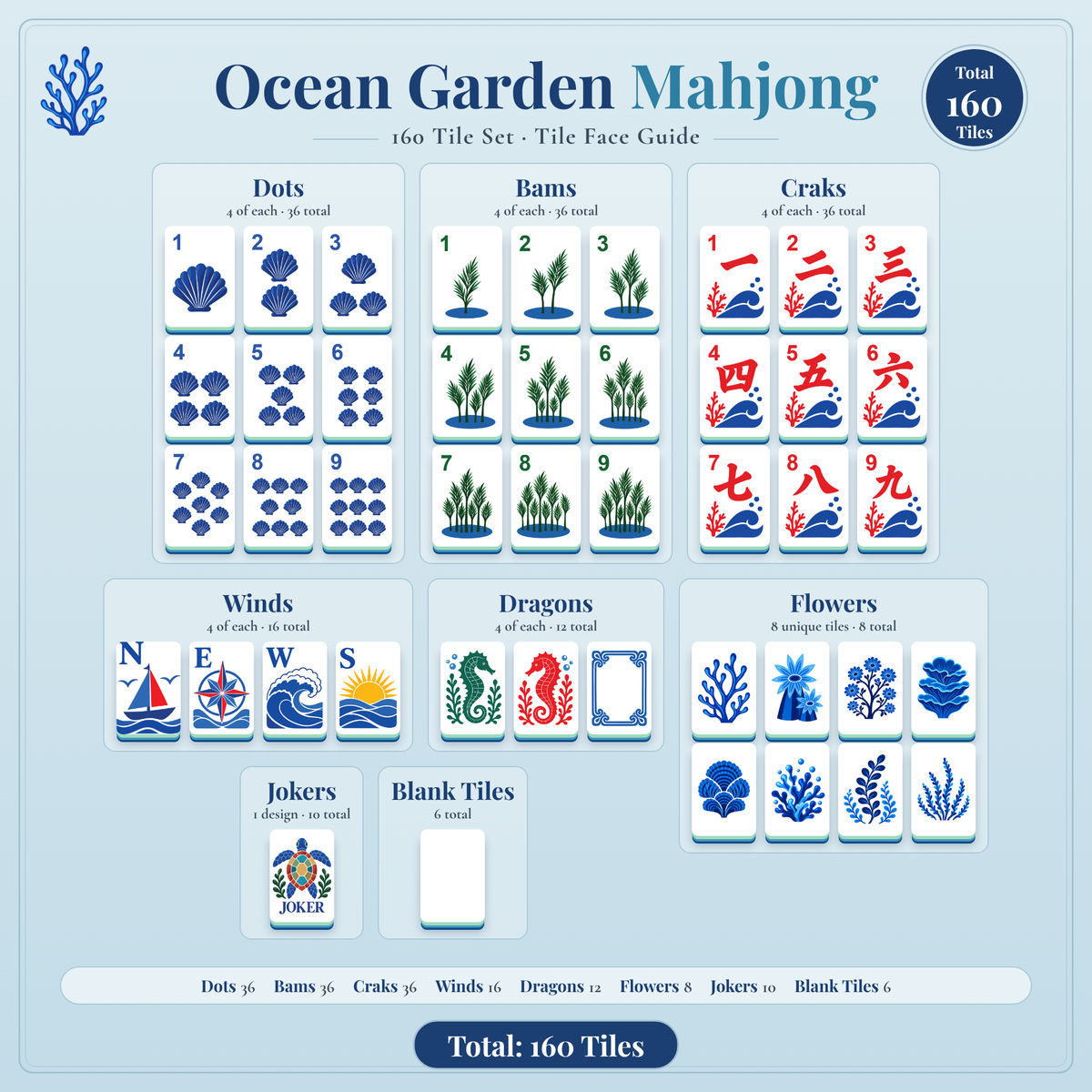
Hong Kong mahjong is played with exactly 144 tiles—fewer than American mahjong. The game uses different hand patterns, a faster pace, and no jokers, making it a distinct variant worth learning if you play multiple mahjong styles.
How many tiles exactly—and what are they?
Hong Kong mahjong contains 144 tiles, divided into four groups. The three suits (Bamboo, Character, Dot) each have numbers 1–9, four copies of each = 108 tiles. The honors—16 winds (four N, four E, four S, four W) and 12 dragons (four Red, four Green, four White)—add 28 tiles. Total: 108 + 28 = 136 active tiles. Eight more go unused in play (part of the dead wall / Kong box). The deck has no jokers, no flowers, no blanks—just these core 144 tiles. American mahjong, by contrast, adds flowers and jokers to reach 160, and forbids sequences entirely. This makes Hong Kong sets both simpler to stock and faster to learn if you already know the suit names.

How does Hong Kong play differ from American mahjong?
The biggest difference is chows: Hong Kong lets you call and expose sequences (1-2-3 of one suit) as melds; American mahjong has no sequences at all, only pungs (three identical) and kongs (four identical). Hong Kong hands come from regional pattern books (not one annual card like the National Mah Jongg League card). Winning is faster—no dead hand rule—and losers pay the winner directly, not a shared pot. No joker substitution means every tile counts as itself; you cannot "wildcard" a missing piece. The play is open and adaptive: tiles are called, exposed, and stolen mid-hand in ways American games forbid. A single game of Hong Kong typically lasts 15–25 minutes; American rounds often run 30–45 minutes. If you host both variants, keeping separate best-selling mahjong sets for each avoids mixing rules mid-table.
Why does Hong Kong mahjong have fewer tiles than American?
Hong Kong mahjong evolved in China and focuses on core hand patterns—suits and honors—without the ornamental tiles that American mahjong inherited and codified in the 1920s. Flowers (eight tiles showing seasons or plum/orchid) and jokers (eight wild tiles) were added to American mahjong to increase variety and complexity; Hong Kong kept the original 144-tile core. This design choice reflects philosophy: Hong Kong play rewards quick reads, tight hand-play, and adaptability, while American play emphasizes elaborate hidden hands, blind luck with the annual card, and slower reveals. The 144-tile standard is also easier to manufacture and distribute—a fact that helped it remain dominant in Asia and among traditional players. If you're buying a set for Hong Kong play only, a 144-tile deck is adequate; if you alternate variants at your table, a 160-tile American set will handle both.
What's the tile composition breakdown table?
Category | Tiles per type | Count | Total |
Bamboo suit (1–9) | 4 each | 9 types | 36 |
Character suit (1–9) | 4 each | 9 types | 36 |
Dot suit (1–9) | 4 each | 9 types | 36 |
Wind honors (N/E/S/W) | 4 each | 4 types | 16 |
Dragon honors (Red/Green/White) | 4 each | 3 types | 12 |
Active play tiles | — | — | 136 |
Dead wall / Reserve | — | — | 8 |
Grand total | — | — | 144 |
The 136 active tiles enter play; eight remain in the dead wall (Kong box). No flowers, no jokers, no blanks in traditional Hong Kong play.

Why buy an American 160-tile set if you play Hong Kong?
A 160-tile best-selling mahjong set includes the full 144-tile Hong Kong deck plus eight spare jokers and blanks. If you host both American and Hong Kong games, one premium American set covers both: remove the flowers and jokers, and you have a perfect 144-tile Hong Kong game; leave everything in, and you play American. Spare tiles let you replace chipped or lost pieces without buying a second set. American sets are often made from higher-quality acrylic or resin than basic Hong Kong imports, so the investment in a versatile deck pays back over years of weekly play. American sets typically feature clearer markings, more durable racks, and better-designed bags—features that matter during long sessions. For players who travel or host mixed tables, the best-selling mahjong sets combine flexibility, durability, and value. If you play Hong Kong only, a dedicated 144-tile set is lighter and cheaper, but you'll miss the adaptability if your group ever tries American rules.
🀄 Shop best-selling mahjong sets →
What to check before you buy a Hong Kong mahjong set
Tile count: Confirm the set has exactly 144 tiles (or 152+ if you want American compatibility). Sellers sometimes mix specs; ask the vendor to list each category (three suits, four winds, three dragons).
Material: Acrylic and resin sets last years; cheap plastic cracks in months. Feel the weight and gloss in person if possible.
Markings clarity: Hong Kong tiles use Chinese numerals on Bamboo (not always obvious to new players). Ensure numbers and symbols are crisp, not faded.
Racks and pushers: Hong Kong play moves fast; good racks let you organize tiles quickly. Check that the set includes racks or that compatible ones are available.
Bag quality: Hong Kong sets get moved between homes more often than American decks. A reinforced bag with a shoulder strap saves your tiles and your back.
🎁 See our most-loved mahjong sets & accessories →
How does tile wear affect Hong Kong play?
Hong Kong mahjong tiles are called and handled constantly—far more than American hidden-hand play. Worn tiles (chipped edges, faded marks, or stuck-together pairs) slow the game and invite accusations of cheating. Players quickly notice when a tile doesn't shuffle cleanly or when a number is hard to read under low light. Acrylic and resin tiles resist wear far better than bone or bamboo; they're also lighter, easier to shuffle, and don't absorb humidity. If you play weekly, invest in a set durable enough to withstand 50+ hours per year. Check the tiles monthly: replace any that are loose, chipped, or discolored. A good mahjong bag and mat (with reinforced felt, not bare wood) protect tiles between sessions.
How to organize your table for Hong Kong mahjong
Hong Kong play requires fast recognition and open placement. Invest in racks with pushers to keep your hand organized vertically; tiles should be easy to read at a glance without lifting or shuffling. Use a mahjong mat with distinct zones (player positions, discard pile, draw wall) to speed play and prevent disputes about tile ownership. A mat also protects tiles from spills and heat—critical when play runs late and refreshments are close. Racks with pushers also reduce hand fatigue and keep tiles from sliding during the quick exchanges that Hong Kong mahjong demands. For hosting, a dedicated travel bag and mat roll up together, so you carry one bundle to every game. American sets often ship with all three; confirm your Hong Kong set includes them or budget to add them separately.
✨ Find your Mahstead set — free US shipping →

FAQ
Can I use an American 160-tile mahjong set to play Hong Kong?
Yes. Remove the eight flowers and eight jokers, and you have 144 tiles. The hand patterns differ (Hong Kong uses chows; American uses only pungs and kongs), so you'll need a Hong Kong pattern book, but the tiles themselves work perfectly. This is the most practical choice if you ever play both variants.
Does Hong Kong mahjong use the same suits as American mahjong?
The suits are the same (Bamboo, Character, Dot), but American mahjong also includes winds and dragons. Hong Kong honors are called exactly the same (North, East, South, West; Red, Green, White). The gameplay difference is that Hong Kong uses chows (sequences), which American play forbids entirely.
How long does a game of Hong Kong mahjong take?
A single round typically lasts 15–25 minutes. American mahjong rounds usually run 30–45 minutes because hidden hands and the annual card add complexity. A full Hong Kong session (usually four rounds) takes 60–90 minutes, similar to American.
Are there regional differences in Hong Kong mahjong tile counts?
The 144-tile standard is universal for Hong Kong mahjong. Taiwanese and other regional variants may add or subtract tiles (for example, some use flower tiles), but classic Hong Kong play worldwide uses exactly 144 tiles with no flowers or jokers.
What materials are best for Hong Kong mahjong tiles?
Acrylic and resin are ideal—they're durable, fade-resistant, and easy to shuffle. Bone and bamboo are traditional but absorb humidity, crack easily, and wear faster with the constant handling that Hong Kong play demands. For weekly sessions, acrylic or resin pays for itself in longevity.
Can I play Hong Kong mahjong with fewer than four players?
Traditional Hong Kong mahjong is a four-player game; the tile count and hand patterns assume this. Three- or two-player variants exist but require modified tile sets and different rules. If you're hosting occasional three-player sessions, confirm your set's manual includes those rules before buying.


View More
View More
View More
