
How Long Does a Game of Three-Player Mahjong Take?
Last updated: Nov 23, 2026
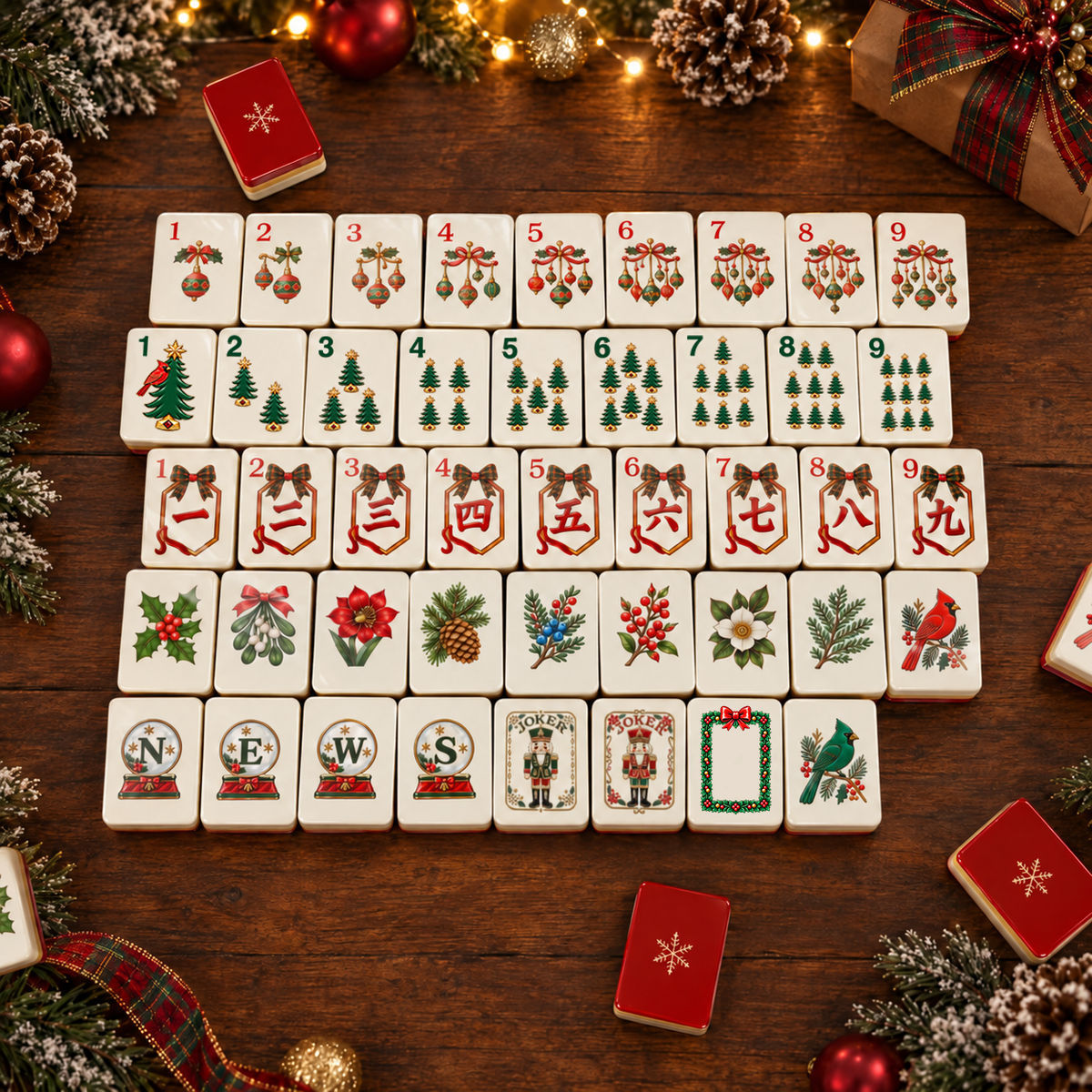
A game of three-player American mahjong typically takes 45 to 90 minutes from start to finish. Setup—including the Charleston (tile-passing ritual)—runs 10 to 15 minutes; actual play spans 30 to 75 minutes. Speed depends on player experience: beginners take longer to study the card and form hands, while experienced players move faster. The game uses modified rules (one fewer hand, adjusted walls, and a dummy hand position); no tiles are removed, so you still play with all 152 tiles and 8 jokers. Faster groups finish in 45 minutes; social players often take 90 minutes or more. Using a quality engraved American mahjong set from our best-selling collection with clear markings and a mat reduces confusion and keeps the game moving smoothly.
Why does three-player mahjong play differently than four-player?
In American four-player mahjong, all four hands play live—each player builds, melds, and discards in turn. Three-player mahjong uses a dummy hand (the fourth position sits vacant or is represented by an empty rack). This removes one active player's turn cycle, which speeds up the overall rhythm: discards reach you faster, and decisions come more frequently. Because fewer decisions happen per tile draw, the game naturally compresses. The dummy hand rotates position each round (like the dealer in poker), keeping the game fair. This structural difference alone shaves 15 to 30 minutes off a typical session.

How much time does setup actually take?
Setup includes four distinct steps. First, players and the dealer are assigned (2–3 minutes). Second, the wall is built—all 152 tiles arranged in stacks of two (3–4 minutes). Third comes the Charleston: each player passes three tiles right, then three center, then three left, and optional passes follow (5–8 minutes). Fourth, the dealer draws, and play begins (1–2 minutes). Experienced groups do Charleston and wall-building in parallel, cutting total setup to 8 minutes; casual groups often take 15 minutes because they verify rules or reorganize tiles mid-setup. Using a mat with clear sections prevents mistakes and speeds wall construction by 2–3 minutes.
What factors make games run faster or slower?
Player experience is the primary driver. Beginners spend 30–60 seconds deciding which tile to discard; experienced players decide in 5–10 seconds. Hand familiarity matters: groups that know the current year's card (which hands are legal) make faster calls and recognize winning shapes quicker. House rules affect speed: if your group allows optional passes in Charleston or debates tile interpretation, you add 10 minutes. Distraction level (conversation, food, phones) can double game length. Tile quality also influences speed—tiles with worn markings or confusing engravings force players to pause and recheck suits, adding 5–10 minutes total. Groups using clear, acrylic tiles with well-spaced engravings move noticeably faster because tile identification is instant.
What's the breakdown: how long for each phase of play?
Phase | Time | Notes |
Dealer/position assignment | 2–3 min | Faster if roles rotate routinely |
Wall building & tile organization | 3–5 min | Parallel Charleston saves time |
Charleston passes | 5–8 min | Optional passes add 2–3 min |
Dealer's draw & first turn | 1–2 min | Just opening the hand |
Active play | 30–75 min | Fastest: 30–45 min; social: 60–75 min |
Total game | 45–90 min | Average: 60 min |
Most of the swing happens during active play. A group that knows every hand on the card and discards decisively finishes in 35–40 minutes of play. A group pausing to verify each potential call or discuss strategy takes 60–75 minutes. The dummy hand doesn't shorten play much because someone still has to manage its position and draw—it mainly keeps the cycle moving without human delay.

How can you speed up or slow down your games?
To play faster: agree on house rules before the session (no optional passes, quick discard decisions), use racks with pushers so tiles stay organized and visible (no fumbling to find a tile), and play with the current year's card so no one stops to debate hand legality. Experienced groups also minimize Charleston chatter and study their hand quietly during others' turns instead of during their own turn.
To play slower (for learning or socializing): allow optional Charleston passes, encourage discussion of strategy, pause between rounds for food or chat, and invite newer players who naturally take longer to decide. Some groups deliberately add 15 minutes by playing a second game back-to-back instead of stopping after one, which dilutes the "speed" without changing the game itself.
What to check before you buy: if you're hosting three-player games regularly, invest in a mat with a dummy-hand section marked so rotations are automatic and no one forgets whose turn is next. Racks with pushers also prevent mid-game arguments about whose tiles are whose—a common delay point in casual games.
🀄 Shop best-selling mahjong sets →
Does skill level really shrink game time by 30+ minutes?
Yes. Consider two scenarios: a beginner group playing their first three-player game will spend 20–30 seconds deciding each discard, verifying hand shapes, and checking the card for every potential call. That's roughly 80 discards per game, or 27–40 extra minutes. An expert group discards in 5–7 seconds and rarely checks the card after the opening turns. The same 80 discards take 7–9 minutes instead of 40 minutes—a 30-minute swing on skill alone. Intermediate players (played 50+ times) typically land at 50–60 minutes; they know most hands but still pause on close calls. Beginners should plan for 90 minutes to 2 hours and not feel rushed. That's not a deficiency—it's the nature of learning a game with 48 legal hand patterns and 8 jokers to track.
🎁 See our most-loved mahjong sets & accessories →
Do different American mahjong set types change the pace?
Marginally. Acrylic tiles with deeply engraved markings (versus printed faces) stay legible after months of play and prevent the "Did you say 7 Dot or 3 Dot?" pauses that add up. Bone and bamboo sets are beautiful but wear faster, and shiny tiles can reflect light, making suits harder to distinguish at a glance. A set with jokers that visually pop (bright color or distinctive design) speeds joker identification by a few seconds per round. Most importantly, a complete 160-tile set with clear labeling and spare jokers ensures you never pause mid-game to hunt for a missing tile. Storage also matters: if tiles live in a case or bag between games, they stay organized and arrive ready to play—no pre-game sorting delays. Using a mat designed for three-player setup with marked zones for the dummy hand eliminates confusion about which tiles belong to which position, saving 2–3 minutes per game.
✨ Find your Mahstead set — free US shipping →

FAQ
Does removing one player's hand actually make a three-player game faster?
Yes, structurally. In four-player, eight turns occur per full round (each player draws and discards once). In three-player, six turns occur per round—no matter the dummy's role. Fewer turns mean faster cycle time. However, the dummy hand still draws and discards automatically, so the wall shrinks at the same rate. The real time savings comes from one fewer player making active decisions. Expect 15–25 minutes faster, not 50 minutes faster.
What if one player is much slower than the other two?
Three-player groups notice speed imbalances more than four-player groups because each player's turn recurs more frequently. If one player takes 60 seconds per decision and the other two take 10 seconds, the slow player dominates. After 60 turns, the gap compounds to 50 minutes lost. Solution: agree before the game that each player gets 15–20 seconds to decide, then they must discard. Most casual groups set a relaxed timer (e.g., by the time the next player picks up their tile) rather than a stopwatch.
Does the current year's mahjong card affect game speed?
Absolutely. Players who have memorized the current year's 48 legal hands decide in seconds. Players new to the card pause to verify every potential call against the paper card—adding 5–10 seconds per decision and another 30–50 minutes per game. Groups mixing experience levels should agree: either everyone uses the card to verify (slowing the game but keeping it fair) or only beginners check it (letting faster players flow). Using one centralized card visible to all three players prevents repeated stopping to consult separate copies.
Is a three-player game considered "real" American mahjong?
It's a recognized variant, not the competition standard. The National Mah Jongg League regulates four-player American mahjong only. However, three-player mahjong uses identical tiles, the same annual card, and the same scoring rules—only the wall layout and dummy-hand position differ. Many casual groups and some regional clubs play three-player regularly. It's fully legitimate for home games; just confirm house rules before starting if you're joining a new group.
How much faster is three-player if I already play four-player mahjong well?
If you're an expert four-player player, expect to play three-player in 40–50 minutes instead of 60–70 minutes—roughly 20 percent faster. The turn cycle is quicker, but your decision-making speed remains similar because the hands and card are identical. Beginners to mahjong will see a bigger relative gain (two to three times faster than their first four-player game) because they're learning the rhythm as well as the hands. Intermediate players (50–100 games) will drop 15–20 minutes per game when switching to three-player.


View More
View More
View More
