
How Long Does a Game of Filipino Mahjong Take
Last updated: Nov 23, 2026
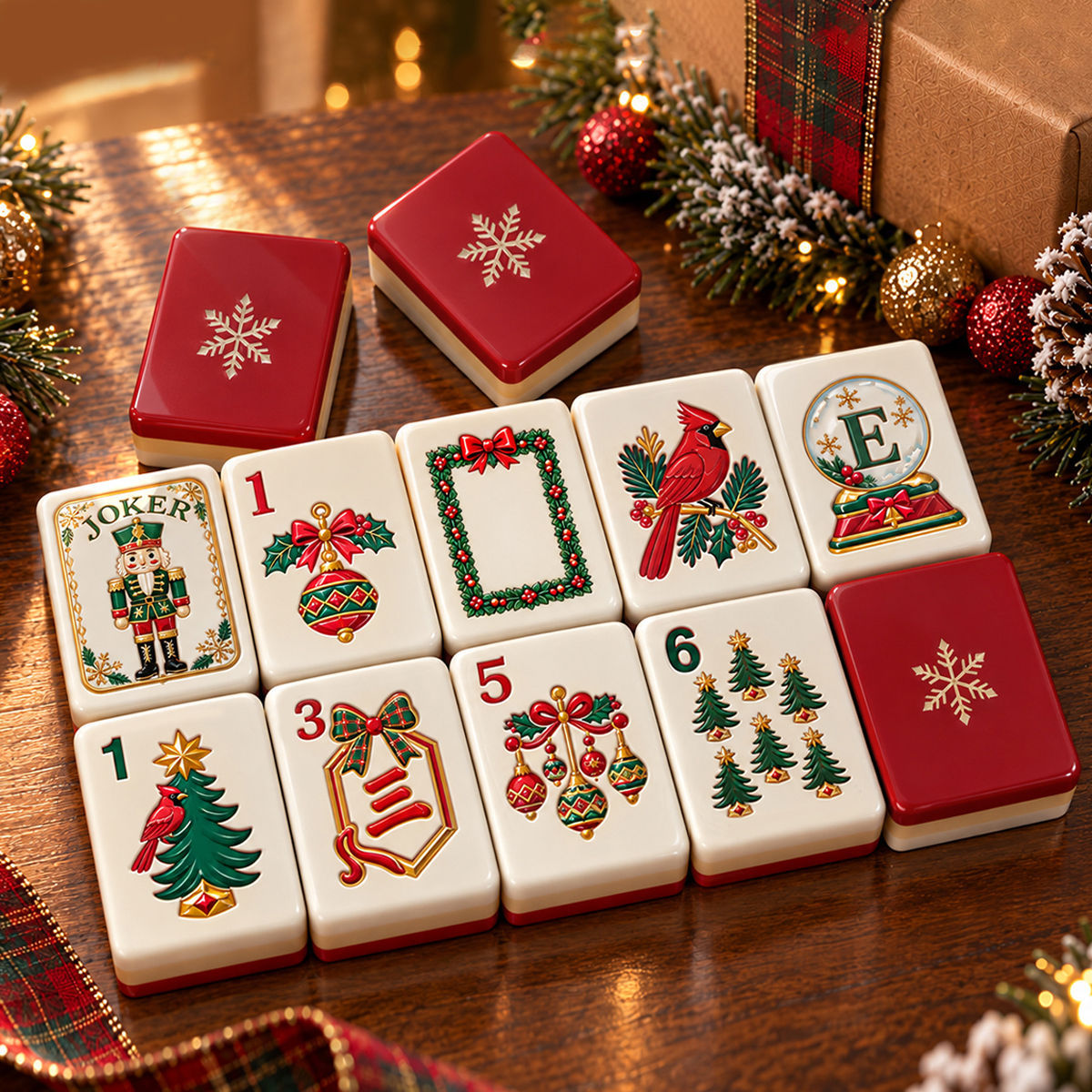
Filipino Mahjong games typically last 45 minutes to 2 hours per round, depending on player count, tile-matching speed, and house rules. Unlike American Mahjong (which uses the annual National Mah Jongg League card and rewards pattern-based melds), Filipino Mahjong emphasizes quick tile elimination and forming sets on the fly. A single game involves matching and discarding tiles until someone empties their hand or the wall runs dry. Four-player rounds move fastest; three-player and two-player variants can stretch longer because fewer tiles circulate. Beginners add 20–40 minutes per round. Experienced groups playing with best-selling mahjong sets and a well-organized mat finish faster because tile visibility and hand clarity reduce decision time.
What exactly is Filipino Mahjong, and how does it differ from American?
Filipino Mahjong is a shedding game where players draw and discard tiles to form melds (sets of three or more identical or sequential tiles) until one player discards their entire hand. It runs on house rules rather than a standardized card—no official "hand" list exists. The core difference from American Mahjong: American uses 152 specific tiles and only fixed hands from the League card each year; Filipino allows any valid combination and emphasizes speed over pattern-matching. Many Filipino rounds play best-of-three or best-of-five to keep stakes high and time framed, making total session time predictable for hosting.

How long does one complete round take?
A single Filipino Mahjong round—from tile distribution to one winner—typically lasts 20–45 minutes for experienced four-player groups. Beginners, indecision, or side bets stretch this to 60+ minutes per round. Tile draw speed, hand-building clarity, and quick discards compress time; lengthy negotiations or rule disputes expand it. Most home games play three rounds per sitting (roughly 90 minutes total), with rest between. Using a mahjong mat with clear tile placement zones cuts setup overhead and lets players read the board faster, shaving 5–10 minutes per round.
🀄 Shop best-selling mahjong sets →
Does the number of players affect game speed?
Game speed scales inversely with player count. Four-player Filipino Mahjong moves fastest because each player has fewer tiles to manage and the discard pile cycles quicker; expect 25–40 minutes per round. Three-player games run 35–50 minutes—fewer discard opportunities mean longer hand-building waits. Two-player Filipino Mahjong can stretch to 60+ minutes because players alternate turns heavily and tile depletion slows. Online variants or solitaire-style tile-matching (tile-clicking on a static board) finish in 10–20 minutes because no turn-taking delays exist. If you host mixed-skill groups, plan 90 minutes for two rounds; experienced players compress that to 60 minutes.
What setup choices make Filipino Mahjong faster?
Faster play depends on three factors: tile quality, hand visibility, and rule clarity. First, use 160-tile acrylic sets with large, legible suits and numbers—players spot matches and sequences instantly instead of squinting. Second, organize tiles on a dedicated mat with separate zones for the wall, discard pile, and each player's hand; this eliminates fumbling and "where did that tile go?" delays. Third, agree on house rules before dealing—especially what melds count as valid (straight sequences, sets of identical tiles, wild-tile rules) and whether jokers substitute freely. Groups that skip this step lose 15–20 minutes to disputes mid-game.
Setup Element | Impact on Speed | Why It Works |
Acrylic 160-tile set | Saves 5–8 min/round | Clear suit markings, legible numbers |
Dedicated mahjong mat | Saves 8–12 min/round | Reduces tile misplacement, faster reads |
Pre-agreed house rules | Saves 10–15 min/round | Eliminates mid-game rule debates |
Racks with pushers | Saves 3–5 min/round | Players organize hands neatly, draw fast |
Experienced players | Saves 15–25 min/round | Less deliberation, quicker meld choices |

Can you speed up Filipino Mahjong without changing the rules?
Yes—practice and equipment matter more than rules. Experienced players recognize tile patterns instantly and discard strategically, cutting round time by 30–40% compared to learners. Use mahjong racks with pushers so each player organizes their hand visibly without dropping tiles; this alone cuts fumbling delays. Keep a printed or digital rule sheet within arm's reach to settle disputes in seconds, not minutes. Set a soft timer for each player's turn (e.g., 60 seconds to draw and discard)—casual pressure speeds thinking without frustration. Play best-of-three instead of single games; players loosen up and move faster after round one.
🎁 See our most-loved mahjong sets & accessories →
What about mixed-skill groups—do beginners slow the game drastically?
Beginners typically add 20–40 minutes to a four-player round because they deliberate tile value, study the board for melds, and ask rule questions mid-game. Pairing one beginner with three experienced players keeps the pace closer to 40–50 minutes; two beginners can push a round past 70 minutes. The fix: teach melds and basic strategy in a 10-minute pre-game huddle, then play a "practice" round where mistakes don't count—most players grasp the rhythm by round two. Mixed groups benefit most from a clear mat and racks because visual clarity reduces beginner anxiety and hesitation.
How does game length vary by Filipino house rules?
House rules dramatically shift game length. Standard Filipino Mahjong (form sets of three, draw-one-discard-one per turn) runs 25–50 minutes depending on skill. Speed variants (shorter walls, faster discard piles, wild-tile-heavy rules) compress games to 15–30 minutes. Conservative variants (limited or no wild tiles, stricter meld requirements) extend play to 60–90 minutes because players struggle to form valid hands. Solitaire-style Filipino Mahjong (computer-based tile matching, no turn-taking) finishes in 10–20 minutes. Ask your group which variant they prefer before hosting—speed-lovers want the 30-minute version; strategy players enjoy the 90-minute deep game. Document your rules on a card or sheet so guests arrive knowing what to expect.
✨ Find your Mahstead set — free US shipping →
What to check before you buy a set for Filipino Mahjong
Tile legibility: Acrylic or high-contrast tiles (avoid bone/bamboo sets with worn paint—squinting adds 10+ minutes per round).
Complete 152-tile count: Standard Filipino games use a full deck; verify the set includes all four copies of each tile.
Included mat and racks: These aren't luxuries—they're speed tools. Check whether your set comes with a mat or if you'll need to buy separately.
Joker count: Filipino rules vary; some allow unlimited jokers as wild tiles, others restrict them. A 160-tile set includes extra jokers for flexibility.
Storage plan: Groups that finish rounds quickly often chain games together. A durable bag or case keeps tiles organized between rounds and ready for the next session.

FAQ
Is Filipino Mahjong faster than American Mahjong?
Yes. Filipino rounds average 30–50 minutes; American games (which require matching hands to the official League card) typically run 60–90 minutes. Filipino rewards speed and tile-shedding; American rewards pattern recognition and planning.
Can I play Filipino Mahjong online, and how long does it take?
Yes. Online and solitaire-style tile-matching games finish in 10–20 minutes because there's no turn-taking delay or rule negotiation. Multiplayer online versions run 30–45 minutes depending on server latency and player skill.
What's the shortest possible Filipino Mahjong game?
15–20 minutes if all four players are experienced, rules are strict (no wild tiles), and the game tile is discarded early. Most casual games run 40+ minutes to allow beginner strategy-building.
Do I need special equipment to host Filipino Mahjong?
Not strictly, but a mahjong mat, racks with pushers, and high-contrast tiles reduce delays by 10–15 minutes per round. These are speed investments, not requirements.
How many rounds can I fit into a 2-hour game night?
With experienced players and good equipment, expect 3–4 complete rounds (each 25–40 minutes) plus 10–15 minutes for rules discussion and setup. Add 30 minutes if your group includes beginners.
Do house rules always affect game speed?
Yes. Variants that allow many wild tiles speed up play (15–30 minutes); variants restricting wild tiles slow it down (60–90 minutes). Agree on rules upfront to set realistic time expectations.


View More
View More
View More
