
Hong Kong Mahjong Winning Hands: Rules, Examples & Strategy
Last updated: Nov 23, 2026
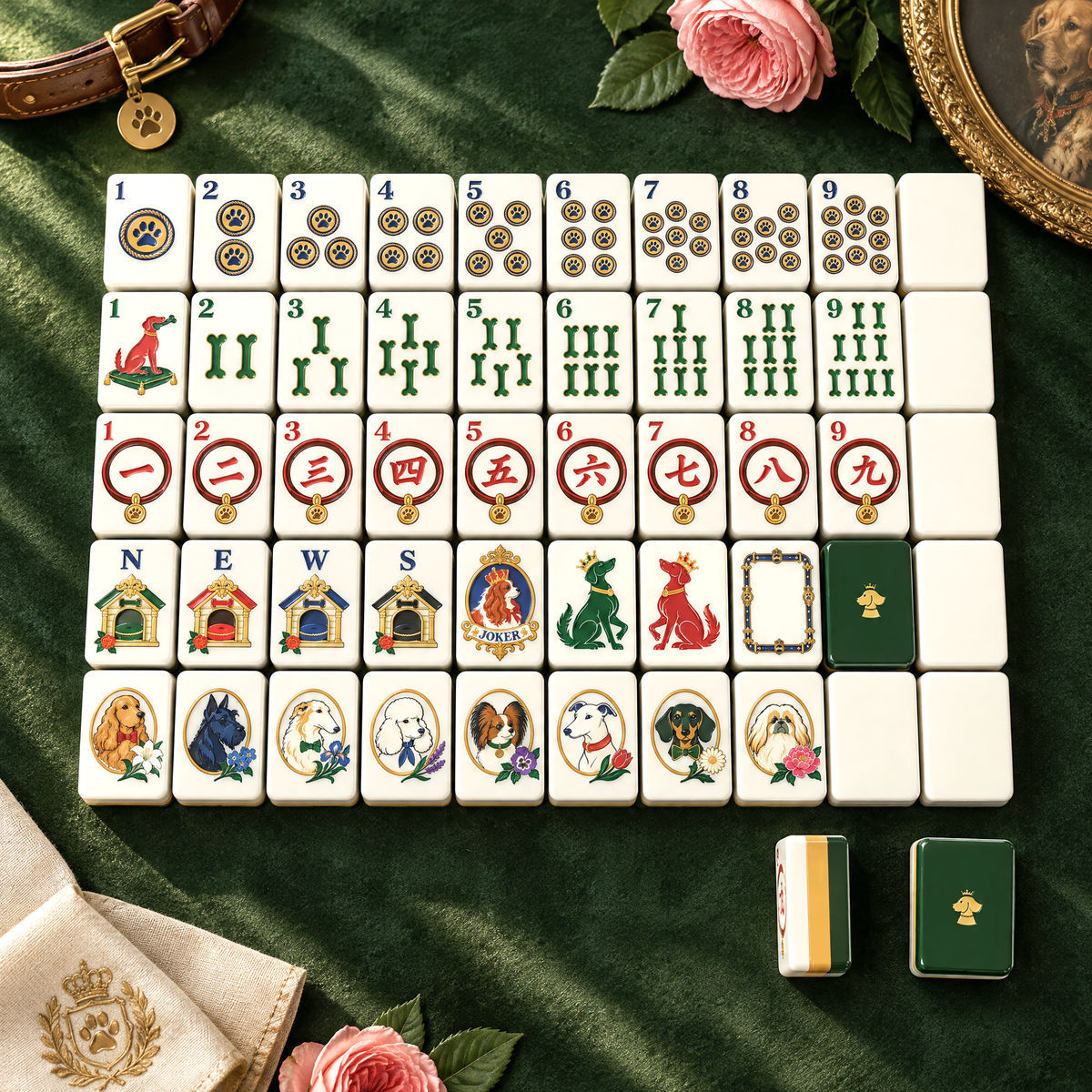
Hong Kong mahjong winning hands consist of four melds (sets) plus a pair. Each meld is either a pung (three identical tiles), a kong (four identical), or a chow (three consecutive tiles: 1-2-3, 2-3-4, etc., within the same suit). Unlike American mahjong, chows are core; jokers don't exist; and hands don't come from a fixed card—instead, winning patterns follow traditional rules tied to tile composition. The hand must total exactly 14 tiles (or 17 in some variants after a kong draw). Victory requires all four melds to be valid and declared on your turn or when another player discards your winning tile. Speed and probability, not seasonal hand lists, drive Hong Kong play.
If you play American mahjong at home, switching to Hong Kong feels like learning a new language—one built on sequences, not fixed reference cards. We've watched many American players pick up Hong Kong rules, and the shift is exhilarating but requires deliberate practice. This guide breaks down the structural difference, walks through real-world hand examples, and explains the strategic habits that separate casual players from consistent winners.
What is a winning hand in Hong Kong mahjong?
A winning (or "winning" / 和 hú) hand in Hong Kong mahjong has exactly 14 tiles arranged as four melds plus one pair. Each meld must be complete: a pung (three 5 Bams), a kong (four 5 Bams), or a chow (3-4-5 Bams). The pair cannot use jokers—they don't exist in Hong Kong play. Once you hold or draw a 14th tile that completes the pattern, you win immediately by declaring and displaying all tiles. No Charleston, no waiting for a seasonal card: winning is instant and rule-based.

How do chows work differently from American melds?
Chows are consecutive runs within a single suit (Bams, Craks, or Dots): 1-2-3, 2-3-4, up to 7-8-9. American mahjong forbids chows entirely—you can only expose pungs and kongs. In Hong Kong, chows are not just legal; they're essential. You must construct hands using chows. A chow can be melded (exposed) or kept concealed in your hand. When you meld a chow openly on the table, other players see exactly which tiles form it. When melding from a discard (e.g., another player throws a 5 Crak and you have 3-4 Craks), you must declare which set the new tile completes. Crucially, a chow always travels in order (1→2→3, never 3→2→1), and you cannot wrap (8-9-1 is invalid across suit boundaries).
Can you call winning on someone else's discard?
Yes, and this is a pivotal difference from American play. In Hong Kong mahjong, if another player discards a tile that completes your 14-tile winning hand, you may call win (hú) immediately and end the round. This is called winning off a discard or "robbing" the discardee's turn. The discarding player pays penalty points to you. If multiple players can win off the same tile, the player closest to the discardee (usually East, then South, West, North in turn order) claims it. This mechanic keeps everyone engaged even when it's not your turn—a strategic pressure that American players must adapt to quickly.
What hands score higher than others?
Hong Kong mahjong uses a points system tied to hand composition, not a fixed seasonal card. Key scoring factors include whether your hand uses all concealed melds (higher value), whether the winning tile came from your draw versus a discard, and specific tile combinations that carry bonus points (e.g., 7 pairs in some variants, or all-terminal hands using only 1s and 9s). Different regional rules award different point bonuses—some honor "all Bams," others value "mixed suit" hands more heavily. Winning off your own draw (not a discard) typically earns double points. Learning your region's scoring table is critical: without it, you cannot judge hand-building risk. Many players carry a small laminated score sheet to the table.
What tiles should you keep early, and what should you discard?
Early in a Hong Kong hand (the first five or six discard rounds), discard extreme values: honor tiles (winds and dragons) you cannot connect to Bam, Crak, or Dot runs, and terminal Dots or Craks that don't pair with neighboring numbers. Hold middle numbers (3-4-5-6-7) and suit pairs aggressively, since they link easily into chows. Watch opponents' melds: if East exposes two chows in Bams, fewer Bam melds are available to you, so shift toward Craks and Dots. Never hold duplicate honors without a clear backup plan. As the hand tightens (one or two draws remain), discard unfinished melds ruthlessly and keep only tiles that complete your four-set structure. The psychological trap is holding on to a beautiful tile too long hoping for a chow that may never come.
Decision | When | Why | Risk |
Discard honors | Draw 1–5 | Few link to number runs | You may block opponents' melds, tipping your strategy |
Hold middle numbers | Draw 1–8 | Form multiple chow paths | Delays your completion if the suit floods |
Meld openly (expose) | Draw 5+ | Signal safety, reduce hand size | Opponents read your melds and avoid throwing complementary tiles |
Discard high terminals (8s, 9s) | Draw 6+ | Fewer players hold them | You block others' terminal hands, slowing the game |
🀄 Shop best-selling mahjong sets →
How does Hong Kong mahjong differ most from American mahjong?
The structural gaps are stark. American mahjong uses a fixed yearly card showing exactly which hand combinations are legal that season; Hong Kong mahjong has no card—any four melds plus a pair wins. American tiles include 8 jokers and 12 dragons with role-specific placement; Hong Kong uses only traditional 136 tiles (108 number tiles, 16 winds, 12 dragons) with no jokers. American hands forbid chows; Hong Kong demands them. American games last 30–45 minutes; Hong Kong rounds compress into 10–15 minutes due to the absence of the Charleston. A best-selling American mahjong set will not work for Hong Kong rules—you need different tile counts and no joker mechanics. Many players maintain separate sets for each variant to avoid confusion at the table.

How do you calculate penalties and scoring?
Scoring in Hong Kong mahjong is a layered calculation. The base is typically 1 or 2 points depending on region. Bonuses apply for hand type (all concealed adds 1 point; winning off your draw adds 1; specific combinations add 1–2 each). The loser (usually the discardee if you won off their tile, or each player if you won self-drawn) pays you the total. In some groups, the winner collects from all three other players; in others, only the discardee pays and the others pay half. East player (usually dealer) may pay or collect double. Keeping a written scorecard is non-negotiable—mental math leads to disputes. At the end of a four-round session (one round per compass position as dealer), scores settle in cash or chips per the group's rules. Always agree on scoring before play begins.
What beginner mistakes torpedo your odds of winning?
New players flush their hand by discarding everything unsafe, leaving a skeleton of tiles too scattered to form four melds in a reasonable timeframe. This is the fastest path to a dead hand. A second trap: holding onto a single honor (e.g., a Green Dragon) hoping it pairs, while ignoring the fact that no other Green Dragon has appeared in six turns—it's likely dead. Melding (exposing) too early is tempting but dangerous; concealed melds are safer and score more points, so keep your chows hidden as long as possible. Many beginners also fail to track discards, losing awareness of which tiles are gone—a critical edge. Finally, chasing a pair too long: if three identical tiles have been discarded and only one remains in the wall, your pair odds are terrible; accept a different hand shape instead.
How many tiles should you draw before deciding your hand is dead?
After drawing eight or nine tiles without forming even two complete melds, start a mental audit. Count how many of your needed tiles remain in the wall and discard pile combined. If you're chasing a pair of 5 Craks and only one 5 Crak is visible, it's dead. If you need one more 3 Crak to close a chow and none have appeared, begin shifting strategy toward a different suit. By draw 12, if you lack at least three melds (either open or in hand) plus an obvious pair path, fold mentally and discard safely to avoid giving opponents a winning tile. This isn't surrender—it's resource management. Some hands simply cannot form given the tiles that have left the wall.
What hands are easiest for beginners to aim for?
Start with mixed-suit all-chow patterns: no honors, just 1-9 Bams, Craks, and Dots woven into four chows and a pair. These hands are frequent and less dependent on rare tile combinations. Pure chow hands (all from one suit) are also beginner-friendly once you get comfortable tracking that suit's remaining stock. Avoid honor-heavy hands (three honor melds plus one chow) until you've played 20+ rounds—calculating honor tile flow is subtle. Avoid pair hunting: aim for hands where your pair emerges naturally as a byproduct of your chow construction, not the reverse. Practice hands that use both visible and concealed melds; it teaches you the tempo of exposure without overcommitting.
When selecting a set for learning Hong Kong mahjong, choose one with clear, large suit symbols and numbers so you can read tiles quickly under table pressure. Many players moving between variants appreciate engraved mahjong sets that let them label sets by variant or house rules, reducing confusion at the table.
🎁 See our most-loved mahjong sets & accessories →
What to check before you buy a Hong Kong mahjong set
Ensure the set contains exactly 136 tiles (108 number tiles across three suits, 16 winds, 12 dragons) with no jokers or blanks, or confirm it ships with 144 tiles (includes 8 blanks as spares, never played). Verify that Dots, Craks, and Bams are visually distinct—Hong Kong play is fast, and color confusion kills your tempo. Test the weight and grip: Hong Kong rounds are rapid, and heavy or slippery tiles cause fatigue and mistaps. Check that the case is washable or easily cleanable, since rapid-fire games stir up dust. If you travel to clubs or tournaments, confirm the set is portable and meets any regional size standards—some venues have tile dimension specs. A mahjong mat designed for speed (with marked discard zones and clear center storage) pairs well with Hong Kong play, since you'll be moving tiles constantly.
✨ Find your Mahstead set — free US shipping →

FAQ
Can you win in Hong Kong mahjong on the first round?
Yes, if you draw the right tiles and form four melds plus a pair on your first or second turn, you can win immediately. It's rare but not impossible, especially with lucky tile distribution. This keeps every hand unpredictable and creates tension early.
Do you have to meld (expose) your tiles, or can you keep everything concealed?
You can keep all four melds hidden in your hand until you declare winning—this is called a concealed win and scores higher. Exposing melds early is a choice that trades secrecy for hand clarity and signals your progress to opponents.
What happens if no one wins and all tiles are drawn?
The round ends in a draw (a tie or "goulash" round). No one scores; players reshuffle and play again, sometimes with the same or rotated dealer. Draws are uncommon in Hong Kong play due to the speed and tile-calling mechanics.
How do winds and dragons fit into winning hands?
Winds (North, East, South, West) and dragons (Red, Green, White) are honor tiles that form pungs or kongs only—they never form chows. A hand might include one or two honor melds; the rest must be number-tile chows. A hand of all honors and no number chows is invalid.
Is winning off a discard the same as winning off your own draw?
No. Winning off a discard (called winning off the wall or draw in some regions) is quicker but scores less. Winning off your own draw (self-drawn or "tsumo" in Japanese mahjong terminology) is rarer and scores more. The discardee pays a penalty if you win off their tile.
What's the best strategy for tracking discards in Hong Kong mahjong?
Mentally group discards by suit and number: which 3 Bams are gone, which dragons have appeared, which winds remain. After four or five rounds, your memory shapes your draw decisions. Many intermediate players write a quick mental map or glance at the discard pile between turns to refresh their count.
How long does a typical Hong Kong mahjong session last?
A session is usually four rounds (one round per compass position as dealer, roughly 10–15 minutes each), totaling 40–60 minutes. Individual rounds end quickly—often 10–15 minutes from the first draw to the winning call. American mahjong games, by contrast, run 30–45 minutes per hand due to the Charleston and card consultation.


View More
View More
View More
