
Hong Kong Mahjong vs Wright-Patterson: Which Game to Learn?
Last updated: Nov 23, 2026
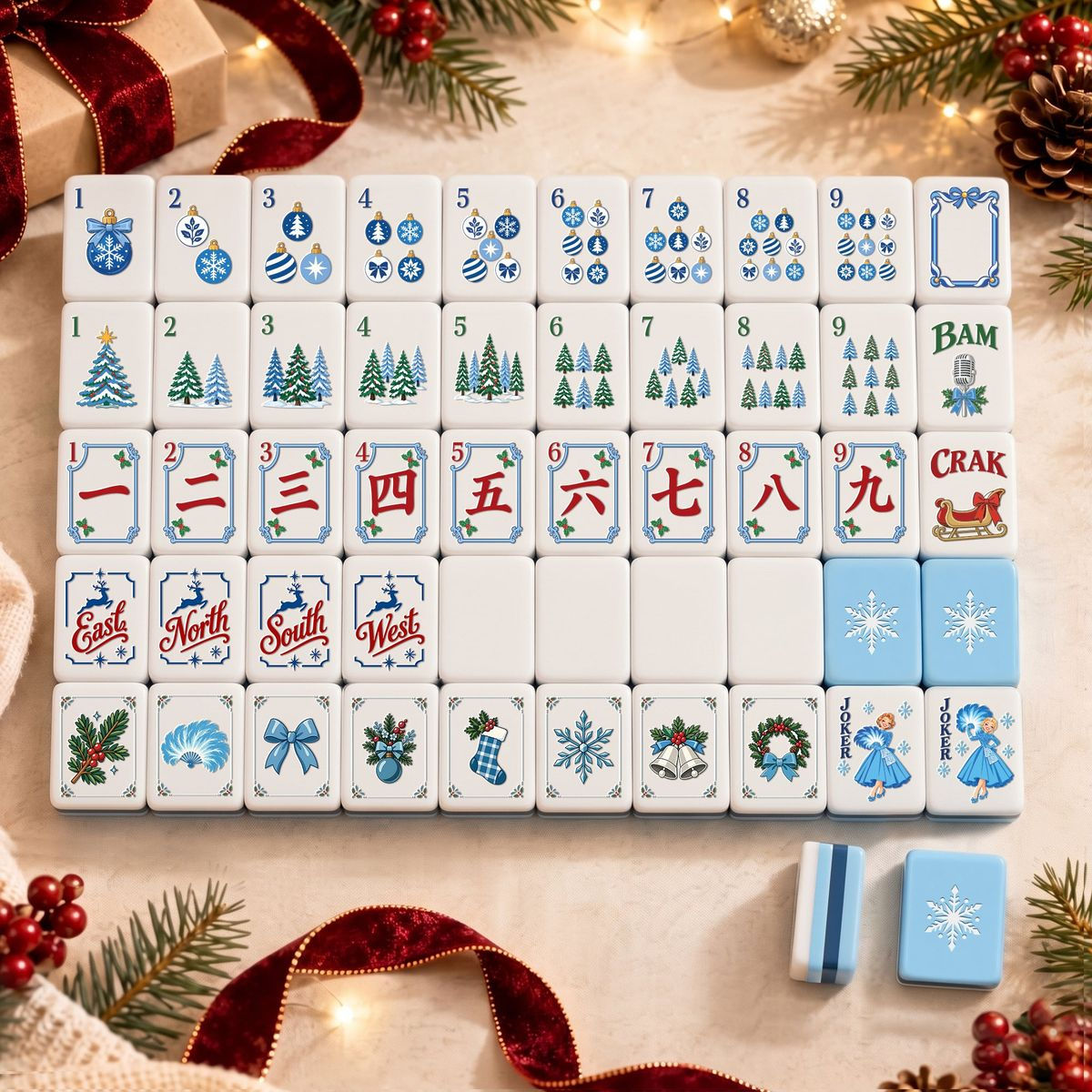
Hong Kong mahjong and Wright-Patterson mahjong are two separate rule systems, not regional names for the same game. Understanding the core differences will help you choose which variant suits your table, skill level, and available equipment.
What is Hong Kong mahjong, exactly?
Hong Kong mahjong is a Chinese variant native to Hong Kong that prioritizes speed, concealment, and pattern memory. The game uses 144 tiles: three suits (Bams, Craks, Dots) numbered 1–9, four copies each; 16 winds (four each of North, East, West, South); 12 dragons (Red, Green, White); no flowers or seasons. Hands remain hidden until winning; melds are exposed only on the winning hand. Players draw and discard rapidly, with most hands discarded within 16 turns. Scoring uses a point-based system (often faan and hu scoring methods), and sequences (chows—1-2-3, 5-6-7, etc.) are legal and common. No jokers exist in standard Hong Kong play. The game rewards pattern recognition, quick decision-making, and tight tile reading.

What is Wright-Patterson mahjong?
Wright-Patterson mahjong emerged in the mid-20th century when American servicemen stationed at Wright-Patterson Air Force Base in Ohio adapted Chinese mahjong rules to a hybrid format. It uses 152 tiles (the American mahjong count): three suits × 1–9 × four copies each (108 tiles), 16 winds, 12 dragons, 8 flowers, 8 jokers. Unlike Hong Kong play, Wright-Patterson allows exposed pungs (three identical tiles), kongs (four identical), and joker substitution in melds—similar to American mahjong mechanics. However, it does not use the National Mah Jongg League card; hands are called from memory or house rules rather than a printed yearly card. The game sits between Hong Kong concealed play and standard American open-meld American mahjong, offering a middle ground for players who want some exposure and joker use without the complexity of the NMJL card system.
🀄 Shop best-selling mahjong sets →
How do the tiles and suits differ?
Both variants use the same three suits (Bams, Craks, Dots) with identical tile faces, but the tile count and extras set them apart. Hong Kong uses 144 tiles total: no flowers, no jokers, a cleaner, more compact set. American mahjong (and by extension Wright-Patterson) uses 152 tiles: eight flowers (Spring, Summer, Autumn, Winter, Plum, Orchid, Bamboo, Chrysanthemum) and eight jokers. If you own an American mahjong set from Mahstead, you have the tiles needed for Wright-Patterson play but not for Hong Kong—you'd need to remove flowers and jokers and play with the 144-tile core. Conversely, a Hong Kong set cannot be used for Wright-Patterson or American mahjong without adding those extras. The suit names and number ranges are identical, so learning to read 1 Bam (often a bird) through 9 Dots transfers between variants; the rule differences and meld mechanics are where they diverge most.
Scoring and winning hand structure: How do they differ?
Hong Kong mahjong wins rely on memorized patterns and faan (fan/multiplier) values. A winning hand in Hong Kong needs four melds (concealed or exposed pairs and sequences, all pungs/kongs) plus a pair, with specific pattern combos determining point multiplication. For example, "All Pungs" (no sequences) is higher-value than a mixed hand; "Concealed" hands (all hidden until win) score higher than exposed ones. Scoring often uses faan (1–13+) and hu (base points), calculated and settled immediately per hand.
Wright-Patterson and American mahjong use different scoring: hands are called from a reference (Wright-Patterson uses house rules or memory; American uses the annual NMJL card) and scored by hand type and tile values. American scoring assigns points to each hand structure, then doubles based on the prevailing wind and seat position. Wright-Patterson typically uses a simpler addition method, awarding points for melds and bonuses for specific combinations. Neither Hong Kong nor Wright-Patterson uses the NMJL card, so if you're learning American mahjong, the hand selection and scoring logic are entirely separate from both.

Can you play either variant with an American mahjong set?
You can play Wright-Patterson with an American mahjong set—in fact, many Wright-Patterson players use standard 152-tile American sets because the tile composition overlaps. You will use the core 144 tiles (three suits, winds, dragons) and the eight jokers for meld substitution, just as you would in American play; the flowers add flexibility but aren't essential to the rules. If your set is a best-selling Mahstead collection or any American mahjong design, you have what you need for Wright-Patterson.
Hong Kong mahjong is trickier: you cannot use flowers or jokers in standard Hong Kong play, so you'd need to remove them from the table before each game, which is awkward and risks losing tiles. Most Hong Kong players use dedicated 144-tile sets designed for that variant. If you're planning to host both variants, owning separate sets (a 152-tile American set for Wright-Patterson and American play, and a 144-tile Hong Kong set for Hong Kong) is the clearest approach and eliminates counting and removal steps mid-session.
🎁 See our most-loved mahjong sets & accessories →
Which variant should a beginner choose?
If you're new to mahjong overall, start with standard American mahjong, not Hong Kong or Wright-Patterson. American mahjong is the most widely taught in the United States, the most widely available in English-language resources and clubs, and has the benefit of a printed annual card that removes hand-pattern memorization. The learning curve is gentler: the NMJL card shows you every legal hand each season, so you don't need to memorize 50+ patterns from memory.
Hong Kong mahjong demands significant pattern memory and faster decision-making; it suits players who already know one mahjong variant and want to deepen their play. Wright-Patterson is a niche variant—fewer resources exist online, fewer clubs teach it, and house rules vary widely by table, making it harder to learn consistently.
If your local mahjong community plays Hong Kong, follow their lead and take a class or find a mentor; the same applies if Wright-Patterson is your table's standard. But if you're starting from scratch with a circle of new players, American mahjong is the stronger choice. Once you learn American mahjong, switching to Hong Kong or Wright-Patterson becomes simpler because you already understand tile values, suit naming, and meld logic—only the hand patterns and scoring change.
✨ Find your Mahstead set — free US shipping →
Comparison Table: Core Differences at a Glance
Feature | Hong Kong | Wright-Patterson | American |
Total tiles | 144 | 152 | 152 |
Flowers | No | Yes | Yes |
Jokers | No | Yes (8) | Yes (8) |
Sequences (chows) | Yes, common | No | No |
Exposed melds | Winning hand only | Yes (pungs, kongs) | Yes (pungs, kongs) |
Hand reference | Memory/printed guides | House rules/memory | NMJL card (annual) |
Scoring method | Faan/hu multiplier | Additive + bonuses | NMJL table lookup |
Tempo | Fast (16 turns avg.) | Moderate | Moderate to slow |
Best for | Speed, pattern recognition | Hybrid play, fewer tiles | Structured, card-based |
What to check before you buy
Tile count: Verify your set has 152 tiles if you plan Wright-Patterson or American play. Mahstead sells 160-tile sets (152 playing tiles plus spare tiles), which is correct for either variant. Hong Kong requires 144; if you want that variant, a dedicated Hong Kong set is simpler than removing tiles from an American set.
Tile design clarity: Make sure number tiles (1–9 in each suit) and honor tiles (winds, dragons) are legible under table lighting. Engraved Mahstead sets show clear suit symbols and numbers, reducing misreads during fast play.
Joker count: If you're playing Wright-Patterson, confirm you have eight jokers. American mahjong also uses eight jokers; some players accidentally discard or lose one. Check your set count before starting.
Rules agreement: Before your first game, clarify with your circle whether you're playing Hong Kong, Wright-Patterson, or American mahjong, and confirm house rules for scoring and tile swaps. This avoids disputes mid-game.
Equipment for the variant:Mahjong mats and racks with pushers work for any variant, but bags and cases sized for 152 tiles are tight for long-term storage if you frequently add or remove tiles between games.

FAQ
Can I learn Hong Kong mahjong if I already know American mahjong?
Yes. The tile reading, suit names, and basic meld logic transfer directly. You only need to memorize Hong Kong hand patterns (faan combos) and learn the faster discard tempo. Most players make the transition in 3–4 sessions with a patient teacher or study guide.
Is Wright-Patterson mahjong still played in Ohio or elsewhere in the U.S.?
Wright-Patterson remains active in Ohio and parts of the Midwest, but it's a regional variant with a smaller player base than American mahjong. Online mahjong forums and local Meetup boards may list Wright-Patterson clubs; start by asking your library or community center if they know of groups.
Do I need a new set to switch between variants?
Not necessarily. A single 152-tile American mahjong set works for both Wright-Patterson and American play. For Hong Kong, you'd remove flowers and jokers each game (tedious) or buy a dedicated 144-tile Hong Kong set. Two sets is cleanest if you play both.
Why does American mahjong not allow sequences like Hong Kong does?
American mahjong evolved from the Chinese game but was streamlined in the early 20th century to simplify hand structures and speed learning. The NMJL standardized rules to use only pungs, kongs, and pairs, removing sequences to reduce hand complexity and memorization burden for club play.
Where can I find people to play Hong Kong or Wright-Patterson mahjong near me?
Search Meetup.com for "mahjong" and your city; contact local community centers, libraries, and synagogues (which often host mahjong groups); ask in city-specific subreddits like r/[YourCity]. Many groups list their variant on their profile or during a phone call; don't assume—confirm which rules they play before attending.
If I buy an American mahjong set from Mahstead, will it work for all three variants?
Yes for Wright-Patterson and American (both use 152 tiles). For Hong Kong, you'd have to remove the eight flowers and eight jokers before each session and store them separately—workable but inconvenient. If you play Hong Kong regularly, a dedicated 144-tile set is simpler.


View More
View More
View More
